
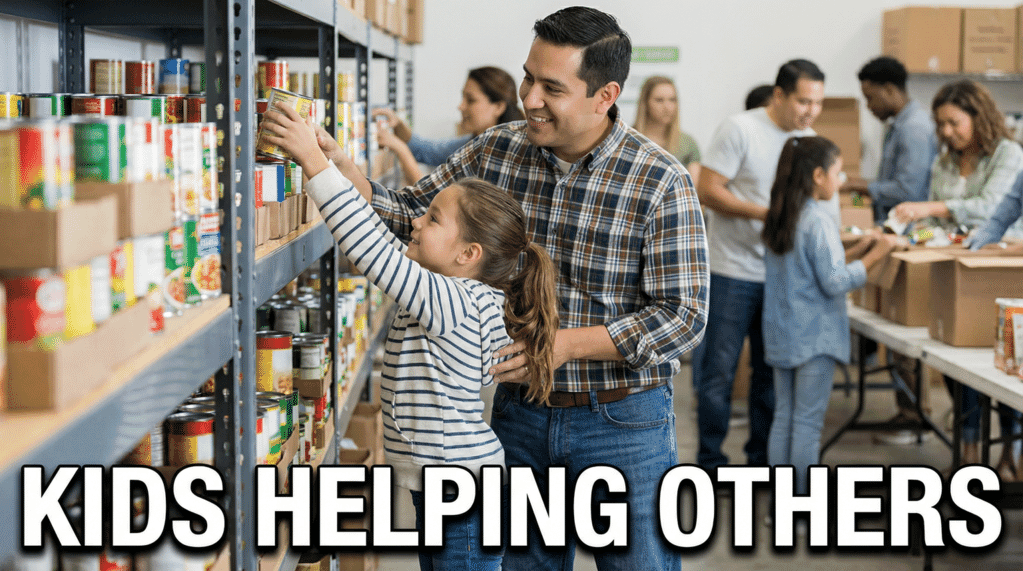
Your 6-year-old wants to help the dogs at the shelter. She’s been talking about it for weeks. But when you sit down to actually do something, you realize you have no idea where to start. How much? Which charity? Will she even understand what’s happening?
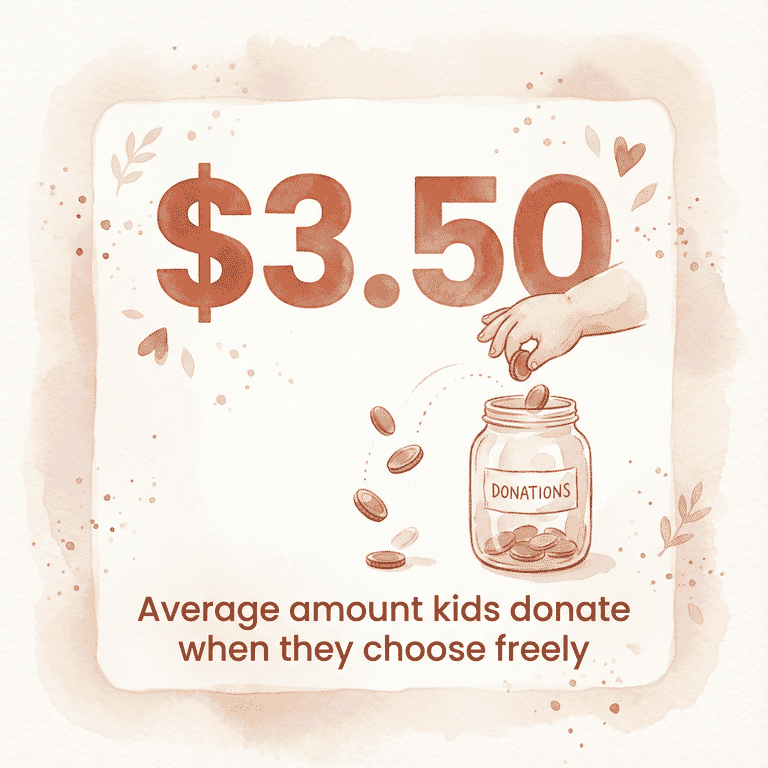
Here’s the thing: research shows children can make meaningful donation decisions younger than most parents expect. In one study, kids given $10 donated an average of $3.50 to help others—entirely on their own. Your child is more ready than you think.

Key Takeaways
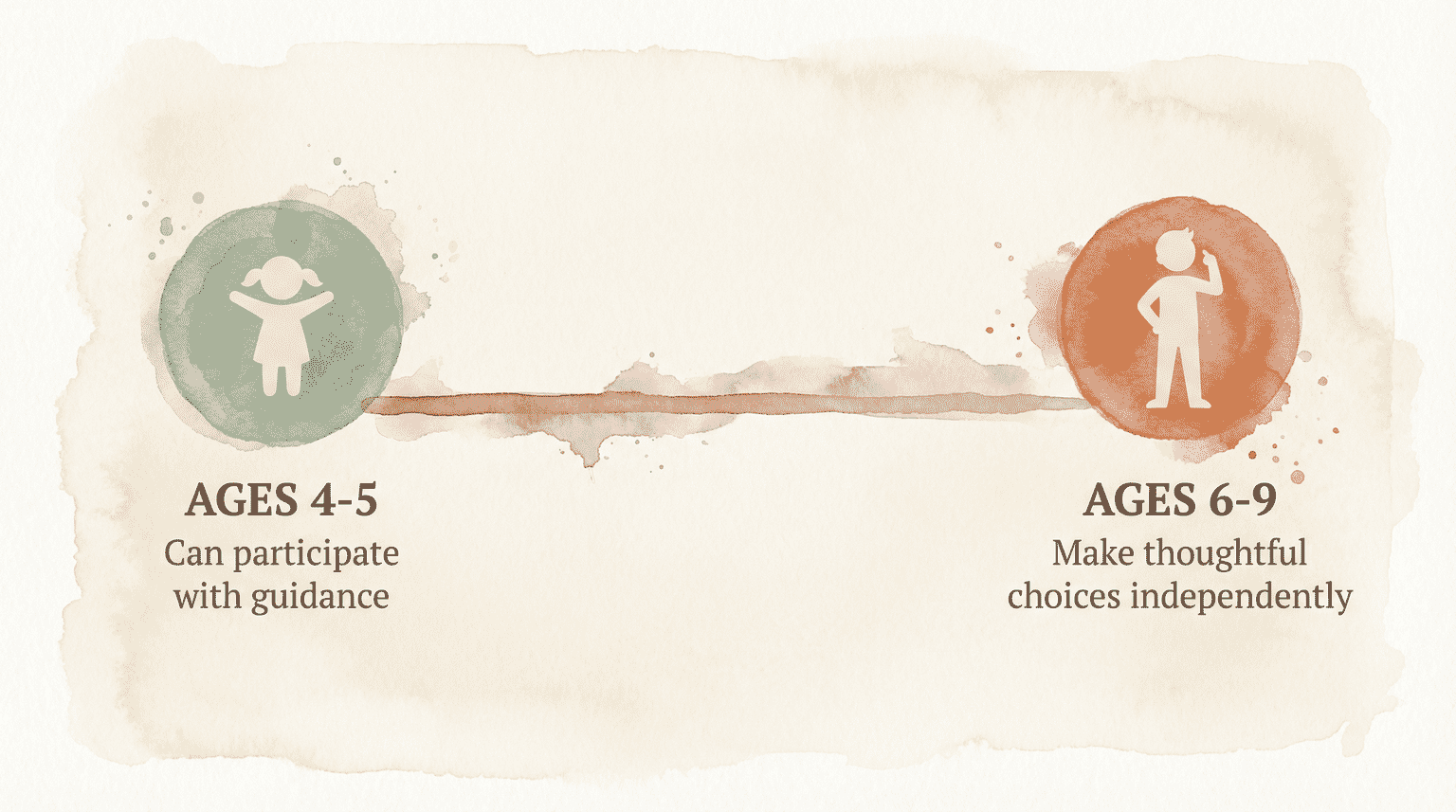
- Children as young as 4-5 can participate in meaningful giving with guidance, and 6-year-olds make thoughtful donation choices independently
- The Choose-Give-See framework makes first donations tangible and memorable
- Kids who see their parents give are far more likely to become generous adults
- The amount doesn’t matter nearly as much as letting your child decide for themselves
The Choose-Give-See Framework
After walking through this with my own kids (eight times and counting), I’ve learned first donations work best when they’re visible, concrete, and child-led. That breaks down into three simple steps.
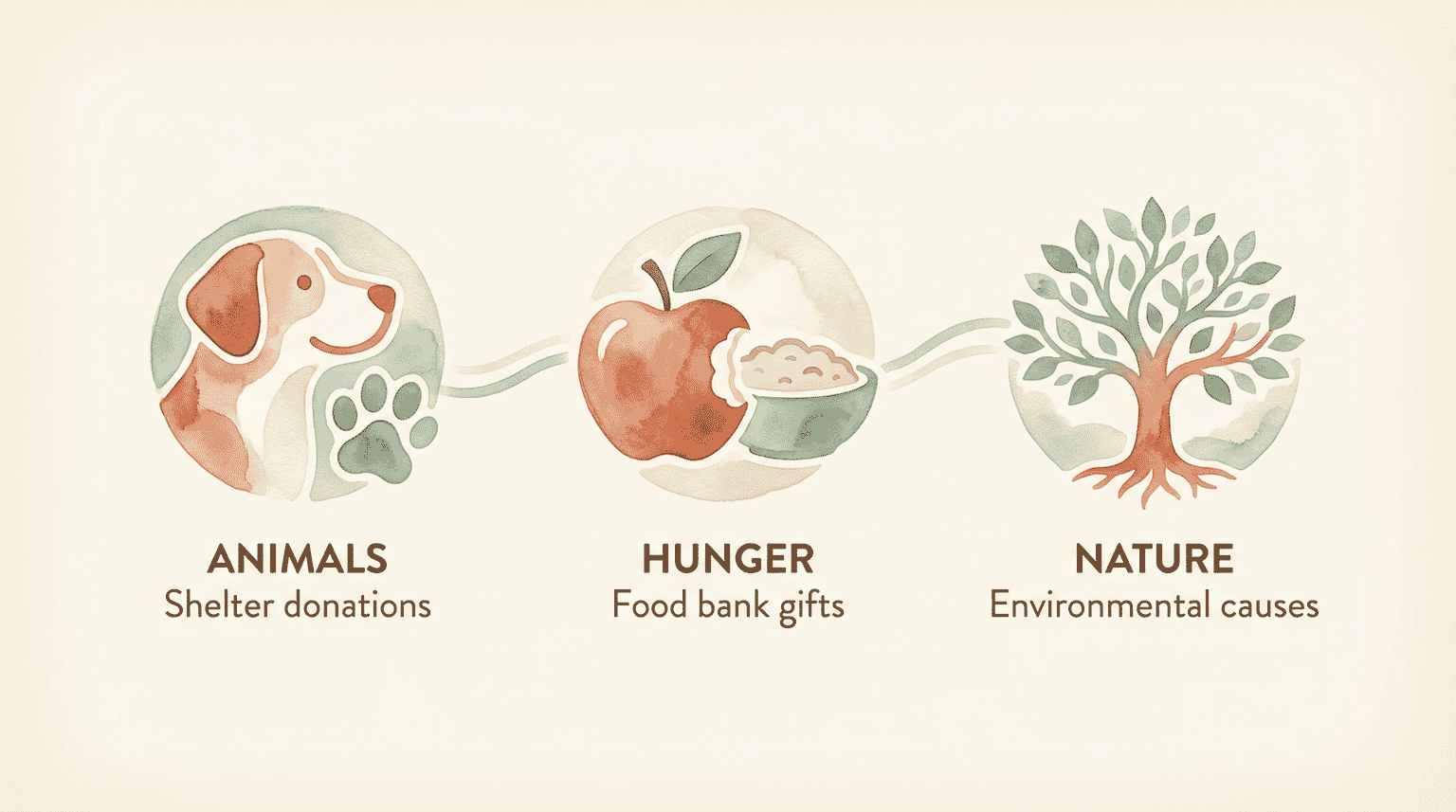
1. Let them choose the cause. Animal lovers connect with shelter donations. Kids worried about hunger understand food banks. Follow their interests—not yours. The emotional connection matters more than the “best” charity.
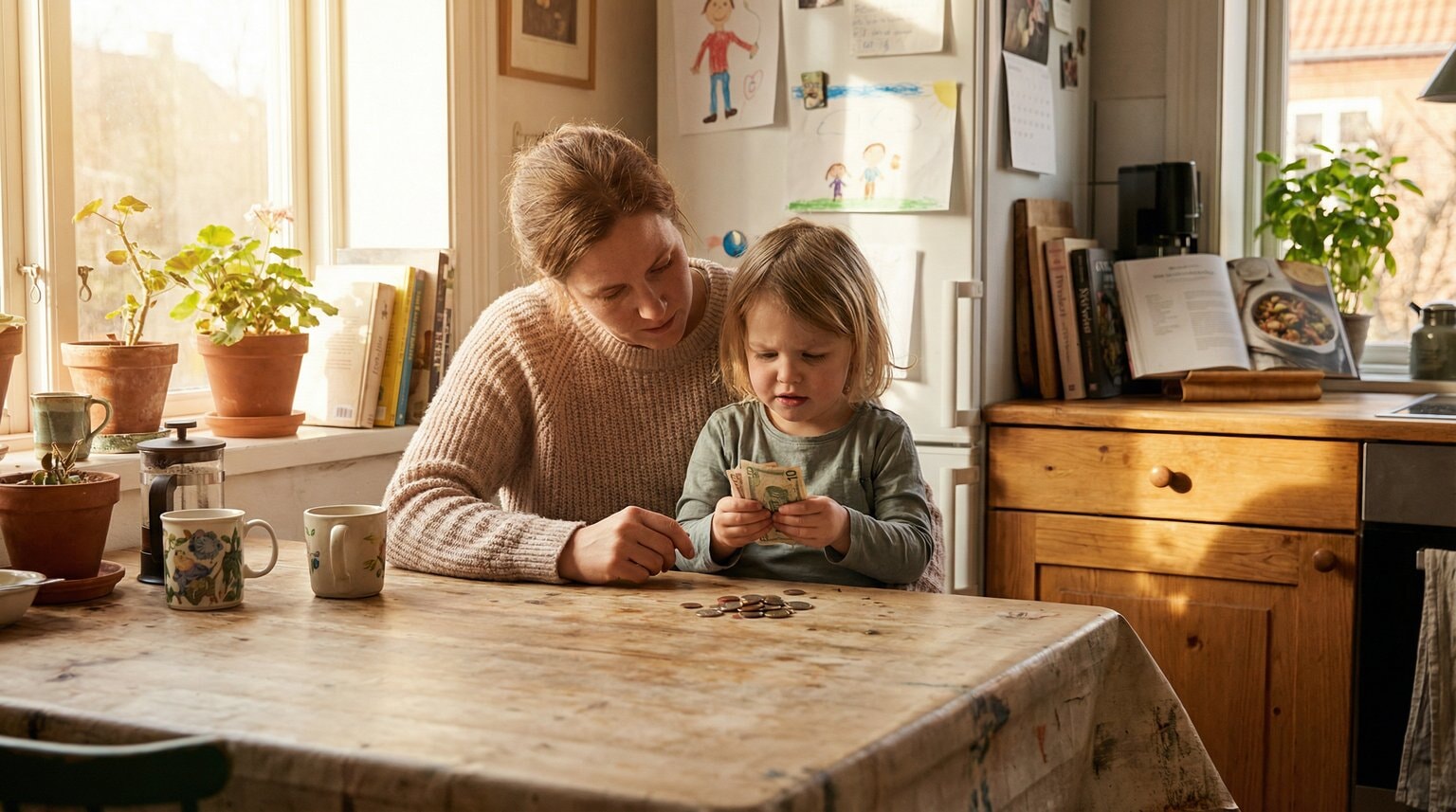
2. Make the giving moment tangible. Hand over actual cash or items together. Write a check at the kitchen table instead of clicking “donate” on your phone. Kids need to see something leave their hands.
Our brains learn generosity through doing, not watching. (For more on teaching children about giving, that link goes deeper.)
3. Show them where it goes. This is the step most parents skip—and it’s the most important. Visit the food bank. Watch the shelter’s thank-you video. Read the update email together.
Children need to see their impact to internalize the lesson.
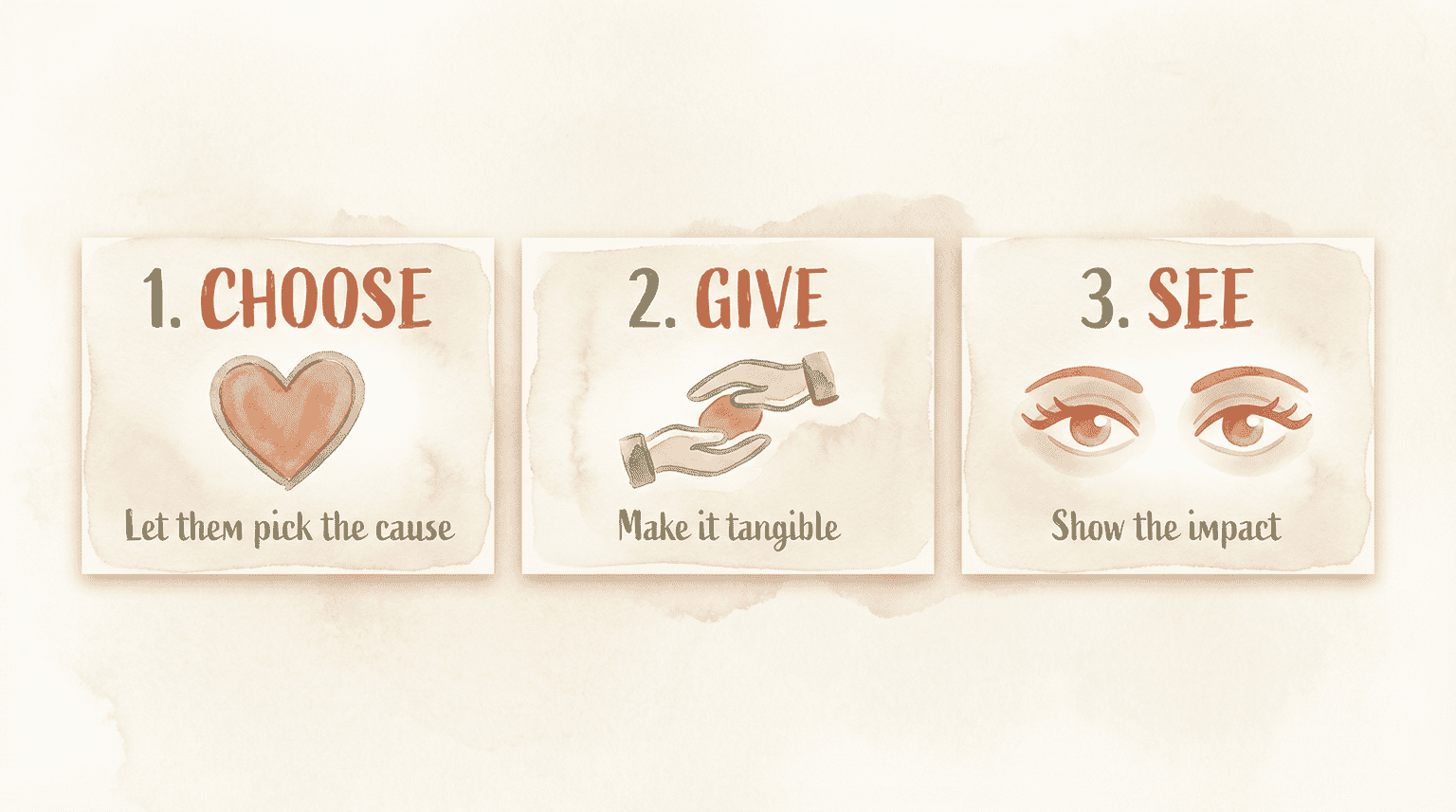
When all three steps happen together, something clicks. Your child doesn’t just give money—they experience the full loop of generosity.
When to Start and How Much
Most kids can participate in simple giving by ages 4-5 with guidance. A 2022 study found 6-year-olds make thoughtful donation choices, with generosity increasing significantly by age 9.
If your child is asking questions about helping others, they’re ready.
As for amount? Let them decide from their own money—allowance, birthday cash, whatever feels like theirs. Research found that average $3.50 donation because children chose amounts that felt meaningful to them.
The decision matters more than the dollars. When children control the amount, they feel genuine ownership over their generosity.
For a detailed breakdown by age, check our age-appropriate giving guide.
Don’t stress about teaching your kid to give “enough.” The habit of giving—not the amount—is what builds generous adults.
Why This Matters Long-Term
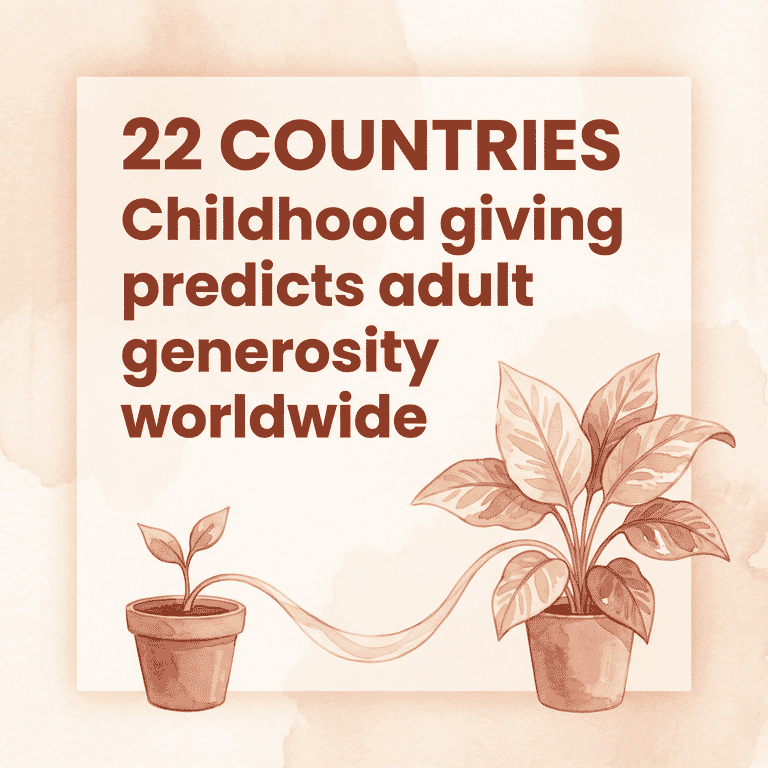
A 2024 study of over 200,000 people across 22 countries found that childhood experiences with giving strongly predict adult charitable behavior. The researchers put it plainly: childhood is when we form the beliefs and values that shape generosity for life.
This is part of the broader science of how gifts shape developing minds.
What you model right now ripples across decades. Kids who watch their parents give become adults who give—across cultures, across continents.
That’s not opinion. That’s data from over 200,000 people worldwide.
One more thing research confirms: kids need to know you give too. Make your own donations visible. Talk about them. That visibility is what transforms a single donation into a lasting value.
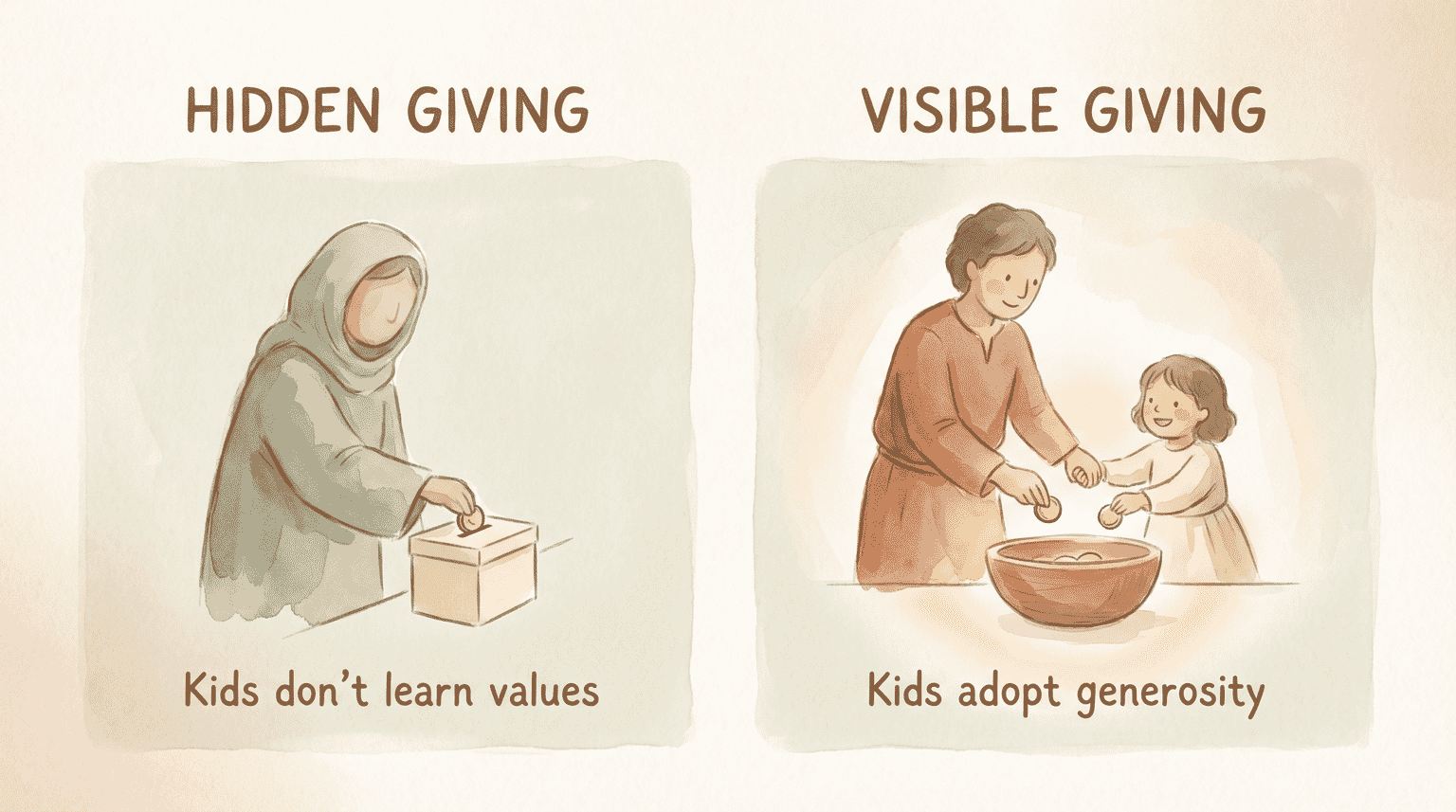
So next time you donate, bring your child into the moment. Let them see the check, hear the conversation, know where it’s going. That’s how values transfer.
Over to You
Has your child made their first charity donation? I’d love to hear which cause they chose—and whether the experience stuck with them.
Your stories help other parents navigate their kids’ first giving experiences.
References
- Children’s Altruism Following Acute Stress – Research on children’s donation behavior and developmental patterns
- Childhood Predictors of Charitable Giving – Large-scale study on how early experiences shape adult generosity

Share Your Thoughts