
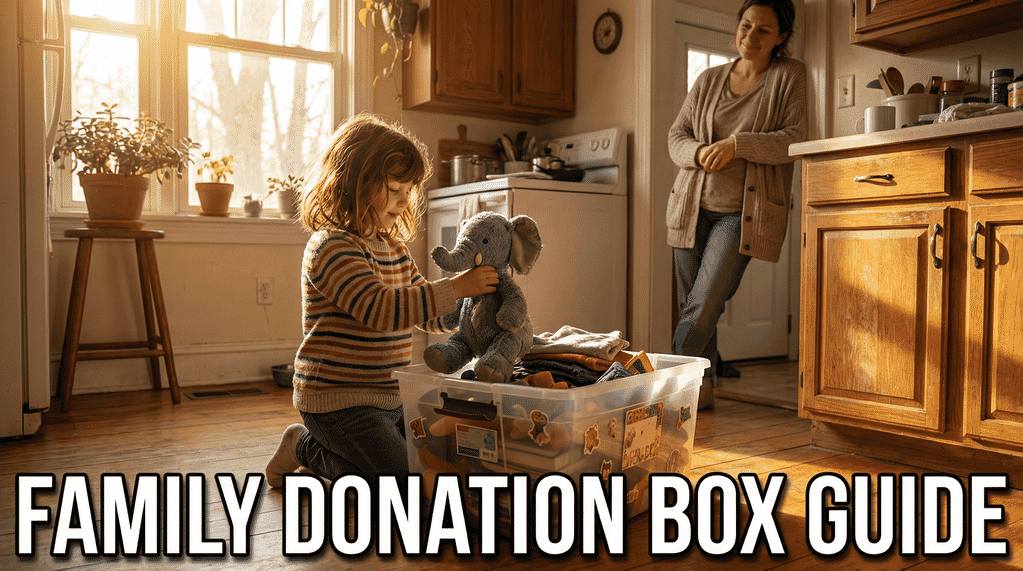
Standing in my kitchen doorway, I watched my 6-year-old carefully place a stuffed elephant into a cardboard box we’d decorated together. “This one’s for a kid who needs a friend,” she announced. No prompting. No negotiation. Just a small person making a choice to give.
That moment didn’t happen by accident. It took months of building a family system around one simple tool: a donation box that lives in our house year-round.
Here’s the thing—talking about generosity with kids rarely works. But giving them something physical to interact with? That changes everything. If you’re trying to raise children who genuinely understand giving, a donation box is where to start.
Key Takeaways
- A physical donation box gives children instant sensory feedback that triggers dopamine—making generosity feel rewarding
- Adding faces or eyes to your donation box can triple children’s giving according to behavioral research
- Simply asking “what do you think you should share?” significantly increases donations—the conversation matters as much as the container
- Children rarely share more than 40% of resources spontaneously—resistance is developmentally normal, not defiance
- Regular small giving builds more generosity than occasional large purges—consistency beats intensity
Why a Physical Box Actually Works
My librarian brain needed to understand why a cardboard box could do what all my lectures couldn’t. Turns out, the answer involves dopamine.
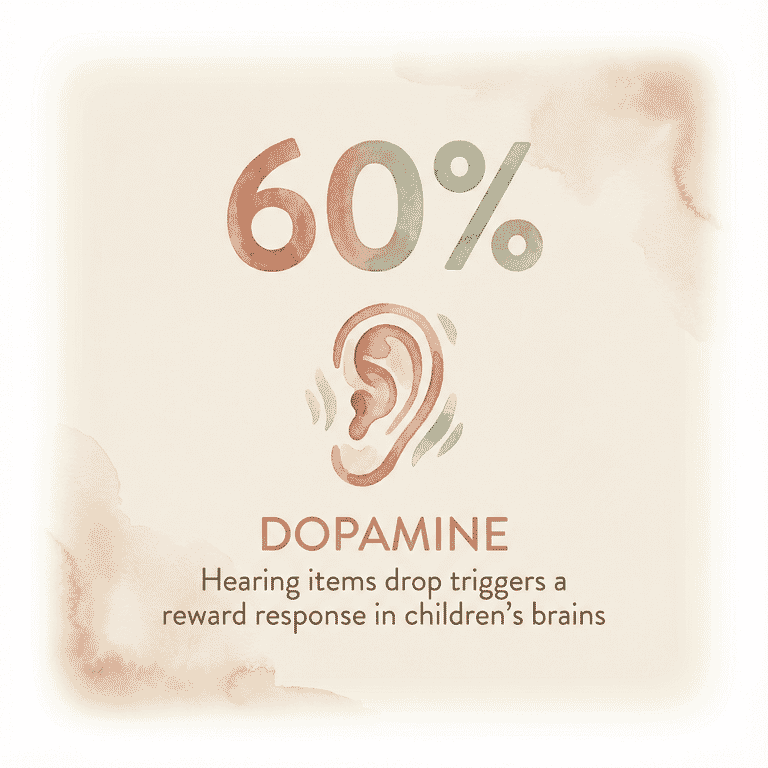
When your child drops something into a donation box, they get instant sensory feedback—the sound of the item landing, watching the box fill up over time. Research on donation behavior shows this auditory confirmation triggers a small dopamine hit, essentially rewarding the brain for giving—part of the broader science of how gifts affect our brains. It’s the same reason arcade games are so satisfying.
A donation box transforms abstract charity into concrete action. Your child can see their generosity accumulate. They can touch it, add to it, watch it grow.
For children under 7 especially, who struggle with abstract concepts, this tangible representation makes “helping others” something they can actually grasp.
This connects to your broader family values around giving—the box becomes a physical symbol of what your family believes in.
Setting Up Your Family Donation Box
After testing various approaches with my crew (ages 2 to 17 give me plenty of experimental subjects), here’s what actually works:
Choose the Right Container
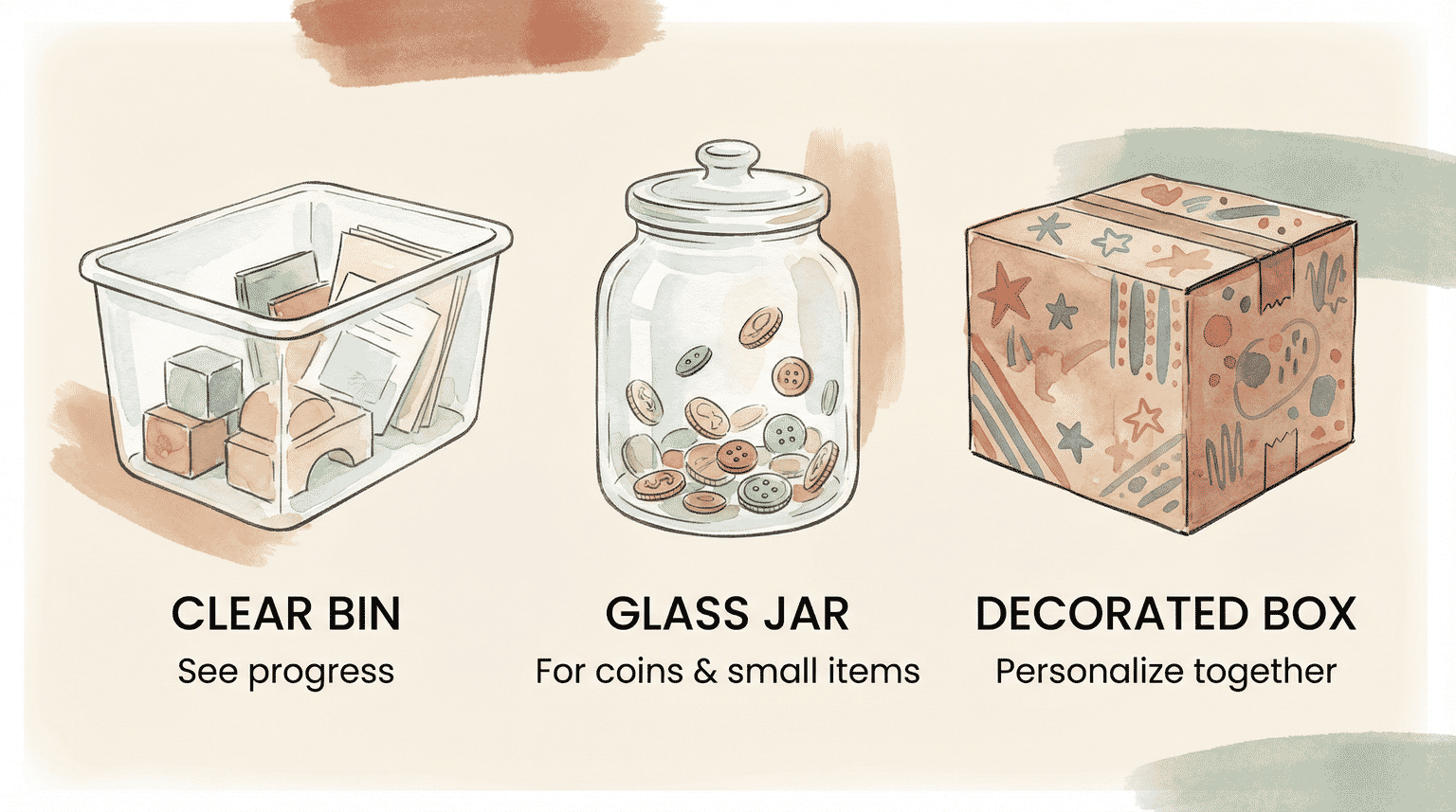
Go clear, not opaque. Children need to see donations accumulating—it’s visual proof their giving matters. A large clear plastic bin, a glass jar for small items, or even a clear garbage bag inside a decorative box all work. The key is visibility.
Size matters too. Too small and it fills immediately, removing the satisfying accumulation. Too large and it never looks full. I’ve found medium moving boxes work well for toys and clothes, while gallon jars are perfect for collecting coins or small items.
Pick the Right Spot
Place it at your child’s eye level in a shared family space—not hidden in a closet or tucked in the garage. The box should be somewhere your child passes daily. Our current one sits in the mudroom, which means everyone walks by it multiple times a day. Out of sight really is out of mind with kids.
Let Them Personalize It
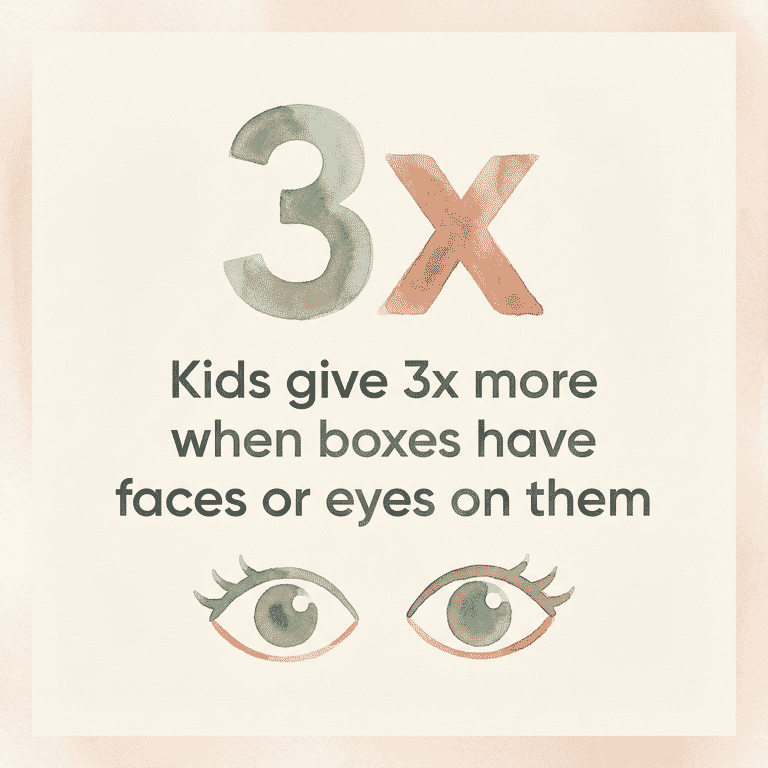
Here’s a detail that surprised me: behavioral scientists studying donation boxes discovered that adding faces or eyes to collection boxes significantly increases donations. Powell et al. found that eye images on or near donation boxes boosted giving compared to boxes without them. Bateson et al. documented participants contributing nearly three times as much when eye images were present.
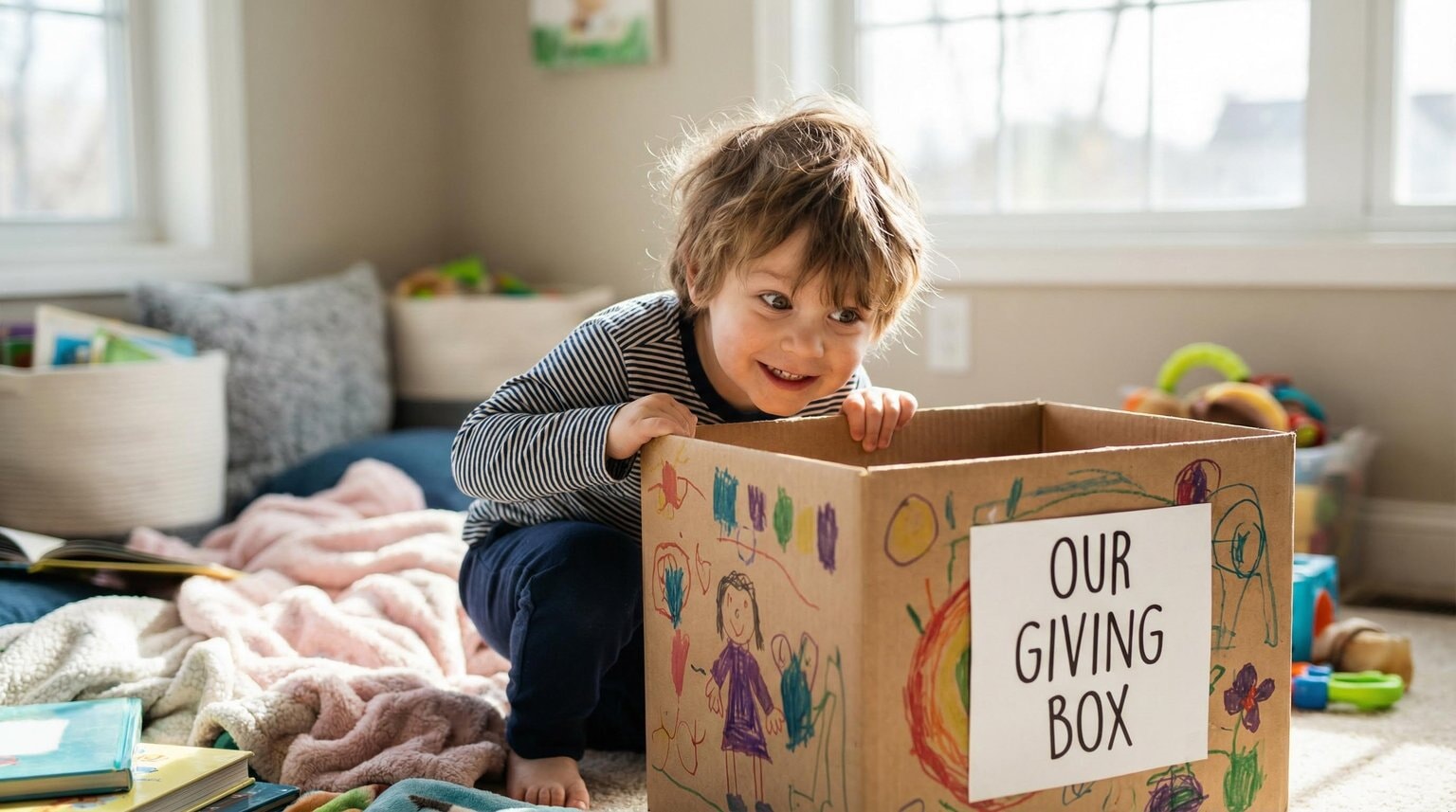
So let your kids decorate the box with faces, eyes, photos of children who might receive the donations, or drawings of people the items will help.
It’s not just craft time—it’s psychology in action.
Choose the Destination Together
Giving children agency over where donations go increases their investment. A 2022 study in Developmental Psychobiology found that “childhood is a developmental period when altruism could potentially be nurtured and promoted”—and that nurturing happens best when kids have real choices.
Let your child help decide: the local shelter? A refugee organization? A children’s hospital? Research animal shelters together online. Visit potential donation sites. The destination should feel real to them, not just “somewhere Mom picks.”
The Fairness Conversation
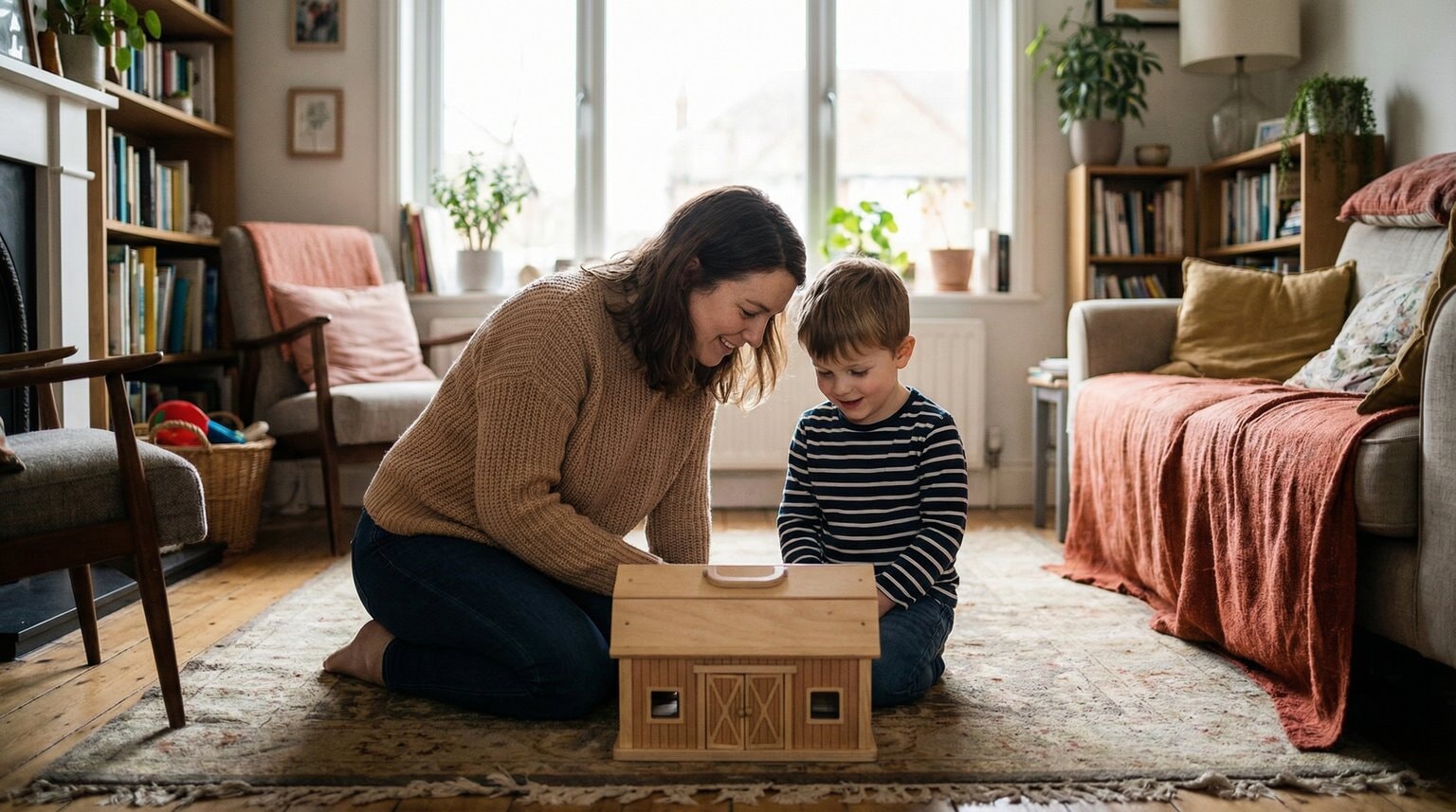
What you say when introducing the box—and each time something goes in—matters more than the box itself.
Research from child development psychologists Misch and Dunham (2021) found something parents should know: simply asking children “what do you think you should share?” significantly increased their donations. The conversation itself primes generosity.
Simple Scripts That Work
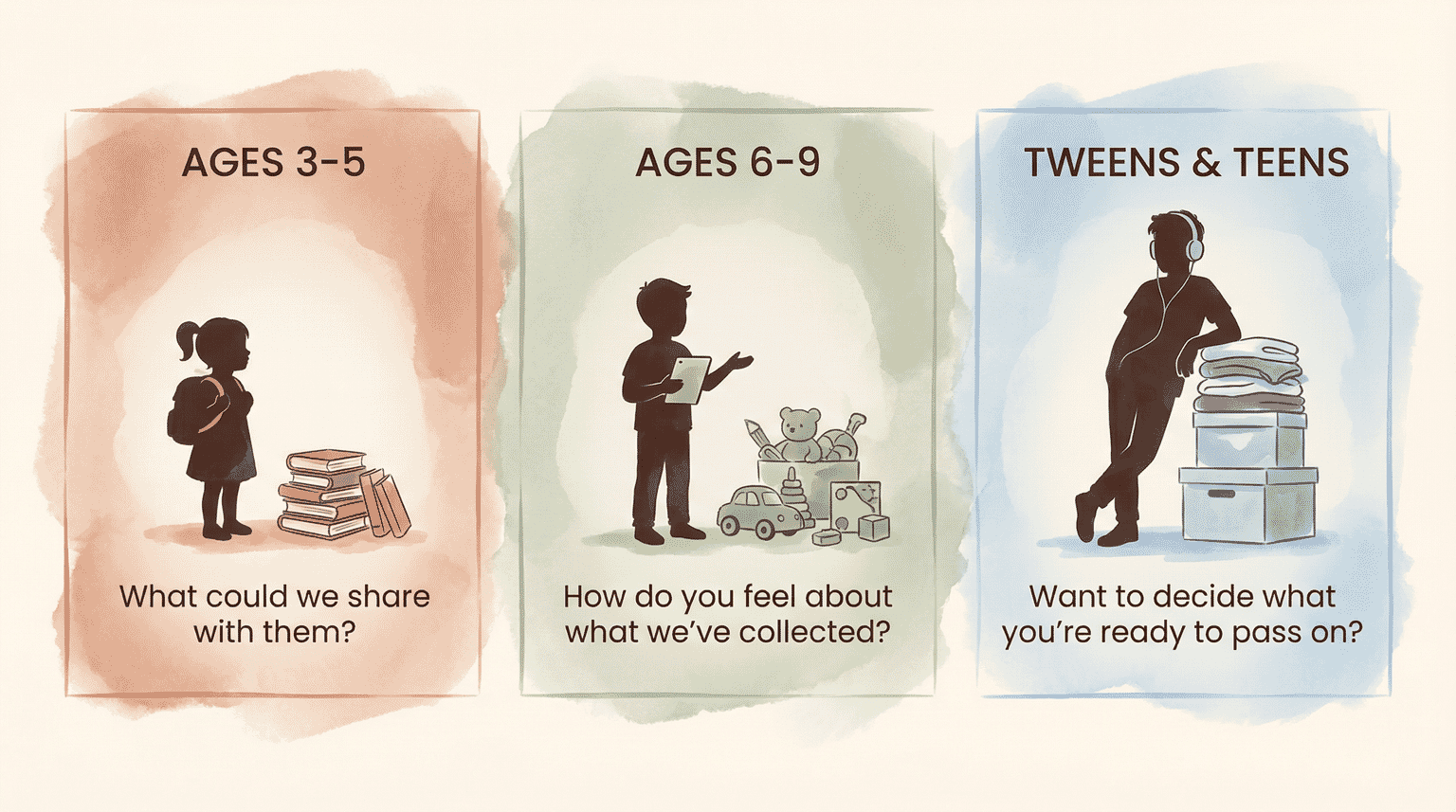
For younger children (ages 3-5):
“Some kids don’t have enough toys to play with. What could we share with them?”
For elementary-age kids (ages 6-9):
“Our box is getting full! How do you feel about what we’ve collected so far? What else do you think would help a family who needs it?”
For tweens and teens:
“We’re doing a donation run this weekend. Want to go through your stuff and decide what you’re ready to pass on?”
Notice the pattern: questions, not commands. You’re inviting them into a decision, not dictating one.
Honoring Attachment
When my 8-year-old hesitates over a toy she hasn’t touched in months, I’ve learned to say: “That one seems hard to let go of. You can keep it—or you can think about it and decide later.”
Forced donations backfire. The goal is building a generous habit, not winning each individual battle.
Building a Giving Rhythm
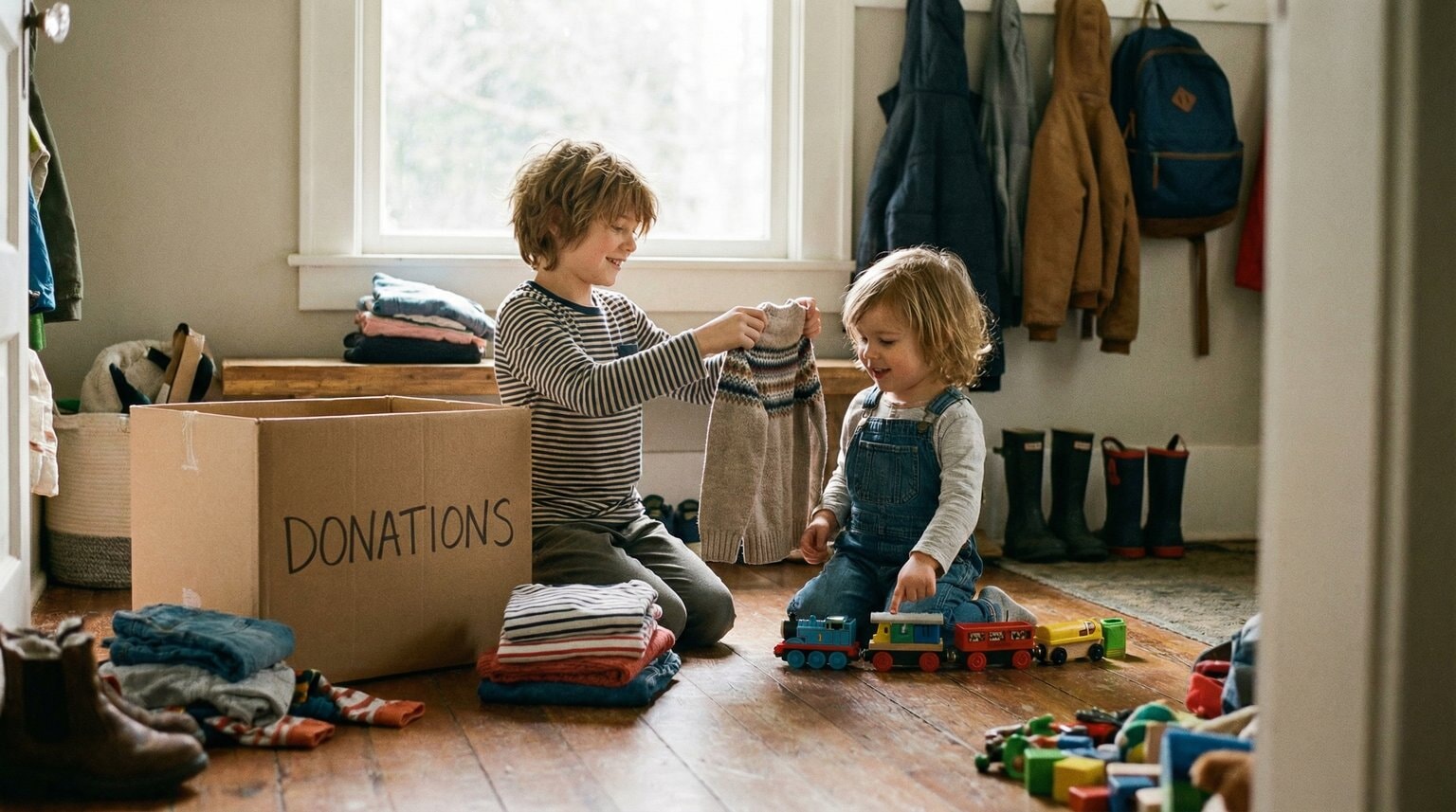
One-time donation purges teach nothing. Regular rhythms build lasting habits.
Natural Trigger Points
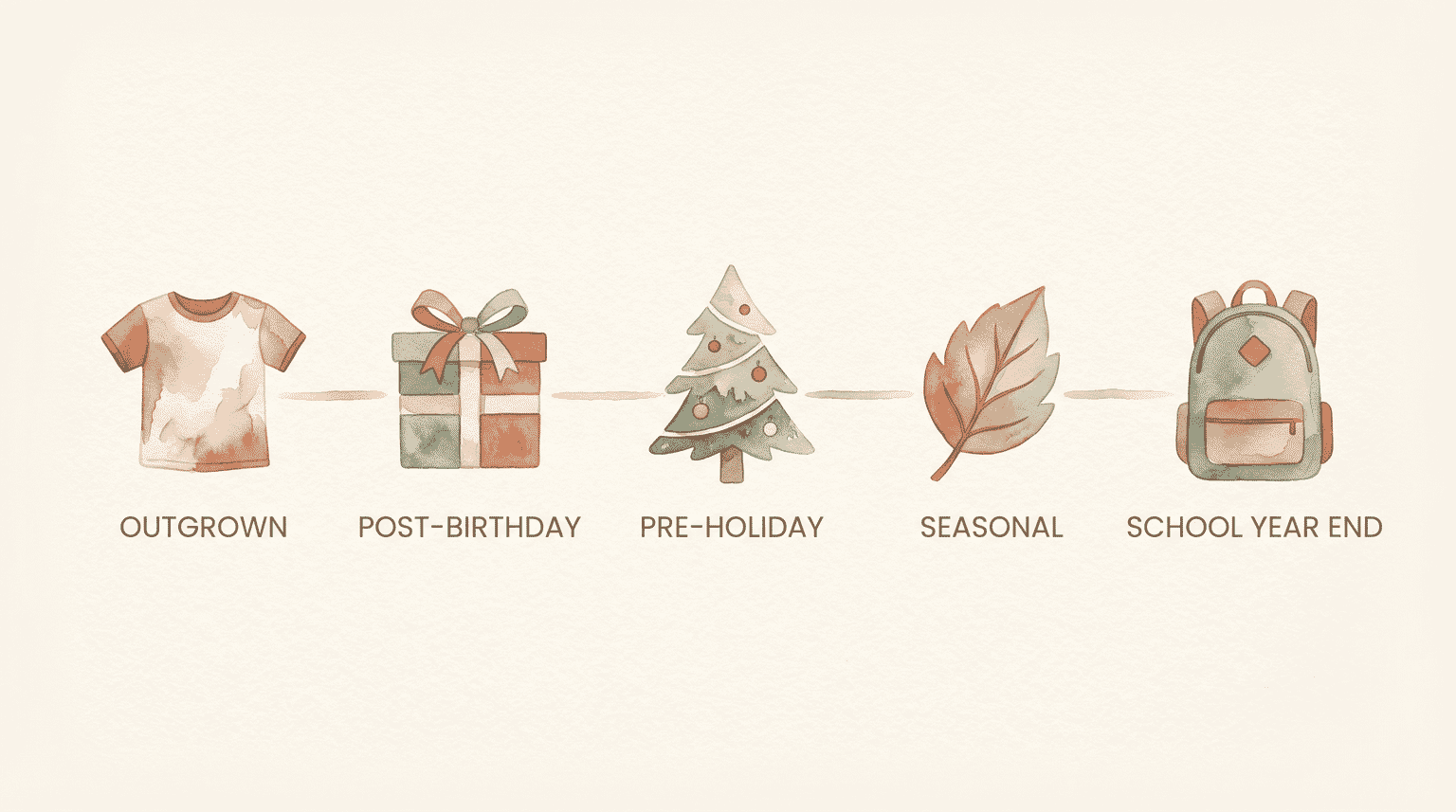
Rather than arbitrary schedules, tie donation moments to natural transitions:
- Outgrown items: When clothes don’t fit or toys seem “babyish”
- Post-birthday: After new gifts arrive, choose items to pass on
- Pre-holiday: Before Christmas or Hanukkah, make room for what’s coming
- Seasonal transitions: Fall and spring closet swaps include donation sorting
- End of school year: Backpack cleanout includes gently used supplies
Finding Your Family’s Frequency
Some families do weekly check-ins (“Anyone have anything for the donation box this week?”). Others prefer monthly donation days with more ceremony. With eight kids generating constant turnover, we land somewhere in between—a casual ongoing practice punctuated by bigger seasonal sorts.
What matters is consistency. A 2021 study in Frontiers in Psychology documented that children’s prosocial behavior showed an “accumulating positive effect” over consecutive days of exposure to generous models. Translation: regular small giving builds more generosity than occasional large purges.
Sibling Dynamics
With multiple children, peer influence kicks in. That same 2021 research found children imitate prosocial behavior more readily than antisocial behavior—seeing a sibling donate makes younger ones more likely to follow.
In my house, I’ve watched donation enthusiasm become genuinely contagious among the littles when the older kids participate visibly.
When They Say “No”
Here’s something that took me four kids to accept: resistance is developmentally normal.
As researchers Misch and Dunham explain, “Actually behaving in line with moral principles sometimes presents a challenge for young children because it most often comes at personal cost. Sharing requires overcoming the desire to keep as much as possible for oneself.”
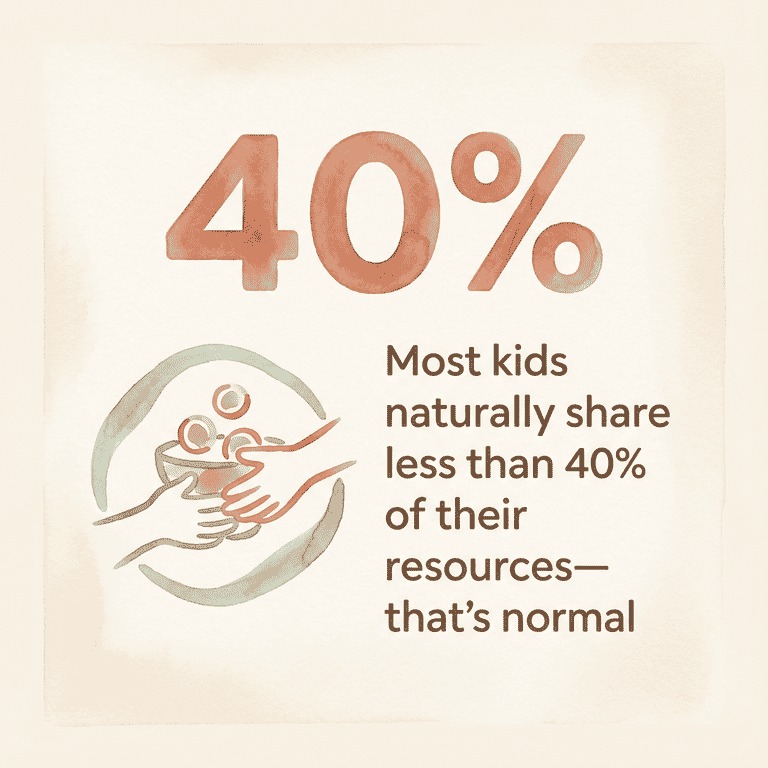
Their research confirms that children rarely share more than 40% of resources spontaneously. The 2022 Developmental Psychobiology study found the average child donation was $3.50 from a possible $10.
Any giving is meaningful—you’re not failing if your child doesn’t enthusiastically empty their room.
Response Scripts for Resistance
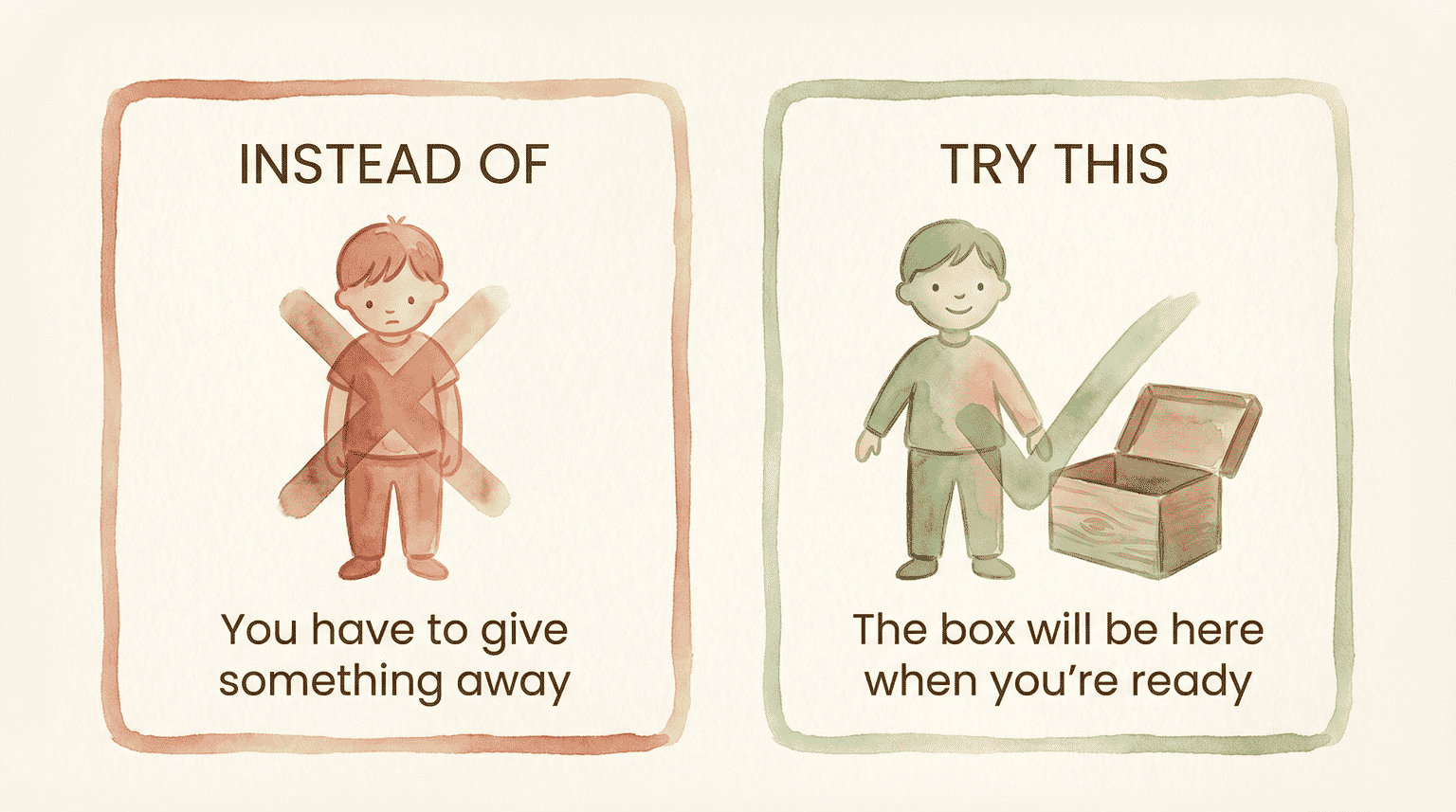
When your child says: “I don’t want to give anything away!”
Try: “That’s okay for today. The box will be here when you’re ready. Is there anything that’s broken or missing pieces we could let go of together?”
When your child says: “But I might want to play with it someday!”
Try: “I understand that feeling. Let’s put it aside for two weeks—if you play with it, it stays. If not, maybe it’s time for it to help another kid.”
For navigating the emotional complexity of teaching charity without creating guilt, the key is patience. You’re building a lifetime habit, not checking a box.
Completing the Loop: Delivery Day
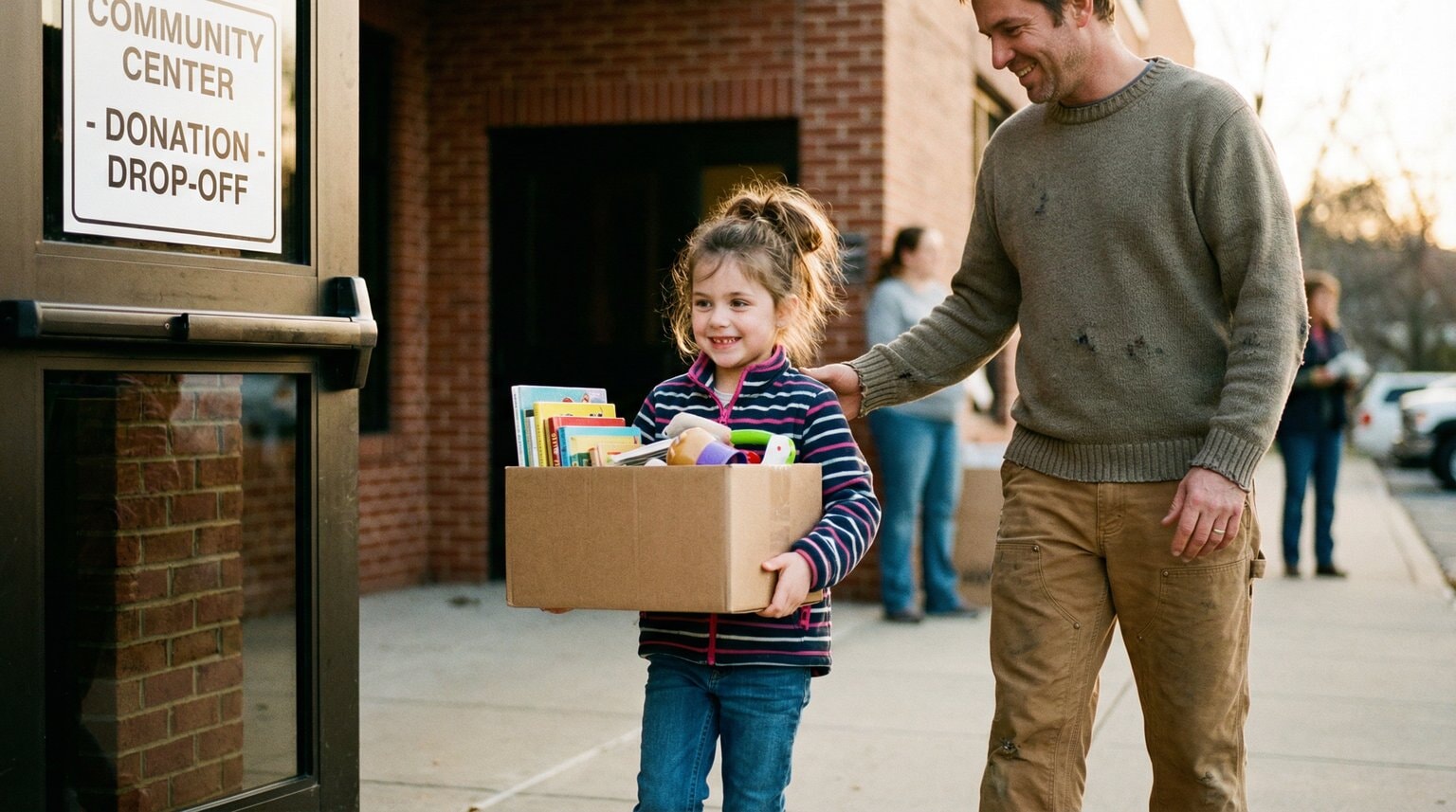
The donation experience isn’t complete until children see where their items go.
Make Delivery Meaningful
Whenever possible, bring your child along to drop off donations. Let them carry the box inside. Have them hand it to the person receiving it. This closes the loop between “putting something in a box” and “helping a real person.”
Research shows collaborative activity increases children’s subsequent sharing behavior. The 2022 study on children’s altruism found evidence for “tend-and-befriend” responses—helping others actually helps children cope and feel connected. Delivery day leverages this beautifully.
Celebration Elements
After delivery, we do something small to mark it:
- A special treat or meal together
- Taking a photo with the full donation box before it goes
- Talking at dinner about who might use what we gave
- Adding a tally mark to a family “giving tracker”
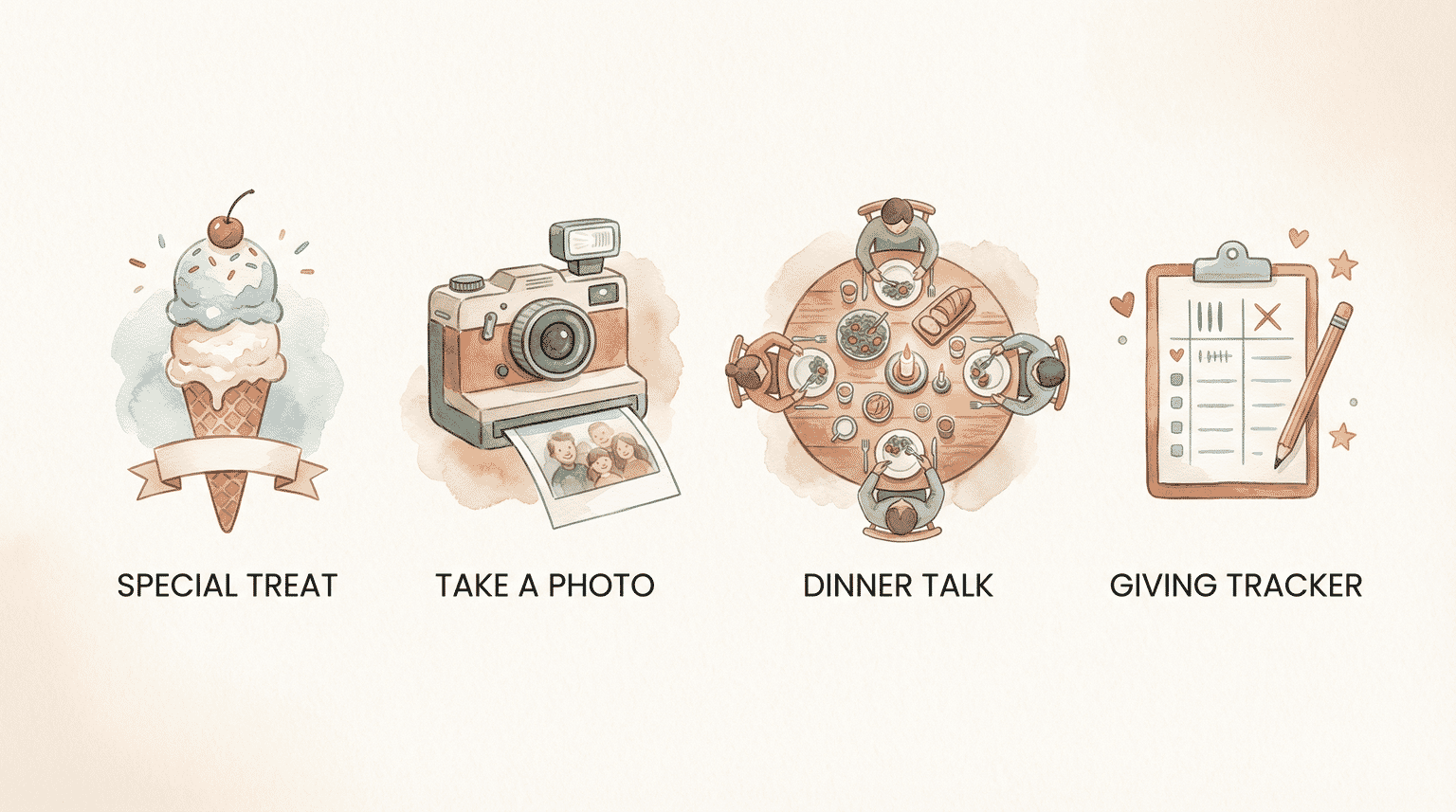
The celebration isn’t about praise—it’s about making generosity feel good, reinforcing that giving is something our family does and values.
Frequently Asked Questions
How do I teach my child to donate toys?
Start with a physical donation box at your child’s eye level in a shared family space. Let children help decorate it and choose where donations will go. Research shows that asking children “what do you think you should share?” significantly increases their willingness to give—the conversation matters as much as the container.
What age can children understand donating?
Children begin showing sharing behaviors around age 2, though abstract charitable concepts develop closer to age 9. A donation box works for children as young as 3-4 when parents guide the process, while children ages 6-8 can participate more independently in selecting items and understanding where donations go.
How do I get my child to give away toys?
Research shows children rarely share more than 40% of their resources spontaneously—resistance is developmentally normal, not defiance. Frame giving around fairness rather than forcing choices. Build regular rhythms with natural trigger points like outgrown clothes or post-birthday sorting.
Should I make my child donate toys?
Forcing donations typically backfires. Studies show children are not blindly conformist—they imitate prosocial behavior more than antisocial behavior when they see it modeled authentically. Focus on modeling giving yourself, involving children in destination choices, and celebrating small acts of generosity. Any donation is meaningful.
Join the Conversation
Does your family use a donation box? I’m curious how you’ve made giving tangible for kids—and whether the visual reminder has actually led to more consistent generosity.
I read every comment and love learning what works in different households.
References
- Donation Box Psychology – Research on sensory feedback and visual design in charitable giving
- Children’s Prosocial Behavior and Peer Influence – Misch & Dunham’s research on fairness conversations and sharing norms
- Prosocial Media Effects on Children’s Donations – Study on accumulated prosocial modeling effects in 4-6 year-olds
- Children’s Altruism and Stress – Research on tend-and-befriend responses and developmental altruism

Share Your Thoughts