
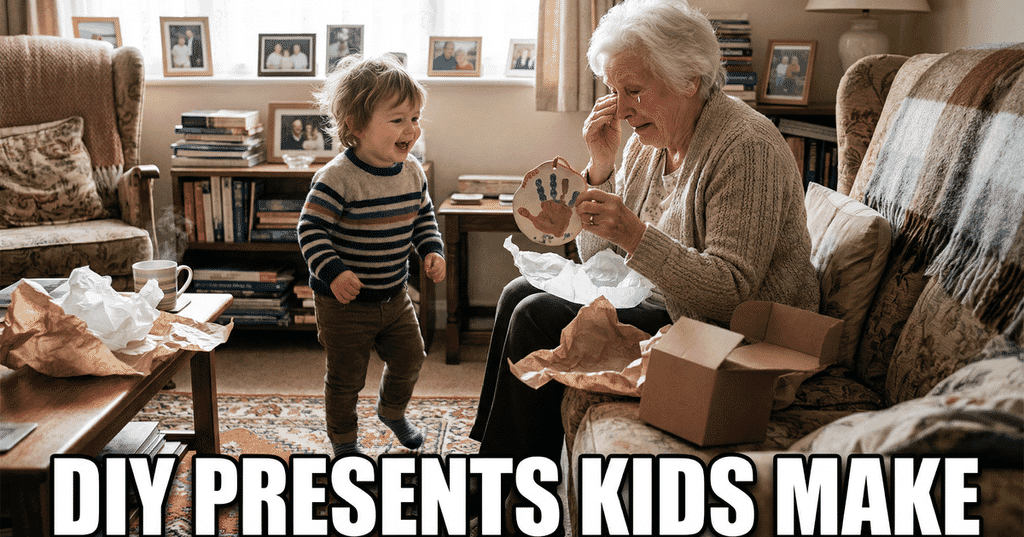
Why does your grandmother treasure a wonky clay handprint more than the cashmere scarf you carefully selected? Why does your dad display a crayon drawing in his office while the “nice” gift stays in a drawer?
My librarian brain couldn’t let this go without checking. After eight kids and countless lopsided creations leaving my house as presents, I finally dug into the research. Turns out, there’s real psychology behind why homemade gifts hit differently—and understanding it can help us support our kids in making gifts that truly matter.
Here’s what I found: three distinct mechanisms explain why DIY gifts carry emotional weight that store-bought presents simply can’t match.
Key Takeaways
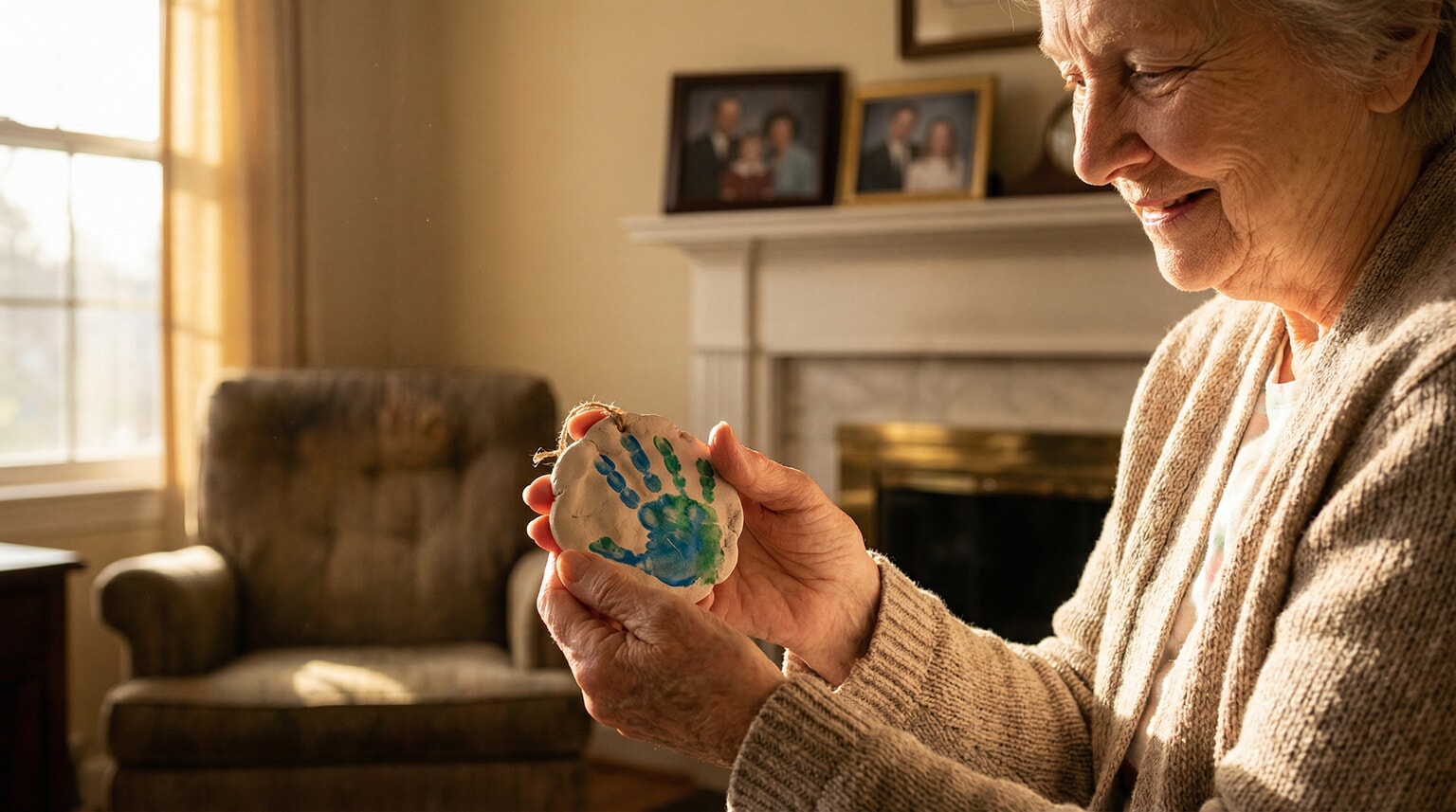
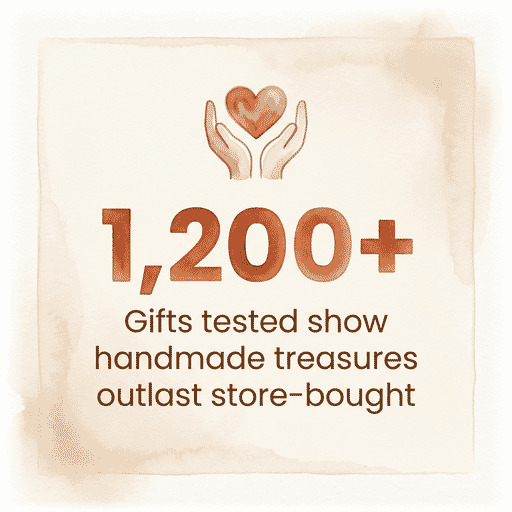
- Children chose handmade over factory-made gifts 94-98% of the time when thinking about emotions and relationships
- Gift-making triggers “helper’s high” in children, lowering stress and boosting self-esteem through the act of giving
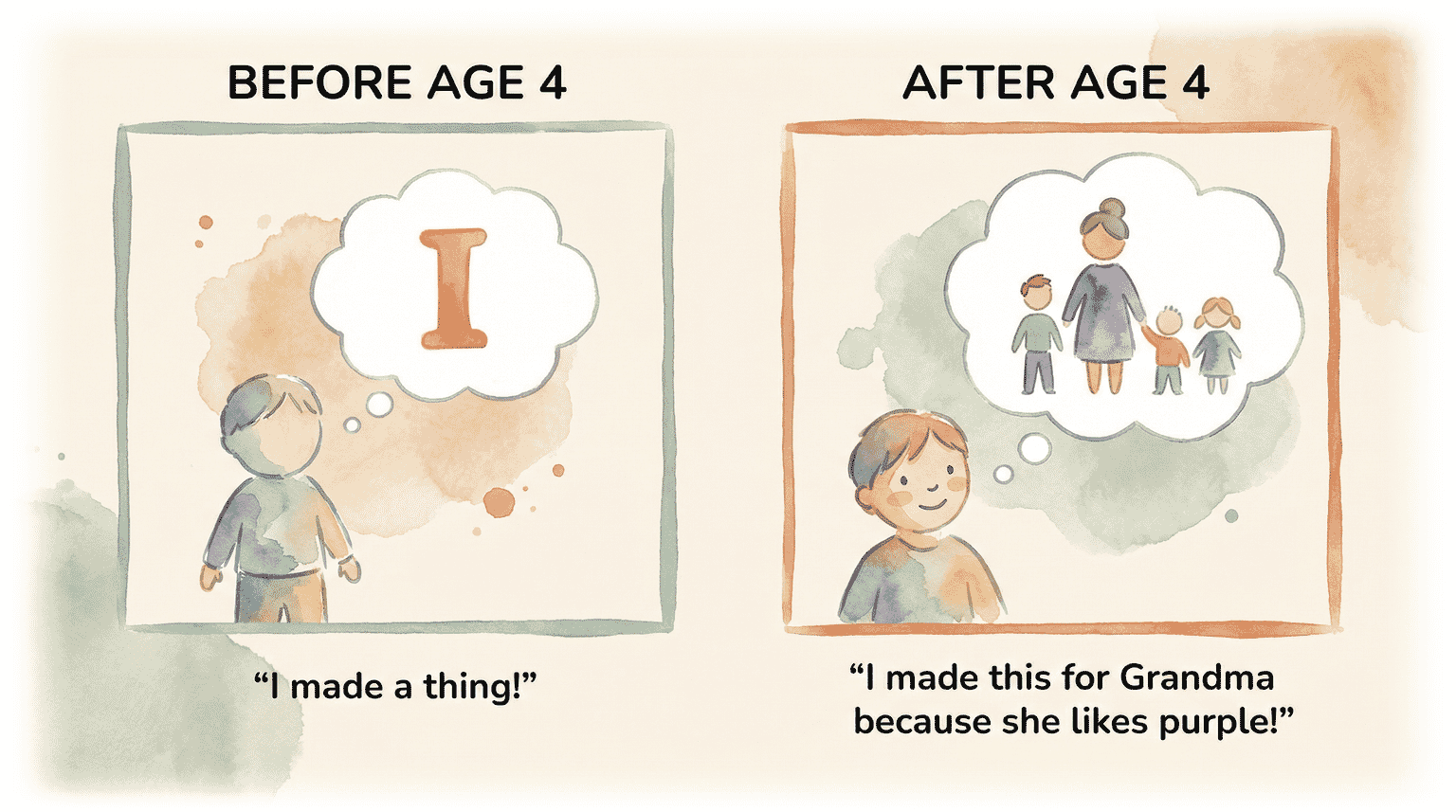
- Perspective-taking ability emerges around age 4, transforming gift-making from “I made a thing” to “I made this for Grandma”
- Imperfection actually strengthens the gift’s emotional impact because visible effort signals genuine care
- How recipients respond either reinforces or undermines your child’s growing generosity
The Effort Heuristic: Why “Trying Hard” Matters More Than Spending More
Humans have a built-in mental shortcut called the effort heuristic. We instinctively value things that required effort to create. When we see that someone invested time and attention into something for us, our brains interpret that effort as care.
A 2022 study published in the journal Cognition found something striking about how children understand this. When kids in the study gave explanations that referenced emotions or relationships, they selected handmade items 94-98% of the time over factory-made alternatives. They intuitively grasped what many adults have forgotten: effort signals love in ways money simply cannot.
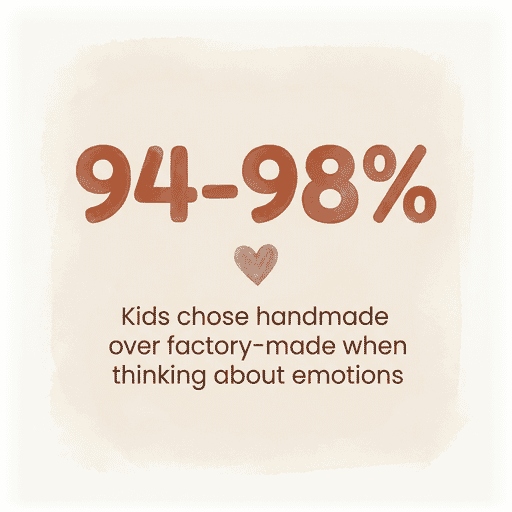
The researchers discovered that handmade items are valued “because they are viewed as an extension of the self”—meaning items made by people we’re close to carry the maker’s identity with them.
Your child’s fingerprints in that clay ornament aren’t just smudges. They’re literal pieces of your child, now living at Grandma’s house.
This explains why relationship closeness amplifies the effect. The same study showed that children expected others to prefer items made by someone familiar (like a parent) over items made by a stranger. A macaroni necklace from your own grandchild activates this mechanism at full strength. Understanding the science behind meaningful gifts helps explain why this response is so universal—it’s not just sentimentality.
Purdue University researchers documented another piece of this puzzle: play with homemade items provides “the same benefits” as play with expensive alternatives. The developmental value comes from the creation and engagement, not the price tag. This principle extends to gifts—their worth comes from what they represent, not what they cost.
The Helper’s High: What Happens in a Child’s Brain When They Give
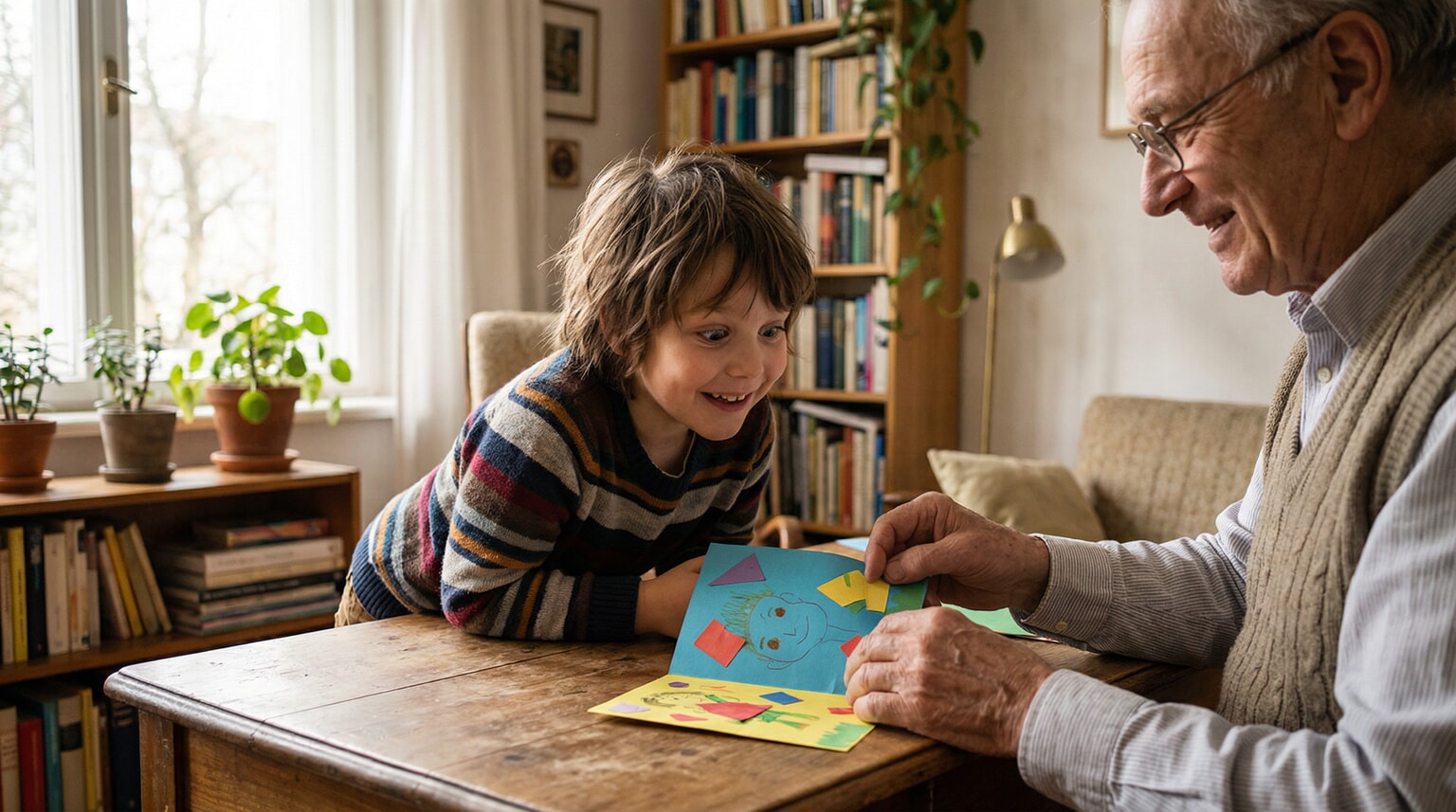
Here’s where it gets physiologically interesting. When children create something for another person, their brains reward them for it.
NIH research on charitable giving describes a phenomenon called “helper’s high”—the rush of positive feelings that comes from helping others. This isn’t just warm fuzzies. Research shows that helper’s high can lower stress levels, boost self-esteem and mood, and may even enhance immune function.
Thirteen-year-old Sia Lakshmi Sampson, who created and delivered 50 handmade gift bags to hospitalized children, described it perfectly:
“Any time I’ve ever helped someone feel better, my heart soars and I can’t help but smile the rest of the day… Giving is something I love doing.”
— Sia Lakshmi Sampson, 13, volunteer gift-maker
I’ve watched this happen with my own kids. The anticipation on my 8-year-old’s face as Grandpa opens her handmade card is completely different from when she watches him open something we bought. She’s invested. She’s watching for his reaction because her heart is wrapped up in that gift.
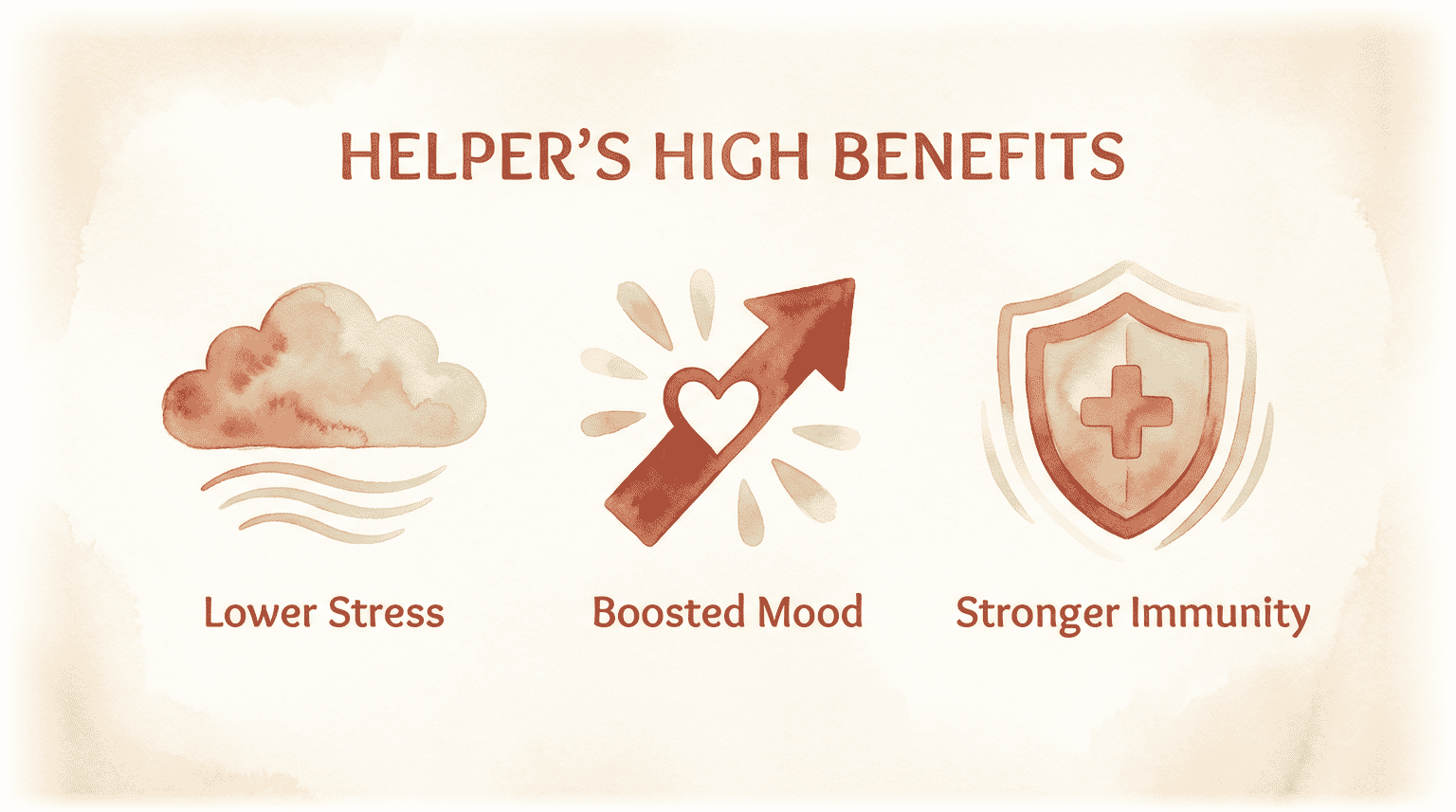
Research on DIY crafting confirms that creating releases endorphins and provides “a tangible representation of your abilities and creativity.” Completing a project for someone else compounds this effect—you get the satisfaction of finishing something difficult plus the helper’s high from giving it away.
This dual reward system is why making gifts for others feels categorically different from making things for yourself.
The Empathy Engine: How Gift-Making Builds Perspective-Taking
Around age 4, something shifts in children’s brains. They develop what psychologists call Theory of Mind—the ability to understand that other people have their own thoughts, feelings, and preferences that differ from their own.
Research from Thoughtful Parent puts it clearly: “Kids don’t have the brain maturity to think about much other than themselves until they are around 4 years old.” This doesn’t mean younger children can’t create—it means that around 4, gift-making transforms from “I made a thing” to “I made a thing for Grandma because she likes purple.”
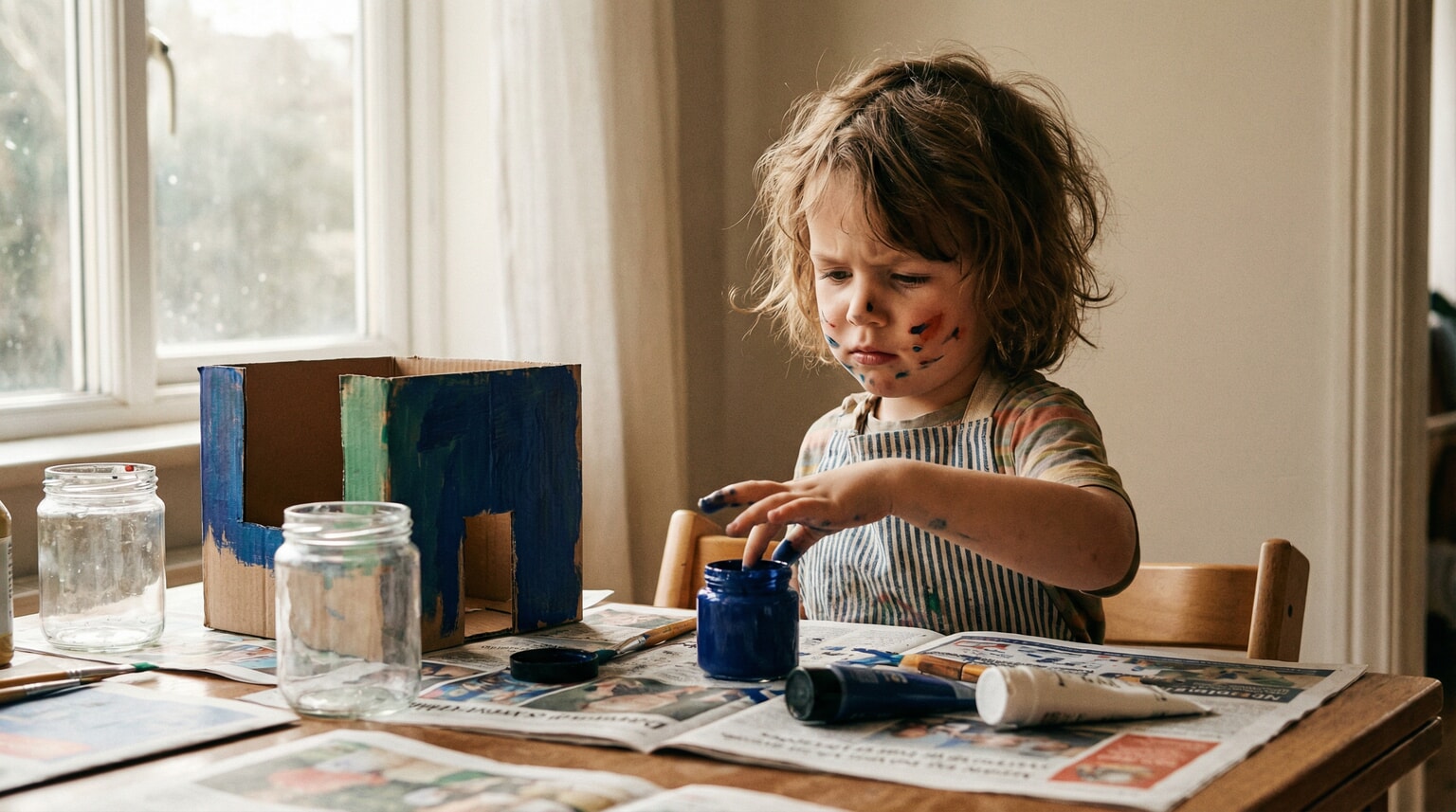
Dr. Borba, author of Unselfie: Why Empathetic Kids Succeed in Our All-About-Me World, emphasizes that empathy is “taught, not caught.” Making gifts for specific recipients is empathy practice in its purest form. Your child must ask: What would this person enjoy? What colors do they like? What would make them smile?
This is the “WE instead of just ME” thinking Dr. Borba describes—and it’s happening naturally every time your child chooses blue paint because Uncle Mark’s favorite color is blue.
Developmental research confirms that children who understand the emotional benefits of giving become more generous over time. When they see Grandma’s face light up, they’re learning that their actions can create joy in others. That’s a lesson no store-bought gift can teach.
The Flow State: Why Creating Provides Emotional Benefits
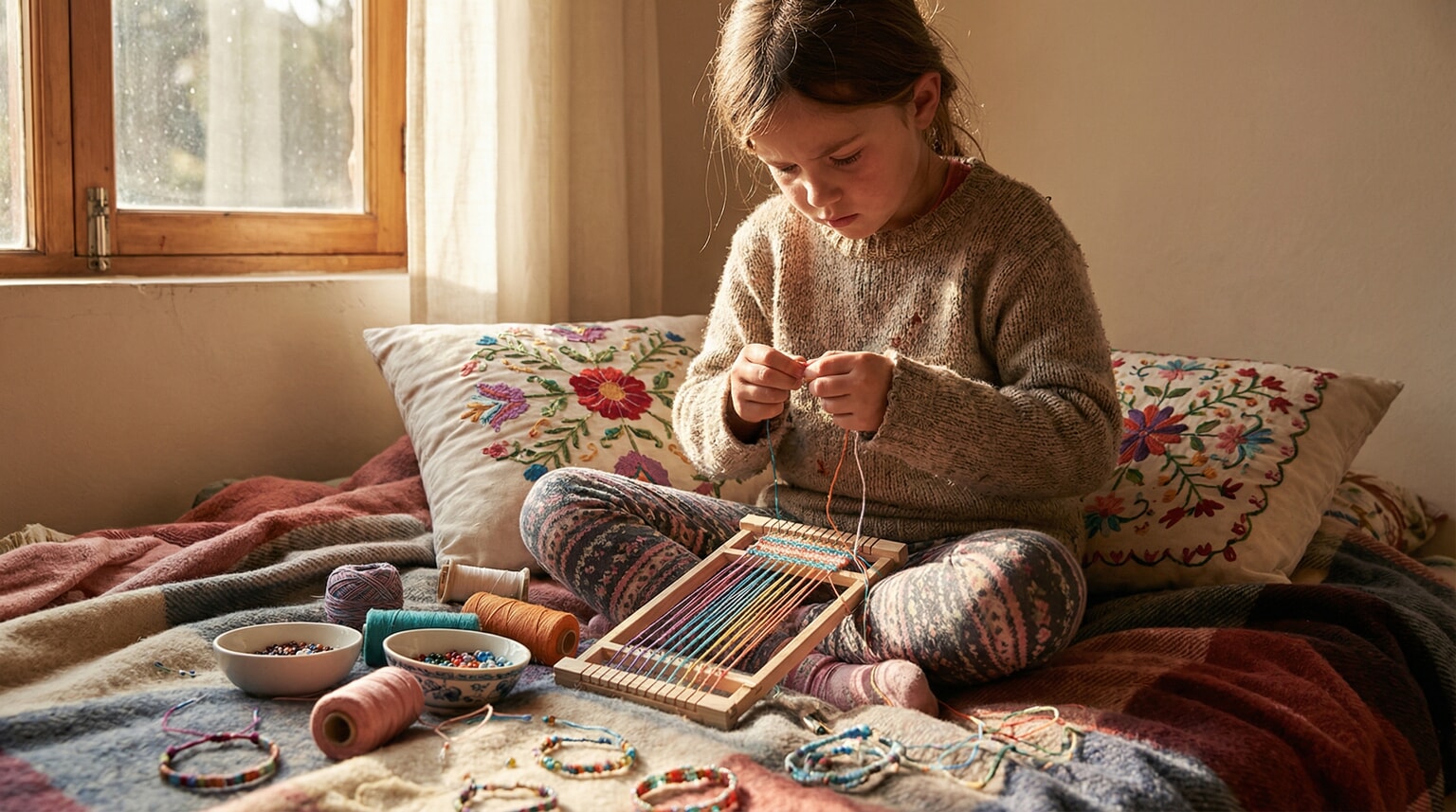
When my 10-year-old gets absorbed in making friendship bracelets for her cousins, she enters what psychologists call a “flow state”—complete engagement in the task at hand. Time disappears. Worries fade. She’s fully present.
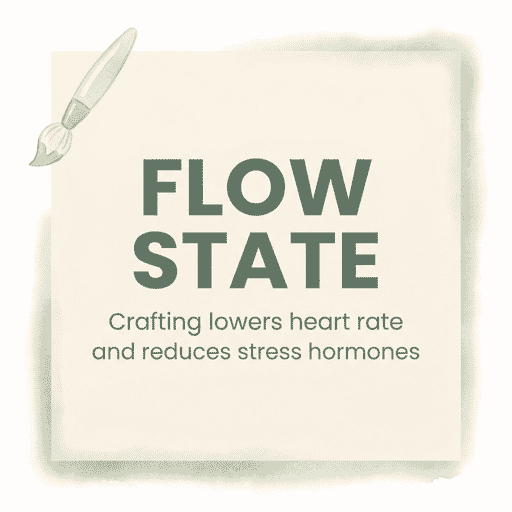
Research on crafting shows that this state shifts attention away from stressors, allowing the mind to find respite and calmness. The repetitive, rhythmic motions in activities like beading, knitting, or painting can actually lower heart rate and blood pressure.
Art therapy manager Tammy Shella explains why creation is particularly powerful: “The main idea of art therapy is to utilize art as another form of expression, especially for things that might be difficult to express verbally.”
For children, this is huge. Your 6-year-old might not have words for how much she loves her teacher. But she can draw a picture of them together surrounded by hearts. The gift becomes a love letter in a language she can actually speak.
When children complete a project, they gain confidence. Research confirms that DIY crafting boosts self-esteem “by providing a sense of accomplishment and pride.” That finished gift represents proof of their capability—something they made with their own hands that’s worthy of giving to someone they love.
The Memory Effect: Why Handmade Gifts Last Longer in Hearts
Every parent knows some gifts get forgotten within days. But homemade gifts? They tend to stick—for both giver and receiver.
Effort investment creates stronger memory encoding. When your child spends an afternoon painting a picture for Dad, they’re building detailed memories of the creation process. They remember choosing the colors. They remember what went wrong and how they fixed it. They remember the anticipation of giving it.
This connects to why gifts that create lasting memories often outperform expensive toys in long-term emotional value. The memory isn’t just of receiving or giving—it’s of the entire experience surrounding the gift.
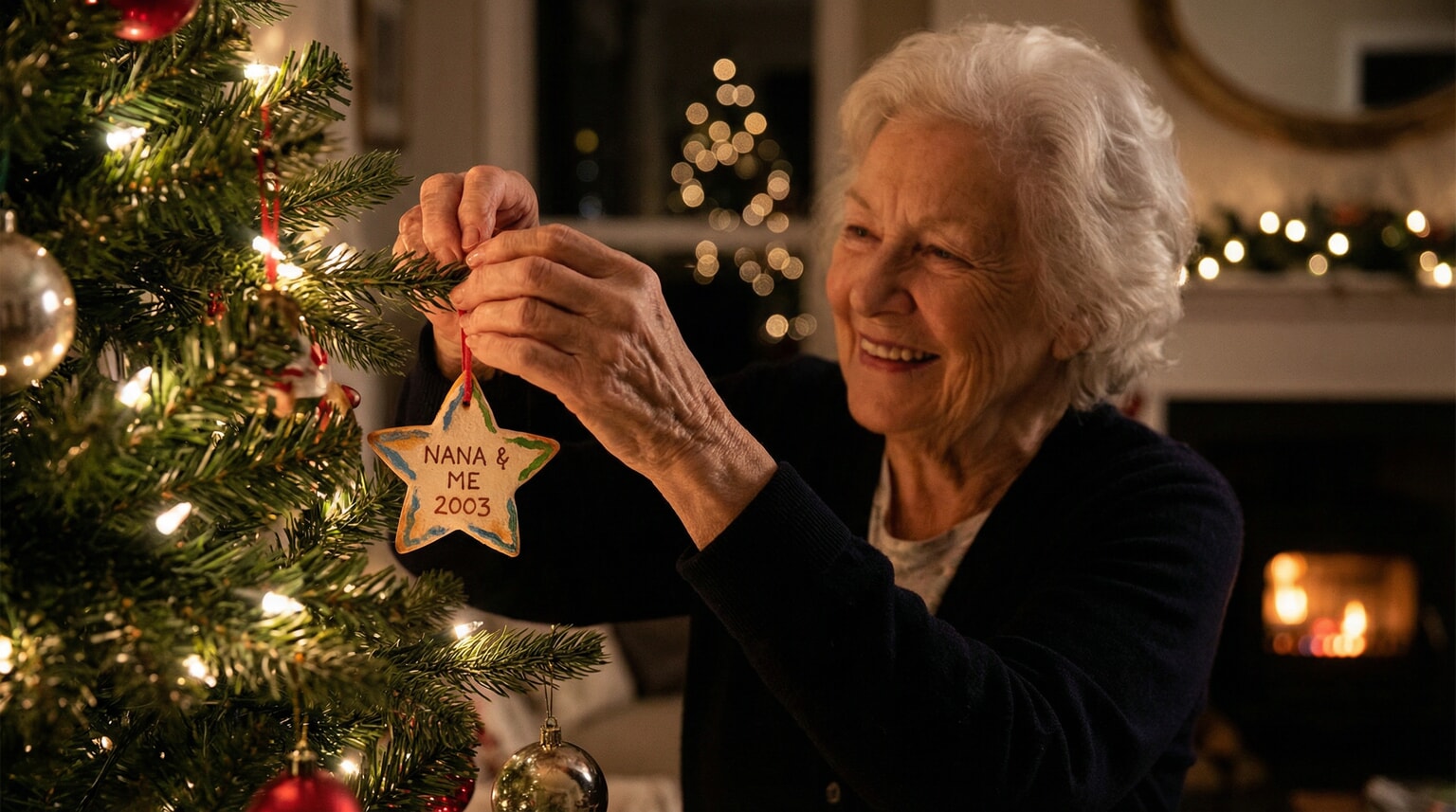
Recipients remember effort-backed gifts longer too. That handmade ornament gets displayed year after year, each viewing triggering memories of the child who made it. Meanwhile, purchased gifts blur together in memory.
The tradition-building potential here is significant. Annual gift-making creates family rituals. In my house, the kids know December means making cookies for neighbors and cards for grandparents. These traditions become part of family identity—shared memories that accumulate year over year. For more ideas on building family gift traditions that stick, the research on ritual-building is worth exploring.
Applying the Mechanisms: Getting Started
Understanding the “why” matters because it helps you support the process more effectively. The mechanisms stay the same regardless of your child’s age—what changes is the complexity of what they can create.
Around age 4, when perspective-taking ability emerges, gift-making becomes truly meaningful. Before this, children can create, but the “for someone else” concept is limited. Starting around 4-5, children can begin considering what a specific person might enjoy.
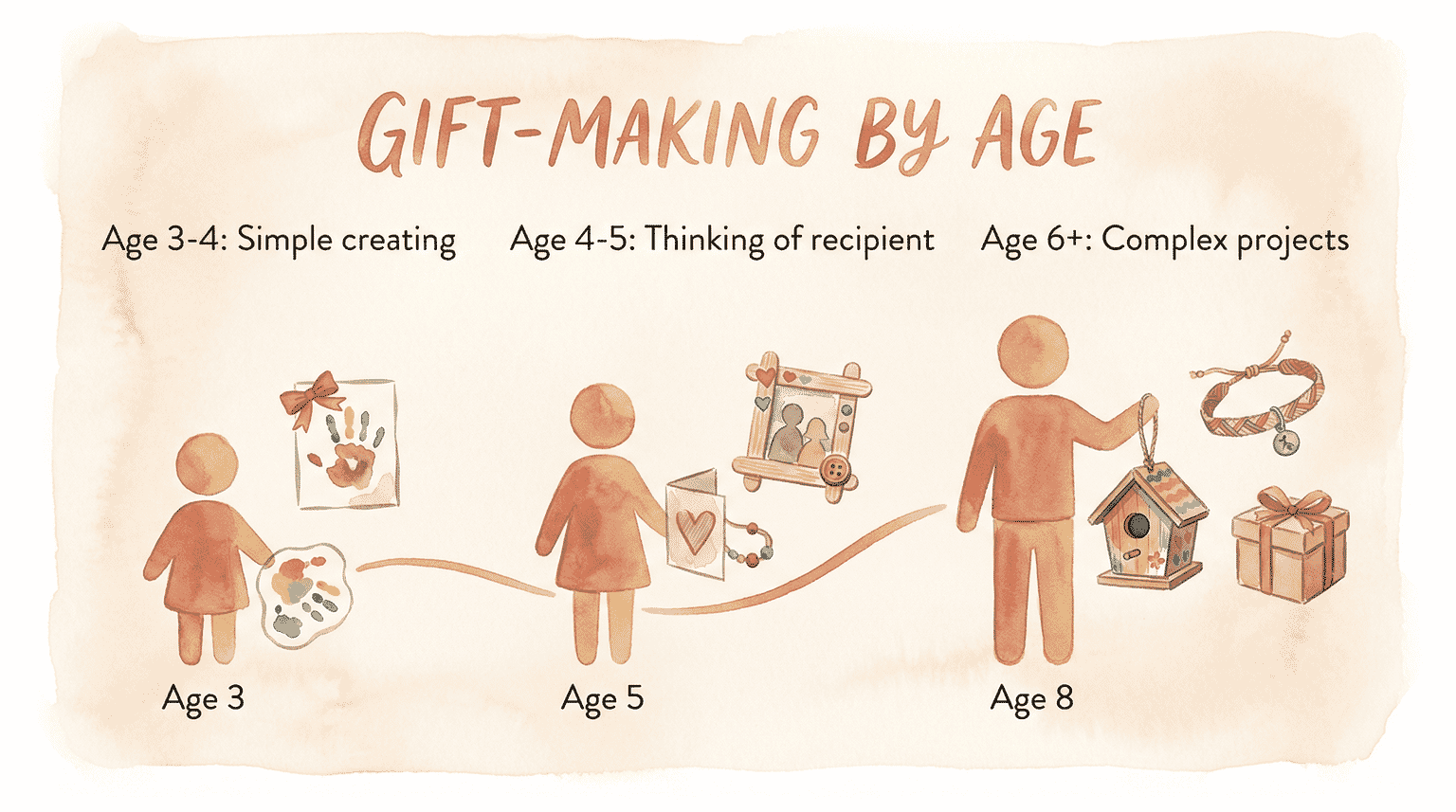
The 4-H Activity Guide provides helpful time estimates: bath fizzies take about 20 minutes and work for all ages, while more complex projects like homemade bread (60 minutes) suit older elementary kids. Match project complexity to your child’s fine motor skills and attention span.
The key insight: don’t focus on perfection. Focus on effort. A lopsided clay bowl made with genuine care activates all three mechanisms just as powerfully as a Pinterest-perfect creation. Maybe more so, because the effort is more visible.
Recipient Response: How Adults Can Honor the Gift
Here’s something I wish someone had told me earlier: how recipients respond to homemade gifts either reinforces or undermines everything your child just experienced.
When Grandpa makes a big deal about the handmade card—reading it aloud, displaying it prominently, mentioning it weeks later—he’s validating your child’s effort and amplifying the helper’s high. When a recipient glances at a gift and sets it aside, the opposite happens.
This means preparing recipients matters. A quick text to grandparents before the visit—”Sarah made you something she’s really proud of”—primes them to respond appropriately. You’re not being manipulative; you’re protecting your child’s growing generosity from accidental dismissal.
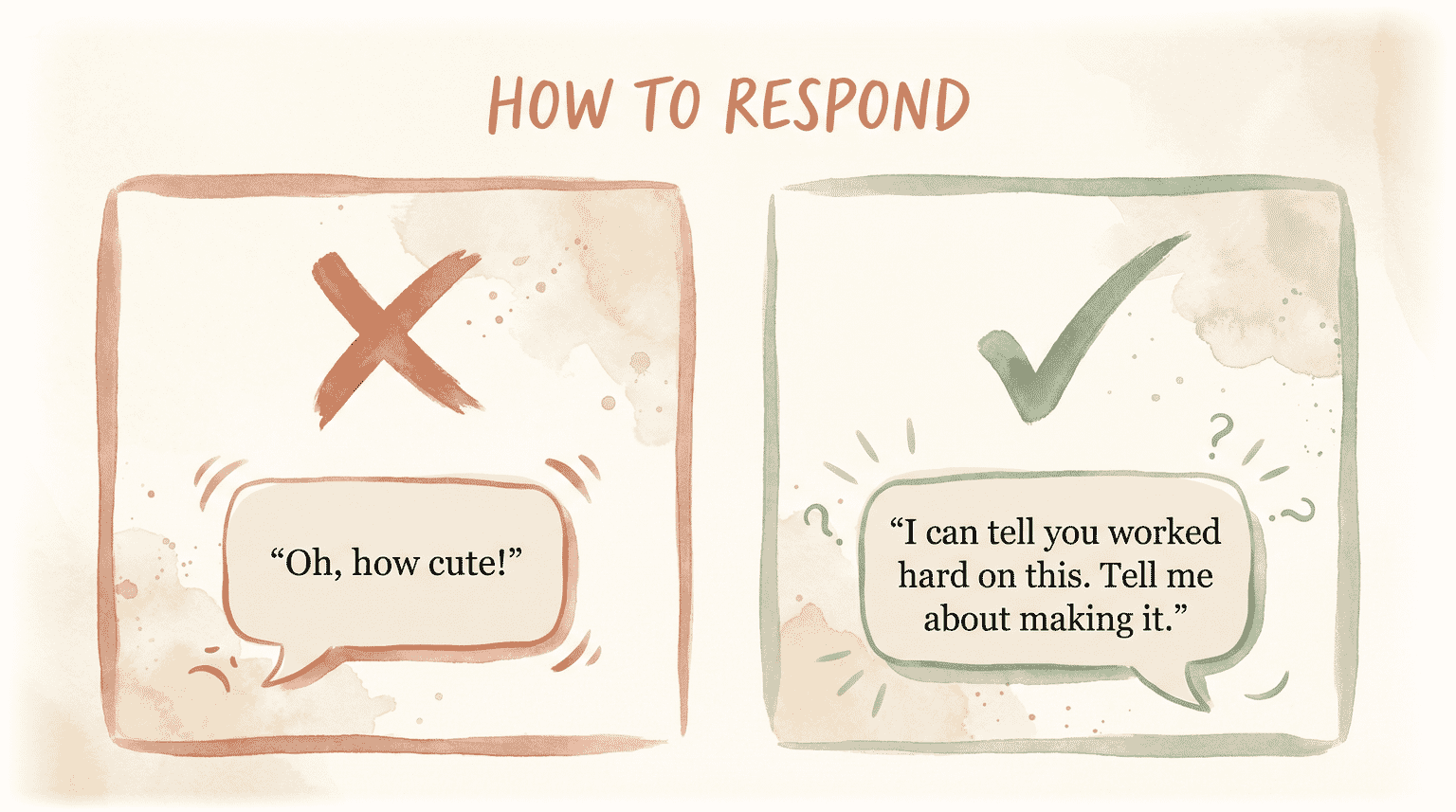
Appropriate responses honor effort over outcome:
The goal isn’t performative enthusiasm. It’s genuine acknowledgment of what the gift represents—time, thought, and care directed at the recipient.
The Mechanisms Make the Meaning
Understanding why homemade gifts matter transforms how we support our kids in making them.
The effort heuristic means we let projects take time—rushing defeats the purpose. The helper’s high means we protect the giving moment, not just the making process. The empathy engine means we encourage kids to think about recipients throughout creation, not just at the end.
In my house, this looks like asking “What do you think Grandma will say when she sees this?” while they’re still gluing. It means not fixing their “mistakes” because imperfection proves effort. It means treating the giving as importantly as the making.
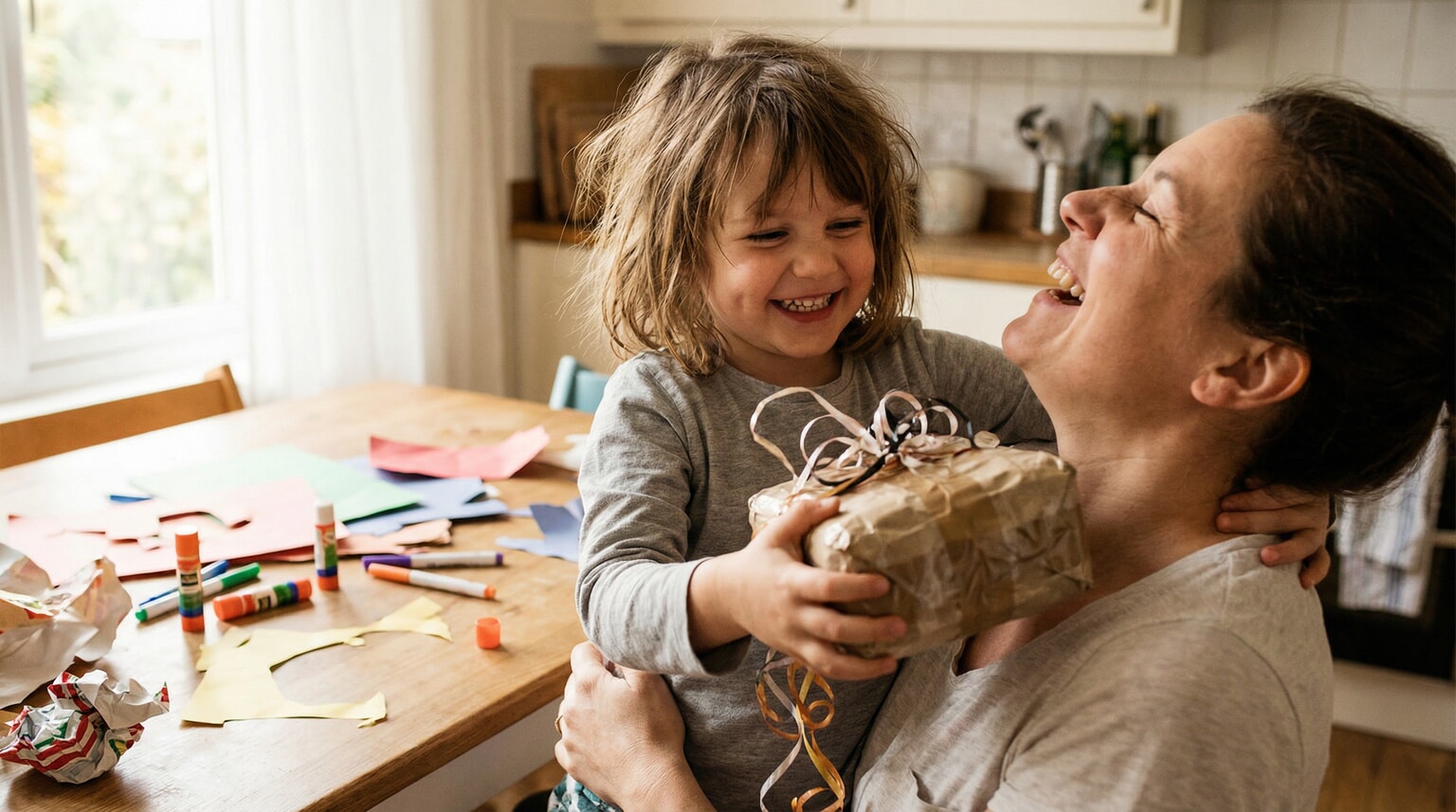
The next time your child hands you a lopsided creation wrapped in too much tape, you’ll know exactly what you’re holding: not just craft supplies transformed, but your child’s effort, empathy, and heart—made tangible.
Frequently Asked Questions
Why do homemade gifts mean more than store-bought?
Homemade gifts signal effort, which humans instinctively interpret as care. Research shows handmade items are valued as “extensions of the self”—they carry the maker’s identity in ways purchased items cannot. When children create for someone they love, the gift represents invested time and thought, not just money.
At what age can kids start making meaningful gifts?
Children develop the cognitive capacity for perspective-taking around age 4, which is when gift-making becomes truly meaningful rather than just craft time. Before this, children can create, but understanding “I’m making this for someone else” is limited. By age 4-5, they can begin considering what a specific person might enjoy.
How should recipients respond to homemade gifts from children?
Honor effort over outcome. Rather than generic praise like “how cute,” try “I can tell you worked really hard on this—tell me about making it.” Display the gift visibly and mention it again later. This response validates the child’s effort and reinforces the helper’s high they experienced from giving.
What if my child’s gift doesn’t turn out well?
Imperfection actually strengthens the mechanism. Visible effort—including “flaws”—signals genuine care more than polished results. The lopsided clay bowl made with love activates the same psychological benefits as a Pinterest-perfect creation. Don’t fix their work; the value lies in their effort, not the outcome.
I’m Curious
What’s the homemade gift your child made that you’ll never throw away? Or the one that made a grandparent cry? I’ve got a lopsided clay “jewelry dish” from my now-teenager that still sits on my dresser. Would love to hear which kid creations became treasures in your family.
These stories always remind me why the wonky ones matter most.
References
- Children expect others to prefer handmade items – Research on why handmade items are psychologically valued as “extensions of self”
- Creating Homemade Blocks for Young Children – Purdue research on developmental benefits of homemade play materials
- Thoughtful Treasures Bring Joy – NIH research on helper’s high and prosocial benefits of giving
- The Therapeutic Benefits of DIY Crafting – Research on flow state and emotional benefits of creation
- Fun, Meaningful Kids’ Gifts that Promote Kindness – Developmental insights on empathy building
- 4-H Inspire Kids to Do Activity Guide – Age-appropriate gift-making activities with time estimates

Share Your Thoughts