

Your child rattled off “thank you” at the birthday party—but you could tell she didn’t mean it. Here’s the thing: real gratitude isn’t about manners. It’s a muscle. And like any muscle, it needs daily exercise to get stronger.
That’s not my analogy—it comes from CHOC mental health therapist Elizabeth Mu. The good news? You don’t need elaborate activities or 30-day challenges. You need four simple touchpoints woven into routines you’re already doing.
Key Takeaways
- Gratitude is a muscle that needs four daily touchpoints to grow stronger
- Parents who practice gratitude feel closer to their kids—regardless of how challenging the day was
- Kids as young as six can tell the difference between genuine and forced gratitude
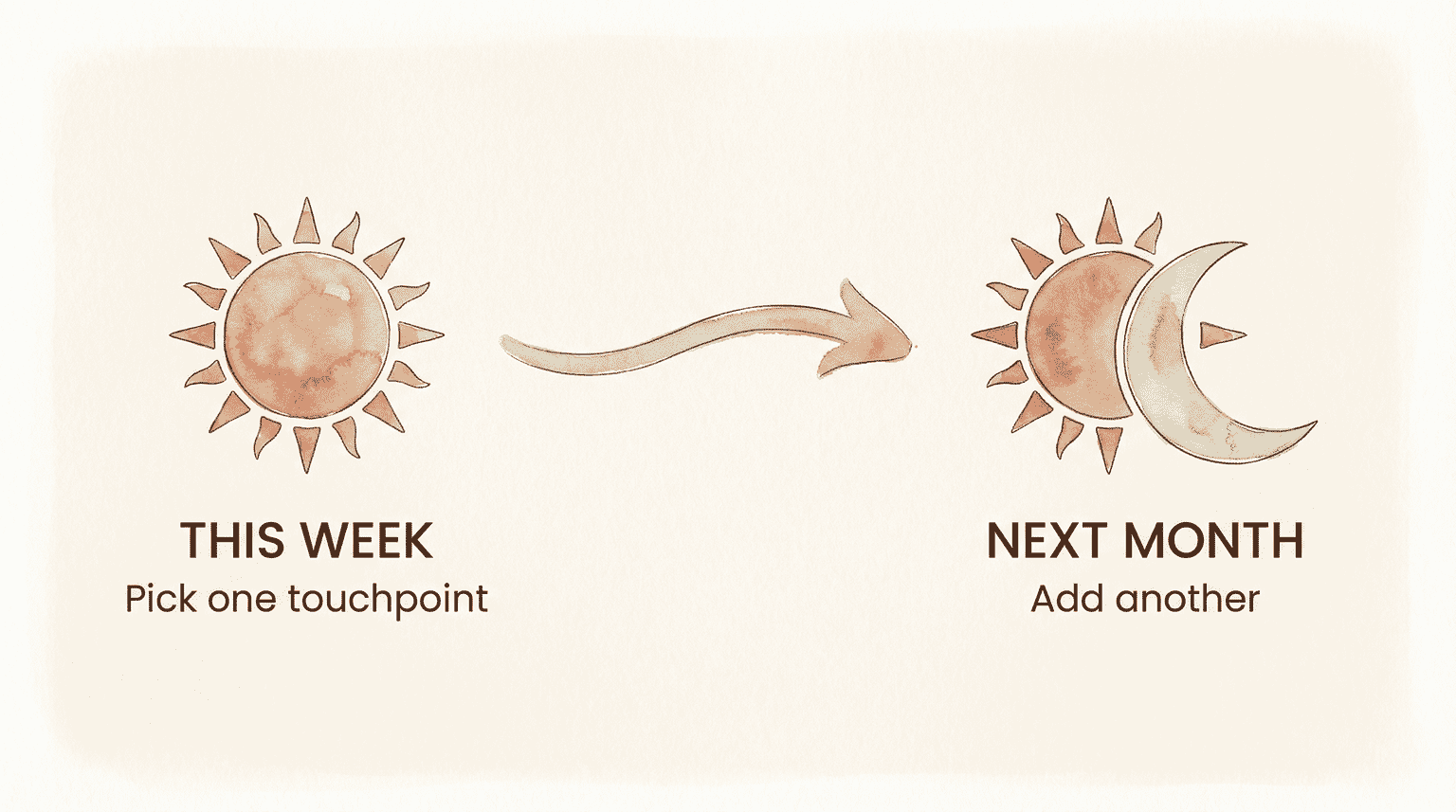
- Start with one touchpoint this week and add another next month
The Four Daily Touchpoints
Morning: At breakfast or while getting dressed, ask: “What’s one thing you’re looking forward to today?” Takes 30 seconds. Builds anticipatory gratitude before the day even starts.
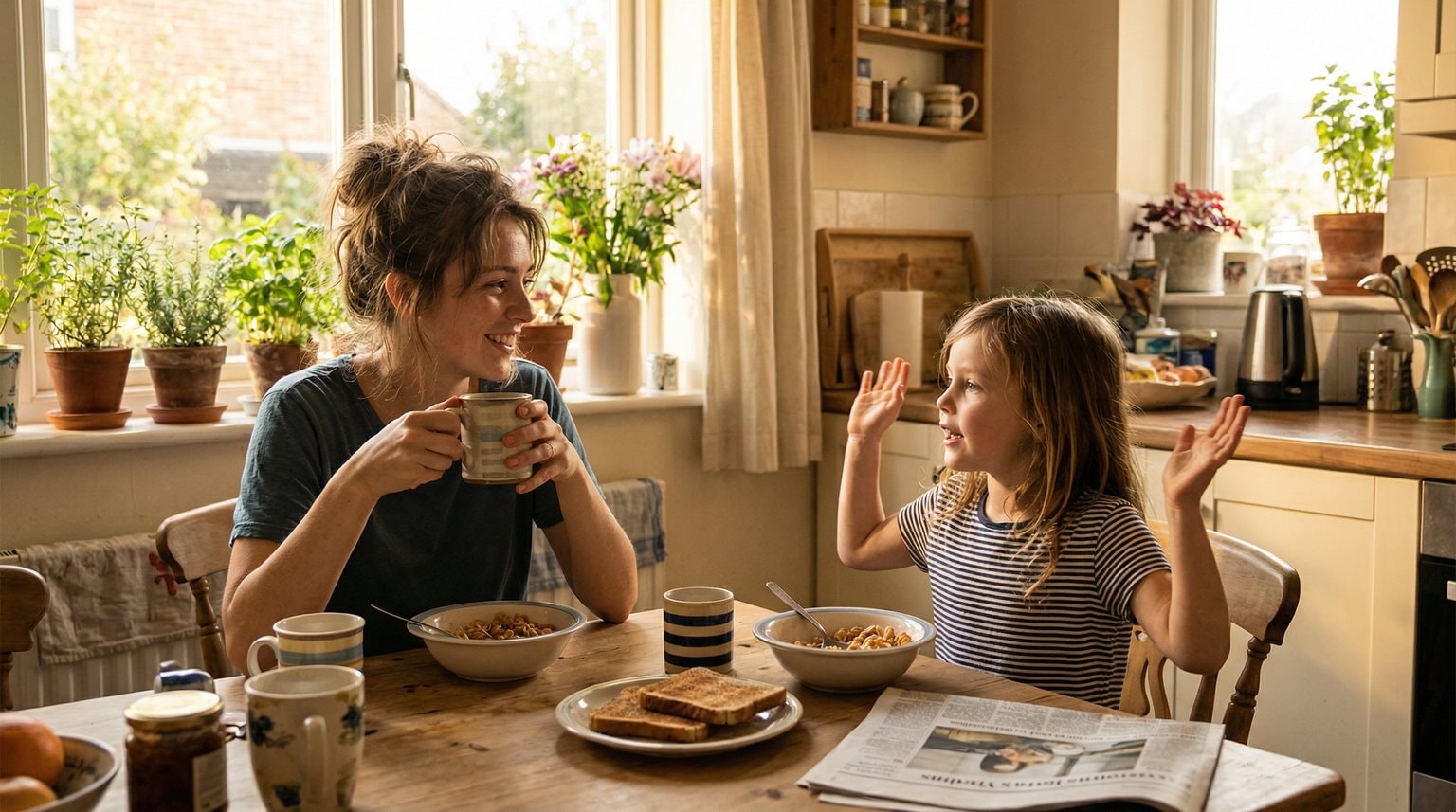
Dinner: Each person shares one good thing from their day. UC Berkeley researchers found that parents who practice gratitude experience greater closeness and less conflict with their kids—regardless of how challenging the day was.
This kind of family ritual builds connection over time. Go first. Your modeling matters more than any prompt.
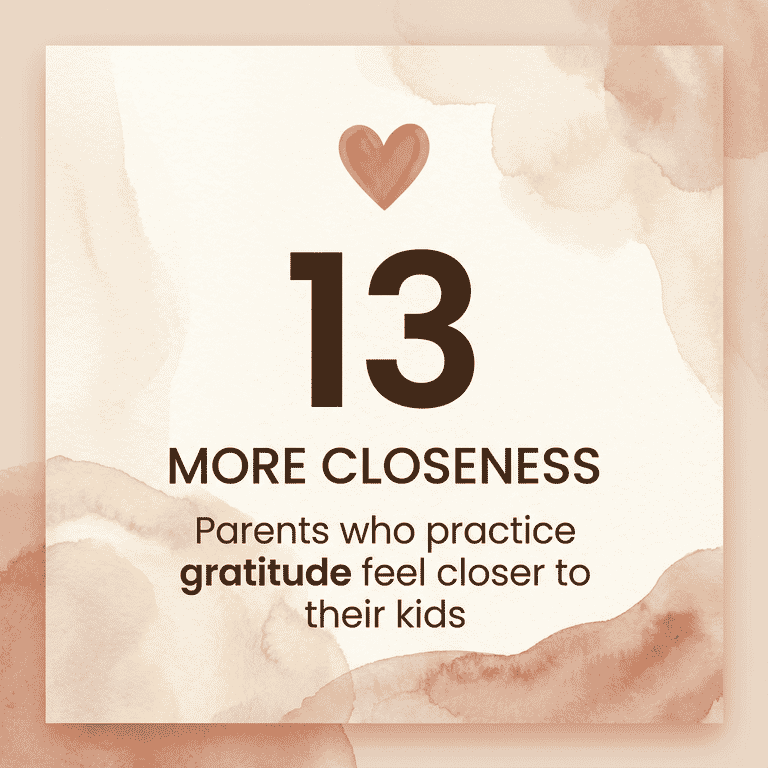
The research is clear: when parents make gratitude a regular practice, the whole family benefits. It’s not about being perfect or having picture-perfect dinners.
Even on hard days—especially on hard days—finding one small thing to appreciate together creates a buffer against stress and conflict.
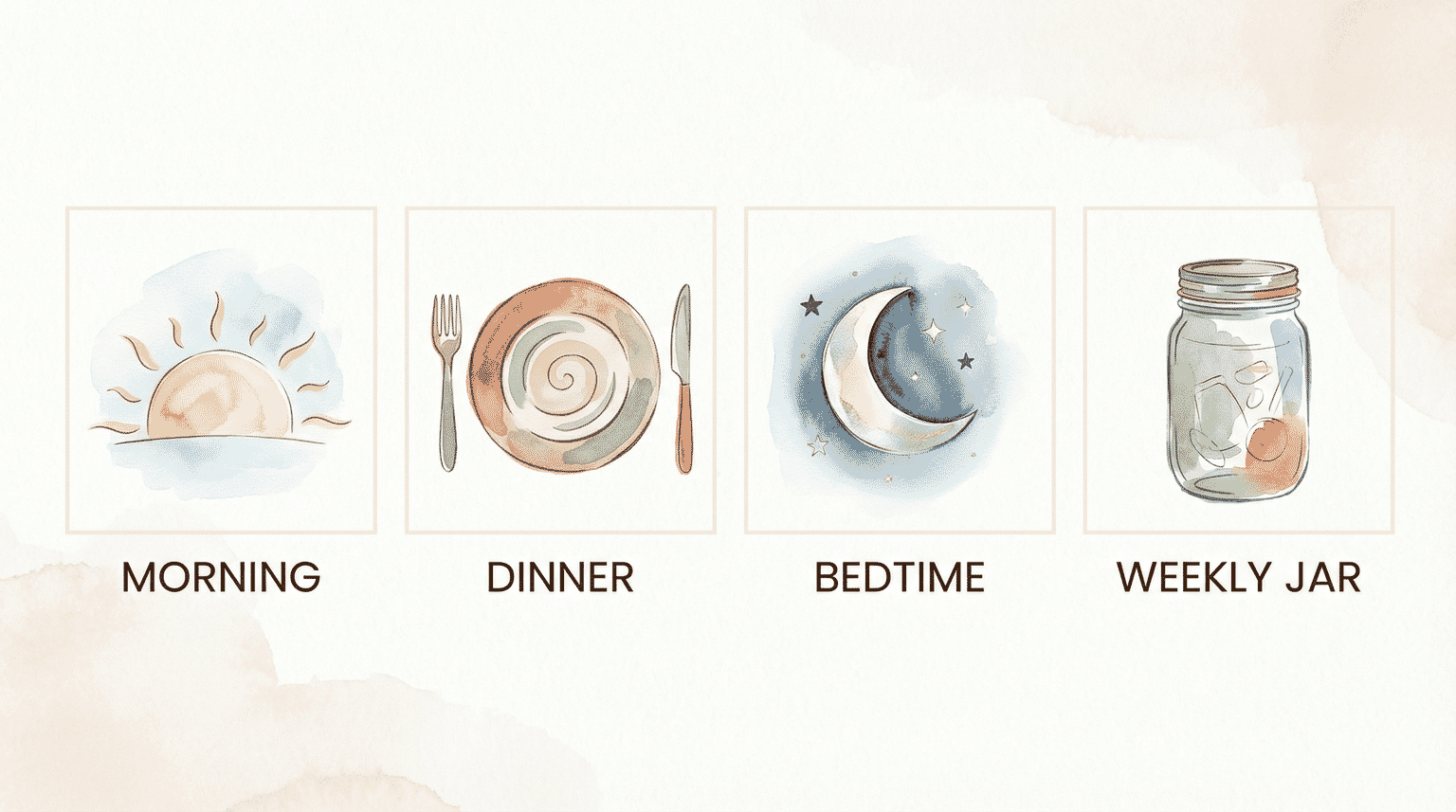
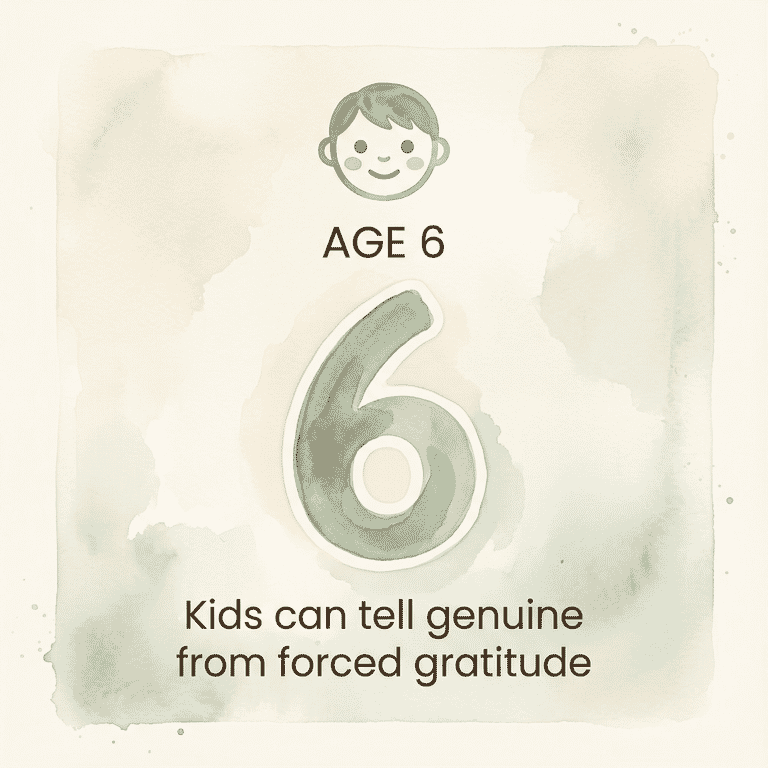
Bedtime: Before lights out: “What made you smile today?” or “Who helped you today?” Keep it simple. Harvard developmental scientist Andrea Hussong notes that even six-year-olds can tell the difference between genuine and forced gratitude.
This is why scripted “thank you” prompts often backfire. Kids sense when we’re going through the motions versus genuinely curious about their inner world.
The bedtime question works because it’s low-pressure. They’re already winding down, reflecting on the day. You’re just giving that reflection a gentle direction.

Weekly Jar: Kids write or draw one grateful moment, add it to a jar. Read them together monthly. This makes abstract gratitude concrete—and gives everyone something to look forward to.
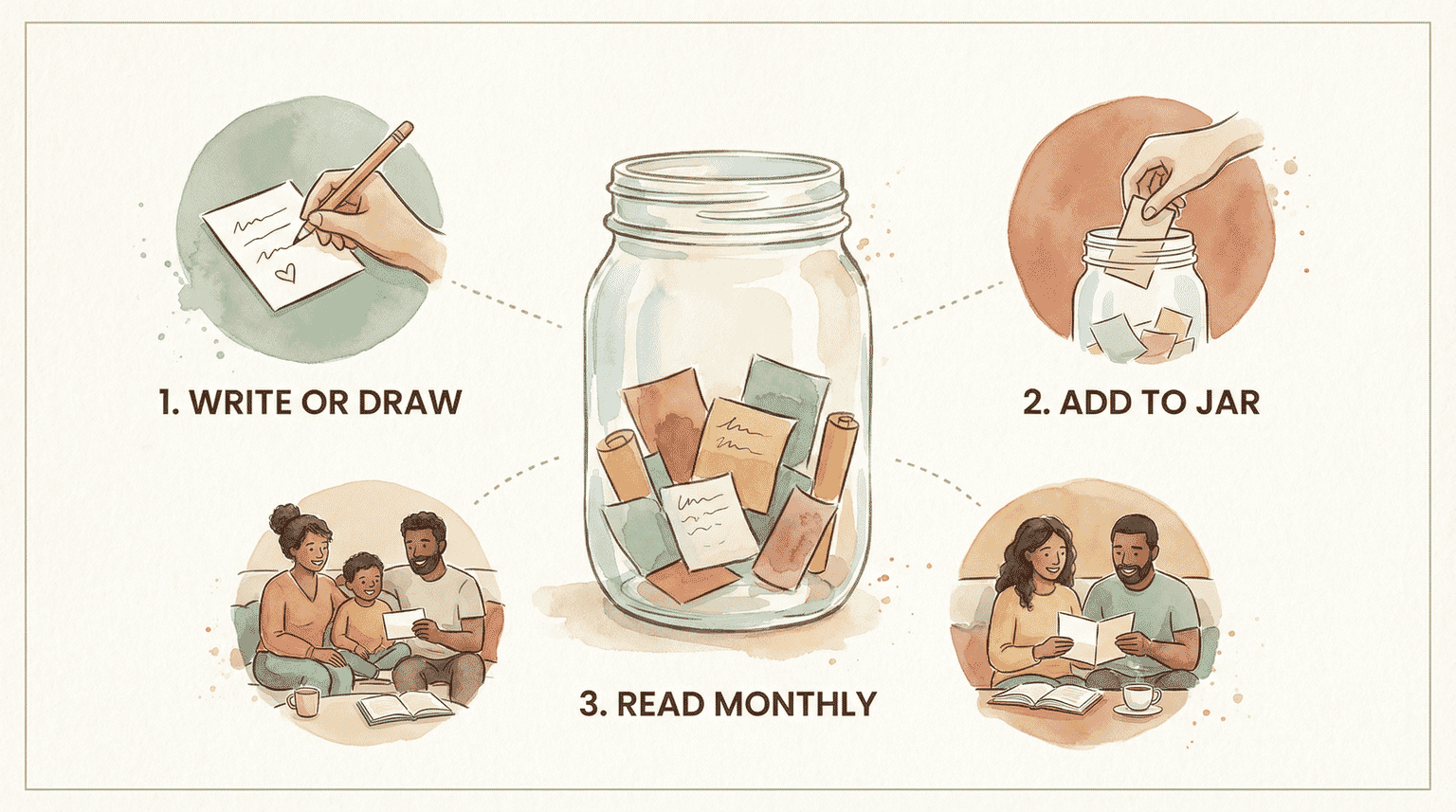
The magic happens when you read them back together. Those small moments you’d otherwise forget become a tangible record of what your family values most.

Getting Started

Pick one touchpoint this week. Add another next month. The goal isn’t perfection—it’s repetition.
For more on teaching kids to value what they receive or understanding why gratitude rituals actually work, we go deeper elsewhere. But this framework? It’s all you need to start tonight.
Join the Conversation
Which daily gratitude practice has stuck at your house? I’m curious whether bedtime or mealtime works better—and how long it took before your kids stopped resisting.

Your experiences help other parents know what actually works in real families.
References
- CHOC Health – Gratitude as mental health practice for children
- Harvard Graduate School of Education – Four components of genuine gratitude
- Greater Good Science Center – Parent gratitude and family relationships

Share Your Thoughts