
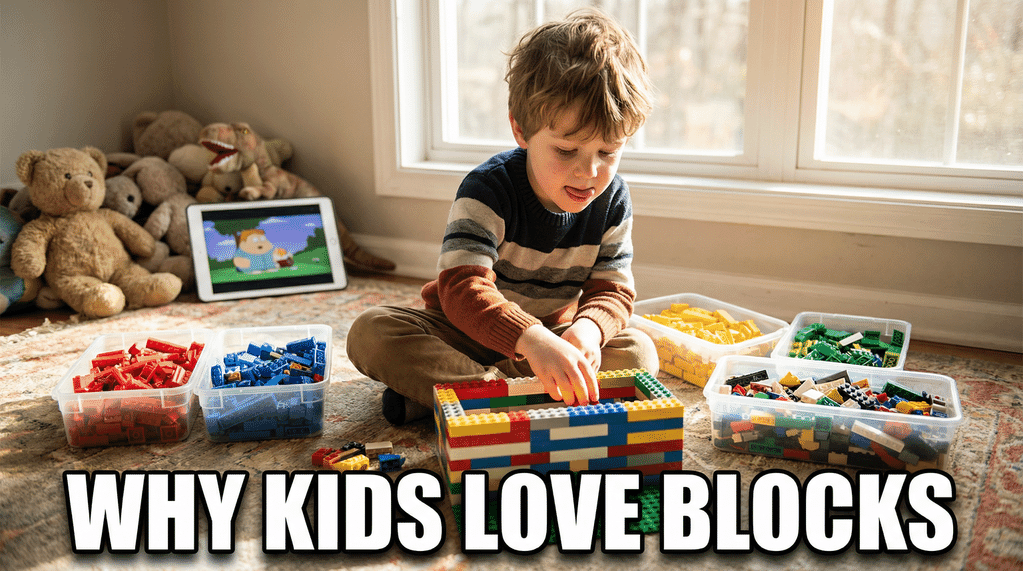
Your 4-year-old has a room full of toys. A tablet within reach. Books, puzzles, dress-up clothes, stuffed animals—the works. And yet, for the third hour today, she’s on the floor with a pile of blocks, building something that vaguely resembles a castle but might also be a rocket ship.
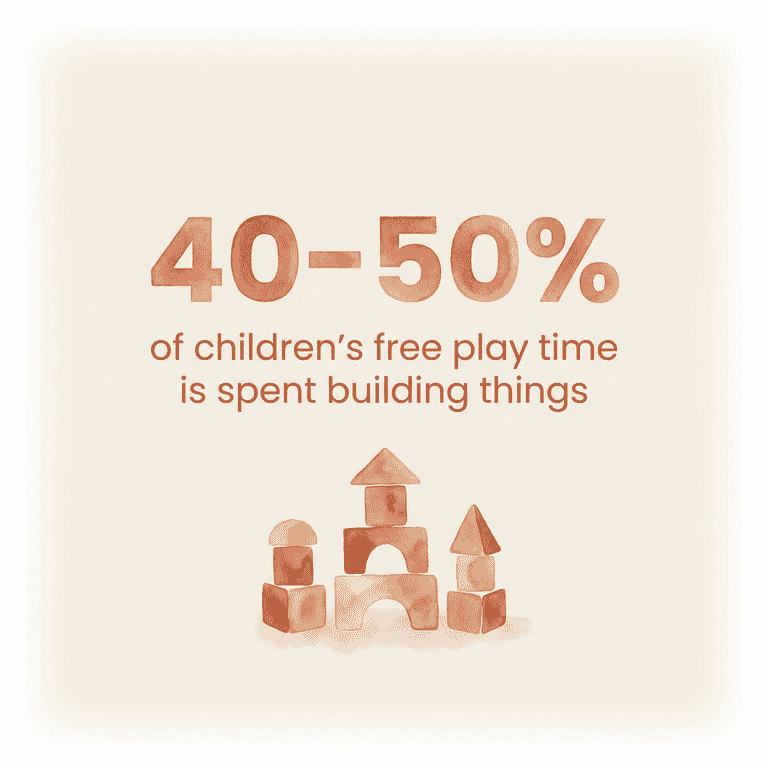
Here’s what I’ve learned watching this scene play out with eight kids: this isn’t random preference. Children spend 40-50% of their free play time building things—a 2024 NIH-indexed study tracking children from ages 3.5 to 6 found this percentage actually increases with age. My librarian brain couldn’t let that go without investigating why.
Turns out, construction toys aren’t just popular—they’re activating specific neurological mechanisms that other toys simply can’t replicate.
Key Takeaways
- Different construction toys develop different spatial skills—LEGO builds mental rotation while magnetic tiles develop mental folding
- Toddlers genuinely struggle with interlocking bricks due to motor development, not lack of interest—only 16% of 10-month-olds can even stack items
- Guided play outperforms free play for construction learning—presence without control is the sweet spot
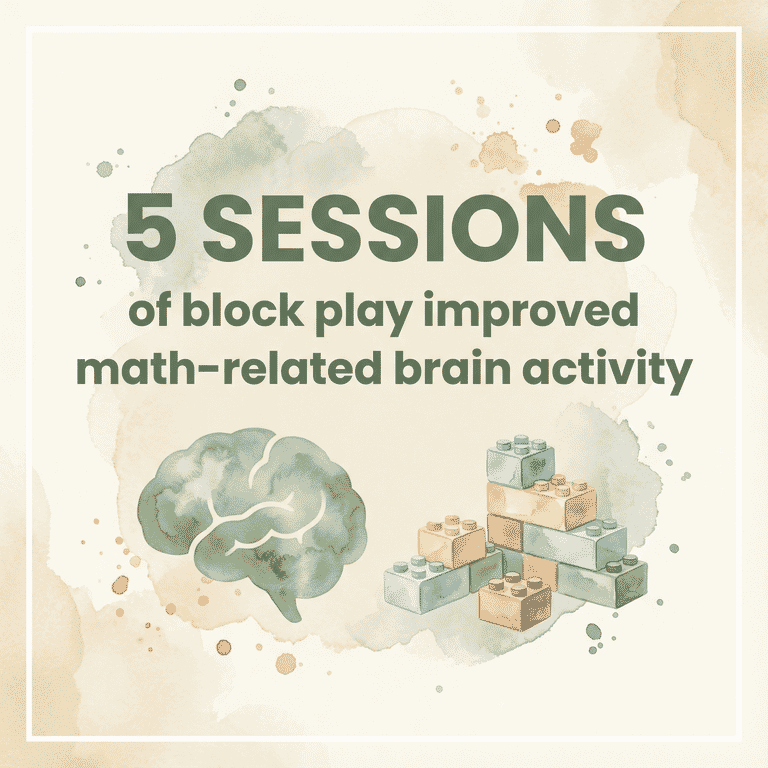
- Five 30-minute block play sessions created visible changes in math-related brain activity on fMRI scans
- The developmental benefit lives in the building process, not the finished product—rebuilding matters more than display
What’s Actually Happening in Your Child’s Brain
When I first dug into the research, I expected to find general “building is good for development” claims. Instead, I found something far more specific: construction toys develop three distinct spatial skills, and different toy types activate different cognitive pathways.
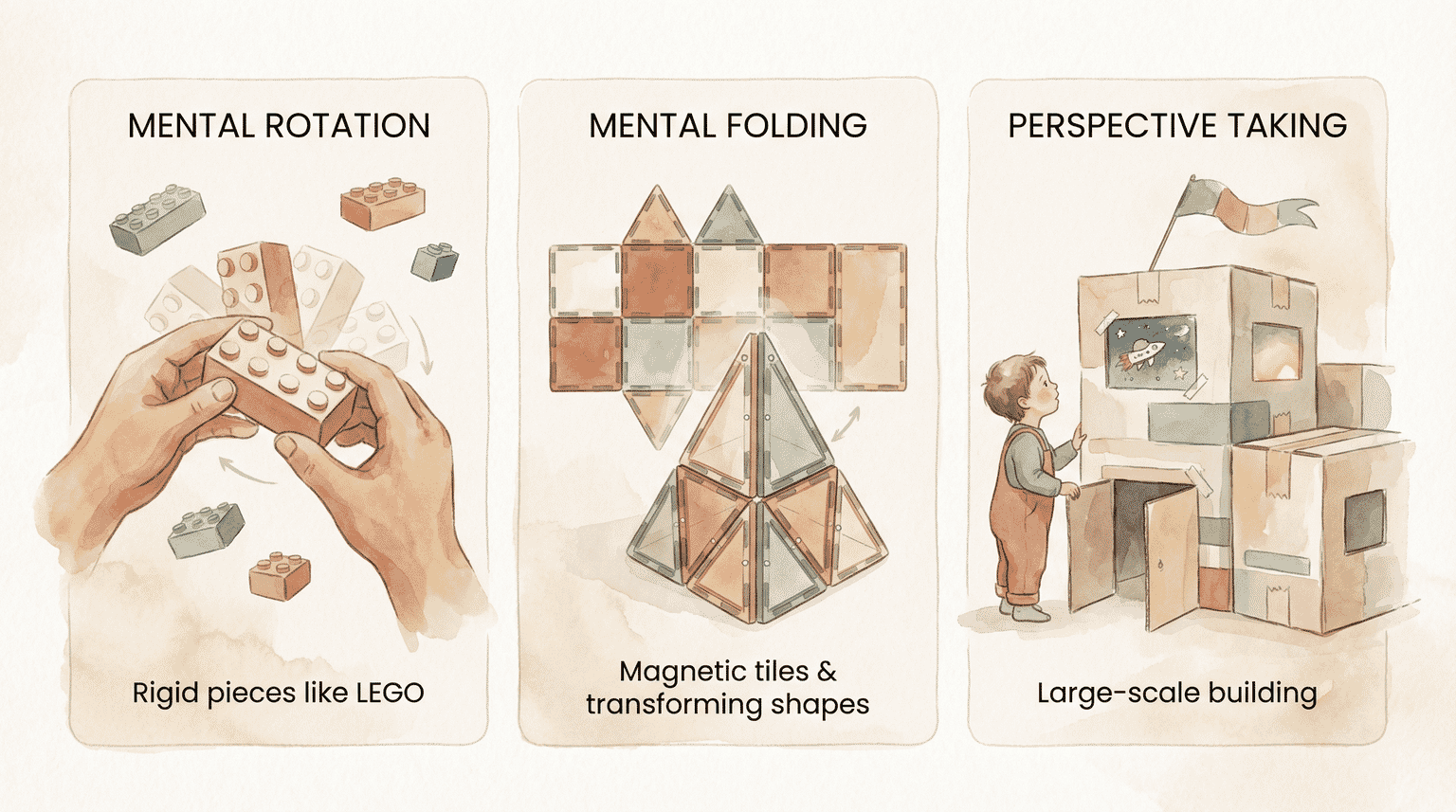
Mental rotation happens when your child manipulates rigid pieces like LEGO bricks—they’re mentally turning objects before placing them, practicing the same skill they’ll later use in chemistry to understand 3D molecular structures or in geometry to reason about angles.
Mental folding activates with magnetic tiles and similar toys that transform from flat shapes into 3D structures. This is what researchers call a “non-rigid transformation”—the shape actually changes, which is cognitively more demanding than rotation.
In my house, I’ve noticed my kids spend longer puzzling over magnetic tile creations than brick builds, and now I understand why.
Perspective taking develops through large-scale construction—the kind where kids build things bigger than themselves. They’re learning to understand space relative to their own bodies, a skill that’s both spatial and social.
This is why the magnetic tile trend isn’t just marketing. These toys develop mental folding in ways that traditional blocks can’t, creating cognitive pathways that research suggests may be even more beneficial than mental rotation for spatial development.
Why Does Your Toddler Struggle with LEGO?
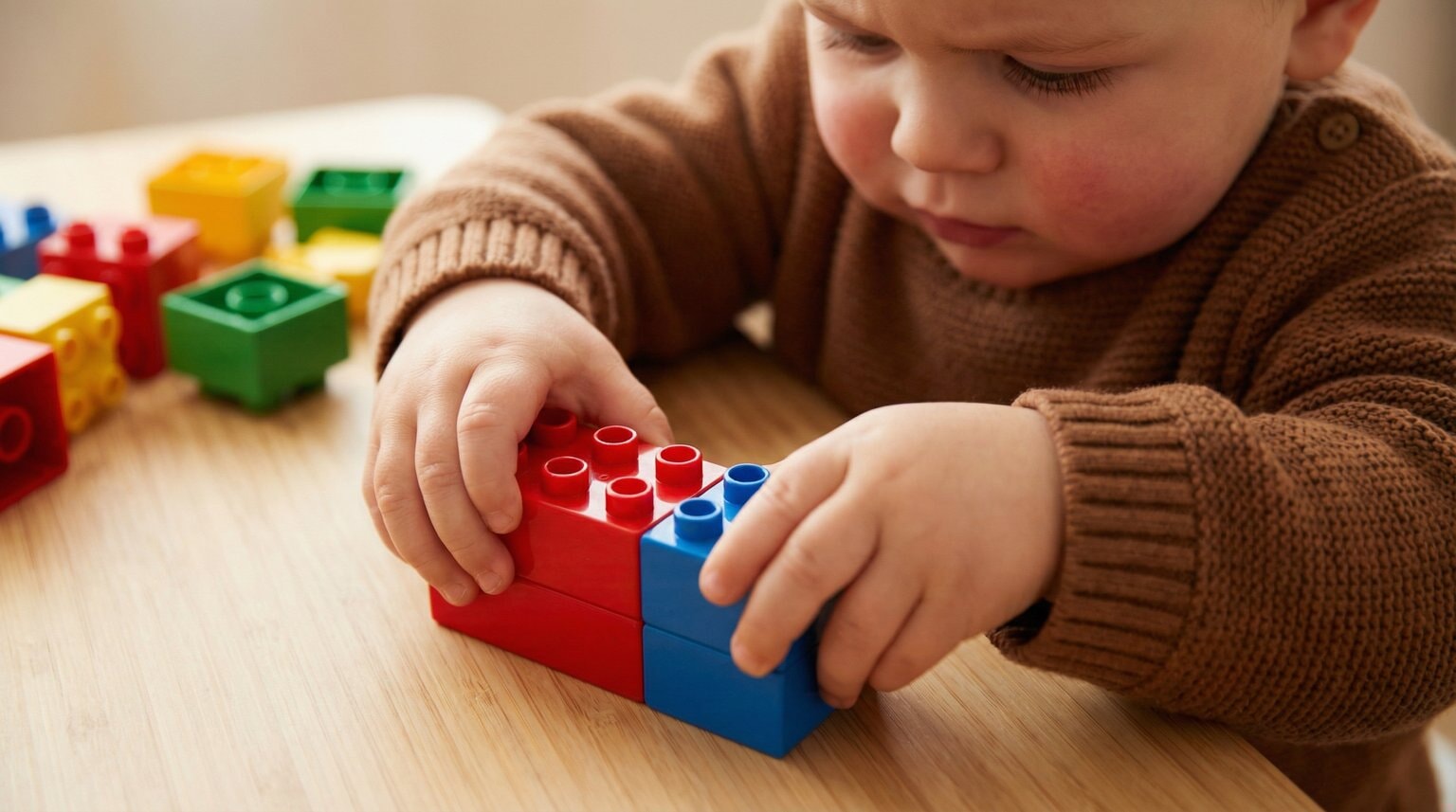
If you’ve ever watched a 2-year-old try to snap Duplo bricks together and felt like maybe something was wrong, let me reassure you: interlocking bricks are genuinely, neurologically difficult.
A 2022 study tracking 91 children from 12 to 60 months identified three specific challenges. First, the designed action isn’t transparent—studs only slightly protrude and don’t obviously suggest insertion. Second, there’s limited perceptual feedback, meaning different attempt types produce similar sounds and sensations. Third, rigid plastic requires precise positioning and substantial force, demanding motor control that’s still developing.
The researchers put it plainly: “Children cannot realize the intended spatial and creative benefits of toy play if they cannot use toys in the ways they were designed to be used.”
Here’s the developmental reality: only 16% of 10-month-olds can stack items. By 12 months, it’s 45%. By 24 months, most children can stack six or more blocks—but that’s stacking, not interlocking. True LEGO building requires even more precision.
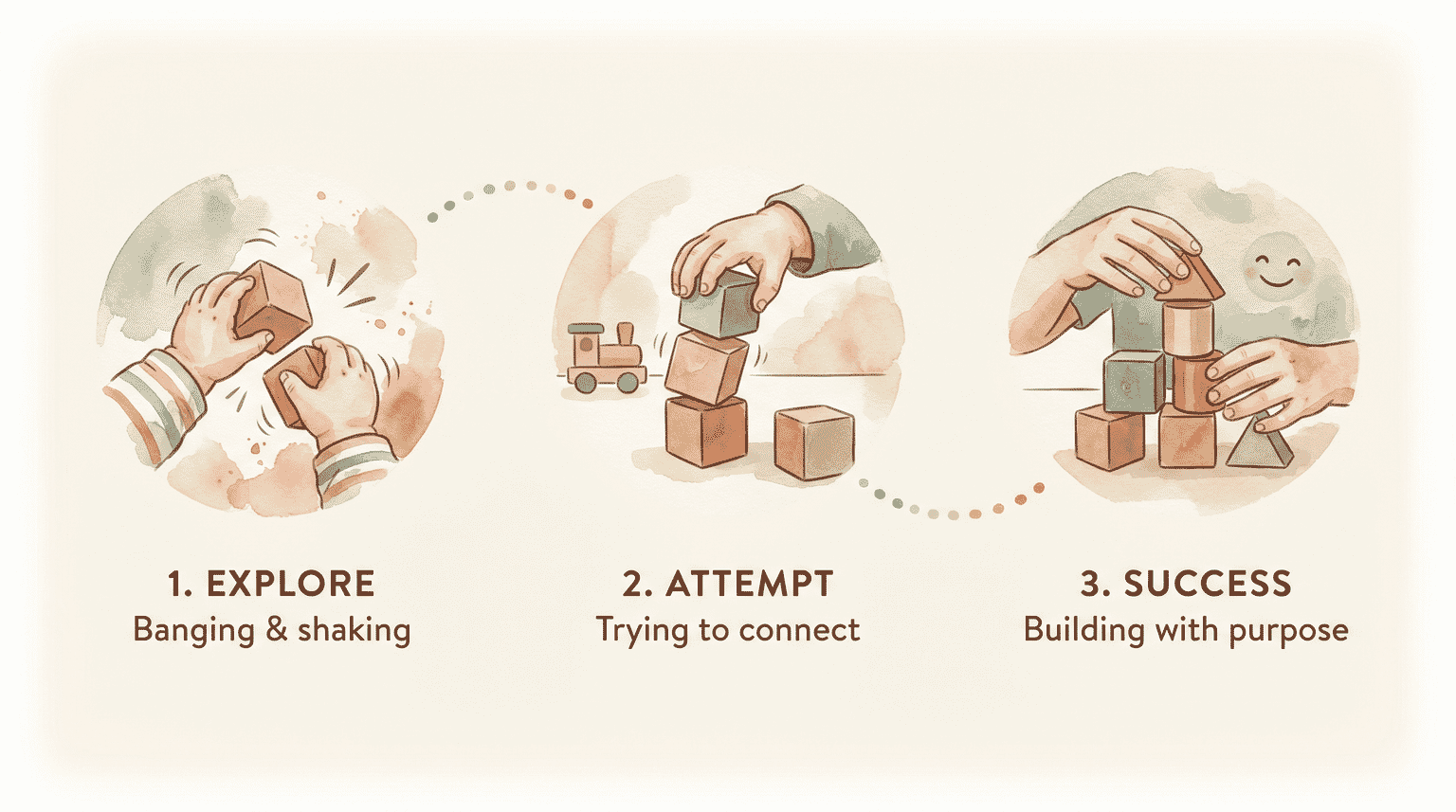
I’ve watched all eight of my kids go through the same progression: random exploration (banging blocks together), attempting the designed action (trying to connect pieces), and finally succeeding. The study confirmed this is universal.
And here’s what surprised me—those “random” exploration phases aren’t wasted time. Researchers note that “exploration may lay fundamental groundwork for more advanced actions.” So when your toddler is shaking blocks instead of building with them, their brain is doing exactly what it should.
The Guided Play Paradox
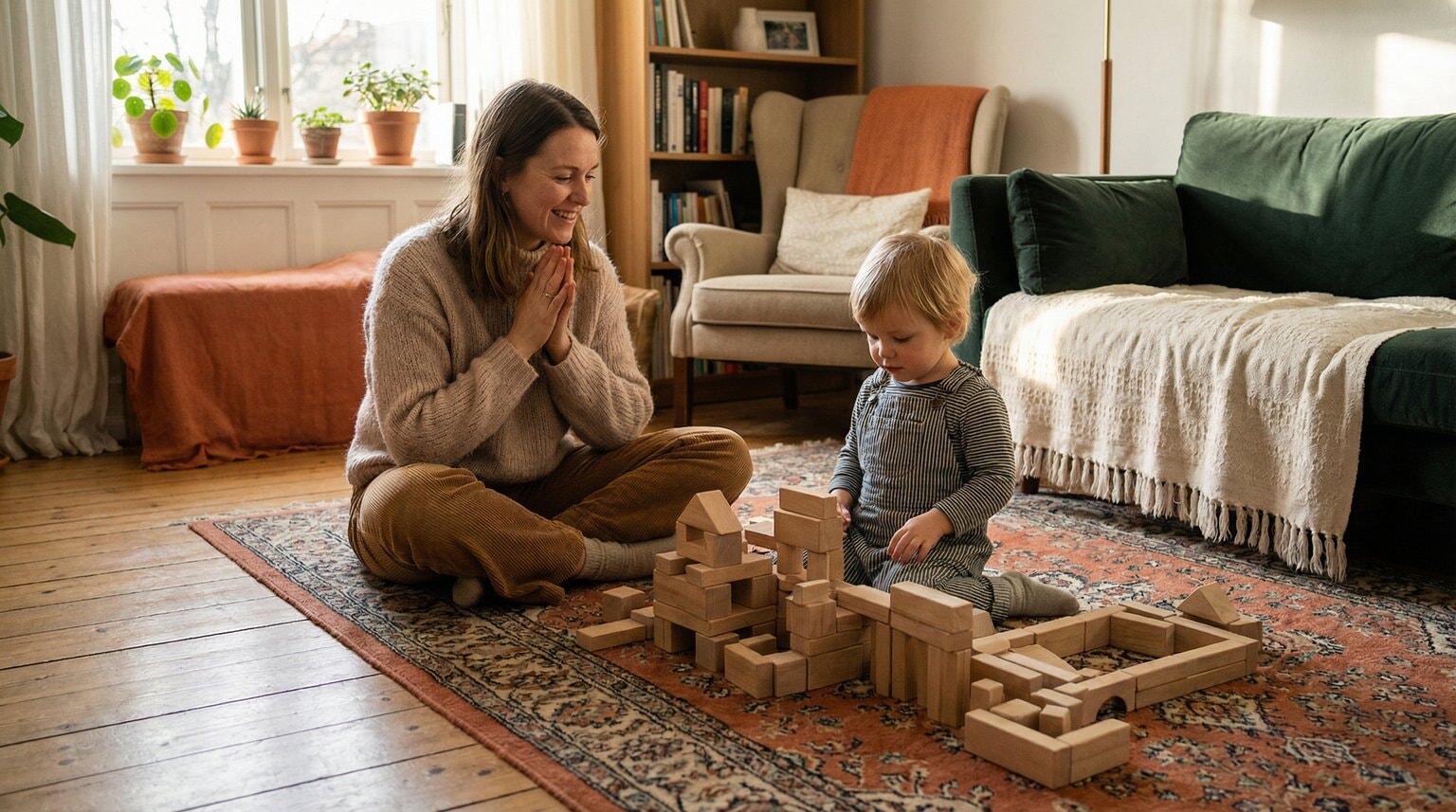
This finding genuinely challenged my assumptions. I’d always believed free play was the gold standard—let kids explore, don’t interfere, trust the process.
Then I read a 2022 study of 183 German children aged 5-6 that found something counterintuitive: children in free play groups didn’t improve their stability knowledge. Only guided play groups showed gains.
The researchers explained the mechanism: “In the free play group, however, the children might have experienced many failures, as their buildings tumbled, because they did not know how to stabilize them.”
In other words, unguided construction can create frustration cascades that undermine both learning and motivation. Children’s self-beliefs about their building abilities actually decreased in the free play condition but remained stable with scaffolding.

What does effective scaffolding look like? Not directing, but:
- Promoting perception of challenge (“This is tricky—I bet you can figure it out”)
- Highlighting achievements
- Asking children to explain their reasoning
- Providing visual examples to try
I’ve noticed this in my own house. When I sit nearby and occasionally ask “What are you building?” or “How will you make that part stay up?”, my kids build longer and more ambitiously than when I completely disappear. The sweet spot is presence without control.
The STEM Connection That Shows Up on Brain Scans
Here’s where my inner research librarian gets genuinely excited. Developmental psychologists have documented that after just five 30-minute sessions of structured block play, 8-year-olds showed improved addition and subtraction performance—and fMRI scans revealed increased activation in the brain regions associated with arithmetic processing.
Let that sink in: building with blocks creates visible changes in math-related brain activity.
Longitudinal research goes even further. Studies following children over time found that the complexity of construction play at age 4 predicts mathematics achievement in high school, even after controlling for IQ.
This isn’t correlation—researchers have identified the mechanism: construction toys strengthen neural pathways through repeated spatial manipulation that transfers directly to mathematical reasoning.
For parents wondering whether to prioritize building toys, construction naturally blends with imaginative play around ages 4-5, creating a dual developmental benefit. My 6-year-old doesn’t just build structures—she builds elaborate settings for stories, combining spatial reasoning with narrative development.
Why Building Satisfies Differently Than Screens
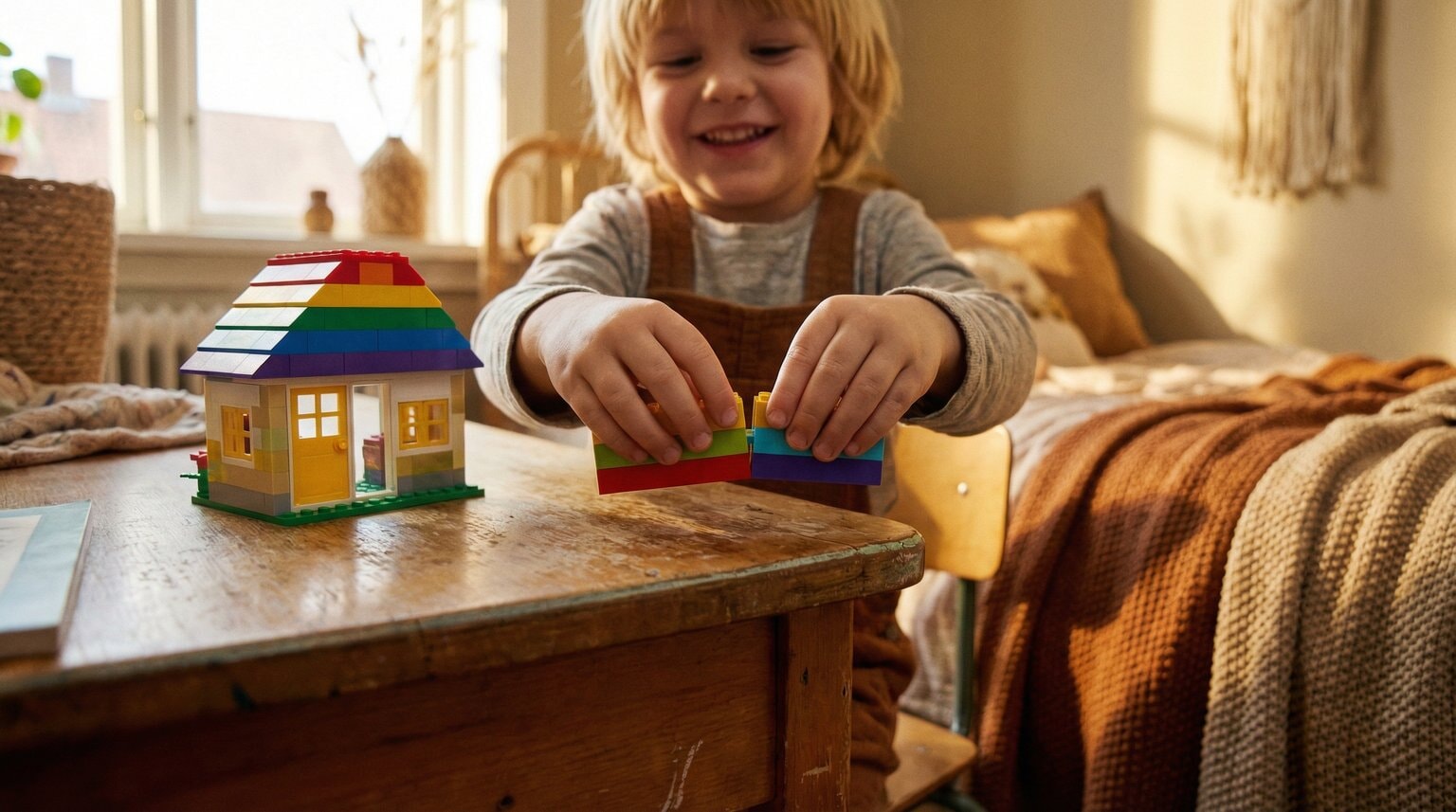
I’ve got eight kids and a house full of screens. I’m not anti-technology. But I’ve observed something that research confirms: construction toys provide a different kind of satisfaction than digital play.
The mechanism involves tangible feedback loops. When pieces connect, there’s immediate physical confirmation—what LEGO researchers call “clutch,” the satisfying sensation of snapping bricks together. When structures fall, children instantly understand why. This physical-to-cognitive transfer cannot be replicated through screen-based activities.

A 2023 Education Sciences study found constructive play accounted for 29% of children’s observed play time—the highest single category among all play types.
Children naturally gravitate toward building because the rewards are concrete, immediate, and entirely their own creation.
For parents specifically looking for screen-free alternatives, construction toys represent one of the few categories that genuinely competes with digital entertainment’s engagement levels.
One additional note: construction play shows no gender differences in outcomes. How children play and benefit doesn’t vary by gender, making building toys a naturally inclusive choice in why tangible play matters in a digital age.
The Emotional Regulation Mechanism
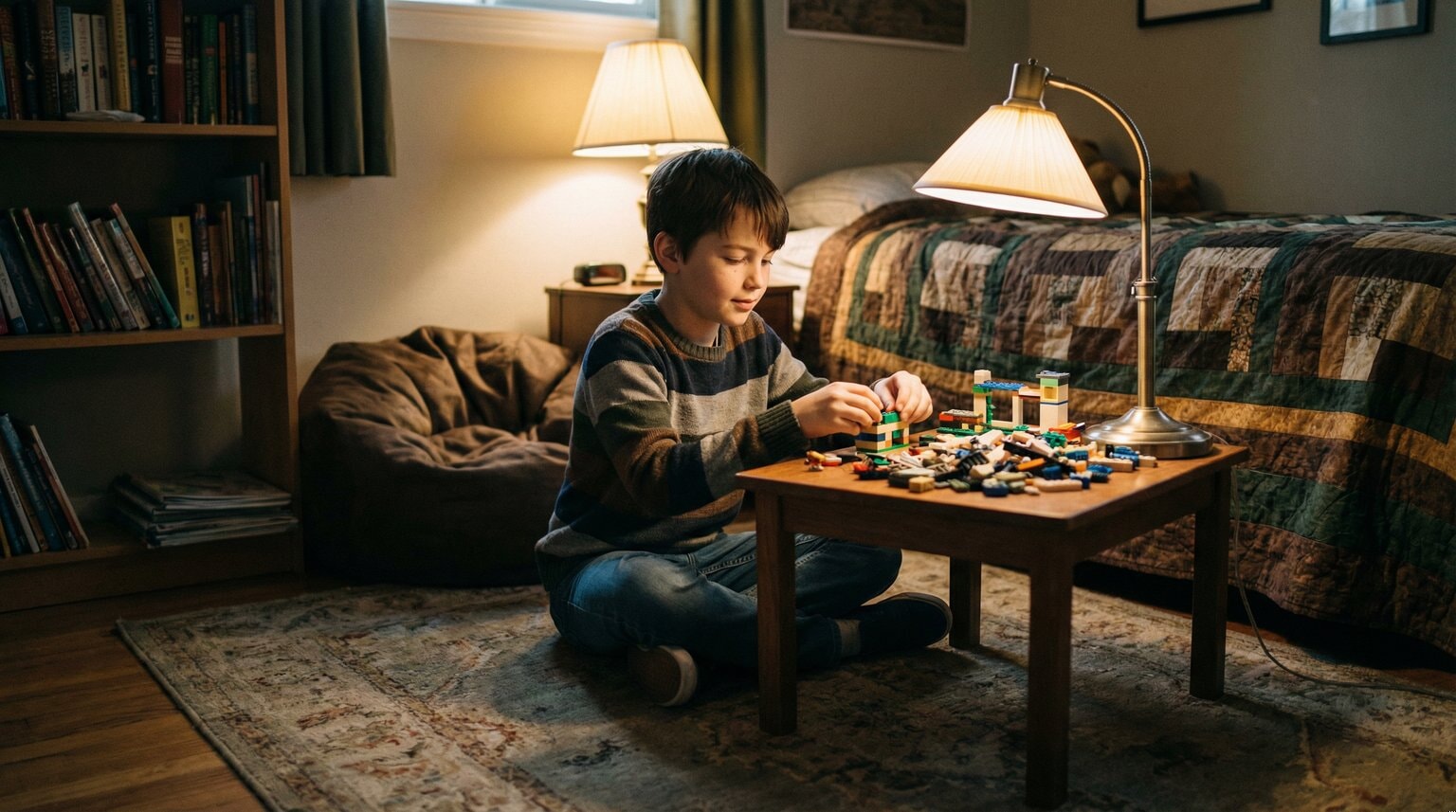
Dr. Scott Glassman of Philadelphia College of Osteopathic Medicine describes something I’ve observed but couldn’t articulate: building with construction toys creates “psychological safety for examining emotions.” The construction process itself quiets the mind “like a subtle form of meditation.”
I’ve seen this with my anxious 10-year-old. When he’s overwhelmed, he retreats to his LEGO collection. He’s not escaping—he’s regulating. The focused attention on micro-tasks, the predictable response of materials, the visible progress—it’s genuinely calming in ways that other activities aren’t.
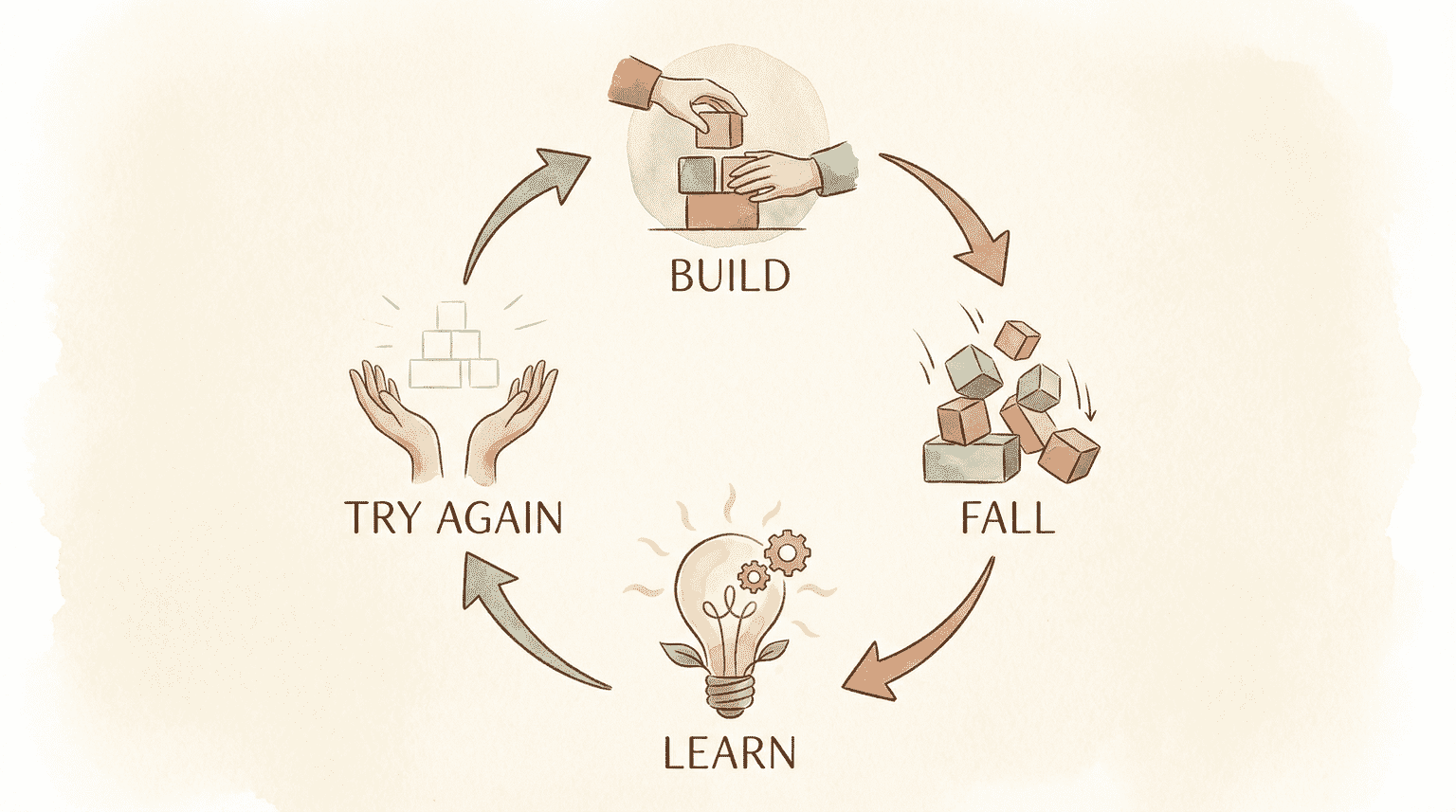
Frustration tolerance develops through the construction-destruction-success-failure cycle. Children experience failure when towers fall, analyze causes, and try again. This teaches distress tolerance applicable far beyond building—skills that transfer to everything from homework challenges to social setbacks.
“I’m sure the many hours I spent building with my son when he was younger bolstered his natural curiosity, fueled his creativity, and brought us closer through moments of joy and imaginative discovery.”
— Dr. Scott Glassman, Philadelphia College of Osteopathic Medicine
That relational piece matters. In my house, building together has become how I connect with kids who’ve aged out of lap-sitting and bedtime stories. My 15-year-old won’t tell me about his day directly, but he’ll talk while we sort LEGO pieces.
The Rebuilding Mechanism: Why Process Beats Product
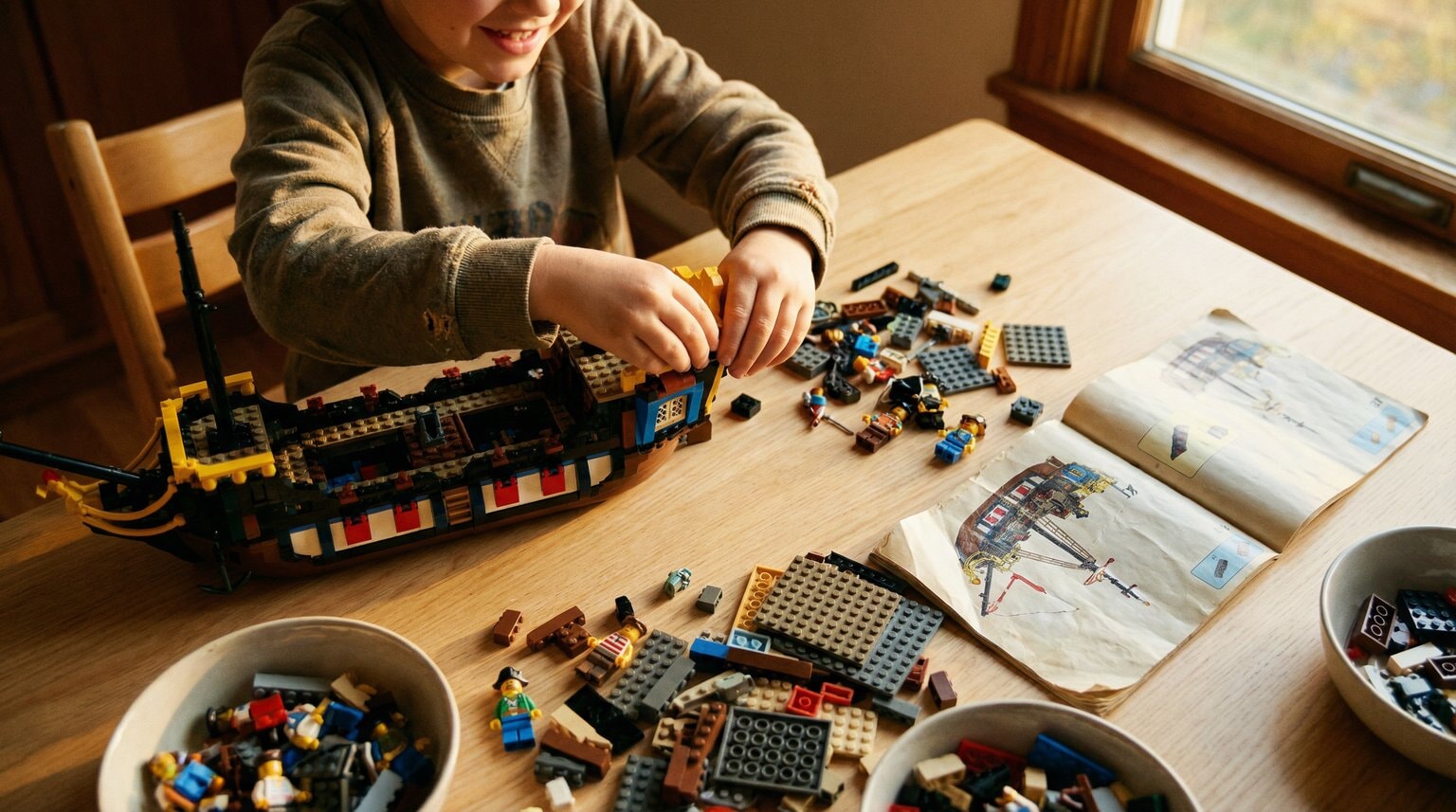
Here’s a critical finding that changes how I think about themed LEGO sets: researchers observed that “once individuals get these sets, they follow the instructions, complete the suggested composition and rarely pull it apart again. In this way, the construction pieces become display materials and lose their ability to promote spatial thinking when built only once.”
The developmental benefit lives in the building process, not the finished product.
This doesn’t mean themed sets are worthless—my kids love them, and there’s genuine satisfaction in following complex instructions. But the cognitive benefits come from rebuilding, from using those pieces to create something new after the initial build.
My approach now: themed sets are for the first experience. After that, I actively encourage dismantling and creating something different. The pieces are the investment; the instructions are just a starting point.
Frequently Asked Questions
Why do kids like building toys so much?
Children naturally gravitate toward construction toys because building provides immediate, tangible feedback that satisfies their developmental drive for mastery. Research found constructive play accounts for 29% of children’s free play time—the highest single category—because the rewards are concrete: pieces click, structures grow, and imagination becomes physical reality.
Do building toys actually help with math?
Yes—neuroimaging studies show structured block play activates the same brain regions used for arithmetic processing. After just five 30-minute sessions, children demonstrated improved math performance with corresponding changes visible on brain scans. Longitudinal research indicates construction play complexity at age 4 predicts math achievement through high school.
Are LEGO sets good for child development?
LEGO bricks effectively develop mental rotation and fine motor skills. However, themed sets with step-by-step instructions offer limited developmental benefit if built only once—researchers note they “become display materials.” Open-ended building with generic bricks, or rebuilding completed sets into new creations, provides greater cognitive benefit.
What’s the difference between blocks and magnetic tiles for development?
Different construction toys develop different spatial skills. Brick-based toys like LEGO support mental rotation—manipulating rigid objects. Magnetic tiles support mental folding—transforming 2D shapes into 3D structures, which may be more cognitively demanding. Large-scale construction toys support perspective taking. The variety matters more than choosing one type.
Join the Conversation
What building toys have been hits at your house? I’m curious whether LEGO, blocks, magnetic tiles, or something else has gotten the most mileage—and whether you lean toward open-ended play or structured sets.
I read every comment and your experiences help shape future building toy guides.
References
- Empowering Parents for Constructive Play – Research on constructive play time allocation and developmental benefits
- The Process of Learning Designed Actions of Toys – Developmental progression in learning to use construction toys
- Malleability of Spatial Skills – How different construction toys develop different spatial skills
- Fostering Block Building Self-Concepts – Guided vs. free play in construction learning
- The Role of Play in Deep-Level Learning – Frequency and outcomes of constructive play in early childhood
- Building Blocks of Success – Psychological and emotional benefits of LEGO play

Share Your Thoughts