
You know that moment when the first piece of wrapping paper hits the floor and suddenly it’s a feeding frenzy? Three kids ripping simultaneously, paper flying, “wait, who gave you that?” shouted across the room, and fifteen minutes later everyone’s sitting in a pile of cardboard wondering what just happened.
I’ve lived this scene twenty-plus times now across eight kids. And here’s what finally clicked: the blur isn’t inevitable—it’s a design problem. A few simple structural changes can transform that tornado into something you’ll actually remember.
Key Takeaways
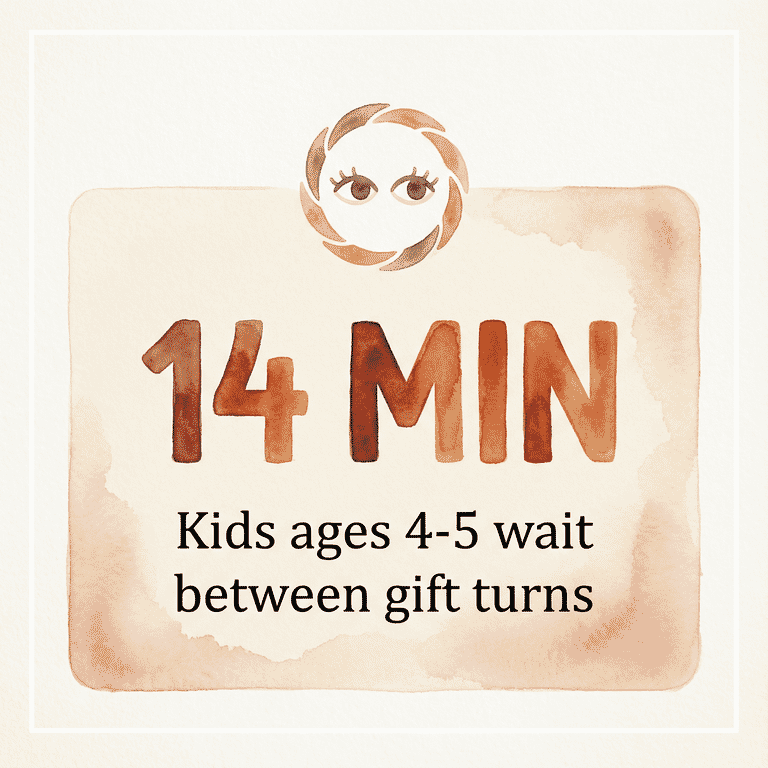
- Children ages 4-5 can wait over 14 minutes between gift turns when families establish consistent traditions
- The “thank-you pause” is the single most transformative strategy for slowing down and creating connection
- Gift-givers experience more happiness when they actually witness reactions, which simultaneous opening prevents
- Five proven gift-opening methods work for different family sizes and ages
- Setting expectations on Christmas Eve prevents most meltdowns the next morning
Why Christmas Morning Becomes a Blur (And What to Do About It)
There’s a psychological phenomenon researchers call the “smile-seeking hypothesis”—gift-givers unconsciously optimize for the moment of reaction. We want to see the face light up, so we rush toward the next unwrapping, then the next.
The problem? We’re so busy chasing reactions that we never actually witness them.
Harvard Business School psychologist Michael Norton puts it simply: gift-givers actually prefer seeing the other person receive the gift. That witnessing moment is where the happiness boost lives.
When everyone opens simultaneously, nobody sees anything. The givers miss the reactions. The kids barely register what they received. And the whole thing becomes a blur of paper and boxes with no actual connection in between.
The good news? Small structural changes fix this completely.
Five Gift-Opening Methods That Actually Work
There’s no single “right” approach—different methods work for different families. Here’s what I’ve seen work (and the research behind why):
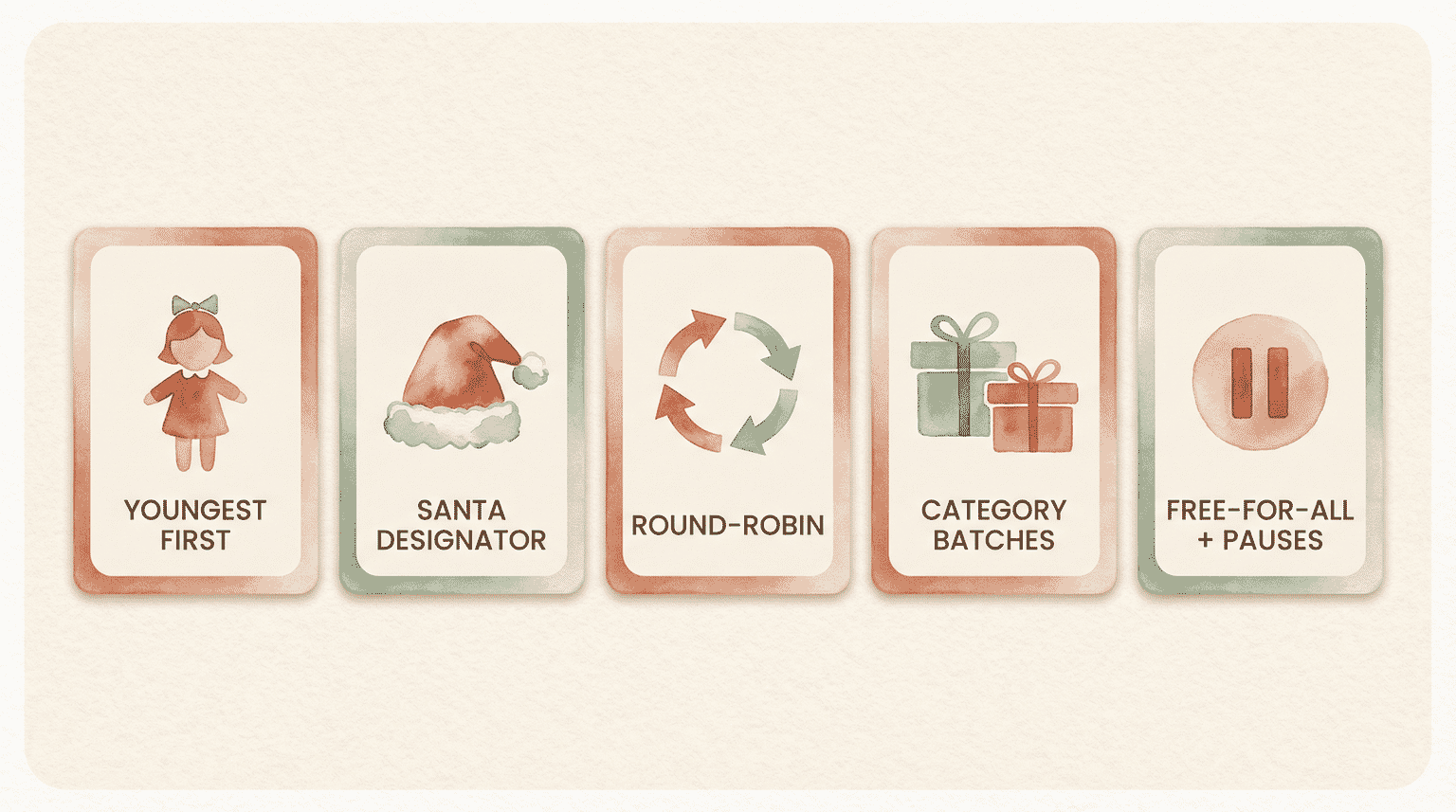
1. Youngest to Oldest Rotation
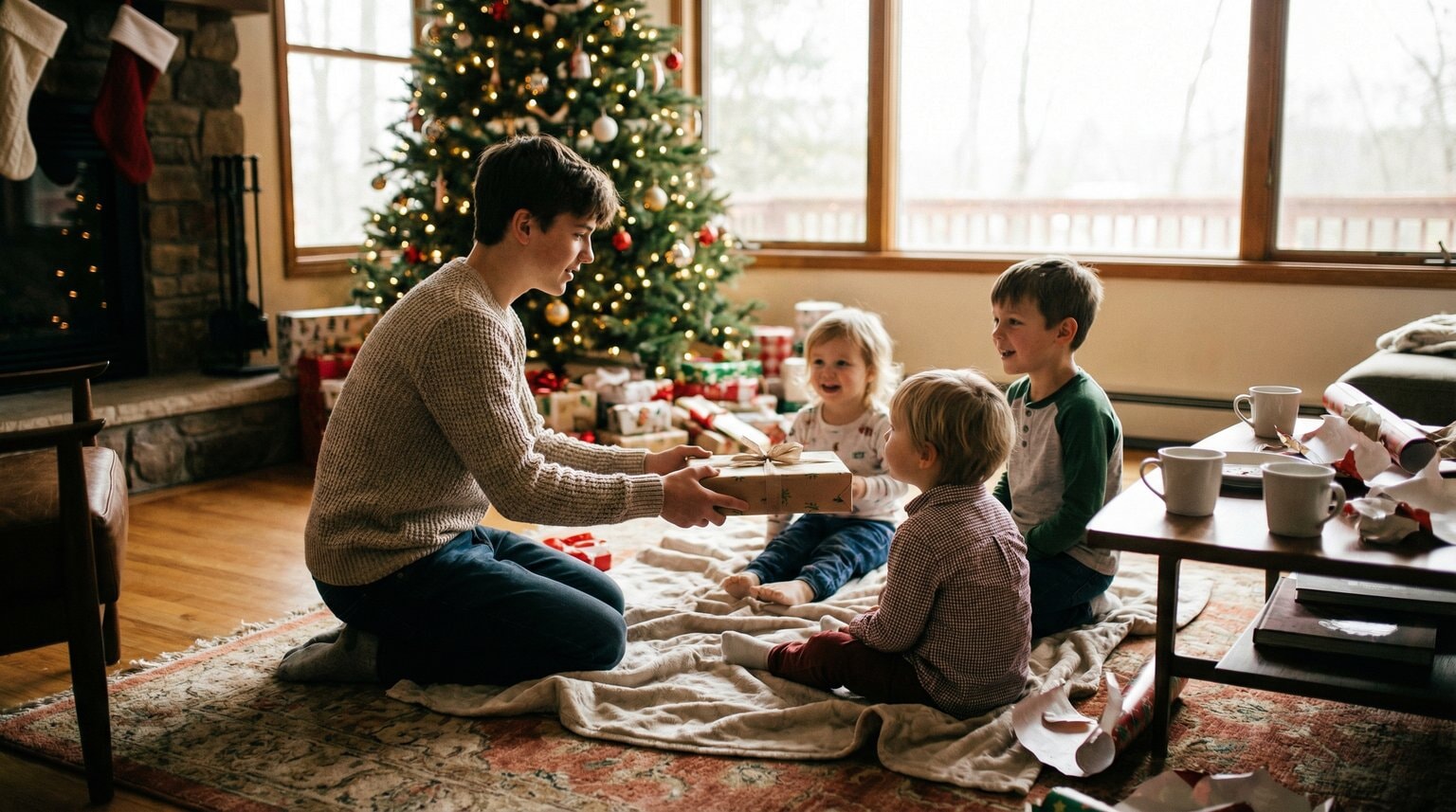
How it works: The youngest child opens one gift while everyone watches. Then the next youngest. Continue up the age ladder, then repeat.
Best for: Families with toddlers or preschoolers who have shorter patience windows.
The upside: This honors developmental reality—little ones get attention before fatigue hits.
Watch for: Older kids may feel deprioritized unless you frame it positively (“You get to help the little ones wait while they watch you”).
2. The Santa Designator Method
How it works: One person—parent, older child, or designated “Santa”—reads each tag and distributes gifts one at a time.
Best for: Large families or anyone wanting clear pacing control.
The upside: Creates natural ceremony, prevents grabbing, and builds in automatic photo opportunities.
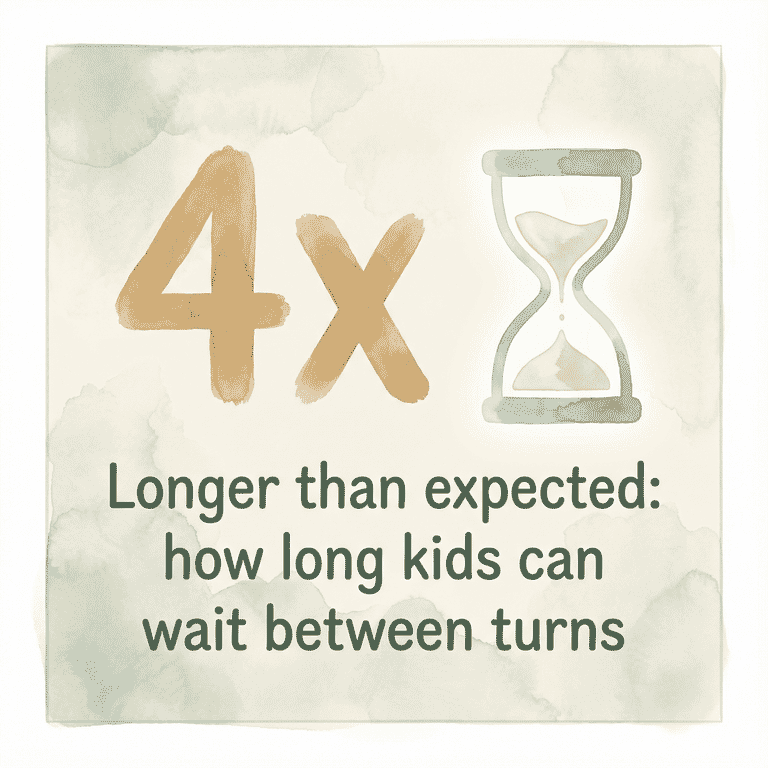
A 2022 cross-cultural study published in Psychological Science found that children respond remarkably well to consistent gift-opening structures. American children ages 4-5 waited a median of 14.54 minutes between turns—nearly four times longer than they’d wait for a treat like a marshmallow.
3. Round-Robin Circle
How it works: Family sits in a circle. One person opens while everyone watches. Rotate clockwise until complete.
Best for: Families prioritizing connection and gratitude moments.
The upside: Everyone witnesses every reaction. This models appreciation naturally.
“We do like this little bit of kind of clapping at the end of the giving that makes us feel a little bit happier about the giving.”
— Michael Norton, Harvard Business School psychologist
When you structure for witnessing, everyone benefits—givers included.
4. Category Batches
How it works: Open gifts by type—all stockings first, then small gifts, then larger gifts.
Best for: Families who want natural breaks or have a wide range of gift sizes.
The upside: Creates “chapters” in the morning and builds anticipation toward bigger items.
5. Free-for-All with Pause Points
How it works: Everyone opens freely for 10-15 minutes, then you call a mandatory pause for cocoa, breakfast, or photos. Resume after the break.
Best for: Families with older children who find strict turn-taking tedious.
The upside: Honors their excitement while preventing the “it’s over in 20 minutes” problem.
In my house, we’ve shifted methods as the kids have aged. When most were little, youngest-to-oldest was essential. Now with teenagers in the mix, we do more of a hybrid—turn-taking for the first round, then pause points as things wind down.
The Thank-You Pause (Your Secret Weapon)
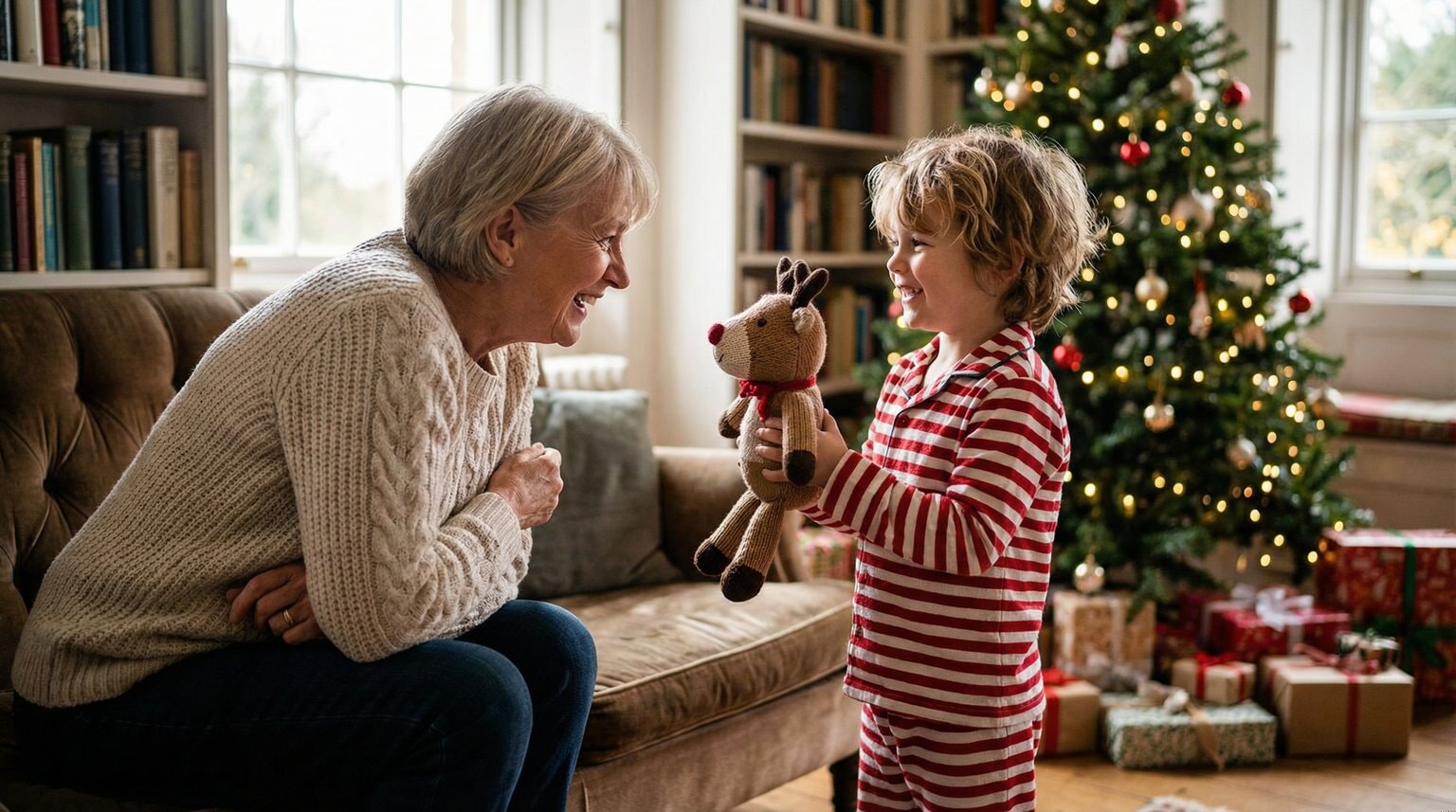
If you implement only one strategy from this article, make it this: the thank-you pause.
After opening each gift, the recipient identifies who gave it and shares one specific thing they like. That’s it. Simple, but transformative.
Here’s what to say: “Before you open the next one, find who gave you that and tell them one thing you love about it.”
The neuroscience of giving reveals something unexpected about this pause.
“Gift giving is ancient. There’s just this deep, inherent delight that comes with receiving the gratitude from a person we’ve gifted.”
— Dacher Keltner, UC Berkeley professor and co-director of the Greater Good Science Center
This single pause creates natural pacing, builds a gratitude habit, and gives givers the acknowledgment that actually increases their happiness. I’ve watched it transform my kids’ Christmas mornings from grab-fests into something that genuinely feels connecting.
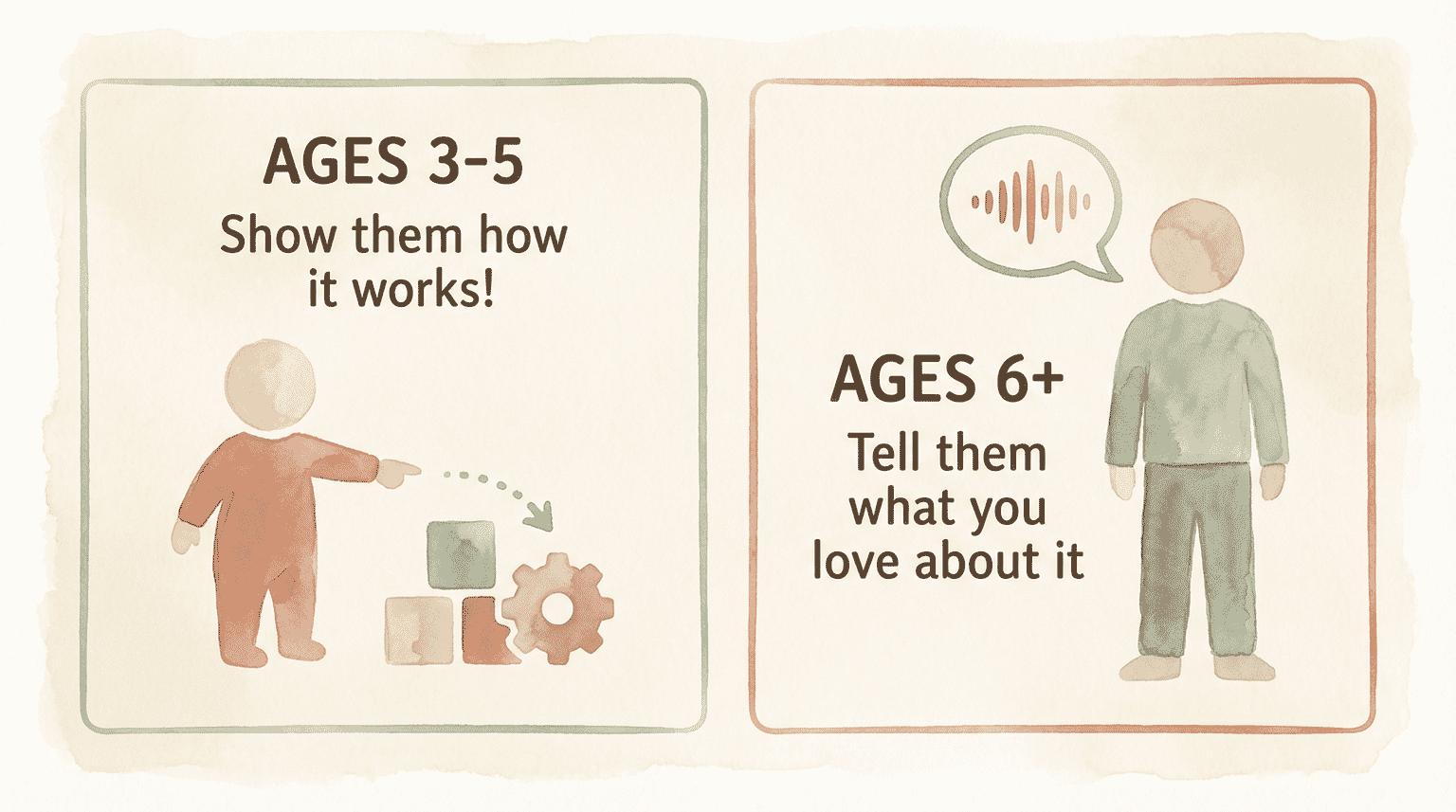
Age adjustments:
- Ages 3-5: Prompt with “Who gave you that? Can you show them how it works?”
- Ages 6+: They can articulate specifics on their own
Photo Breaks Without Killing the Momentum
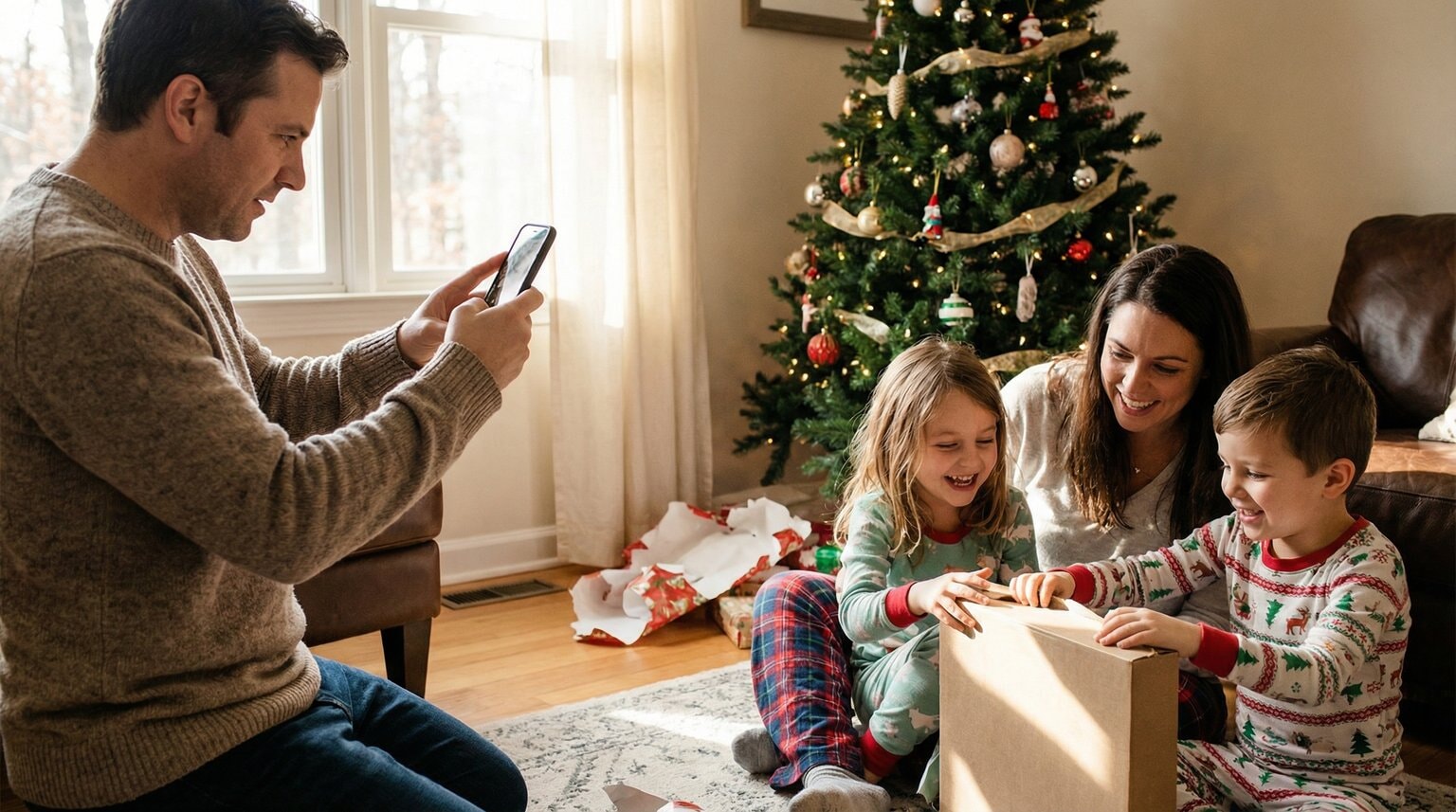
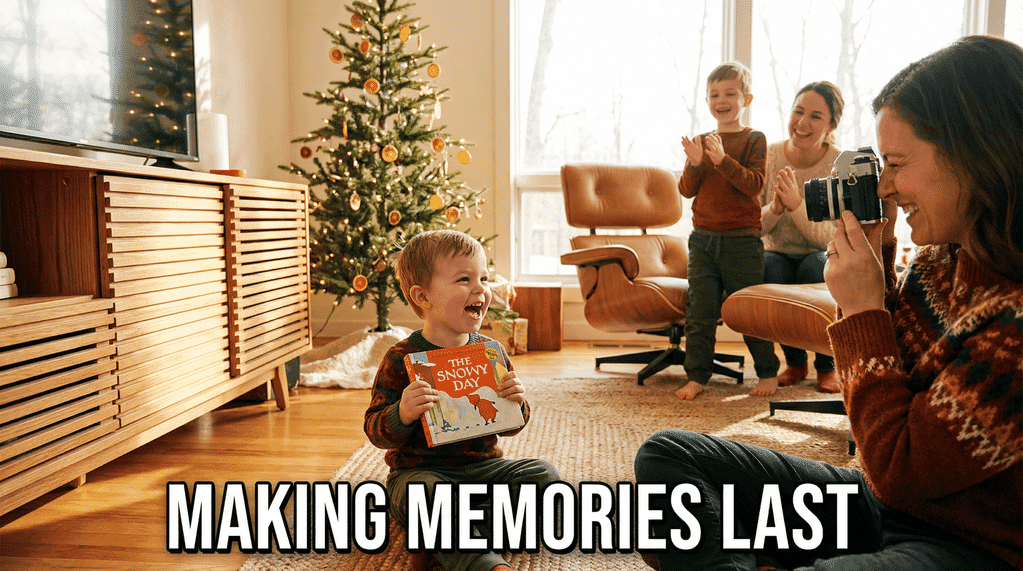
Here’s the tension: you want to document this. You also want to be present for it. Constant photographing pulls you out of the moment while you’re trying to create the moment worth capturing.
Three approaches that work:
- Designate one photographer per round. Rotate adults so everyone gets to both witness and document.
- Scheduled photo moments. Take pictures after every third gift, not every gift.
- Video one section, photos for another. You don’t need both constantly.
Research from Utah State University Extension found that families remember experiences and connections far more than the gifts themselves two years later. The memory you’re creating matters more than perfectly documenting every unwrapping.
Setting Up the Night Before
The secret to a smooth Christmas morning is actually Christmas Eve. Clear expectations prevent meltdowns.
Sample script:
“Tomorrow morning, we’re going to take turns so everyone gets to see each other open gifts. You’ll open one, then [sibling] opens one, then it’s your turn again. This way we all get to watch the good parts.”
Some families incorporate this into a Christmas Eve box tradition—the anticipation-building activity becomes the perfect moment to set expectations for the next morning.
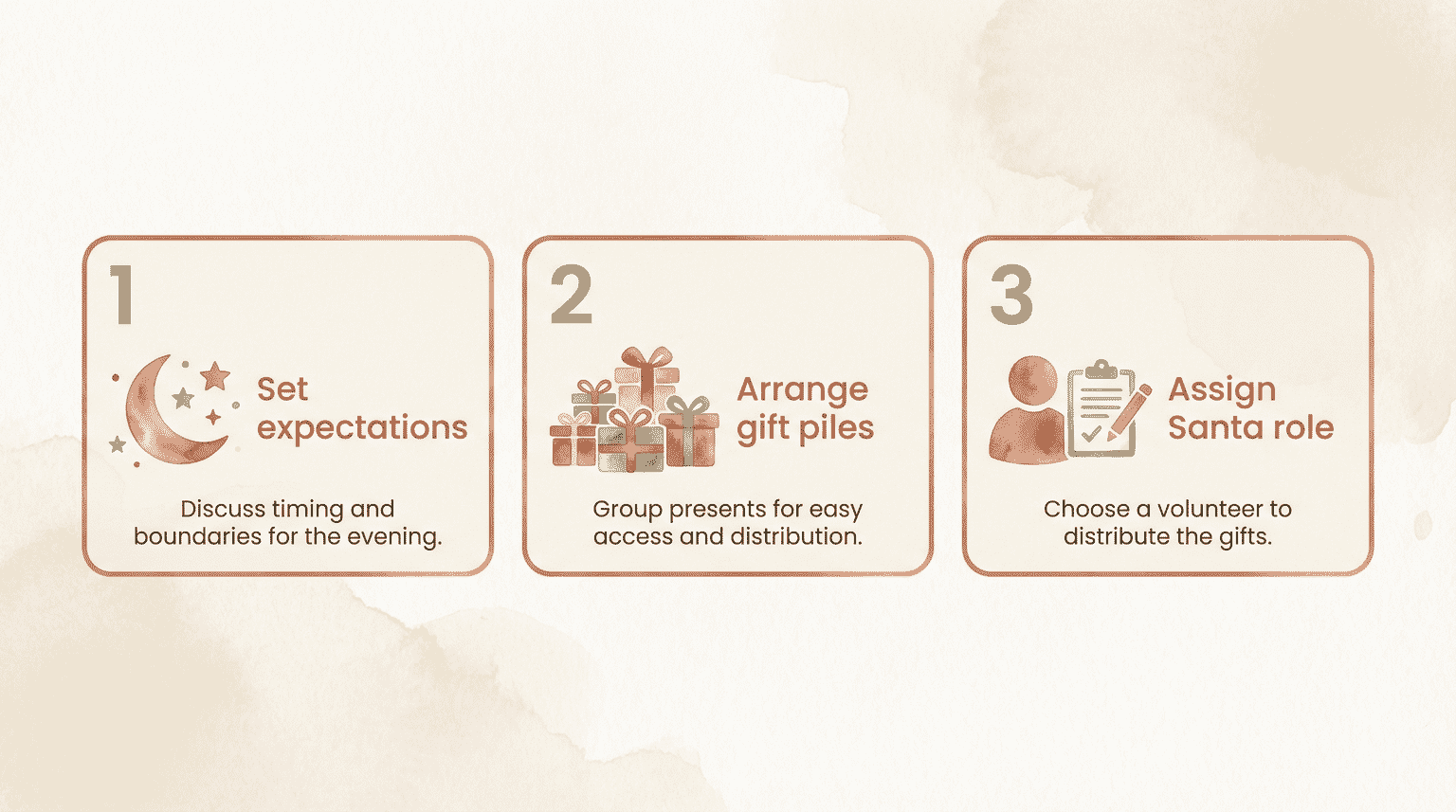
Physical setup helps too: Arrange gifts in piles by recipient for easy distribution. If using the Santa Designator method, decide who plays this role and brief them on pacing.
Pace Management for Different Family Sizes
How long should this actually take? Here’s what works:
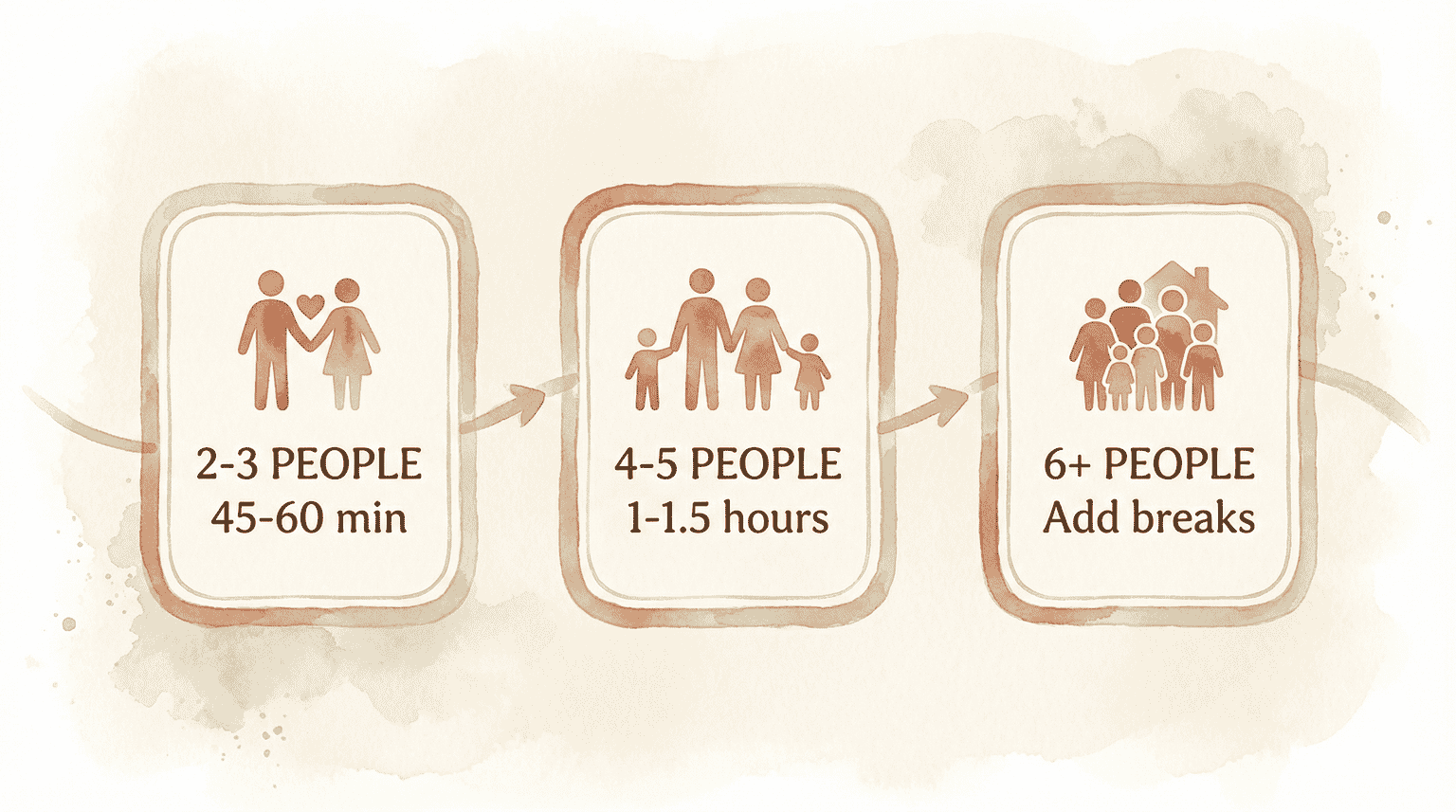
- 2-3 people: 45 minutes to 1 hour is comfortable
- 4-5 people: Plan for 1-1.5 hours
- 6+ people: Consider sub-grouping (nuclear family opens together, then an extended family round later)
The Psychological Science research surprised me here: children ages 4-5 can genuinely wait 14+ minutes between turns when the tradition is established. That’s far longer than most parents expect.
The key is consistency—children who grow up with turn-taking expect it and build the waiting capacity.
Build in breaks: Hot cocoa pause, breakfast intermission, or a “play break” where kids try one new toy before continuing. With our crew, we do breakfast between stockings and tree gifts. It creates a natural reset.
When Things Go Sideways (And They Will)
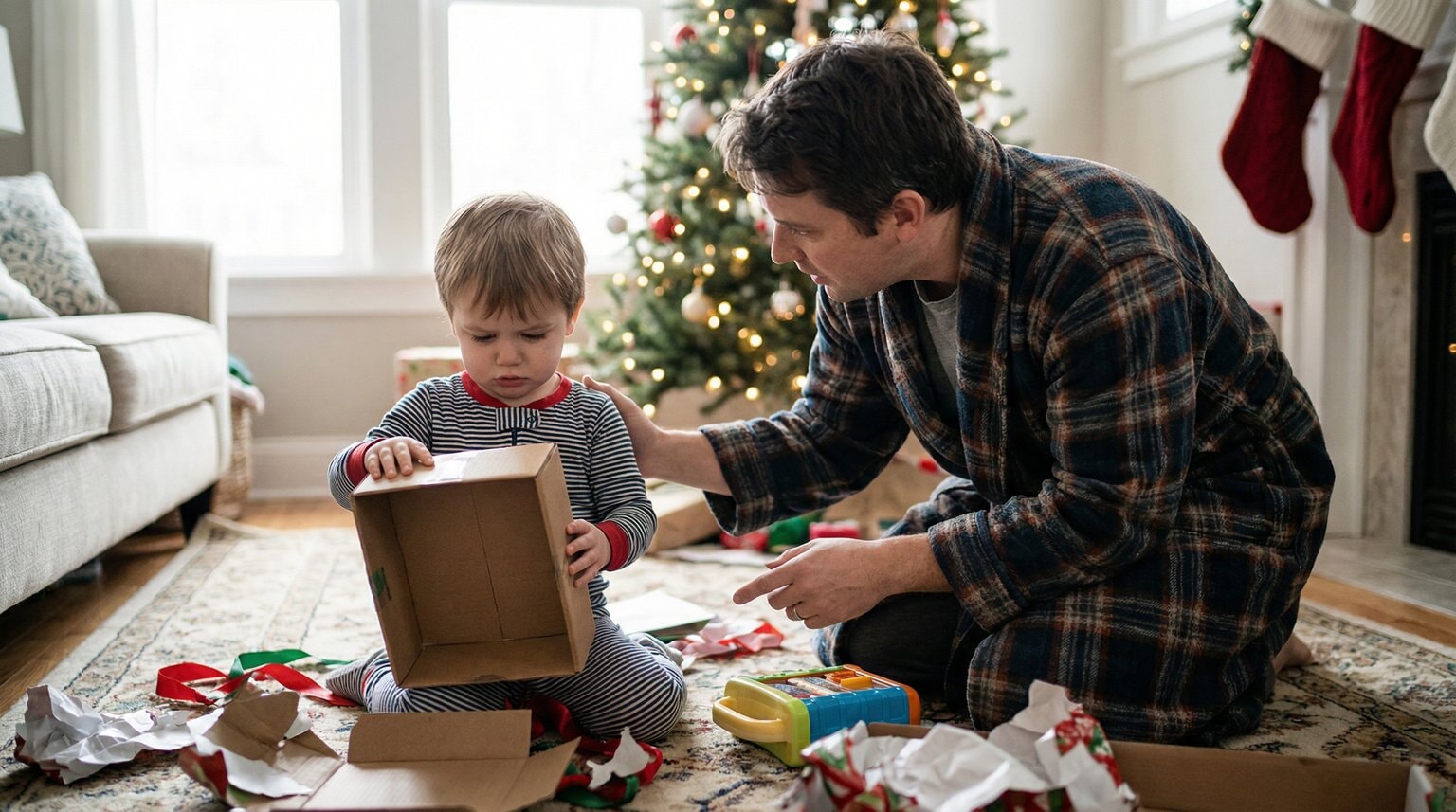
Because they will. Here’s what to say:
Problem: Child wants to keep playing with new toy mid-opening
“That’s so cool! Put it right here next to you—we’ll have play time after everyone’s done, and you can show us how it works.”
Problem: Visible disappointment at a gift
Acknowledge it privately later. In the moment, redirect: “Tell Grandma thank you—what else is in your pile?” For more on handling disappointed reactions, we have specific scripts for every scenario.
Problem: Sibling conflict over opening order
A predetermined, predictable system removes the argument. “Remember, we always go youngest to oldest in our family.”
Problem: Parent feeling overwhelmed
UCSF stress researcher Elissa Epel offers a simple technique for regulating in the moment.
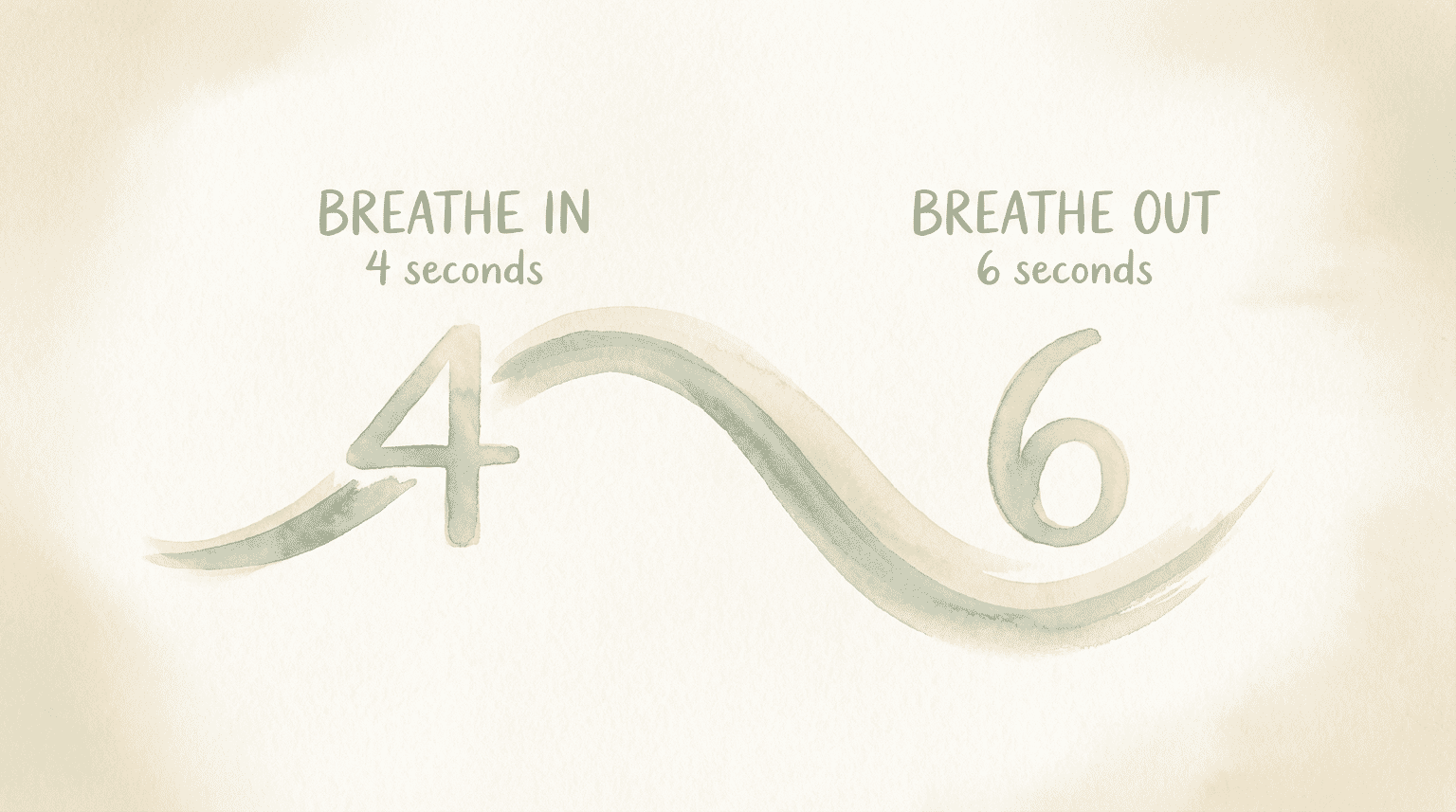
Try breathing in for 4 and out for 6—it’s a shortcut to reducing holiday stress. Nobody notices if you step away briefly, and you come back regulated.
Making It Stick Year After Year
The first Christmas with a new system might feel awkward. By year three, it’s just “how we do things.”
The research on this is clear: children raised with turn-taking traditions develop patience capacity that far exceeds what we might expect. This isn’t natural—it’s built through repetition.
The researchers describe how children form “implicit associations in memory between the context and the delaying behavior.” In other words, your family traditions literally shape their self-regulation.
Consider exploring broader family gift traditions that extend beyond Christmas morning—the same principles apply.
Evolve as kids age. Strict rotation for young children gives way to more flexibility as they mature. My teenagers now help distribute gifts and prompt the little ones’ thank-you pauses.
Name your tradition. “The Johnson Gift Circle” or whatever fits your family creates ownership. It becomes ours, not just rules Mom made up.
Frequently Asked Questions
What order should you open presents on Christmas?
The most common approaches are youngest to oldest rotation, round-robin circle (one person opens while everyone watches, then rotate), or using a “Santa designator” who distributes one gift at a time. Research shows children ages 4-5 can wait over 14 minutes between turns when families establish consistent traditions.
How do you slow down gift opening with kids?
Use a turn-taking system where one person opens at a time while everyone watches, then add “thank-you pauses” where the child identifies the giver and shares one thing they like about the gift. This benefits parents too—research shows gift-givers experience more happiness when they witness reactions.
How long should Christmas present opening take?
Plan for 45 minutes to 1 hour for families of 2-3 people, 1-1.5 hours for 4-5 people, and longer for larger groups. A 2022 study found that children ages 4-5 can wait over 14 minutes between turns when traditions are established.
Should kids open presents one at a time?
One-at-a-time opening creates stronger holiday memories and allows givers to witness reactions. However, strict turn-taking works best for families with younger children. For older kids, a “free-for-all with pause points” approach can balance excitement with pacing.
Over to You
How does gift-opening work at your house—free-for-all, strict turns, or something in between? I’m curious what systems have actually slowed things down and made the morning more memorable.
I read every comment and love learning what works in different households.
References
- Cultures Crossing: The Power of Habit in Delaying Gratification – Cross-cultural research on children’s gift-waiting capacity
- Giving Gifts Boosts Happiness Research – NPR synthesis of Harvard and UC Berkeley gift-giving psychology research
- Stress Free Christmas – Utah State University Extension holiday stress reduction guidance

Share Your Thoughts