
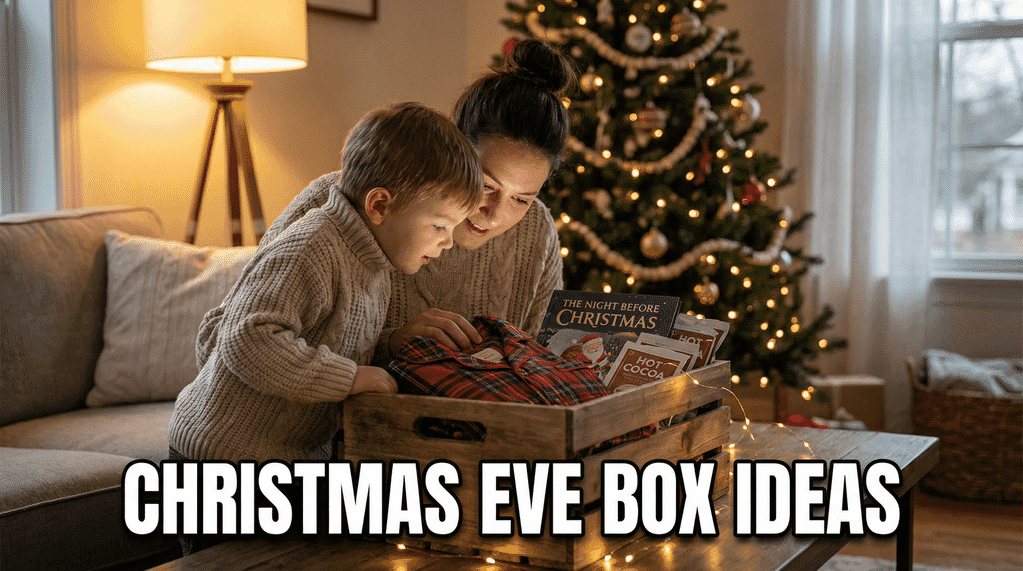
You’re standing in Target at 8 PM, cart already full of wrapping paper and stocking stuffers, wondering if you should grab that cute wooden crate for a Christmas Eve box. Or maybe you’ve done this tradition for years but find yourself stuck in a rut—same pajamas, same cocoa packet, same book about a reindeer.
Here’s the thing: Christmas Eve boxes work because they create a pocket of calm in the holiday chaos. But what goes inside matters more than most lists will tell you. After eight Christmas Eves with kids ranging from toddler to teenager, I’ve learned which items create genuine magic and which end up forgotten by bedtime.
The family gift traditions that stick aren’t complicated—they’re intentional. Let me walk you through what actually works, with the developmental reasoning behind each choice.
Key Takeaways
- Four to six items is the sweet spot—fewer meaningful items create better engagement than overwhelming abundance
- Every box needs pajamas as the anchor, plus a book, cocoa supplies, and one activity—see the essential categories
- Open boxes 1-2 hours before bedtime to wind kids down, not amp them up
- Age-appropriate choices matter for safety and engagement—check the age guide
- A $15 box creates the same magic as a $50 box when you nail the ritual
What Goes in a Christmas Eve Box (The Essentials)
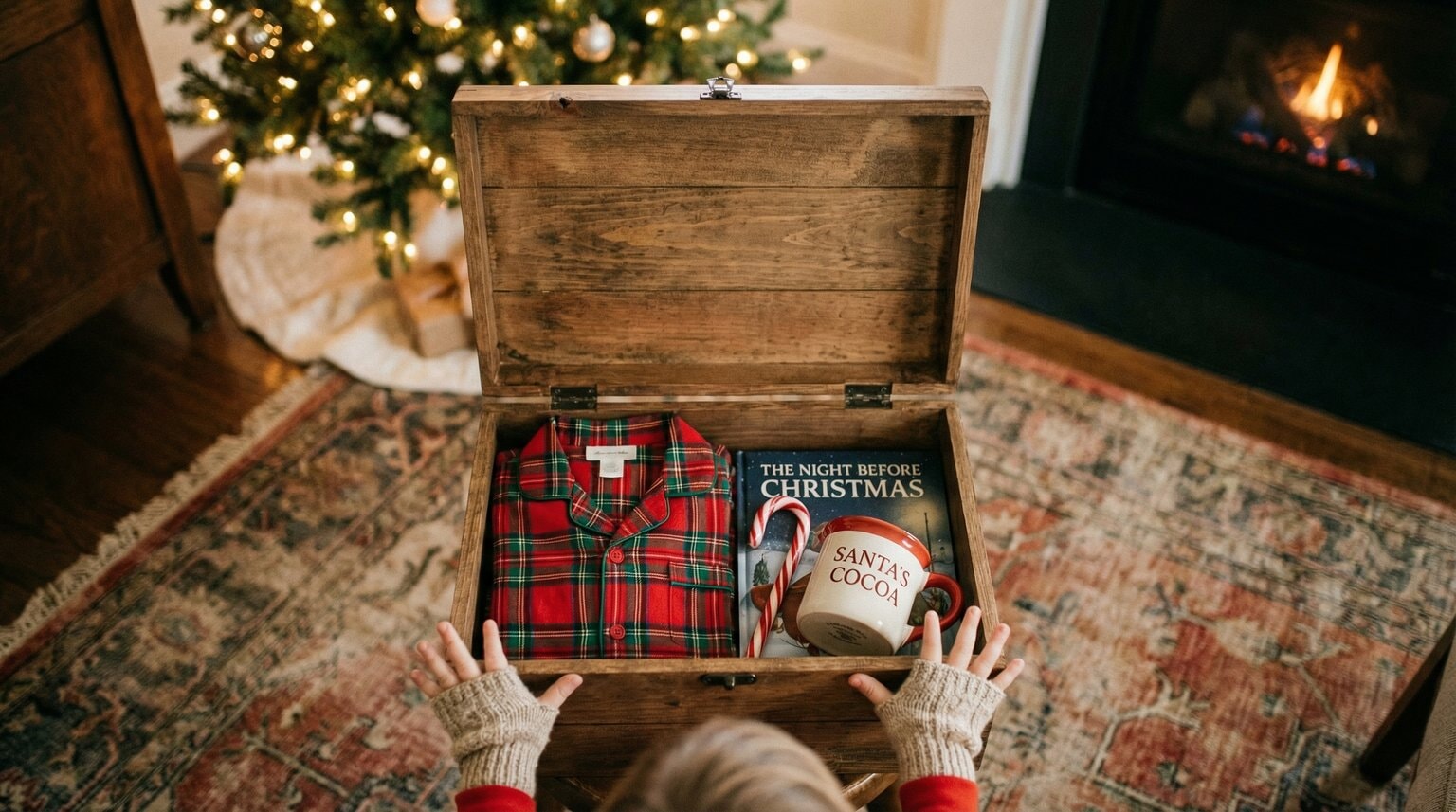
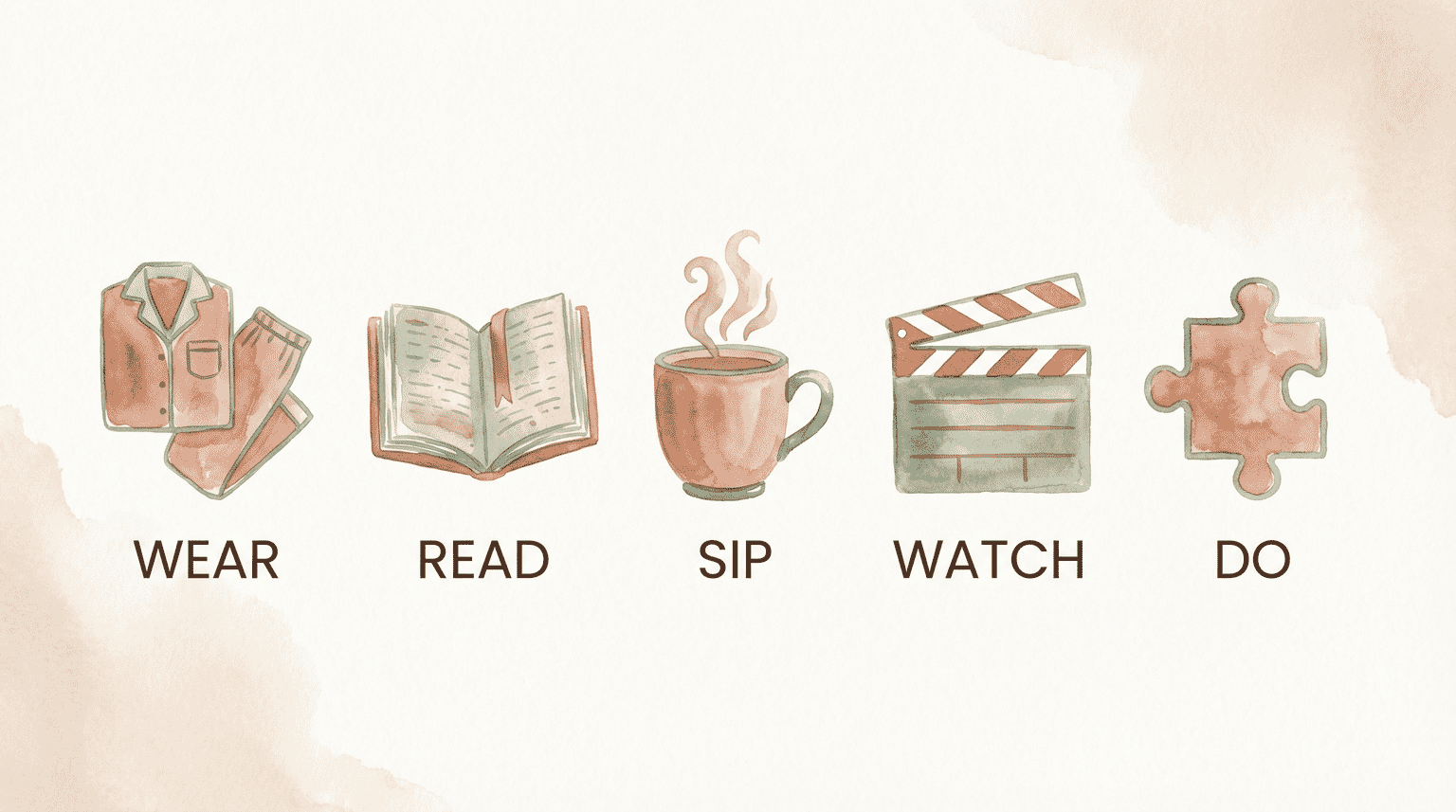
A Christmas Eve box typically includes four to six items across these categories:
- Something to wear (pajamas)
- Something to read (a book)
- Something to eat or drink (hot cocoa, treats)
- Something to watch (movie night supplies)
- Something to do (activity or small gift)
That’s it. Child development research consistently shows that fewer, more meaningful items create better engagement than overwhelming abundance.
Boston University’s Ann Herzog puts it directly: experience gifts “foster connections with family and friends [which] are so important to a child’s social and emotional wellness. They also give a child something to look forward to after the other gifts have been unwrapped and the novelty has worn off.”
The Christmas Eve box tradition originated in the UK and has spread across North America and beyond. Whatever your family’s background, the core principle stays the same: create anticipation without overstimulation.
Pajamas: The Universal Anchor
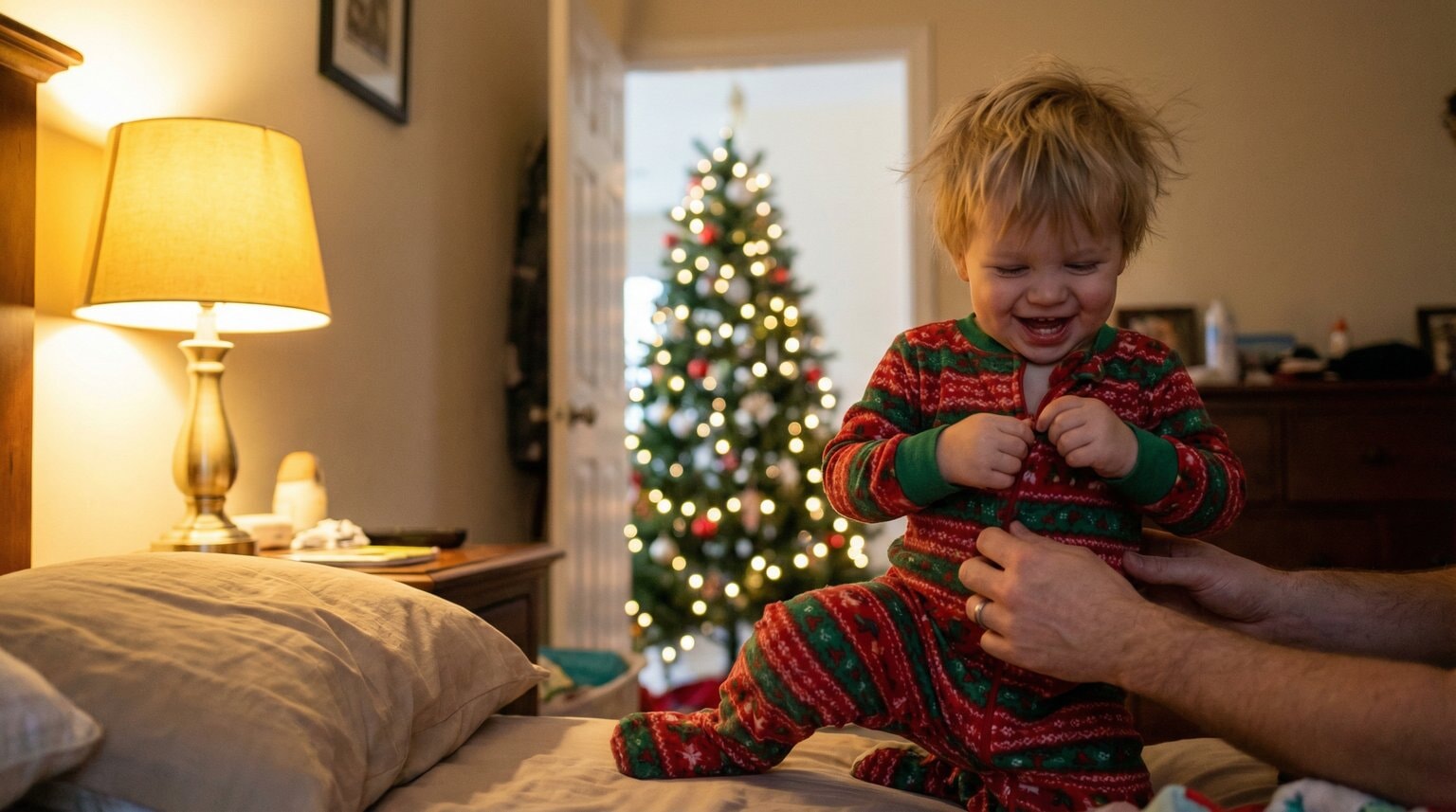
Every Christmas Eve box needs pajamas. It’s the one non-negotiable item that serves both practical and magical purposes—kids change into them immediately, signaling the transition into Christmas Eve mode.
For babies and young toddlers (0-2): Footie pajamas in soft fabrics work best. Look for zip-front styles that make middle-of-the-night diaper changes manageable. Skip anything with buttons or complicated snaps—you’ll thank yourself at 2 AM.
For preschoolers (3-5): Character pajamas hit their peak appeal here. Whatever your child is currently obsessed with—dinosaurs, princesses, trucks, unicorns—find the matching PJs. This age remembers specifics, and those Santa pajamas might appear in Christmas morning photos for years.
For elementary age (6-10): Matching family pajama sets become genuinely exciting rather than embarrassing. Kids this age love being part of the coordinated photo moment. Two-piece sets offer more flexibility as they grow.
For tweens and teens (11+): Lean toward cozy loungewear rather than juvenile patterns. Fuzzy socks, soft joggers, or oversized flannel shirts respect their growing sense of style while maintaining the tradition.
Books: More Than Bedtime Reading
A Christmas Eve book serves double duty—it’s both a gift and an activity that helps wind down overstimulated kids. The key is matching complexity to reading level and attention span.
Board books for babies and toddlers: Pat the Reindeer, Dear Santa, or any touchy-feely holiday book. At this age, the sensory experience matters more than the story. Books with flaps, textures, or sounds engage developing minds appropriately.
Picture books for preschoolers: Classic choices like The Polar Express, How the Grinch Stole Christmas, or The Night Before Christmas work year after year.
UC Santa Cruz psychology professor Campbell Leaper notes that “toys are opportunities for children to practice particular kinds of behaviors and skills”—and books function similarly, building vocabulary, comprehension, and emotional understanding through story.
Early chapter books for elementary readers: Consider starting a series they can continue after Christmas—The Best Christmas Pageant Ever or chapter book versions of holiday classics. My 8-year-old still talks about the year he got his first “real” chapter book in the Christmas Eve box.
Graphic novels or YA for tweens and teens: Long Way Down, Hilo, or holiday-themed novels respect their maturity while keeping the tradition intact. A book they’d actually choose themselves works better than something that feels childish.
Hot Cocoa & Treats: The Experience Element
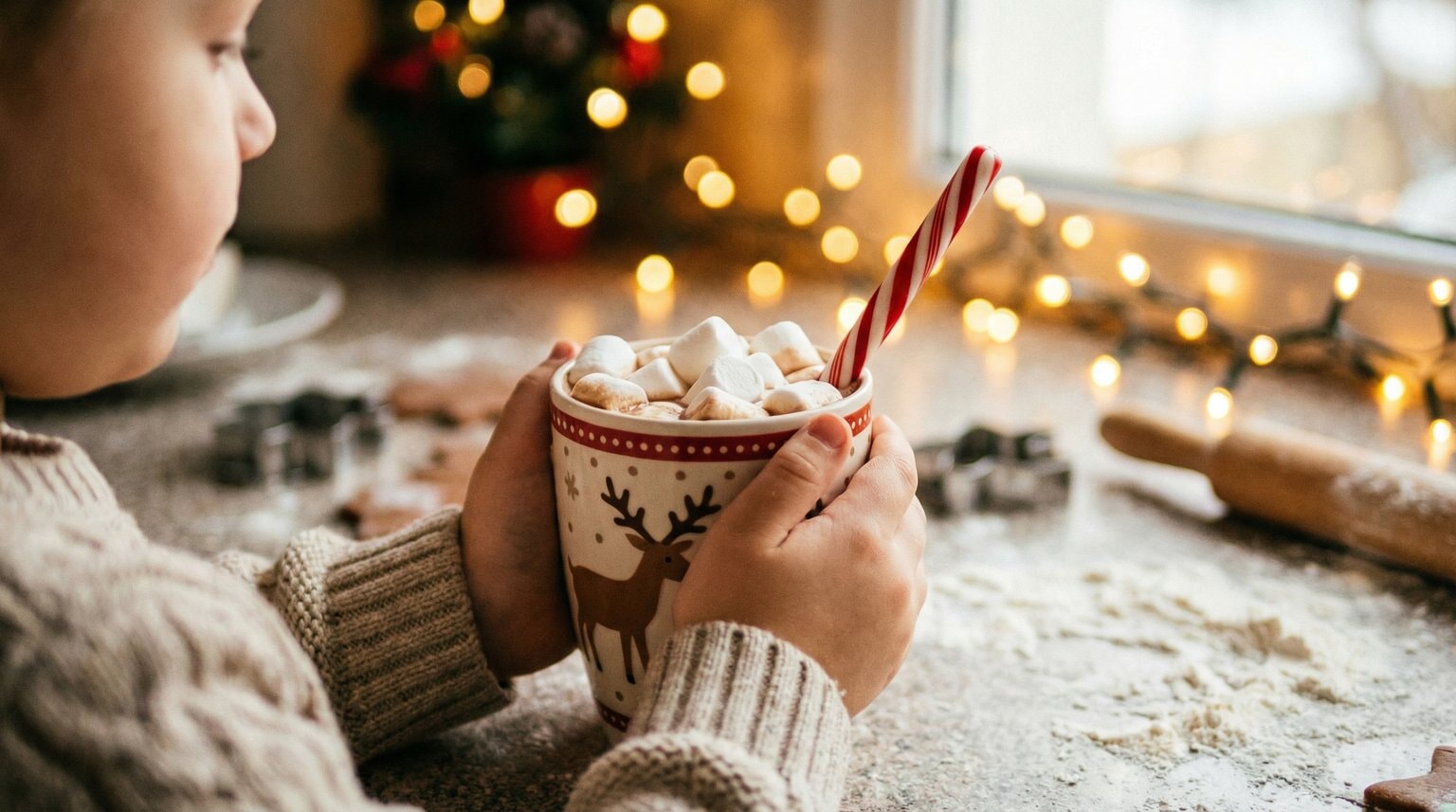
This category transforms the Christmas Eve box from “gifts” into “experience.” You’re not just giving items—you’re creating the evening’s activity.
For toddlers (1-2): Warm milk in a special cup works beautifully. Add a splash of vanilla and call it “Christmas milk.” Skip actual chocolate for the youngest ones—the ritual matters more than the ingredients.
For preschoolers and up: Hot cocoa packets, marshmallows, candy canes for stirring, and special mugs create the full experience. Consider fancy marshmallows shaped like snowmen or peppermint-flavored options.
The baking variation: For families who want an activity, include baking supplies instead—cookie mix, holiday sprinkles, a small rolling pin, cookie cutters. USF nutrition expert Lauri Wright notes that cooking with children “can provide some age-appropriate tasks to help bring families together” while teaching nutrition basics. In my house, Christmas Eve cookies have become as essential as the tree itself.
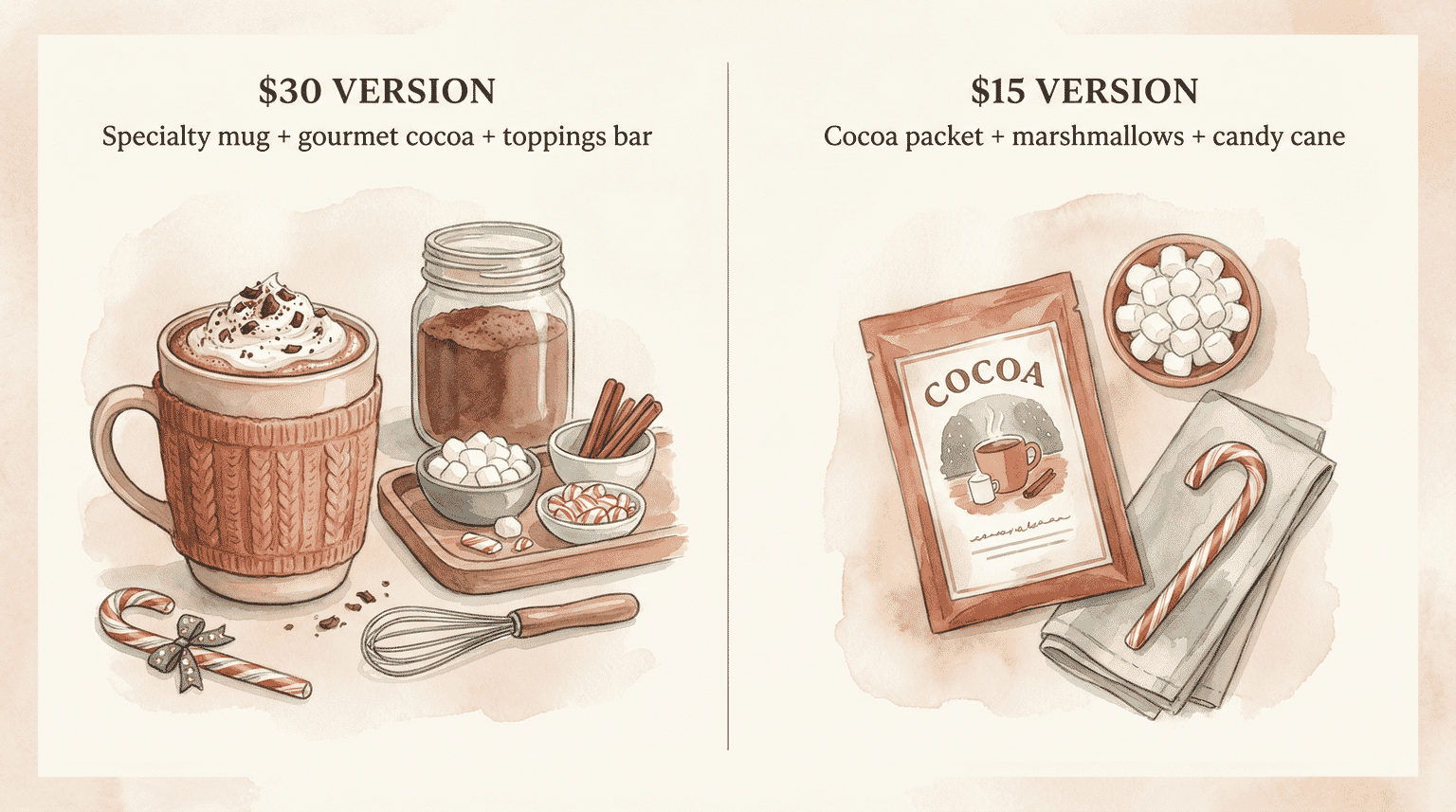
Budget-friendly option: A packet of cocoa, a handful of marshmallows, and a candy cane cost under $3 total. The magic isn’t in the expense—it’s in the presentation.
Movie Night Items
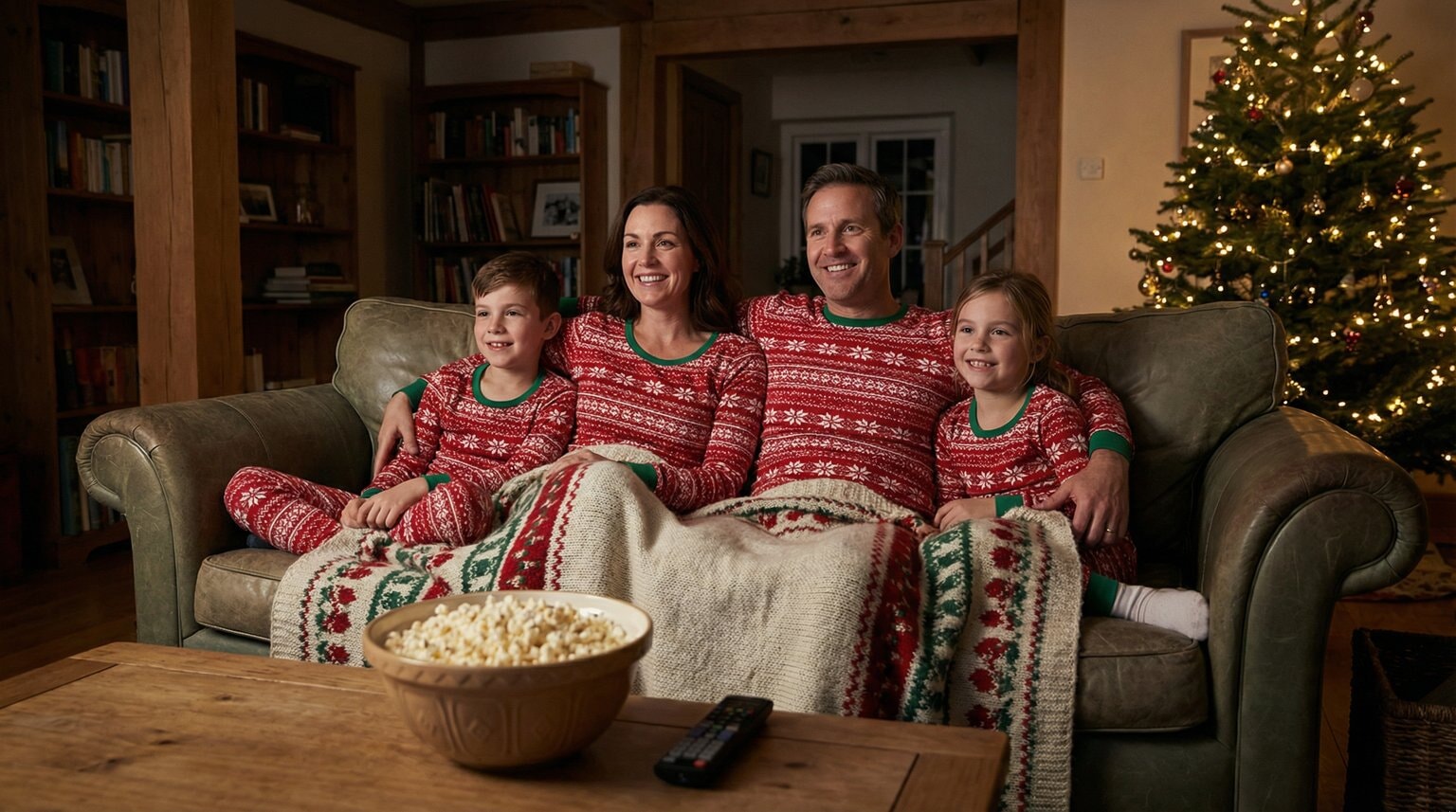
The combination of new pajamas, hot cocoa, and a Christmas movie creates the complete Christmas Eve experience. This category supports that ritual.
Core items for any age:
- Popcorn (microwave packets or kernels for stovetop)
- A cozy blanket (especially nice if it becomes “the Christmas blanket” year after year)
- Movie selection guidance or a specific DVD/streaming rental code
Age-appropriate movie suggestions:
- Toddlers: Mickey’s Christmas Carol, Frosty the Snowman
- Preschoolers: The Polar Express, Rudolph the Red-Nosed Reindeer
- Elementary: Home Alone, Elf, The Santa Clause
- Tweens/Teens: The Nightmare Before Christmas, Die Hard (if your family goes that route), Love Actually for older teens
The BU experts emphasize that “stuff is just stuff, but the memory is what’s more important.” Movie night delivers that memory-making without additional material clutter.
Screen time consideration: If you’re cautious about screens, audiobooks of Christmas stories work similarly—kids can listen in pajamas while drinking cocoa, creating the same cozy atmosphere.
Activities & Small Gifts
This category offers the most flexibility based on your child’s interests and your budget. The goal: something engaging enough to extend the evening’s magic without overstimulating before bed.
For babies and toddlers (0-2): Stacking cups, a small stuffed animal, or a single chunky crayon with paper. Keep it simple—they’re more interested in the box itself than complex items.
For preschoolers (3-5): Coloring sheets, Play-Doh, sticker books, or a small puzzle. Felice Amato, assistant professor at Boston University, emphasizes that imaginative play is “super important for children of all ages”—open-ended items that don’t require batteries or instructions support this kind of play.
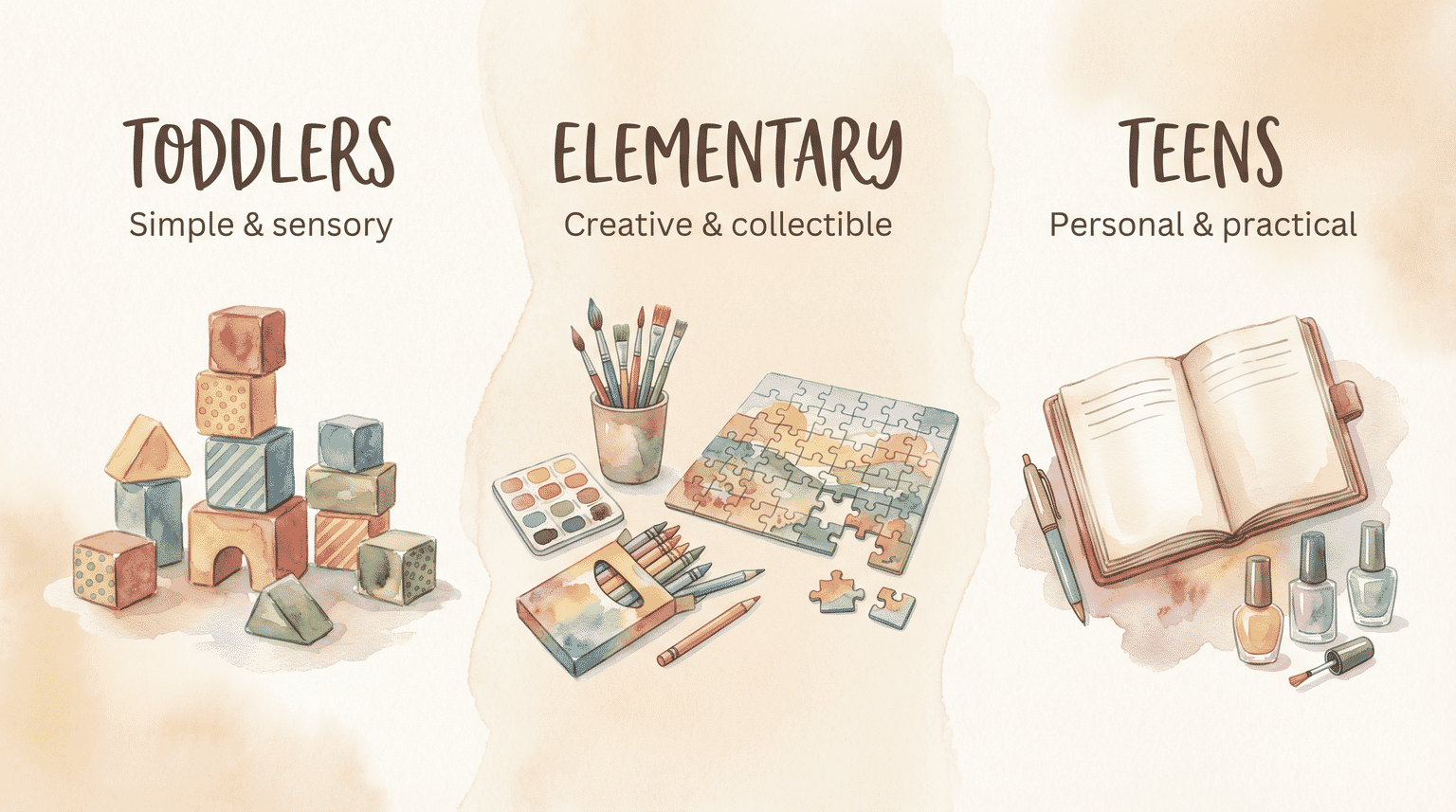
For elementary age (6-10): Craft kits, card games, or a dated ornament to hang. The ornament tradition works beautifully here—each year adds to a collection they’ll eventually take to their own homes. My teenagers now have boxes of ornaments marking every Christmas since toddlerhood.
For tweens and teens (11+): Journal, puzzle book, nail polish, card game the whole family can play, or supplies for a hobby they’re developing. This age appreciates items that feel chosen for them specifically, not generically “kid-appropriate.”
For families with multiple children, you might explore sibling gift exchange ideas that complement individual Christmas Eve boxes without creating competition.
What NOT to Put In (Avoiding Common Mistakes)
After eight years of Christmas Eve boxes, I’ve learned what derails the magic:
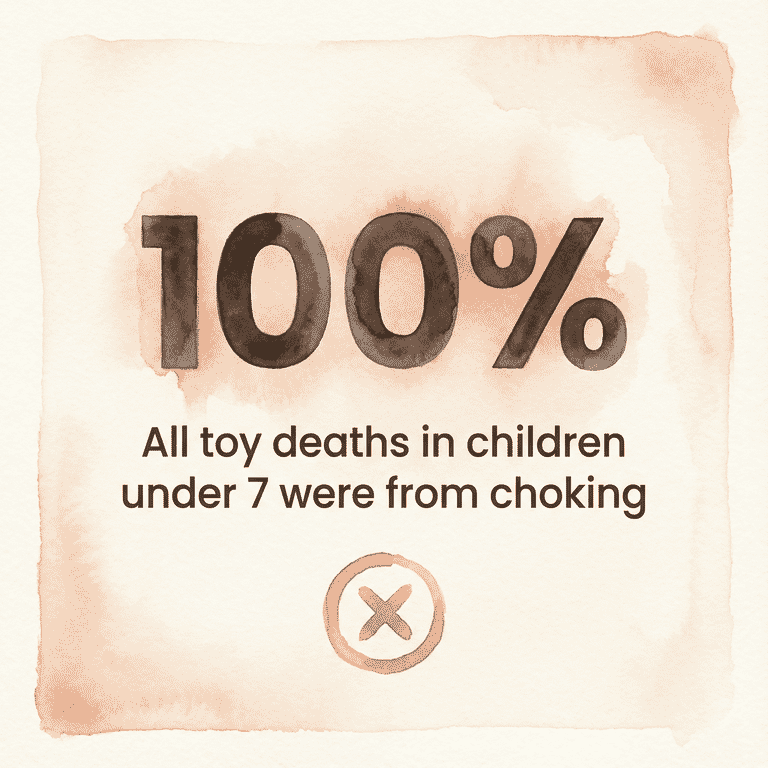
Choking hazards for young children: New York State Health Commissioner Dr. James McDonald warns that toy parts for children under age 3 should be larger than the child’s mouth. This seems obvious until you’re tempted by those tiny craft supplies or mini figurines.
The statistics are sobering: all toy-related deaths in 2022 occurred in children aged 7 months to 6 years, attributed to choking or asphyxiation.
When in doubt, use the toilet paper tube test. If an item fits inside the tube, it’s too small for children under 3.
Overstuffing: More items doesn’t mean more magic. When boxes overflow, kids rush through rather than savoring. Four to six items, thoughtfully chosen, creates more engagement than twelve random things.
Toys requiring batteries or assembly: Nothing kills the mood like hunting for AAA batteries or reading instruction manuals. Christmas Eve should be immediate gratification—items should work right out of the box.
Screen-dependent items: Dr. McDonald specifically recommends staying “away from toys that rely on passively watching a screen” and instead choosing items that “engage young minds in active learning.”
Anything too exciting: Save the big surprises for Christmas morning. Christmas Eve boxes should wind kids down, not amp them up.
When to Give the Box
Timing matters more than parents realize. Virginia Tech’s Rosanna Breaux notes that “children face their own challenges—from disrupted routines to long travel days and unfamiliar social settings” during the holidays. The Christmas Eve box can support routine rather than disrupt it.
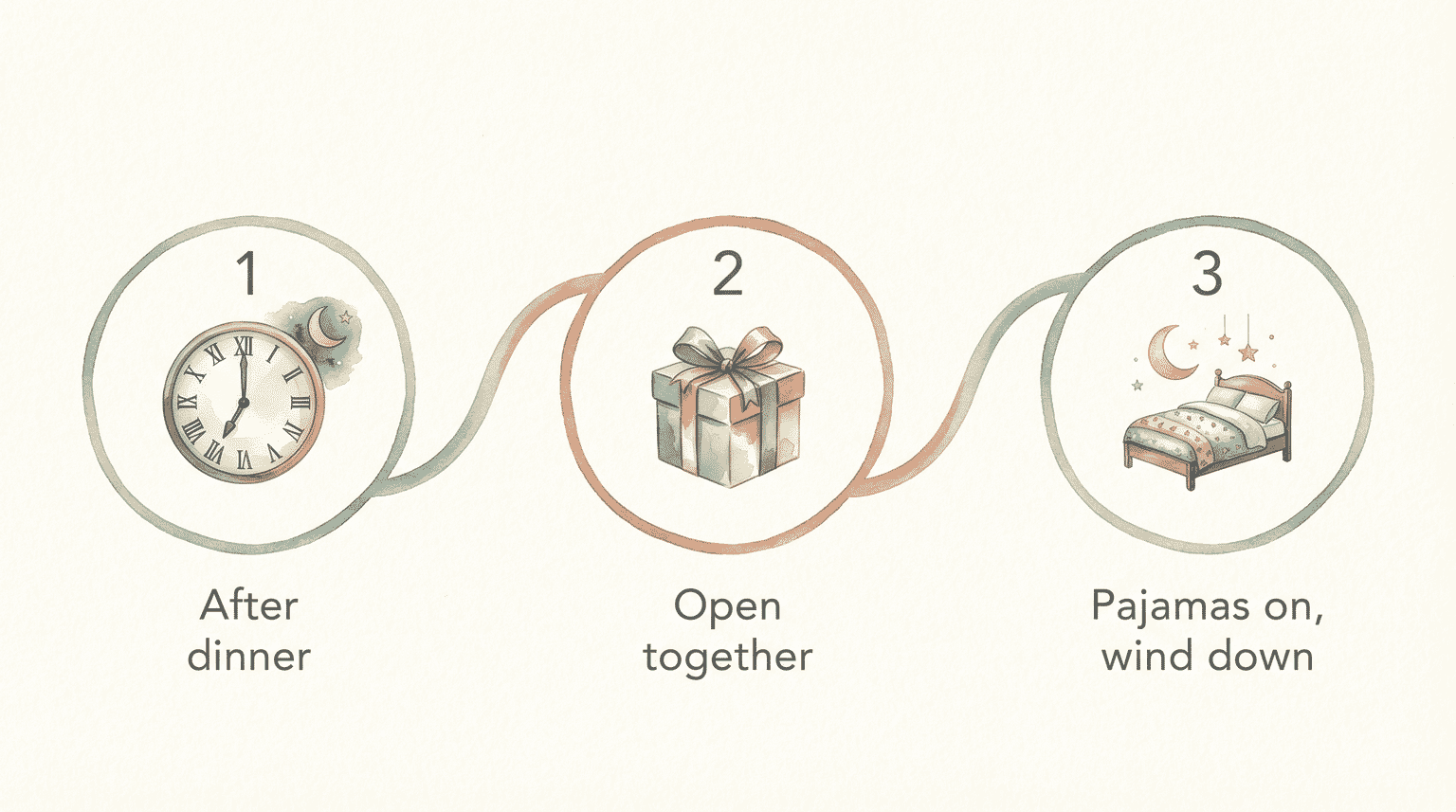
The sweet spot: 1-2 hours before regular bedtime, typically after dinner.
Option 1: The ceremony approach. Gather everyone, present boxes with some fanfare, open together. Works well for families who want the tradition to feel “official” and for households with multiple children (prevents the older kids from spoiling the surprise).
Option 2: The discovery approach. Place boxes on beds or by the tree for kids to find. Creates individual magic moments, especially effective for single-child households or families with large age gaps.
Option 3: The morning approach. Some families open Christmas Eve boxes on Christmas Eve morning, using pajamas for that night and books/activities throughout the day. This spreads the experience across the full day rather than concentrating it at bedtime.
For families managing traditions across multiple households, Christmas Eve boxes work well because they’re portable and can happen at whichever home the children are visiting.
Making vs. Buying the Box
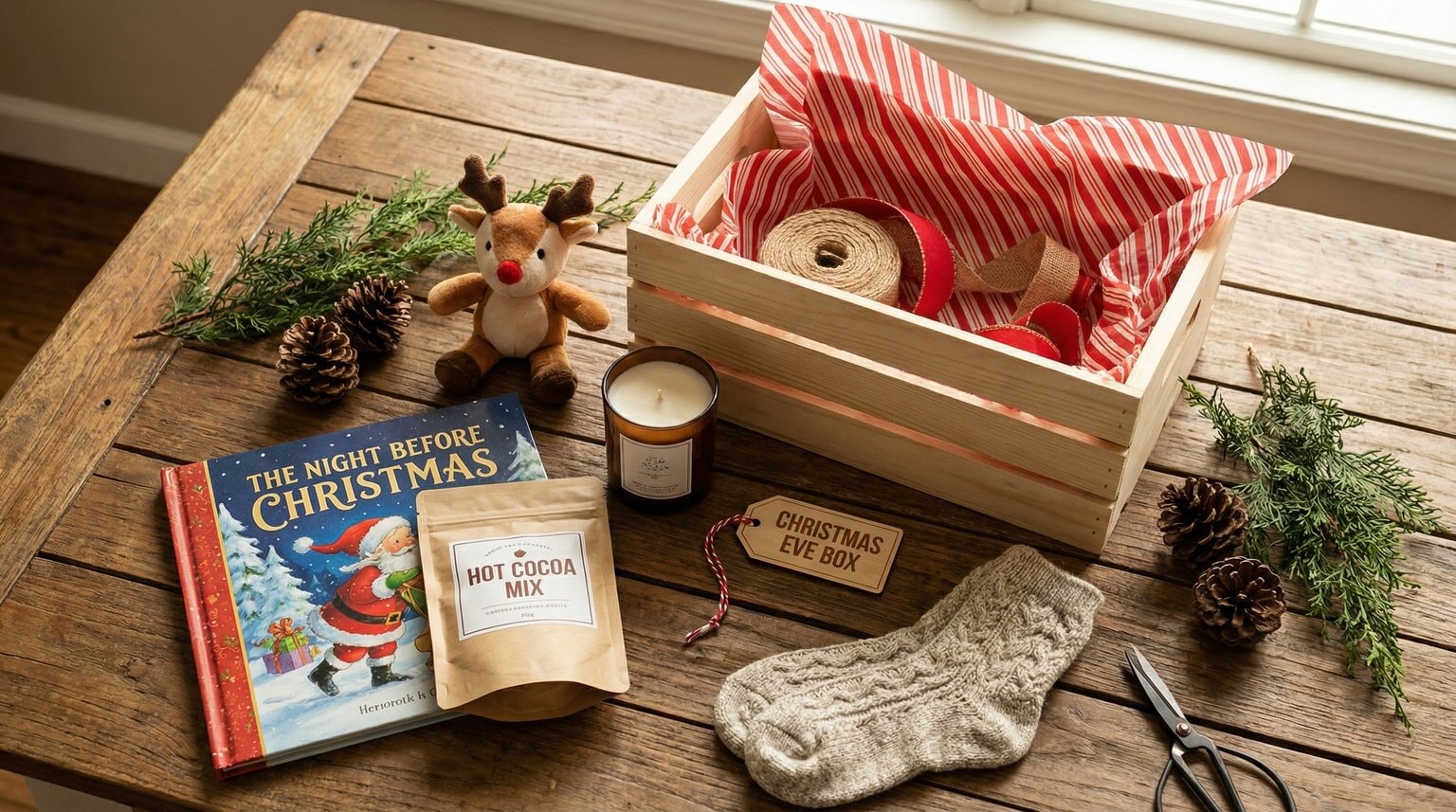
DIY container options:
- Cardboard shipping box wrapped in Christmas paper
- Wooden crate from the craft store (reusable year after year)
- Large Christmas stocking
- Fabric gift bag
- Basket with tissue paper
Reusability consideration: If you plan to continue the tradition, investing in a sturdy box that becomes “the Christmas Eve box” adds to the ritual’s significance. My kids now recognize their individual boxes before they’re even opened.
Budget tiers:
$15 box: Pajamas from Target or Old Navy ($8-10), library book (free), hot cocoa packet and marshmallows ($2), coloring sheets printed at home, one candy cane.
$30 box: Pajamas ($10-12), new book ($8-10), cocoa mug and supplies ($5), small craft kit or puzzle ($5-7).
$50+ box: Quality pajamas ($15-20), hardcover book ($15), specialty cocoa set ($8-10), movie rental or small game ($5-10), dated ornament ($5-10).
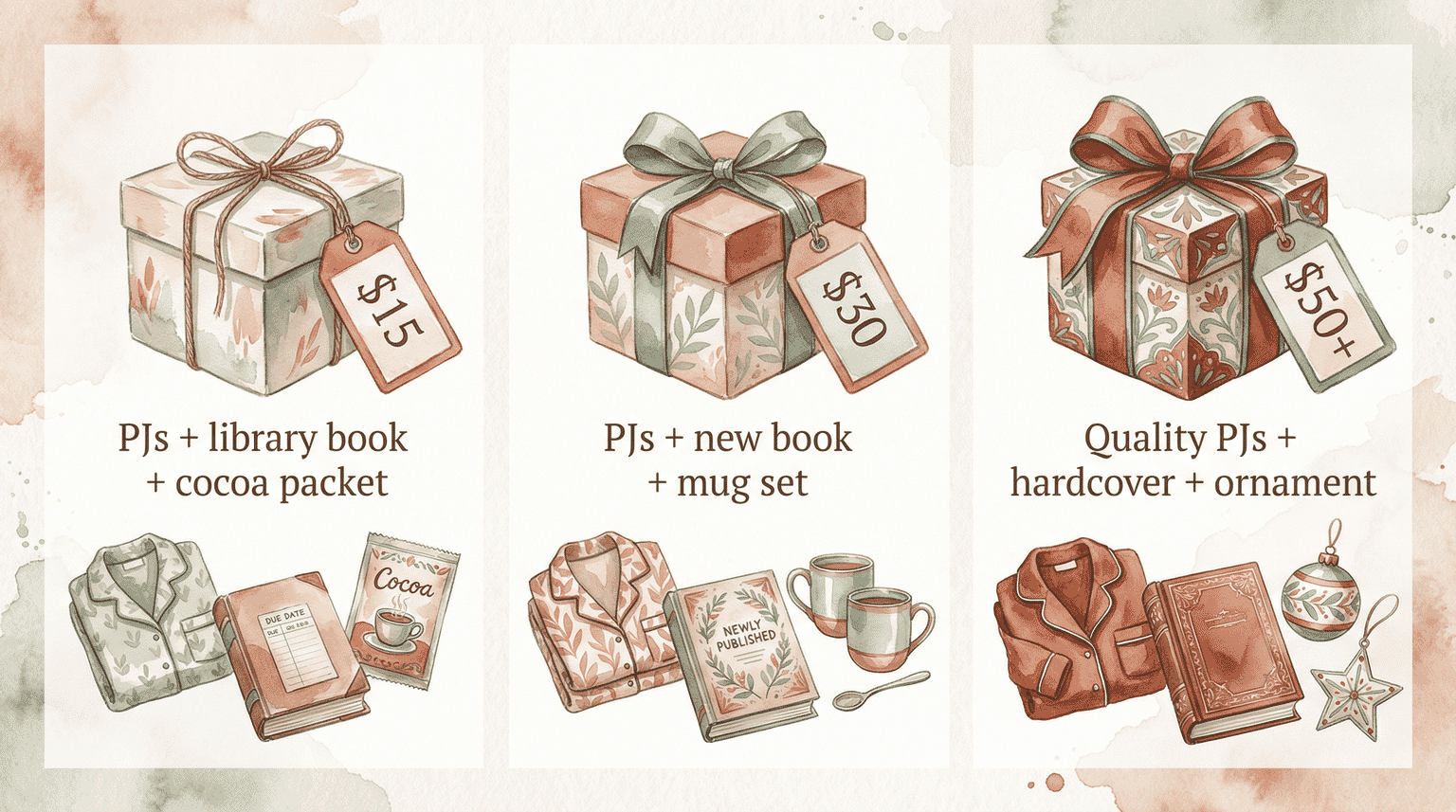
The magic lives in the presentation and ritual, not the price tag.
Quick Reference: Christmas Eve Box by Age
| Age Group | Core Items | One Upgrade Item | Safety Note |
|---|---|---|---|
| 0-12 months | Soft footie pajamas, board book, warm milk | Sensory toy | All items larger than a toilet paper tube |
| 1-2 years | Zip-front PJs, touchy-feely book, special cup | Stacking toy or crayons | No small parts, no balloons |
| 3-5 years | Character pajamas, picture book, cocoa supplies | Play-Doh or sticker book | Supervise with small craft supplies |
| 6-10 years | Matching family PJs, chapter book, popcorn | Dated ornament or card game | Include safety gear with any riding items |
| 11+ years | Cozy loungewear, novel, movie selection | Journal or hobby supplies | Respect their input on preferences |
Use this as a starting point, then customize based on what your specific child lights up about. The best Christmas Eve boxes feel personally chosen, not pulled from a generic list.
Frequently Asked Questions
What do you put in a Christmas Eve box?
The classic Christmas Eve box includes pajamas, a book, hot cocoa supplies, and one small activity or treat. Most families add a Christmas movie for a complete evening experience. Keep it simple—four to six thoughtfully chosen items create more magic than an overstuffed box.
What age should you start a Christmas Eve box?
You can start at any age, though children begin anticipating and remembering the tradition around age 2-3. For babies under 12 months, focus on sensory-safe items like soft pajamas and board books—the tradition benefits parents as much as the child in those early years.
How many items should be in a Christmas Eve box?
Four to six items is the sweet spot for most ages. Child development research suggests that fewer, meaningful items create better engagement than overwhelming abundance. Include one item from each category: something to wear, something to read, something to eat or drink, and something to do.
When should kids open their Christmas Eve box?
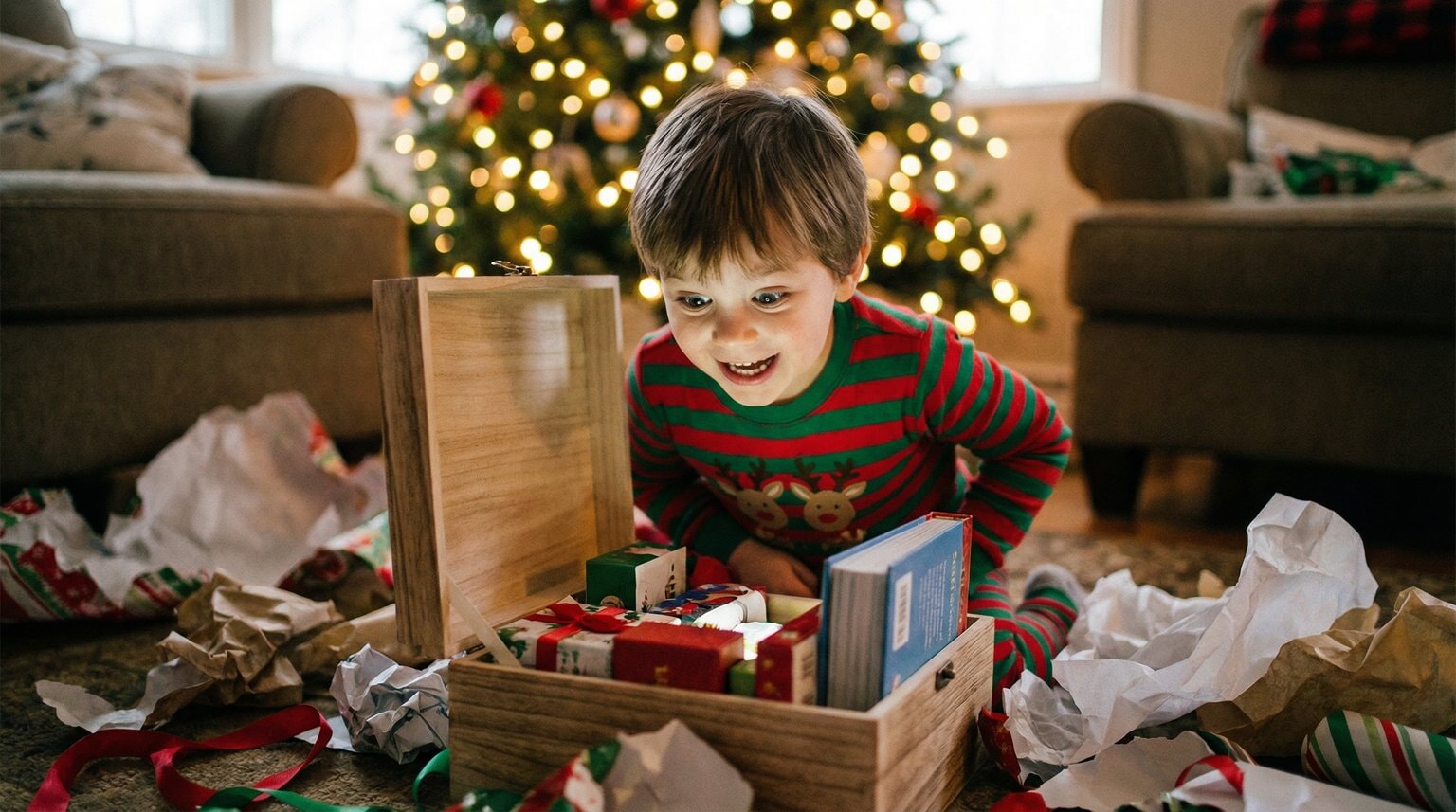
Most families open Christmas Eve boxes after dinner, allowing 1-2 hours before bedtime. This timing lets children put on pajamas, start a book or movie, and wind down without disrupting sleep. Avoid opening too late, as excitement may keep kids awake.
Share Your Story
What goes in your Christmas Eve box? I’m always looking for fresh ideas—especially ones that don’t involve buying more stuff. Would love to hear what your family actually looks forward to opening.
I read every comment and steal the best ideas for next year’s boxes.
References
- Boston University Holiday Gift Experts – Research on experience gifts and imaginative play importance
- UC Santa Cruz Gift and Development Research – Study on how toys build cognitive and social skills
- New York State Department of Health Safety Guidelines – Official toy safety recommendations by age
- University of South Florida Holiday Research – Insights on family cooking and holiday routines

Share Your Thoughts