

Your daughter rips open the package, and for a split second, you see it—the flicker of confusion, the forced smile, the quiet “oh… thanks.” The grandparents are watching expectantly. You’re watching your daughter. And suddenly you’re managing everyone’s emotions while your own stomach drops.
I’ve been in this exact moment more times than I can count. With eight kids spanning ages 2 to 17, gift-opening has become something of a spectator sport in our house—complete with every possible reaction from genuine squeals to barely concealed disappointment.
Here’s what the research actually shows about why this happens, and exactly what to say in the five scenarios where it matters most.

Key Takeaways
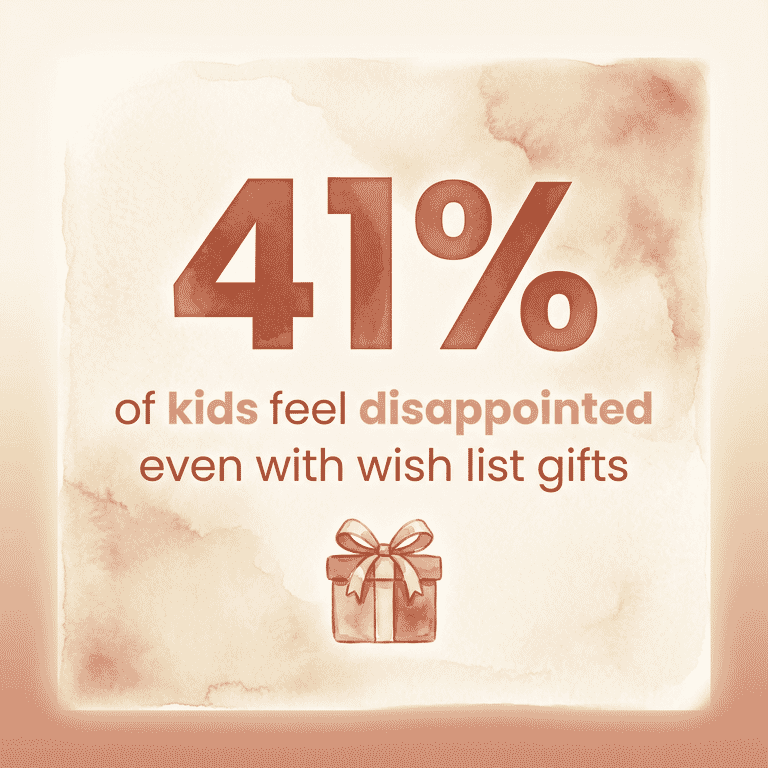
- Gift disappointment is normal—41% of kids feel let down even with wish list items, and it’s developmental, not a character flaw
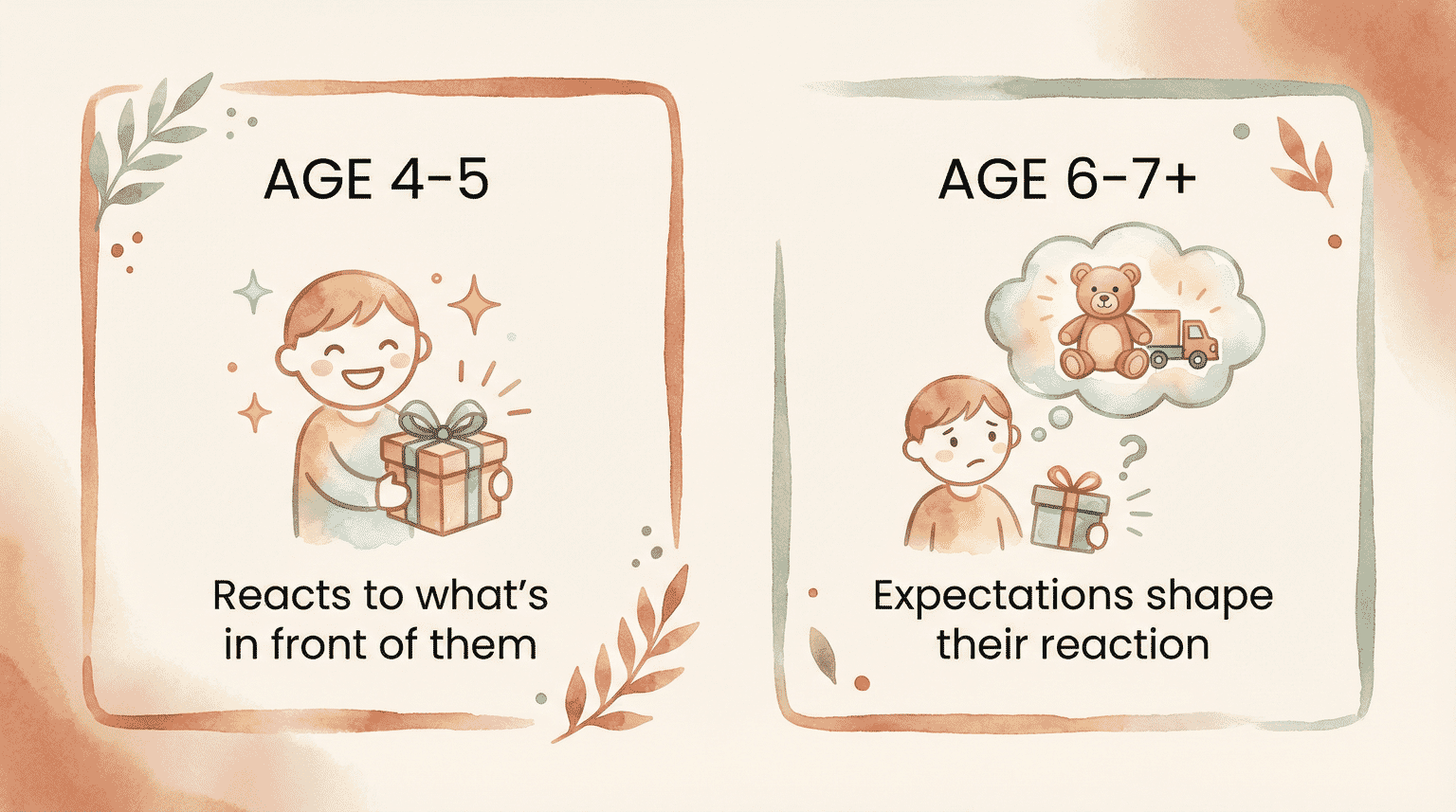
- Children’s expectations start shaping reactions around age 6-7—younger kids react purely to what’s in front of them
- Use the NOTICE-THINK-FEEL-DO framework to build genuine gratitude without forcing fake enthusiasm
- When you blow it (and you will), repair matters more than perfection—kids learn from watching us recover
- Prevention works: calibrate expectations beforehand and practice finding positives year-round
Why Gift Disappointment Happens (And Why It’s Normal)
Here’s something that might make you feel better: surveys show 41% of children feel disappointed even when receiving items from their actual wish list. This isn’t about being spoiled—it’s about how human brains process expectations.
That complexity is exactly why disappointment is so hard for children to navigate. They’re not just processing “I don’t like this”—they’re managing the gap between what they imagined and what they got.
This capacity doesn’t even emerge until around age 2, when brains develop enough to anticipate future events. Before that, there’s no expectation to fall short of.
“Disappointment is a complex feeling, because it is an emotion that consists of several emotional stages. It is based on a desire and a positive expectation that is followed by a negative outcome.”
— Elia Psouni, Professor of Developmental Psychology, Lund University
If you’re dealing with common gift-giving challenges beyond disappointment, you’re definitely not alone. But let’s tackle the specific scenarios where disappointment tends to strike.
Scenario 1: Christmas or Holiday Morning
What’s Happening Developmentally
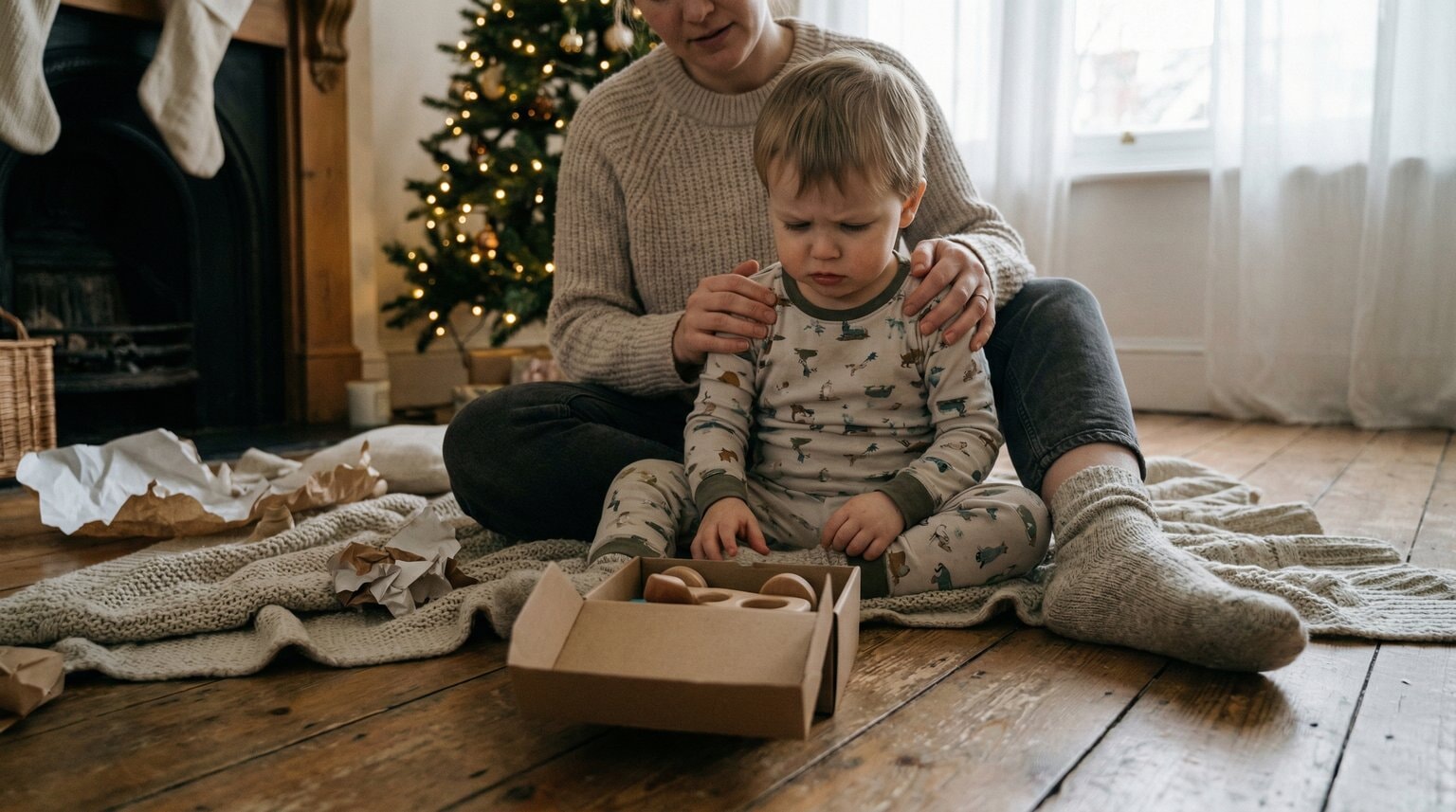
Holiday mornings are a perfect storm for disappointment. Weeks of anticipation, catalog circling, and wish-list making create sky-high expectations—and a 2021 study published in PMC found that those expectations directly shape reactions.
Here’s the fascinating part: children ages 4-5 weren’t affected by prior expectations at all—they’re “more outcome driven,” focusing purely on what’s in front of them. But starting around age 6-7, children with high expectations liked disappointing gifts significantly less than children with low expectations.
The same gift produces completely different reactions depending on what a child anticipated.
What to Do in the Moment
- Stay calm—your regulated response helps them regulate
- Acknowledge briefly without amplifying: “I can see that wasn’t what you expected”
- Resist the urge to lecture while emotions are high
- Redirect to the next gift or activity
What to Say
When they melt down: “That feeling is really big right now. Let’s take a breath together, and we can come back to this present in a bit.”
When they sulk quietly: “I noticed your face changed when you opened that. We can talk about it later—let’s see what’s next.”
When they say something rude: “I hear you were hoping for something different. Right now, let’s focus on [sibling’s] turn, and you and I can talk privately later.”
When You’re the One Who Chose Wrong
If you selected the gift and missed the mark, it’s okay to acknowledge it later: “I thought you’d love that because you mentioned X, but I can see now it wasn’t quite right. Tell me more about what you were hoping for.”
This models that disappointment is survivable and relationships matter more than perfect gifts.
Scenario 2: Birthday Party Gift Opening
What’s Happening Developmentally
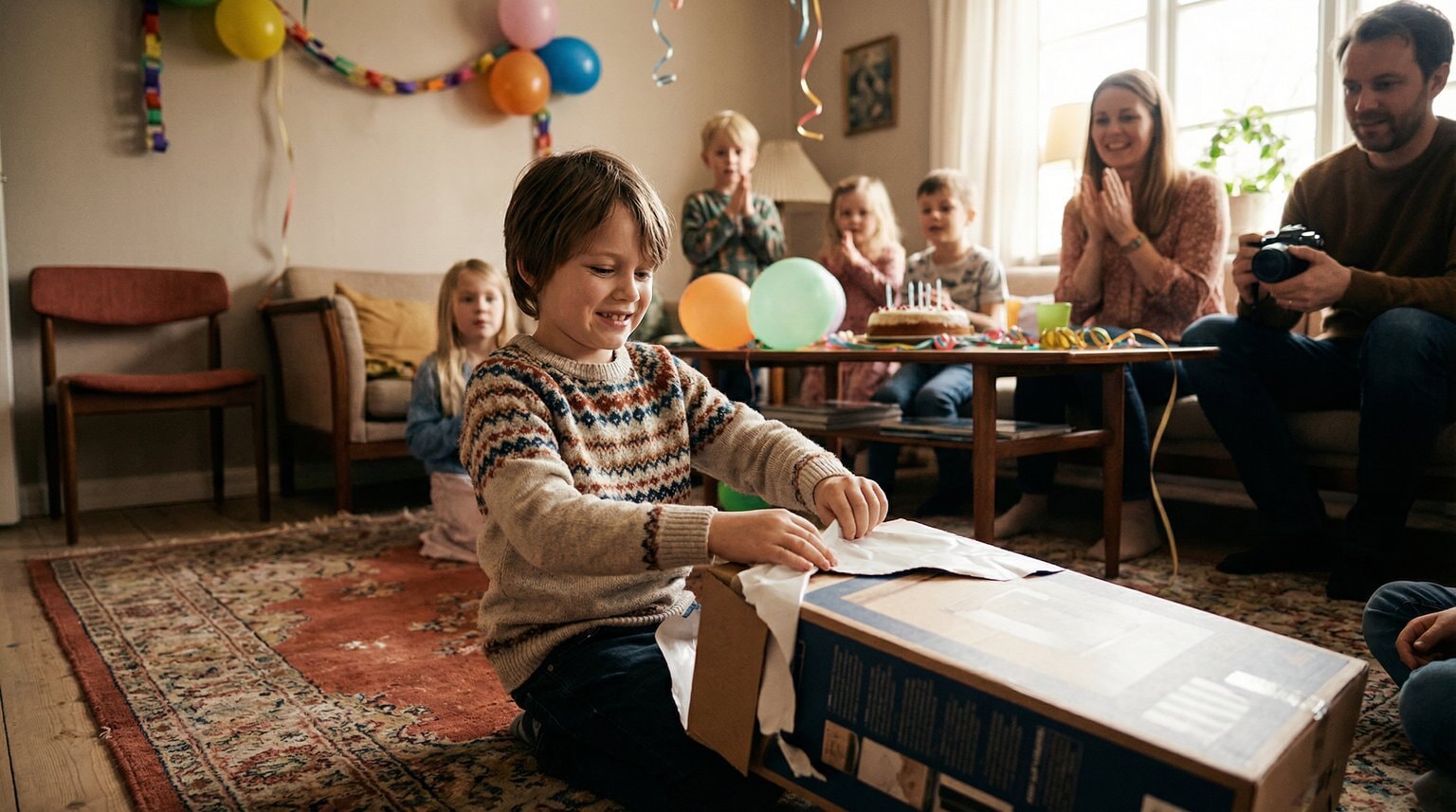
Birthday parties add a layer that Christmas morning doesn’t have: an audience. Cross-cultural research from 2020 found that when preschoolers received disappointing gifts, they displayed more positive expressions (“fake smiles”) when adults were present than when alone.
Even three-year-olds adjust their expressions based on who’s watching.
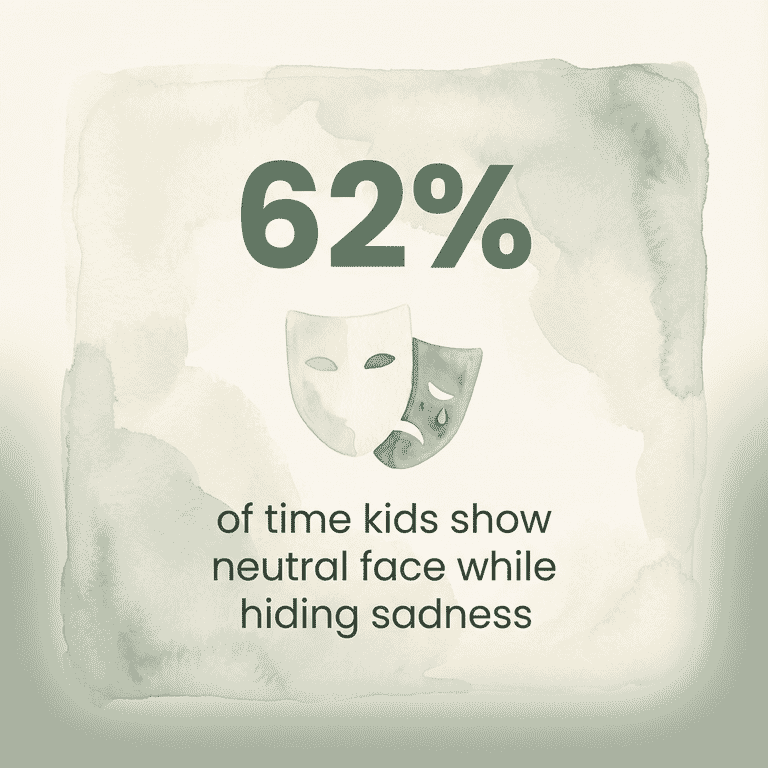
The study found 83.3% of children indicated they didn’t receive the gift they wanted, and 66.6% reported feeling sad when asked directly—yet children spent 61.8% of their time in “neutral” expressions during the task.
Your child may be working harder than you realize to hold it together in public. That neutral face is actually emotional labor.
What to Do in the Moment
- Position yourself nearby during gift opening
- Have an exit strategy ready (a sudden “bathroom break” can work wonders)
- Watch for fidgeting accompanied by forced smiles—research shows this often signals a child suppressing disappointment
What to Say
Public acknowledgment: “What a thoughtful gift from Maya’s family! Let’s put it with your other presents so you can look at everything later.”
Private follow-up (find a quiet moment): “I saw your face when you opened that. It’s okay to feel disappointed—you don’t have to love every single gift. What matters is how we treat the people who gave them.”
Prevention Strategy
Consider delaying public gift opening altogether. Many families now open gifts after the party or have children open one or two and save the rest for home. This removes the performance pressure entirely.
Scenario 3: Grandparent or Extended Family Visits
What’s Happening Developmentally
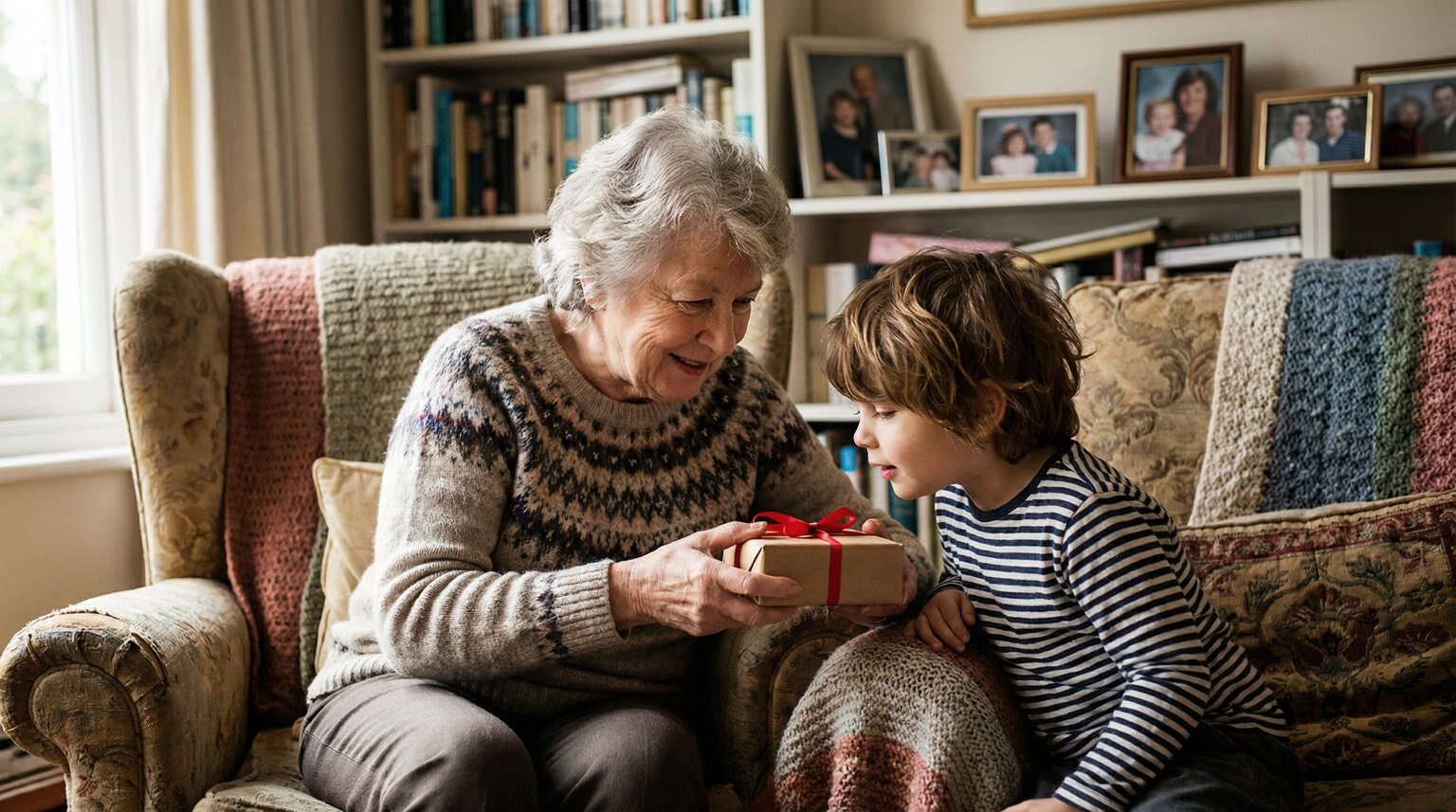
Grandparent gifts come with extra complexity. There’s often a generational gap in understanding what children actually want, combined with your child’s developing theory of mind—their growing ability to understand that Grandma has different knowledge and perspectives than they do.
Here’s what shifted my perspective: Professor Psouni points out that when children feign happiness over a disappointing gift, “it is a sign that the child takes the other person’s perspective and wants to make the other person happy.”
That forced smile you’re cringing at? It might actually be a developmental win—evidence of empathy and social awareness.
What to Do in the Moment
Brief your child beforehand using the “gesture matters more” framing: “Grandma picked this out thinking of you specifically. Even if it’s not exactly what you’d choose, the fact that she thought of you is the real gift.”
What to Say
In the moment (to your child): “Grandma remembered how much you used to love dinosaurs! What do you want to tell her?”
In the moment (redirecting attention): “What a special box this came in! Grandma, tell us about where you found this.”
To grandparent afterward (if needed): “Mom, the kids loved seeing you—that’s always the best gift. If you’re looking for ideas for next time, I can send you a few things they’ve been mentioning.”
For more guidance on how to respond to ungrateful-seeming reactions, especially with family dynamics involved, there’s a lot more to unpack there.
Scenario 4: Thank-You Notes and Follow-Up Conversations
What’s Happening Developmentally
A 2022 study on parent-child gratitude conversations found children struggle with gratitude for three specific reasons: unwanted context (something about the situation felt wrong), physical or emotional state (they were tired or overwhelmed), and gifts that seemed everyday or expected.
One child in the study actually said, “That’s kind of the job of the parent”—highlighting how routine gifts don’t trigger gratitude the same way.
The same research found that parents who emphasized “the gift behind the gift”—the effort, thought, and uniqueness—were more effective at cultivating genuine appreciation.
What to Do
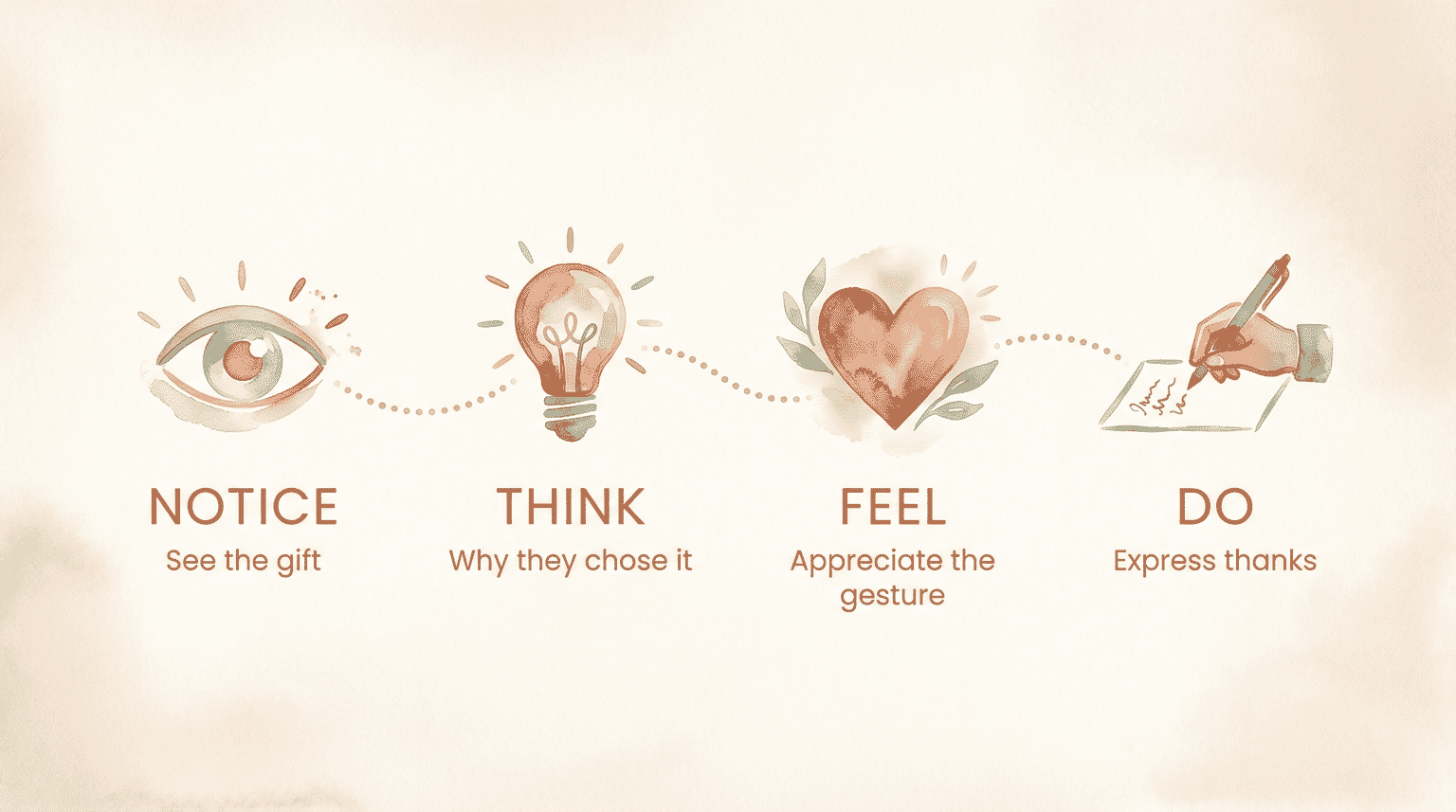
Use the NOTICE-THINK-FEEL-DO framework from gratitude research:
- Notice: Help them recognize what was given
- Think: Discuss why someone chose this specific gift
- Feel: Make space for appreciation of the gesture
- Do: Express thanks in a concrete way
What to Say
Starting the conversation: “Let’s write thank-you notes. For the gift from Uncle Mike, even though it wasn’t your favorite, what do you think made him choose it for you?”
Age-appropriate thank-you note (younger kids): “Thank you for the [gift]. I like the [one specific detail]. Love, [name]”
Age-appropriate thank-you note (older kids): “Thank you for thinking of me and picking out [gift]. I can tell you [noticed something specific about me/put thought into choosing it]. I appreciate you.”
This is part of building genuine gratitude even when disappointed—a skill that takes years to develop.
Scenario 5: When You’ve Already Reacted Poorly

What’s Happening
Let’s be honest: sometimes we’re the ones who blow it. You snapped, “Do you know how ungrateful you sound right now?” in front of everyone. Or you lectured for ten minutes about starving children who’d love to have that toy. Now you’re in a shame spiral.
I’ve been there. Eight kids, countless gift-receiving moments—I have not handled all of them well.
What to Do
Repair matters more than perfection. Children learn more from watching us recover from mistakes than from watching us never make them.
What to Say
To your child: “Earlier, when you opened that gift and I got upset—I reacted in a way I wish I hadn’t. I was worried about Grandma’s feelings, but that doesn’t mean I should have snapped at you. Your feelings about the gift were okay to have. It’s how we express them that we’re working on together.”
If you lectured: “I said a lot of things earlier that probably felt like a pile-on. The truth is, disappointment is a normal feeling. I want to help you handle it, not make you feel bad for having it.”
Quick Reference: What’s Realistic at Each Age
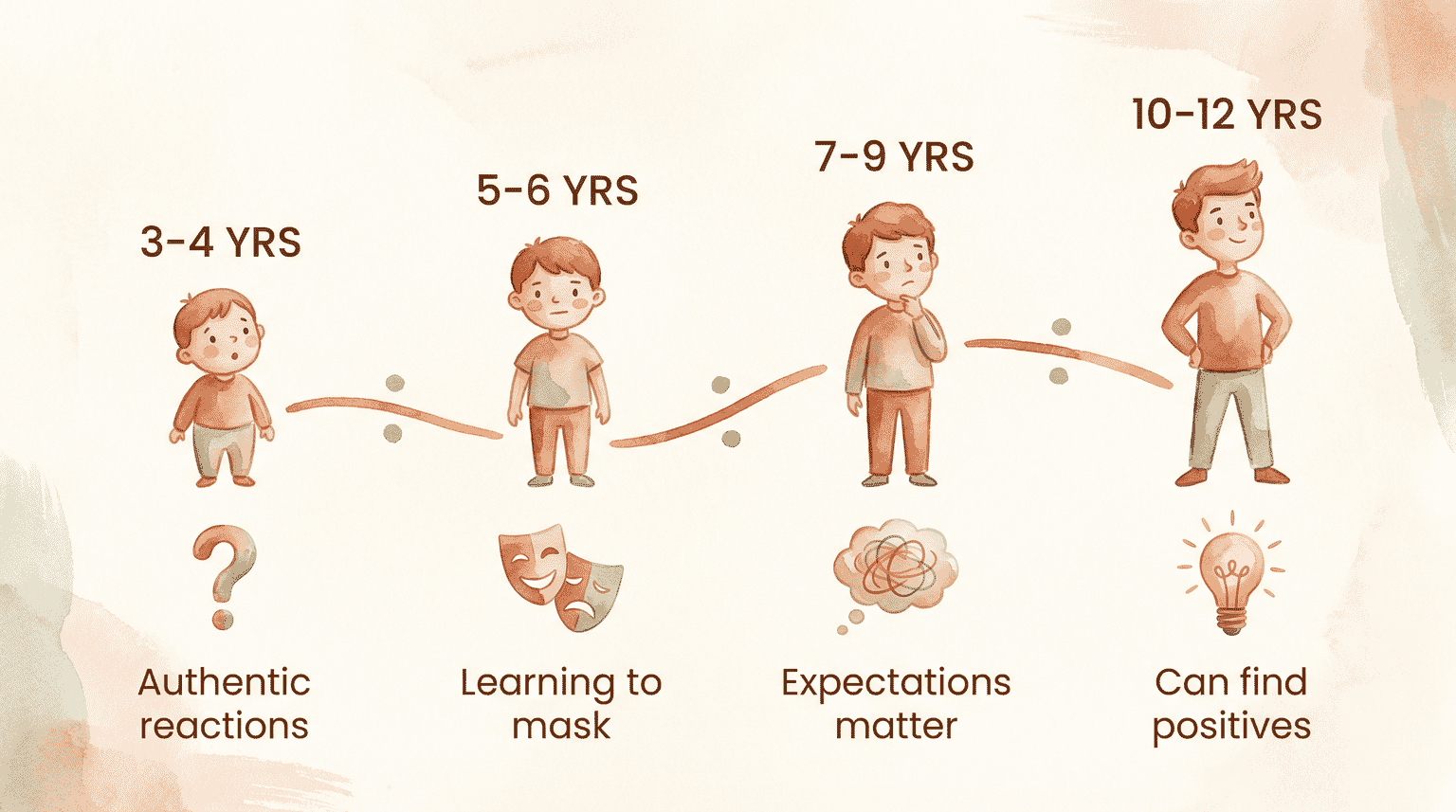
| Age | What’s Developmentally Normal |
|---|---|
| 3-4 | Can begin controlling expressions when others watch, but may not yet understand why they “should.” Expect authentic reactions. |
| 5-6 | Starting to understand display rules—that shown emotions can differ from felt emotions. Still inconsistent. |
| 7-9 | Expectations now significantly influence reactions. Can mask disappointment more reliably but still need support. |
| 10-12 | Better at perspective-taking and finding positives in disappointing outcomes. Can discuss “the gift behind the gift.” |
Research on emotion understanding shows children acquire approximately two additional emotion understanding components every year starting at age 2. Be patient—this is genuinely hard cognitive work.
Prevention: Setting Up for Success
The best response to gift disappointment is often preventing the conditions that create it. Research from the 2021 expectations study suggests children can learn to “flexibly form expectations in different kinds of situations” to better cope with undesirable outcomes.
Before gift-heavy events:
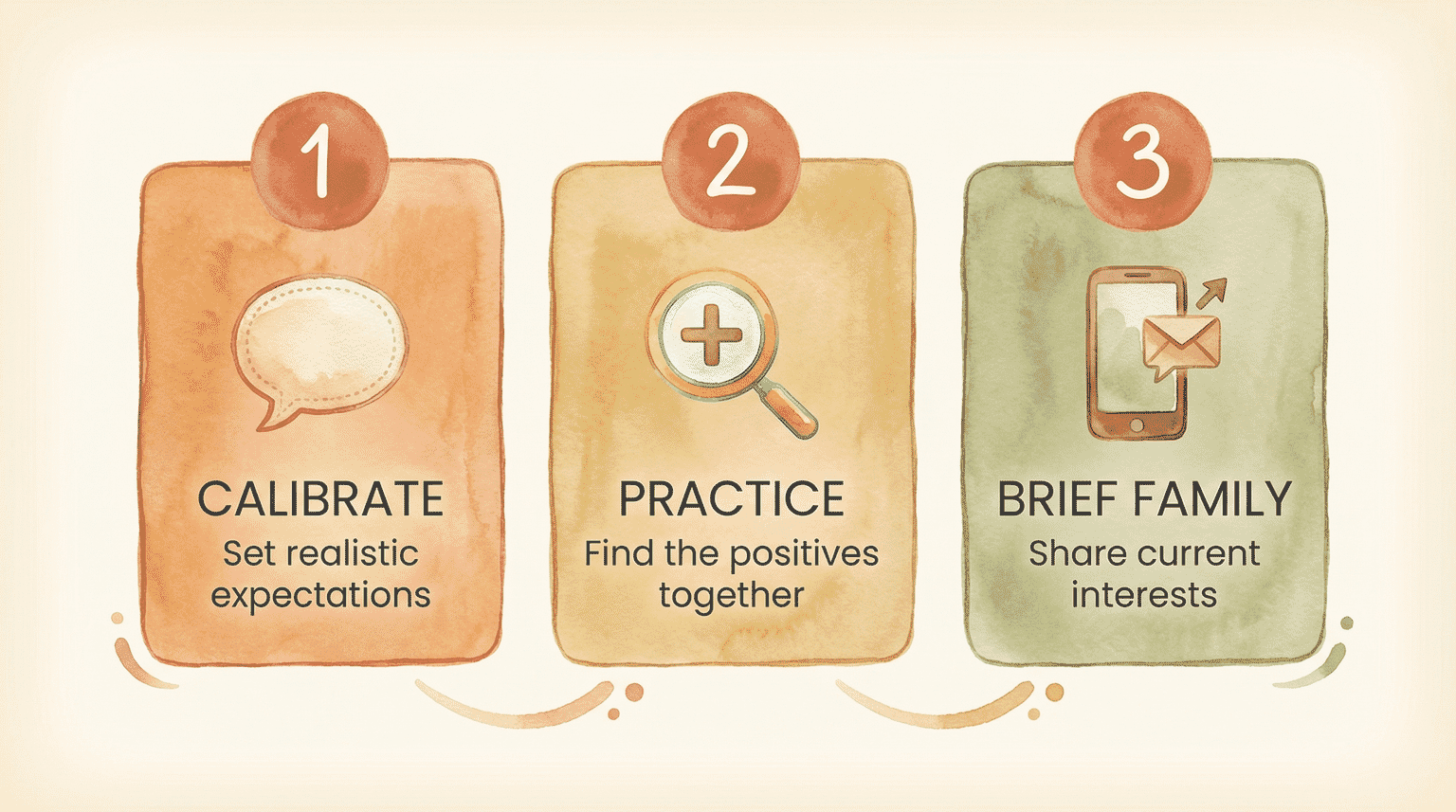
- Calibrate expectations explicitly: “We’re going to Grandma’s, and she’ll have a present for you. It might not be exactly what you’d pick, and that’s okay. The visit is what matters most.”
- Practice finding positives: Year-round, when small disappointments happen, practice asking “What’s one good thing about this situation?” The study found that people who could find positives in disappointing outcomes reported better emotions overall.
- Brief extended family: A quick “Here are a few things they’re into right now” text prevents many mismatches without anyone feeling criticized.
The Bigger Picture
Here’s what I come back to after all these years and all these gift-opening moments: Professor Psouni’s reminder that we should “teach the child that your love is not dependent on their success.”
Gift disappointment isn’t a character flaw to be corrected—it’s a developmental challenge to be navigated together. Every fumbled thank-you, every forced smile, every meltdown is a chance to teach something that matters far more than gift etiquette: that emotions are manageable, relationships survive awkward moments, and their worth isn’t measured by their performance.
In my house, we’ve had spectacular gift fails and beautiful surprise successes. Both are part of the deal. What matters is that we keep showing up for each other—imperfect reactions and all.
Frequently Asked Questions
Is it normal for kids to be disappointed with gifts?
Absolutely—research shows 41% of children feel disappointed even when receiving items from their wish list. Disappointment requires brain development to imagine expectations, a capacity emerging around age 2. Gift disappointment is a normal developmental experience, not a sign of being spoiled.
What should I say when my child doesn’t like a gift?
In the moment, keep it brief: “I can see you were hoping for something different. Let’s set this aside for now.” Avoid lecturing while emotions run high. Later, try: “It looked like that gift wasn’t what you expected. What were you hoping for?” Helping children find something positive about disappointing outcomes improves both emotions and appreciation.
How do I teach my child to be grateful for gifts?
Use the NOTICE-THINK-FEEL-DO framework: help children notice the effort behind a gift, think about why someone chose it, feel appreciation for the gesture, and do something to express thanks. Parents who emphasize “the gift behind the gift”—the giver’s thought and effort—see more effective gratitude development.
Your Turn
What’s your go-to response when your child is clearly disappointed by a gift? I’ve tried redirecting, validating, and occasionally just letting them feel it. Would love to hear what’s worked—and what’s backfired—in your house.
I read every response—your real moments help other parents feel less alone.
References
- Child Mind Institute: Handling Disappointment – Expert guidance on the developmental psychology of disappointment
- PMC – The Impact of Prior Expectations – Research on how expectations shape children’s reactions to disappointing outcomes
- PMC – Cross-Cultural Emotion Expression Study – Research on preschoolers’ reactions to disappointing gifts across cultures
- PMC – Growth in Emotion Understanding – Developmental timeline for emotion display rules
- PMC – What Parents and Children Say About Gratitude – Research on gratitude conversations and the NOTICE-THINK-FEEL-DO framework
- PMC – Dynamic Associations in Emotion Expression – Research on behavioral strategies children use during disappointment

Share Your Thoughts