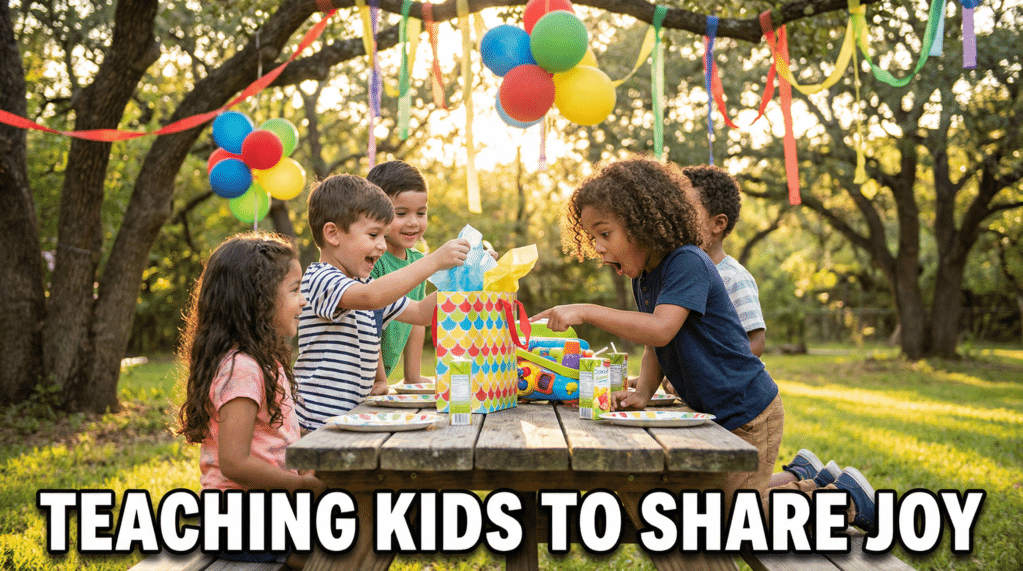
Your child’s friend just opened the coolest birthday present, and your kid looks like she’s attending a funeral. I get it—I’ve watched this scene unfold at approximately 847 birthday parties across my eight kids.
Here’s the brain science that changed how I handle this: celebrating others’ happiness actually activates your child’s own reward centers. It’s not just about teaching manners—it’s giving them a shortcut to feeling good.
Key Takeaways
- Watching someone else’s joy triggers the same dopamine release in your child’s brain—their pleasure centers are literally wired to share happiness
- Give kids an active role at celebrations (“You’re the present helper!”) to transform them from jealous observers into happy participants
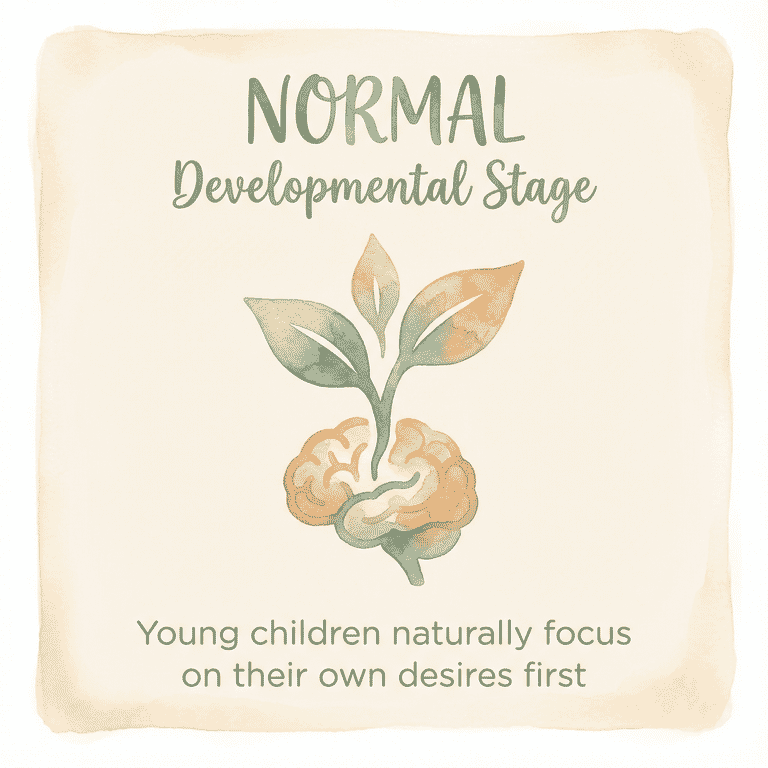
- Young children naturally focus on their own desires—this is developmentally normal, not a character flaw
- Low-stakes practice like pet “birthdays” builds celebration skills before high-pressure party moments
The One Thing Worth Knowing
University of Arizona psychologist Jessica Andrews-Hanna explains it simply: “When we witness something positive happening to another person, we vicariously feel in that person’s pleasure, too.” This is part of the broader science of how gifts affect our brains.
Researchers call this “vicarious reward”—the phenomenon where watching someone else’s joy triggers dopamine release in your child’s brain. The same feel-good chemicals. The same pleasure centers. Their brain is literally wired to share in happiness.
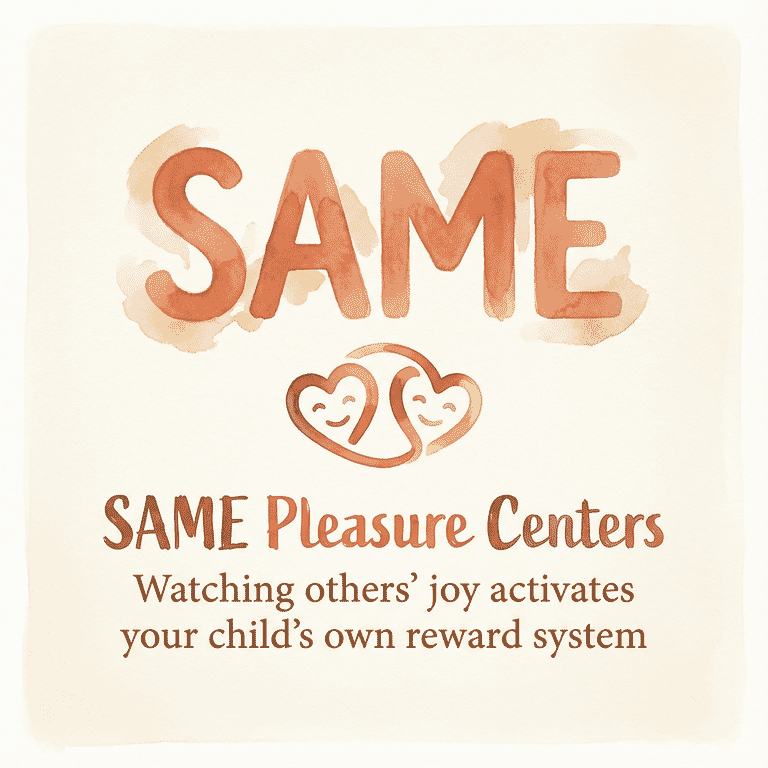
The catch? This skill develops over time. Young children naturally focus on their own desires—that’s developmentally normal, not a character flaw.
But with practice, celebrating others becomes a genuine source of joy, not just polite performance.
As Psychology Today research notes, thoughtful gifts communicate “I see you, and you matter to me.” When we help kids understand this deeper meaning—that gifts represent what gifts really mean about love and connection—they can shift from jealousy to genuine participation in someone else’s happiness.
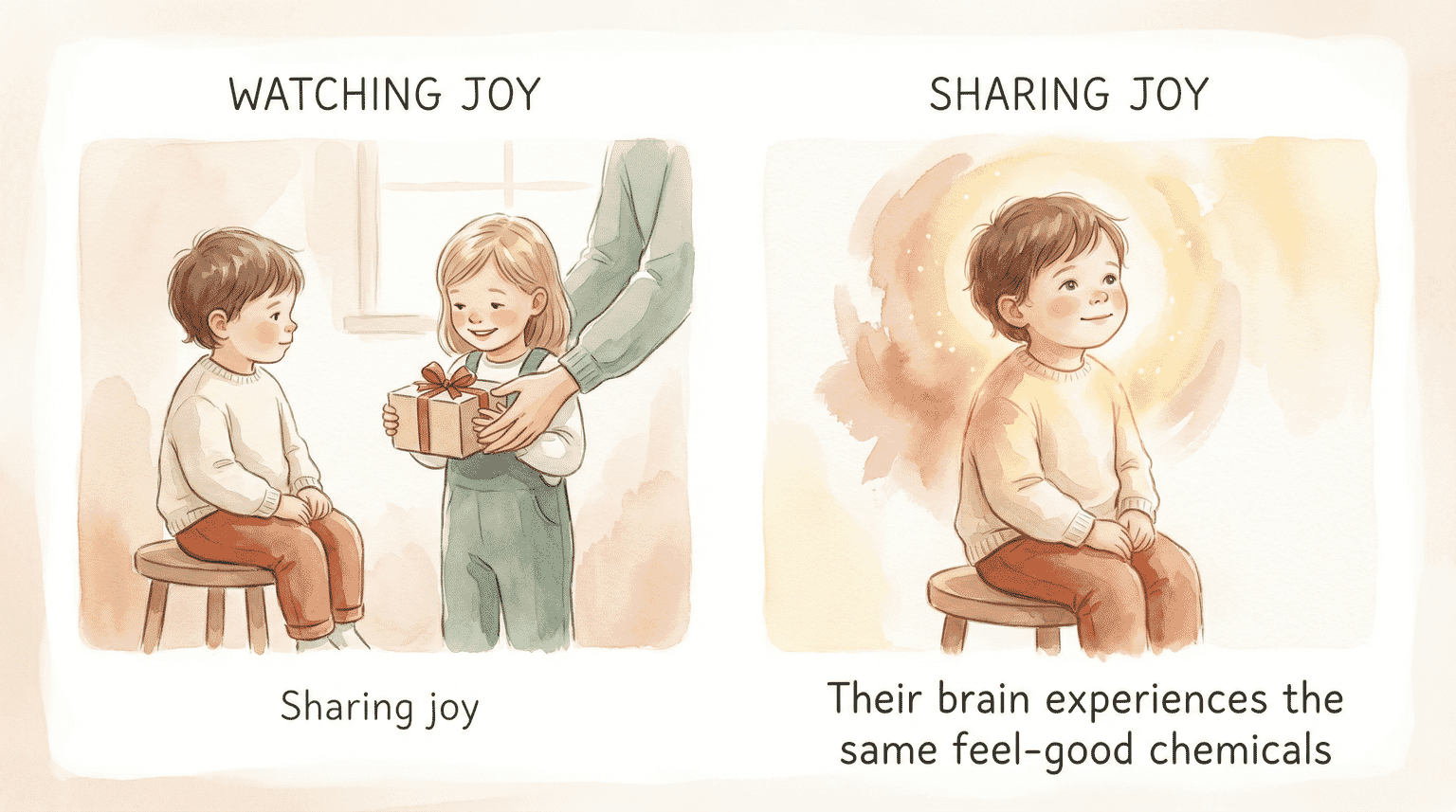
Understanding this brain science shifts everything. You’re not just teaching politeness—you’re helping your child access a built-in happiness hack.
Quick Scripts That Actually Work
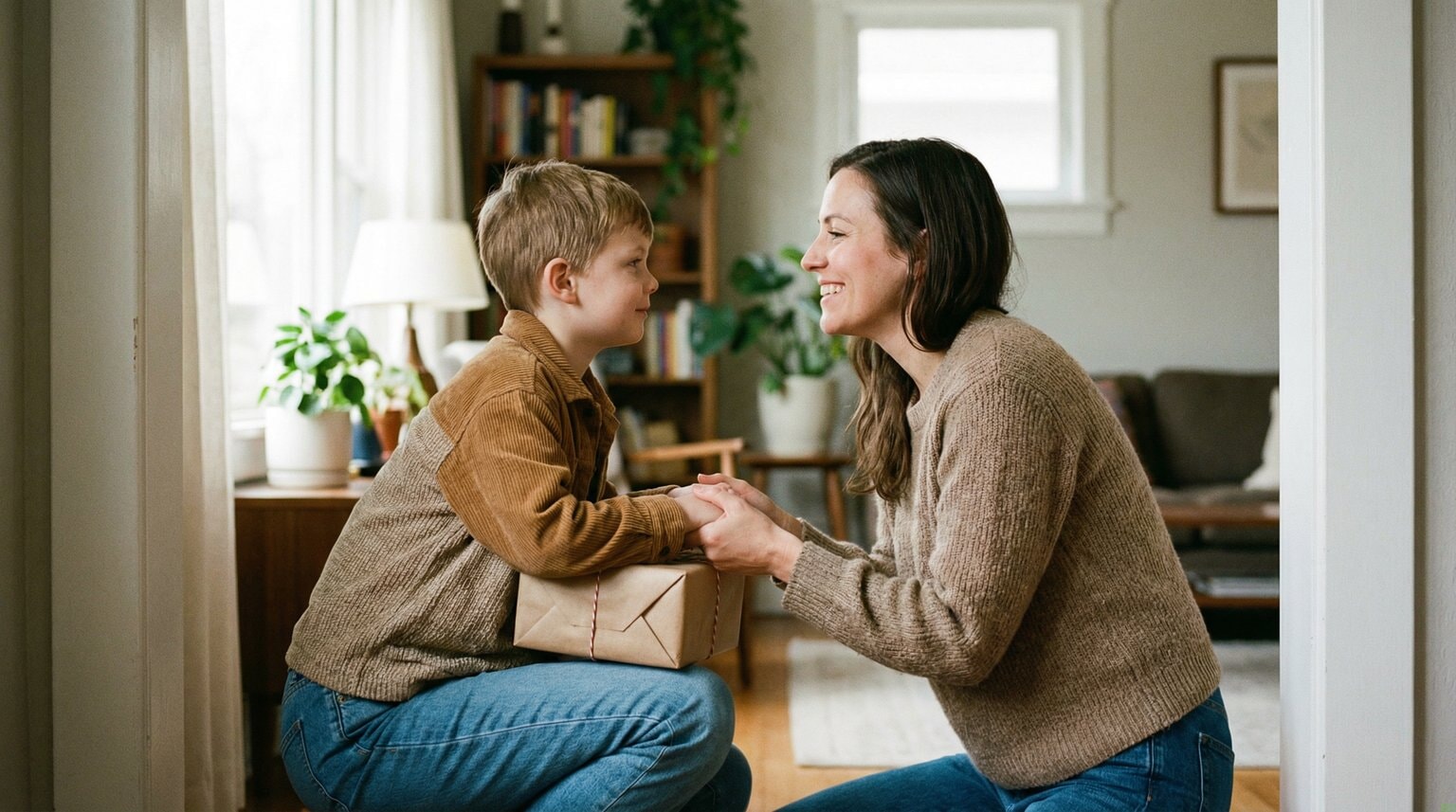
Before a friend’s birthday party:
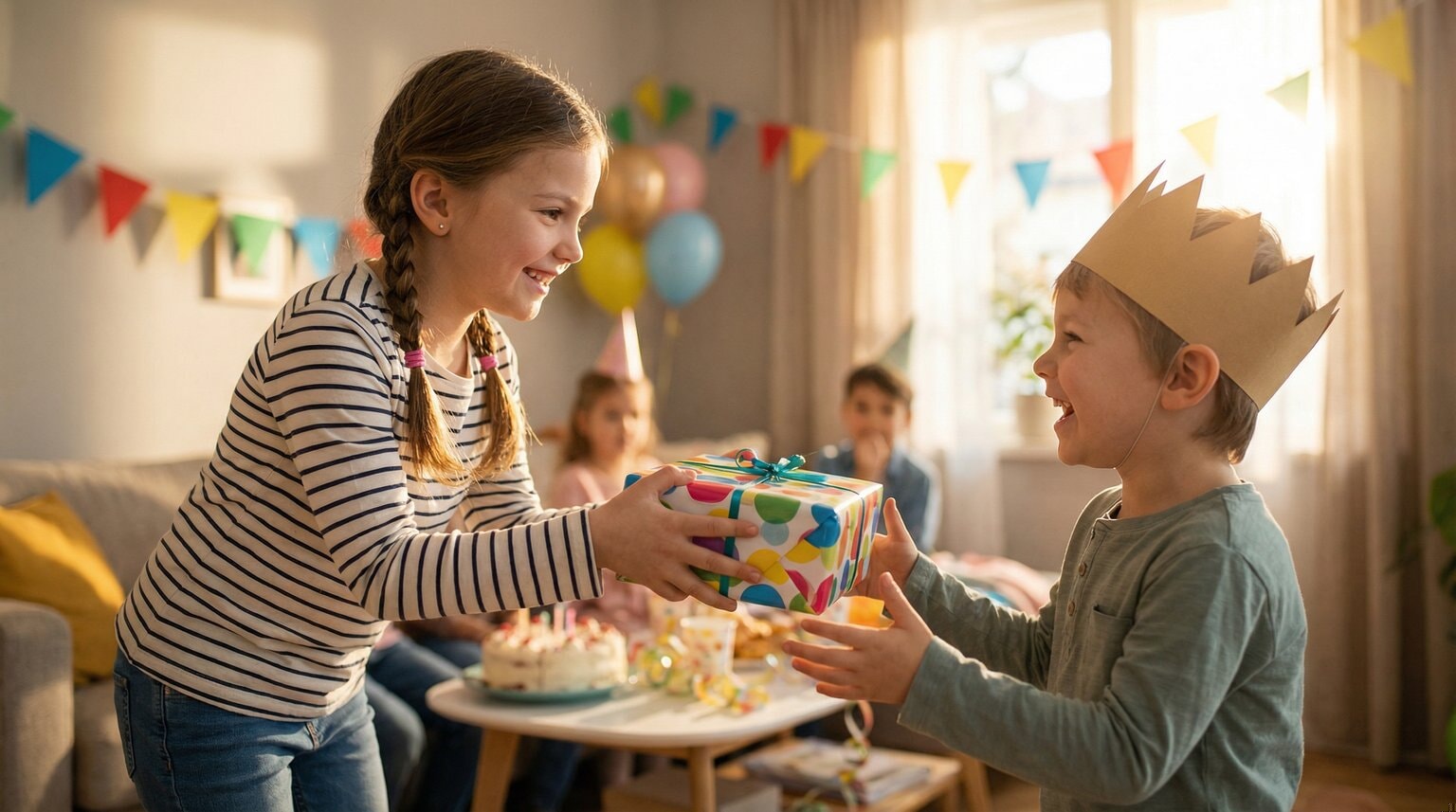
“Today is Maya’s day to be celebrated. Your job is to be her celebration helper—you’ll hand her the presents when it’s time.”
Giving kids a role transforms them from passive observers into active participants. My 6-year-old went from sulking to shouting “OPEN MINE NEXT!” (progress, sort of).
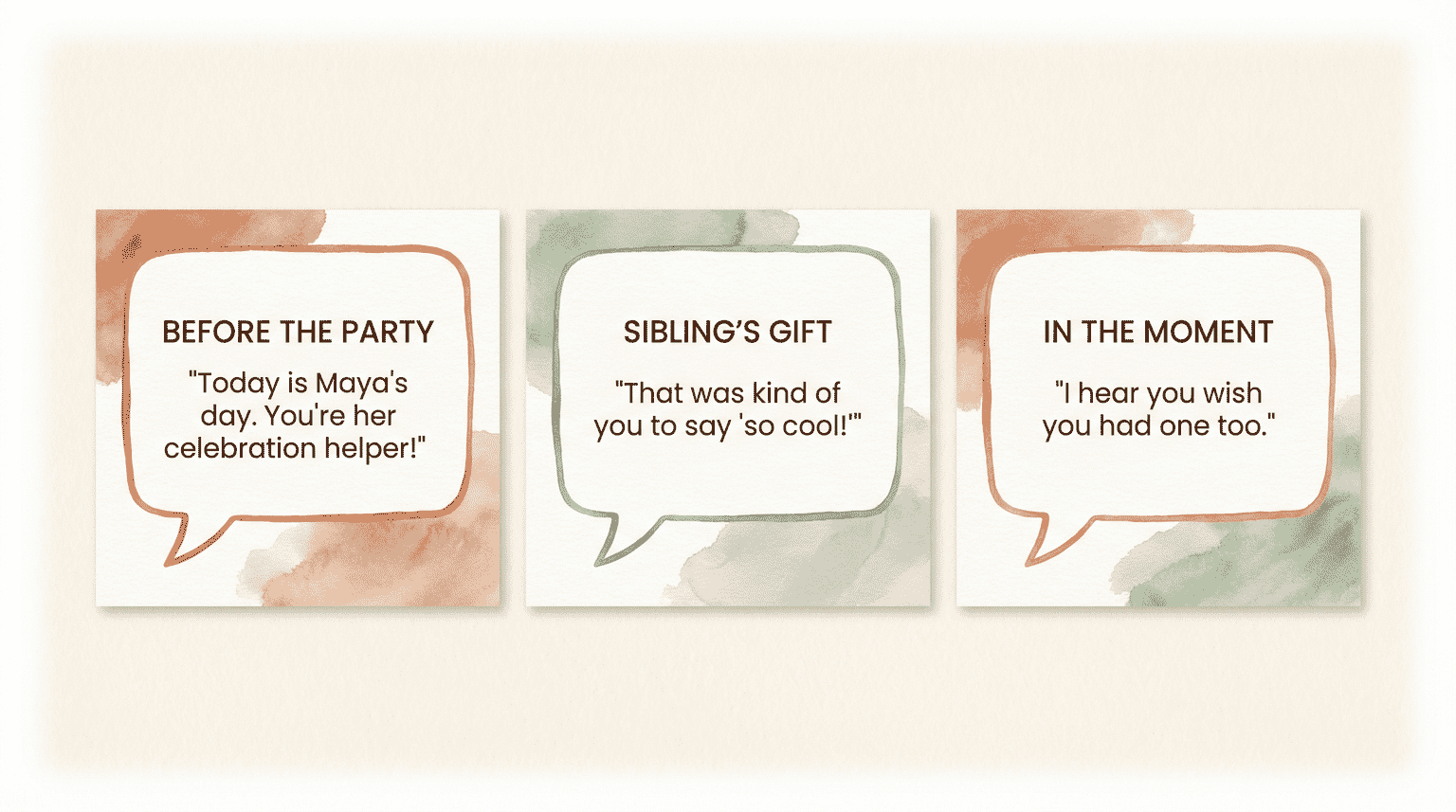
When a sibling opens a gift:
“Your brother’s birthday is his special day. I noticed how you said ‘that’s so cool!’—that was kind. Tomorrow we can plan something fun for just you.”
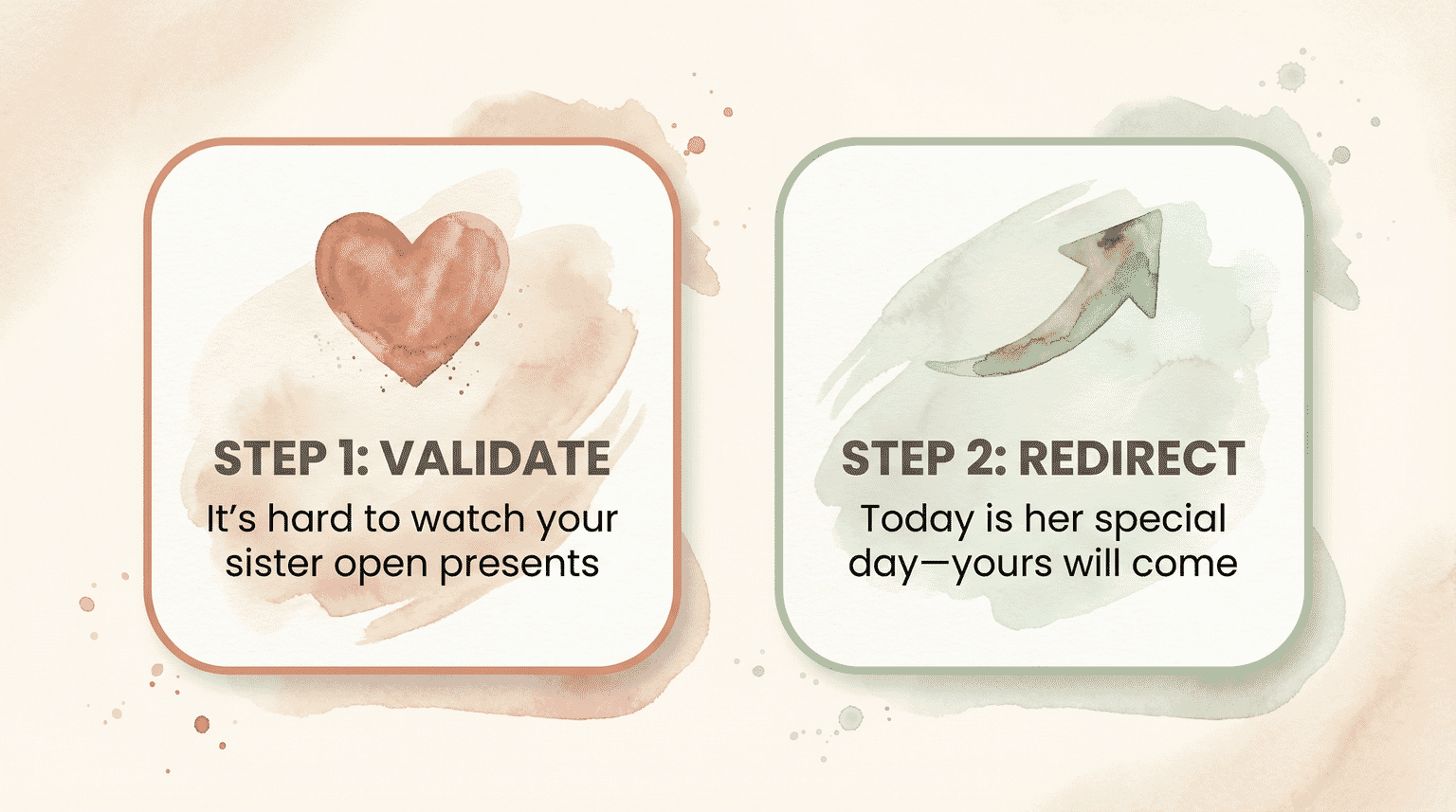
Validate first, redirect second, praise any celebration effort you spot.
In-the-moment redirect:
“I hear you wish you had one too. Right now, let’s see how excited Grandma is to watch your sister open her gift.”
Acknowledging their feelings doesn’t mean giving in to them. It just means you see them—and then gently guide them toward something better.
Simple Ways to Practice
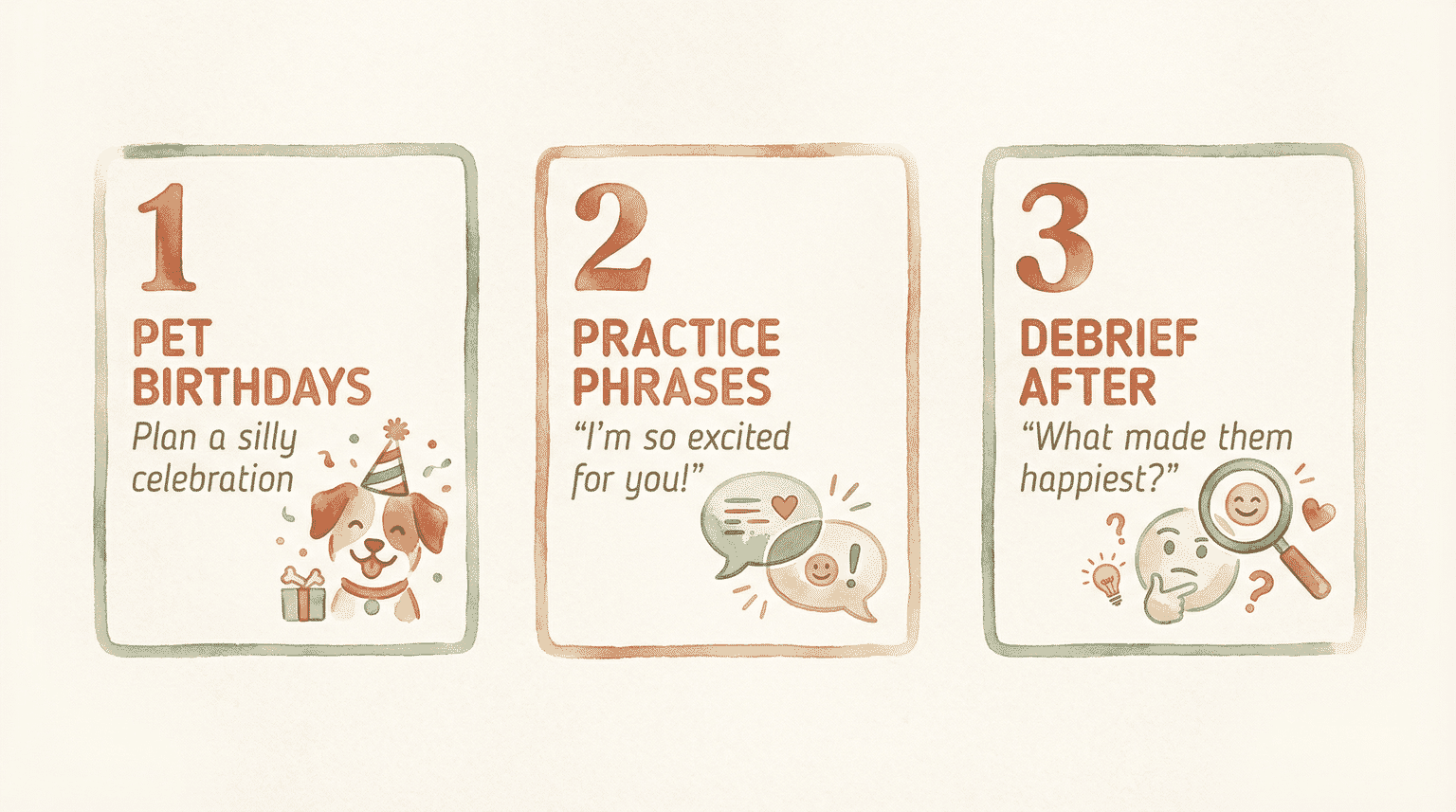
Build celebration skills during low-stakes moments:
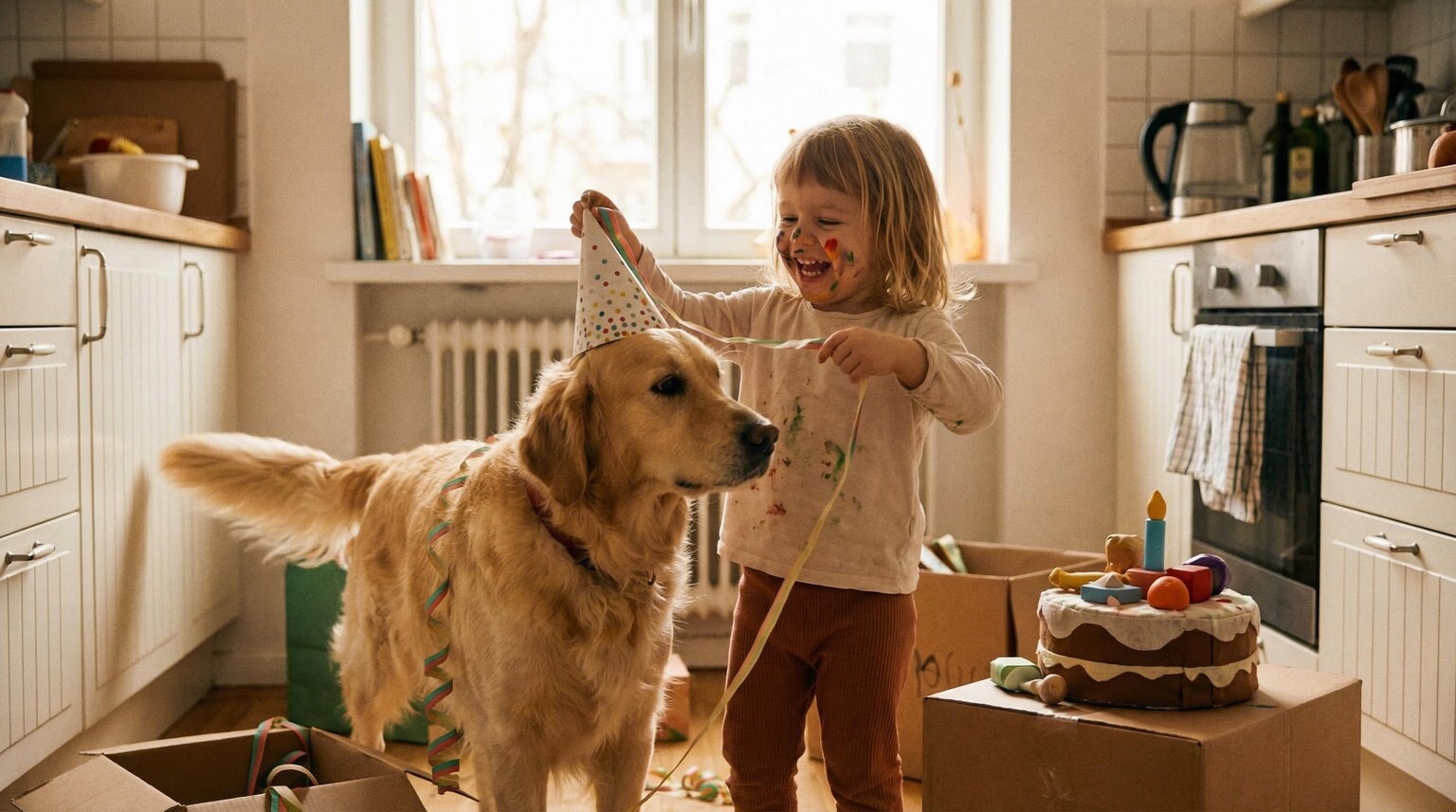
- Pet “birthdays”: Let your child plan a celebration for the family dog. Silly? Yes. Effective practice? Also yes.
- Practice phrases: Role-play saying “I’m so excited for you!” before events
- Debrief afterward: “What made Emma happiest at her party?” builds noticing skills
Keep your age-appropriate expectations realistic—a 3-year-old and a 10-year-old have very different capacity for this skill. And honestly? Even adults struggle sometimes. Give yourself and your kids grace while you practice together.
Frequently Asked Questions
Why is it hard for kids to be happy when others get gifts?
Children naturally focus on their own desires—this is developmentally normal, not a character flaw. While our brains are wired for vicarious reward, this skill requires practice and develops over time with repeated experience.
What should I say when my child is jealous of a sibling’s gift?
Validate first, then redirect: “It’s hard to watch your sister open presents when you want one too. Today is her special day—yours will come.” Later, praise any celebration effort: “I noticed you said ‘cool present!’ That was kind.”
How do I prepare my child for a friend’s birthday party?
Before the party, explain: “Today is Maya’s day to be celebrated. Your job is to be her celebration helper.” Give them a specific role—handing gifts, leading the birthday song, or taking photos—so they’re active participants rather than passive observers.
What About You?
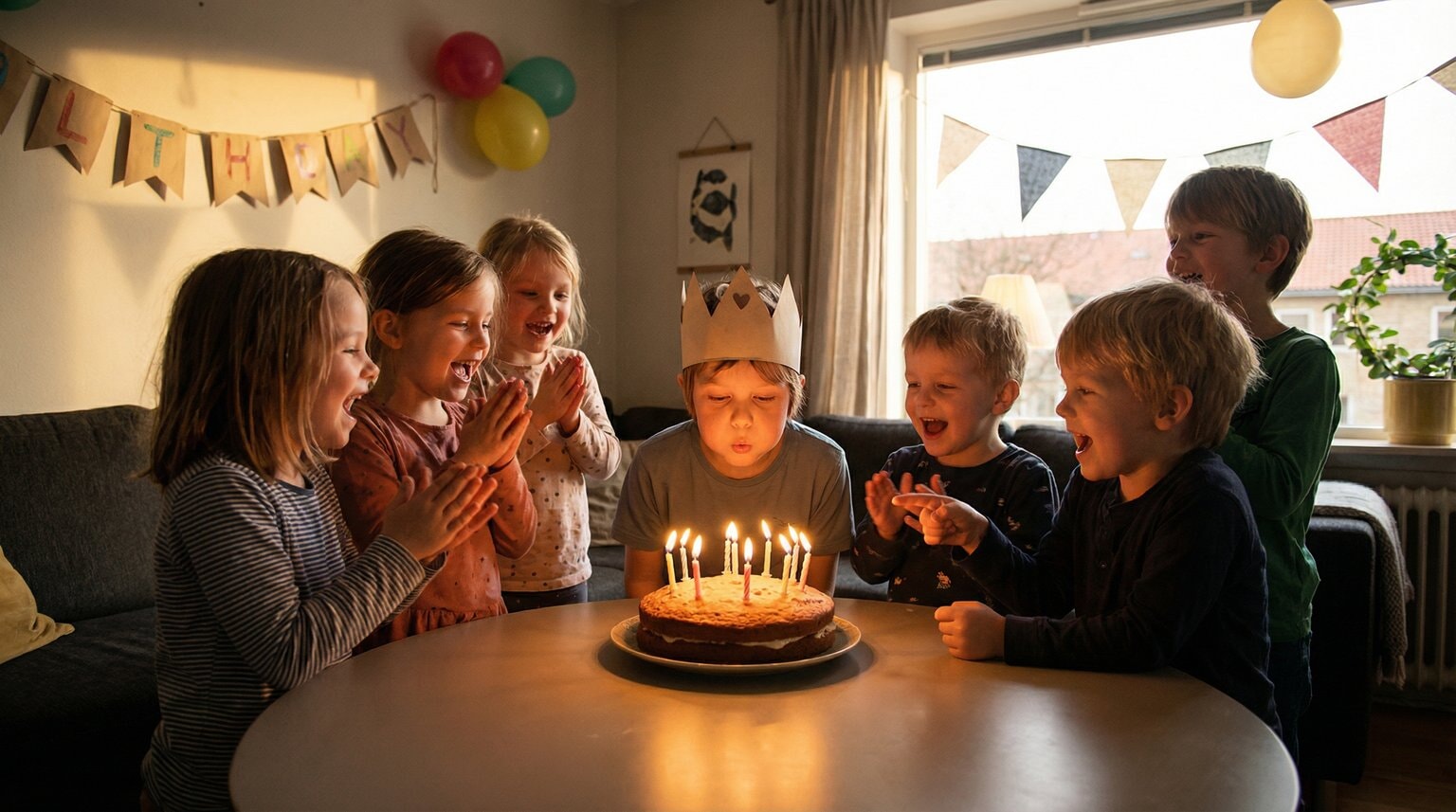
How do you help your child celebrate others’ big moments? I’d love to hear what scripts or strategies have worked—especially for the jealousy that pops up at birthday parties.
Your celebration wins help other parents navigate those tricky birthday party moments.
References
- Understanding the Brain Science Behind Giving and Receiving Gifts – University of Arizona research on vicarious reward and gift-giving psychology
- The Power of Gifting – Psychology Today exploration of emotional significance in gift exchanges

Share Your Thoughts