

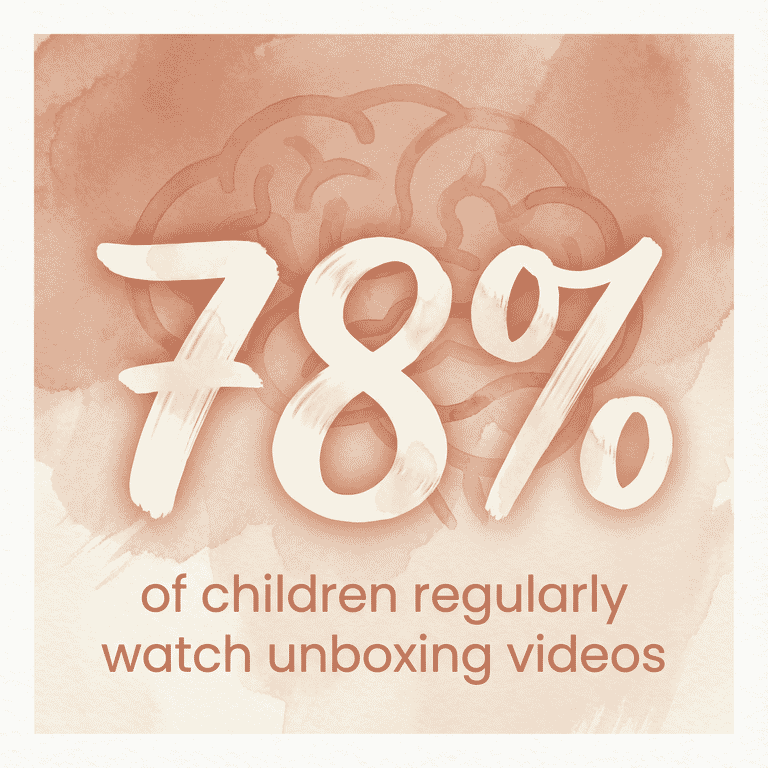
If your child seems magnetically drawn to unboxing videos, they’re not alone—and neither are you. Research shows 78% of children watch unboxing content, and the more they watch, the more purchase demands they place on parents.
The 2025 Common Sense Census found that 40% of children have a tablet by age 2—meaning the unboxing pipeline starts earlier than ever. I’ve watched this play out across eight kids, from my 4-year-old’s “Mommy, I NEED that!” phase to my teenagers explaining why they “have to” see every new tech reveal.
Here’s the thing: if reducing this content feels impossibly hard, it’s not because you’re failing. You’re working against psychology deliberately designed by billion-dollar industries to be irresistible. The good news? Once you understand why these videos captivate children, you can use that same psychology to break the cycle.

Key Takeaways
- Unboxing videos use variable ratio reinforcement—the same psychology that makes slot machines addictive
- Co-viewing with conversation transforms passive consumption into active learning and builds media literacy
- The gradual reduction approach works better than cold turkey—expect 4 weeks of consistent effort before seeing real progress
- Children under 8 typically cannot recognize unboxing videos as marketing content
- Replacement activities must satisfy the same psychological needs—surprise, anticipation, and sensory satisfaction
The Pull You’re Working Against
Before we dive into strategies, a quick note on what you’re up against. Unboxing videos operate on something called variable ratio reinforcement—the same psychological mechanism that makes slot machines addictive.
“Our dopamine system doesn’t just react to the outcome. It lights up in anticipation. The less predictable the reward, the more that dopamine response tends to be.”
— Clinical psychologists, Rowan Center LA
Your child doesn’t know if the next video will reveal something amazing or underwhelming. That uncertainty is precisely what keeps them watching—their brain is chasing the next dopamine-driven feedback loop. The psychological architecture, researchers note, is identical to what drives gambling addiction.
Understanding this isn’t meant to scare you. It’s meant to validate that this isn’t about willpower—yours or your child’s.
It’s about intentionally disrupting a system designed to capture attention. And honestly? Once you see the mechanism clearly, it becomes much easier to work around it.
Strategy 1: Create Predictability
Why It Works
When you control the viewing schedule, you disrupt the variable ratio that makes unboxing videos so compelling. Instead of your child wondering “maybe I can watch just one more,” they know exactly when viewing happens and when it ends. (Try these 3 screen time scripts.)
What to Do
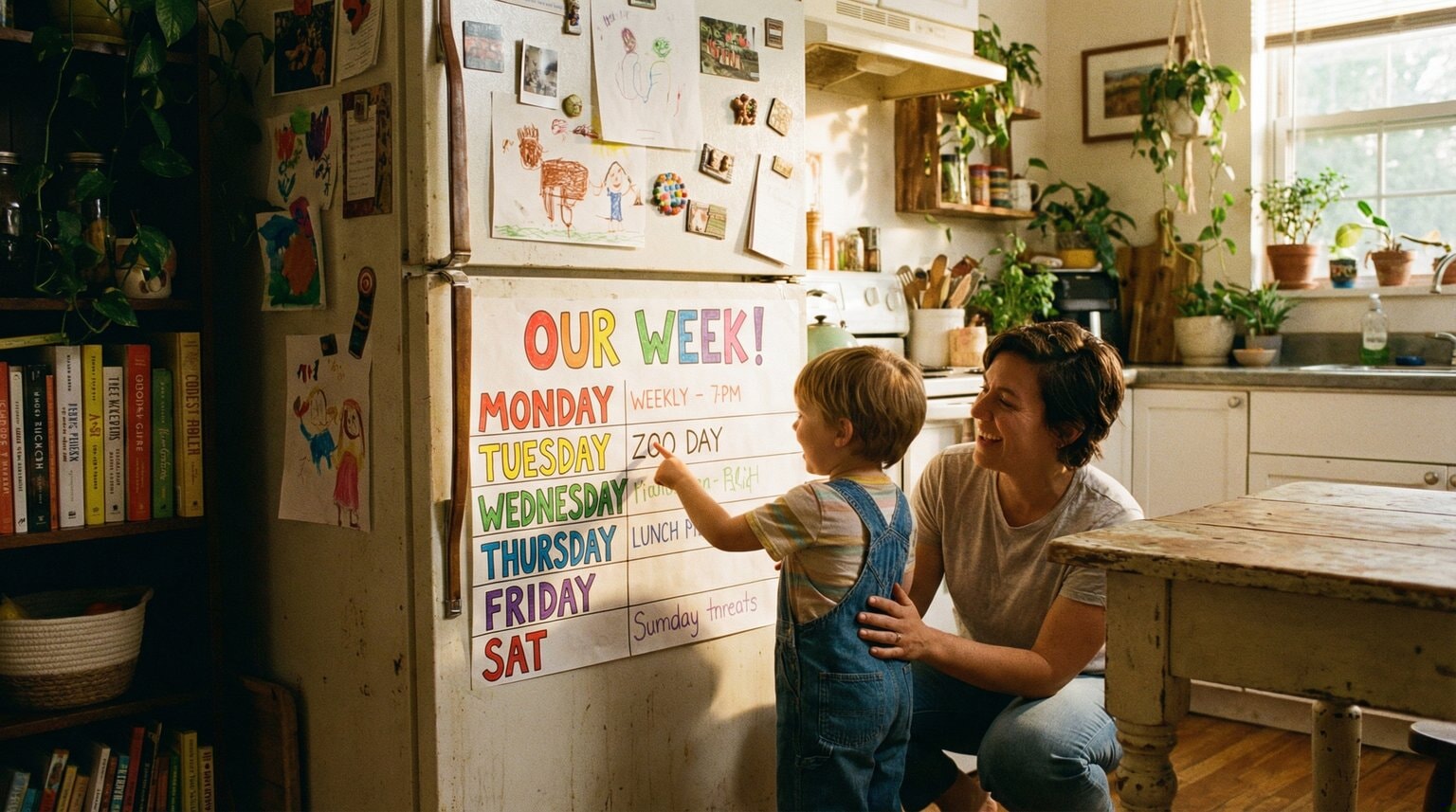
Set specific viewing windows—not “later” or “maybe after dinner,” but “after snack time, we watch one video together.” This transforms watching from an unpredictable reward into a planned activity.
“We’re going to watch one unboxing video together after snack time. When it ends, we’ll build with LEGOs. You get to pick which video we watch.”
— Try this script with your child
The key is consistency. In my house, this meant posting the schedule on the fridge. My 6-year-old stopped asking “can I watch?” every twenty minutes because she knew exactly when it would happen.
Strategy 2: Watch Together, Talk Through
Why It Works
A 2024 NIH study found that supervised co-viewing showed significant improvements in children’s vocabulary, requesting behaviors, and story comprehension. When you watch alongside your child and engage in conversation, passive consumption transforms into active learning.
As one parent in the research noted, “A tablet isn’t a babysitter.” The difference between harmful and neutral viewing often comes down to whether someone’s watching alongside them.
What to Do
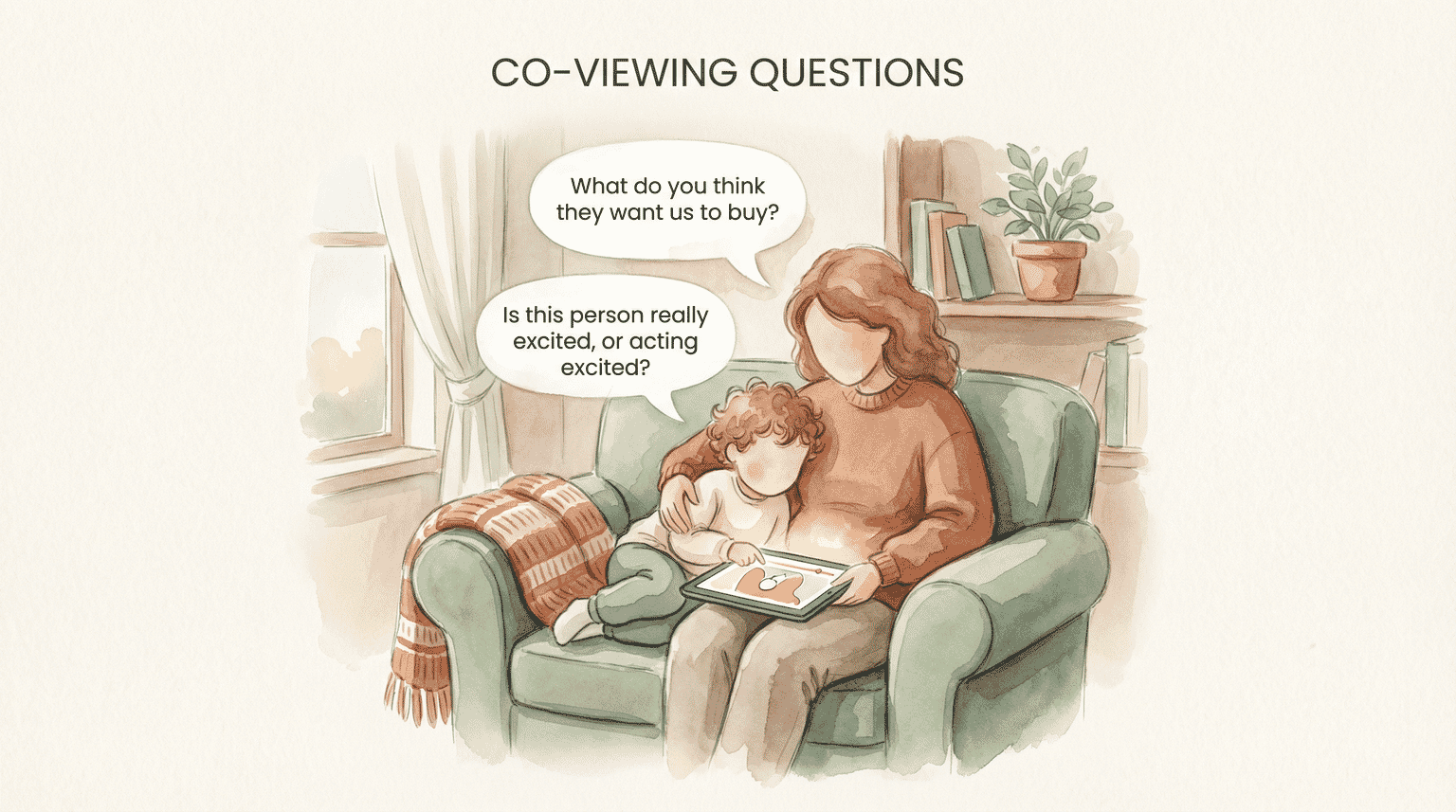
Sit beside your child for the first video of each session. Ask questions that make the hidden persuasion visible:
- “What do you think they want us to buy?”
- “Is this person really that excited, or are they acting excited?”
- “Which toy do you think would actually be fun to play with versus just fun to watch being opened?”
“I noticed there were a lot of toys in that video. If you could only pick one to actually play with, which would it be? Why that one?”
— Try this script with your child
I started doing this with my 8-year-old, and within two weeks, she started pointing out the advertisements. “Mom, that’s not a real surprise—they obviously knew what was in there.”
Strategy 3: Replace the Reveal
Why It Works
Research identifies four core motivations for watching unboxing videos: information seeking, entertainment, social connection, and passing time. The most effective replacement activities satisfy these same psychological needs—especially the craving for surprise and anticipation.
What to Do
Match alternatives to what your child specifically craves:
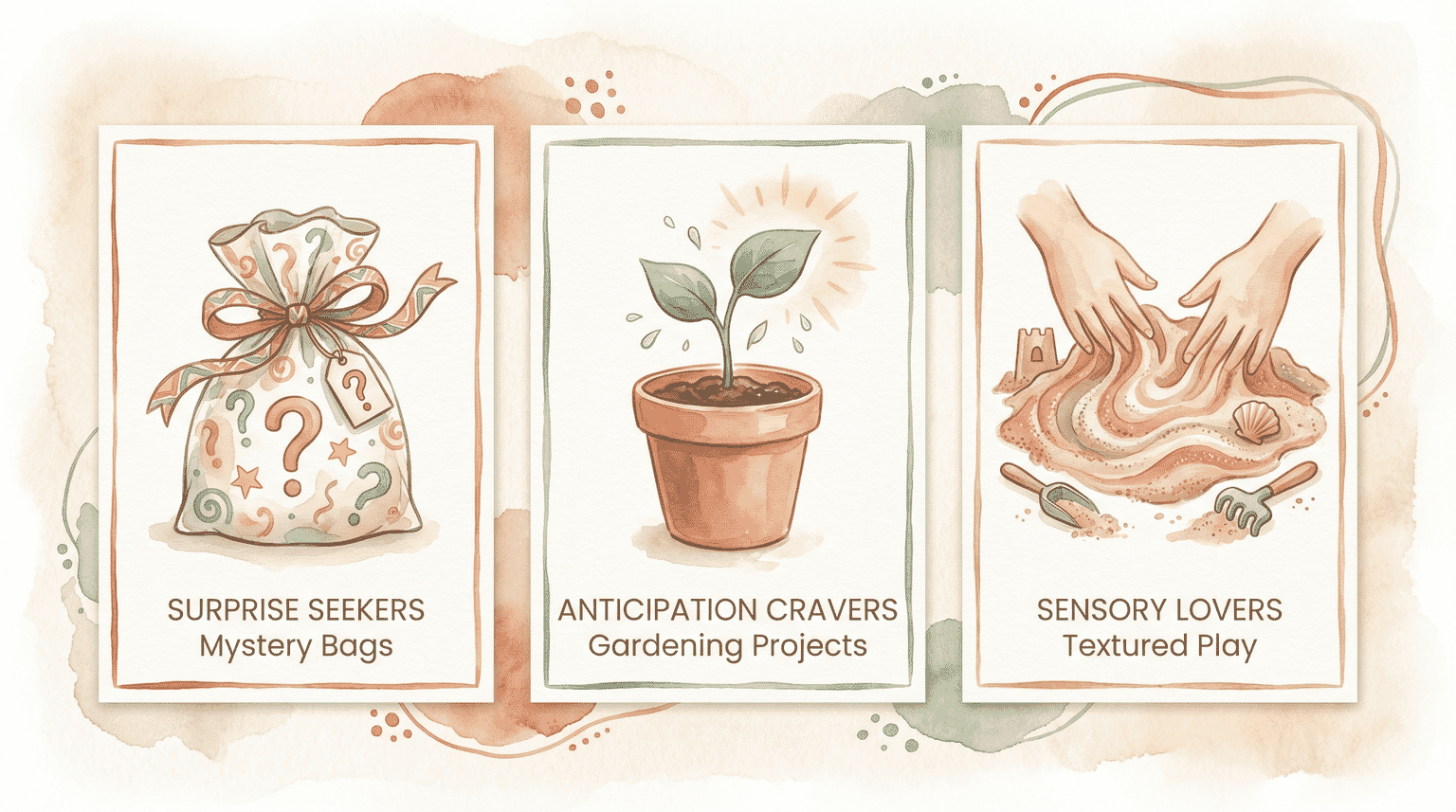
For surprise seekers:
- Weekly “mystery bag” with household items wrapped in tissue paper
- Library book bag “reveals” where you don’t peek until you get home
- Nature treasure hunts where you collect items in a bag and reveal them together
For anticipation cravers:
- Gardening projects where you observe daily growth
- Year-round “advent” activities (countdown to any family event)
- Meal preparation where ingredients transform into something new
For sensory satisfaction:
- Kinetic sand and textured play materials
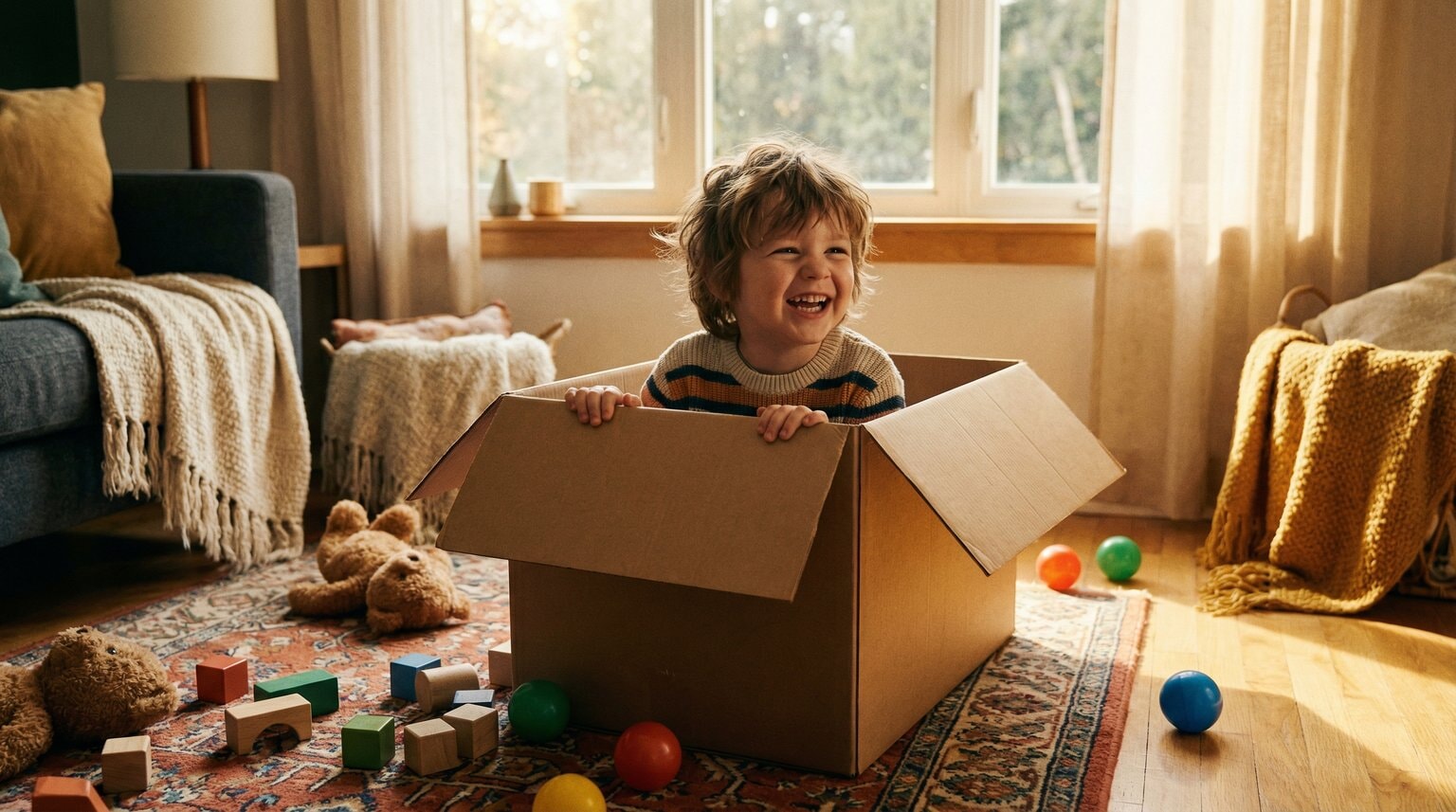
- Save packaging materials and let them be the toy
- Art supplies with that satisfying peel-off protective film
My 4-year-old now looks forward to “mystery bag Monday” more than YouTube. The bag usually contains things like a pinecone, a rubber band ball, and whatever interesting packaging I saved that week. Cost: zero. Engagement: surprisingly high.
Strategy 4: Implement Gradual Reduction
Why It Works
Abrupt removal intensifies craving—behavioral science consistently shows this. Cold turkey approaches tend to backfire because they create a sense of scarcity that makes the forbidden content even more desirable.
The 2-Week Protocol
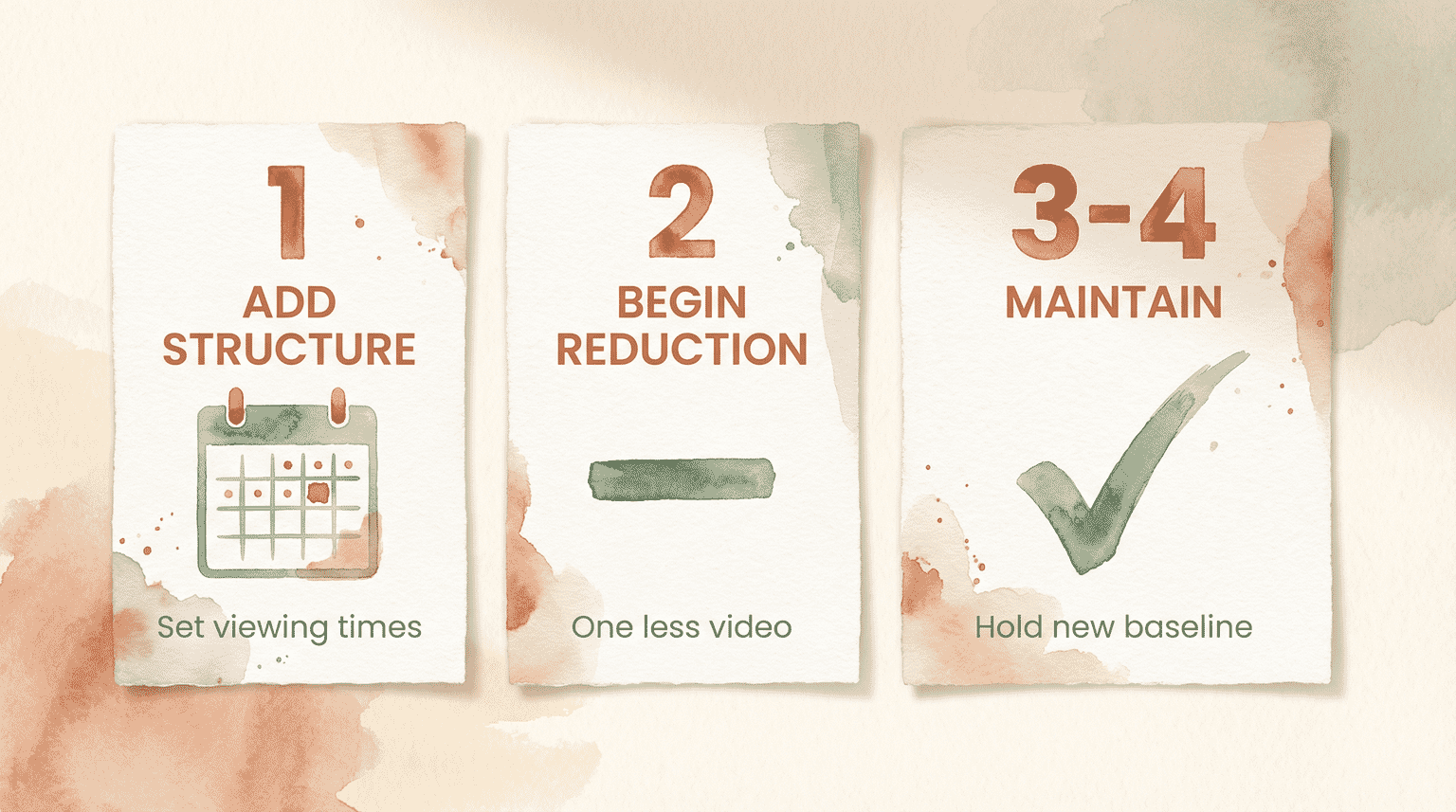
Week 1: Add structure
- Set specific viewing times
- Establish a specific number of videos per session
- Don’t reduce yet—just create predictability
Week 2: Begin reduction
- Reduce quantity by one video per session
- Add a replacement activity immediately after
Weeks 3-4: Maintain
- Hold at the new baseline for two full weeks before further reduction
- Assess whether replacement activities are satisfying
“We’ve been watching three videos after school. Starting today, we’re going to watch two, and then we’ll have time for our mystery bag activity. You still get to pick which two videos.”
— Try this script with your child
This is not a sprint. When I tried going cold turkey with my then-10-year-old, we had three days of misery before I caved. The gradual approach took longer but actually stuck.
Strategy 5: Build Algorithm Awareness
Why It Works
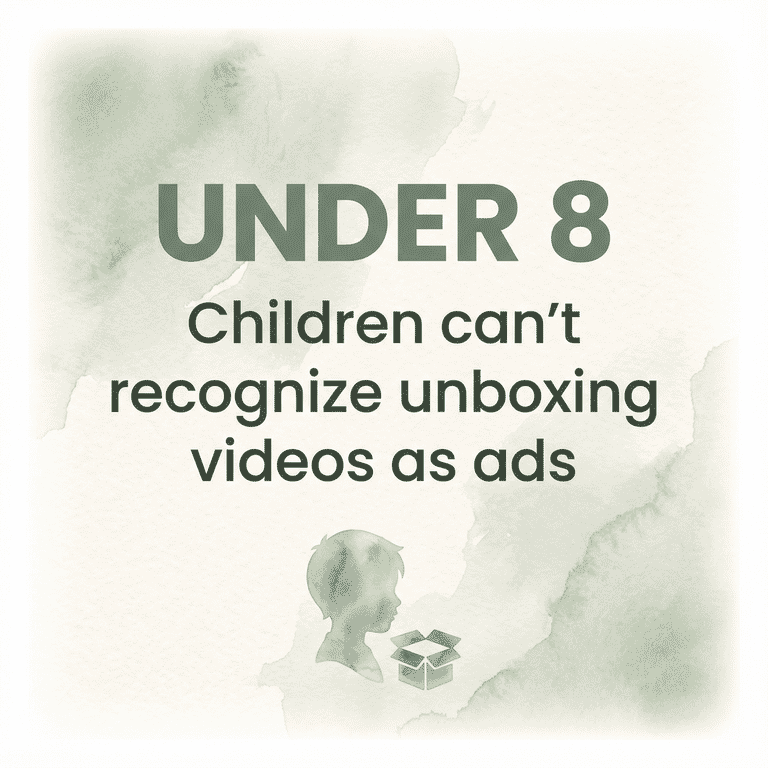
Research from the University of Victoria’s Journal of Childhood Studies found that children under 8 typically cannot recognize unboxing videos as marketing content. Michael Rich, Director of the Center on Media and Child Health at Boston Children’s Hospital, puts it starkly: unboxing videos teach children “to want things. It feeds into the ‘give me’ culture.”
But children ages 6 and up can begin understanding why the app wants them to keep watching. Making the manipulation visible reduces its power.
Frame it as detective work rather than a lecture. Kids love feeling like they’re outsmarting the system.
Try questions like: “See how another video started automatically? The app wants you to keep watching. Should we let it decide, or should we decide?”
What to Do
More detective questions to try:
- “These videos are fun, but the people who make them also want to sell toys. Let’s be detectives and find all the things they want us to buy.”
- “Count how many times they say ‘amazing’ or ‘so cool.’ Why do you think they use those words so much?”
“Let’s play a game while we watch. Every time you spot something the video wants you to buy, squeeze my hand. Winner gets to pick tonight’s bedtime story.”
— Try this script with your child
My 12-year-old now considers himself an expert at spotting “influencer tricks,” which honestly has made him more critical of advertising across the board. Understanding how digital media shapes what children want is a skill that extends far beyond unboxing videos.
When Resistance Happens (And It Will)

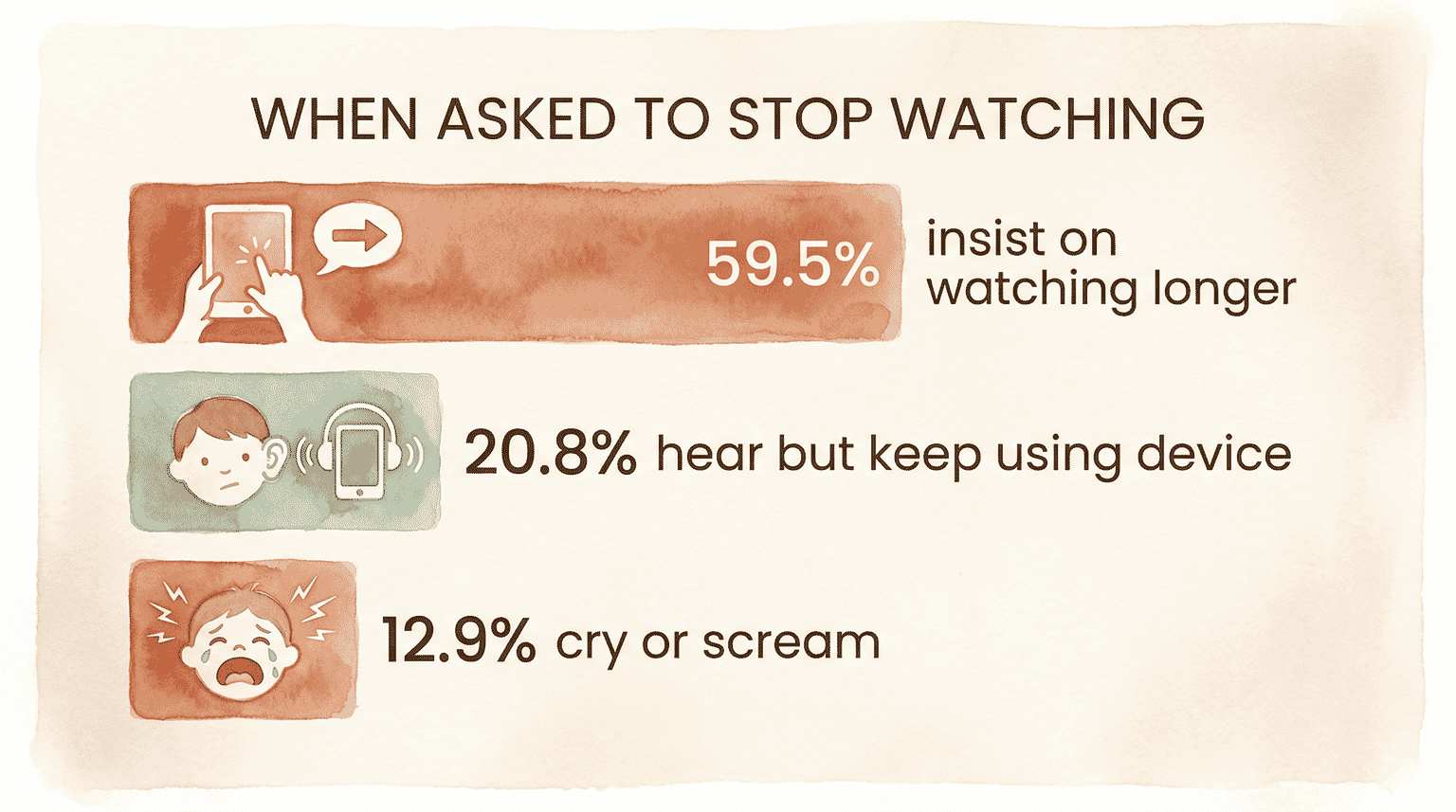
Here’s what the research actually shows: when asked to stop watching, 59.5% of children insist on watching longer. Another 20.8% hear the request but continue using the device. And 12.9% cry or scream to avoid stopping.
If your child pushes back hard, they’re not unusually defiant—they’re statistically normal.
The De-Escalation Approach
1. Acknowledge the feeling: “I hear that you want to keep watching. It’s hard to stop something fun.”
2. Hold the boundary: “The video will be here tomorrow.”
3. Offer the transition: “Right now, we’re going to [specific activity].”
“I know you want to keep watching. One more isn’t the plan for today. Tomorrow we’ll watch again after snack time. Right now, let’s go see if the mail came.”
— When your child says “Just one more! Please!”
Common Resistance Patterns
| What You’ll See | What’s Happening | Your Response |
|---|---|---|
| “Just one more!” escalating to tantrum | Dopamine crash from interrupted reward cycle | Stay calm, acknowledge feeling, don’t negotiate |
| Sneaking device time | Testing whether boundary is real | Remove access without drama, restate expectation |
| “Everyone else gets to watch!” | Social pressure, possibly accurate | “Different families have different rules. In our family, this is how we do screens.” |
| Bargaining with chores/behavior | Learning negotiation (actually healthy!) | “I appreciate the offer, but screen time isn’t something we trade for.” |
One parent in the Turkish study mentioned their child now uses phrases like “don’t forget to like” with friends during playdates. This kind of behavioral spillover—imitating influencer language in daily life—is a sign that viewing has become deeply embedded.
If you’re seeing this kind of spillover, don’t panic, but do recognize it means reduction may take longer.
Signs Your Approach Is Working

Weeks 1-2: Resistance may actually increase before it decreases. This is normal and not a sign of failure. You’re disrupting an established reward pattern.
Weeks 3-4: Your child begins mentioning alternative activities without prompting. “Can we do the mystery bag?” or “When are we going to the library?”
Month 2: Unprompted transitions from screen to activity. Less negotiating about “one more.”
Progress indicators to watch for:
- Decreased frequency of purchase requests after viewing
- Ability to stop at the agreed-upon number without meltdown
- Interest in activities that require patience and delayed gratification
- Critical comments about videos (“That’s just an ad” or “She’s being so fake”)

If you’re not seeing any progress after 4 weeks of consistent implementation, reassess whether your replacement activities are genuinely appealing.
The mystery bag that enchanted my 4-year-old would bore my 10-year-old to tears. Match the alternative to your specific child.
Conversation Scripts for Tricky Situations
Opening a reduction plan:
“I’ve been noticing that unboxing videos make you want a lot of things. I’ve also noticed you seem kind of grumpy after watching for a while. We’re going to try something different—watching together at specific times. I think you might actually feel better.”
— Start the conversation this way
Responding to “Why can’t I watch?”:
“You can watch—tomorrow after snack time. These videos are designed to make you want to keep watching forever, and I want to make sure you have time for other things you enjoy too.”
— Validate while holding the boundary
Handling comparisons to friends:
“It sounds like Jake watches whenever he wants. Different families do things differently. In our family, we’ve decided screens work better with a schedule.”
— Acknowledge without caving
Addressing grandparent inconsistency:
“We’re working on reducing how much unboxing content the kids watch. When they’re with you, could you try to limit it to one video, or maybe do a library trip instead? It really helps when we’re all on the same page.”
— For grandparents
Frequently Asked Questions
Why is my child obsessed with unboxing videos?
Unboxing videos activate the same dopamine reward system as slot machines. The unpredictable nature of what’s inside each package creates anticipation that lights up the brain’s pleasure centers. Combined with relatable child presenters and sensory elements like crinkling packaging, these videos are psychologically engineered for maximum engagement.
Are unboxing videos bad for kids?
They aren’t inherently harmful, but they carry risks worth managing. Research indicates 85% of YouTube content children watch contains advertising, and children under 8 often cannot distinguish entertainment from marketing. The concern isn’t occasional viewing—it’s unrestricted access that creates purchase demands and displaces other activities.
How much YouTube is too much for a child?
Warning signs include resistance to stopping (research shows 59.5% of children insist on watching longer when asked to stop), using influencer language in daily conversation, and preferring videos over previously enjoyed activities. Co-viewed, time-limited watching poses fewer risks than unrestricted solo viewing.
What can I do instead of screen time?
Effective alternatives satisfy the same psychological needs unboxing videos fulfill. For surprise: mystery bags with household items, library book reveals. For anticipation: gardening projects, countdown activities. For sensory satisfaction: kinetic sand, textured play materials, or letting children play with packaging itself.
At what age should kids stop watching unboxing videos?
The question isn’t about a specific cutoff but about developing media literacy. Children who understand how the videos work become less susceptible. By ages 6-8, begin co-viewing conversations about persuasive intent. Focus on building critical viewing skills while gradually reducing consumption.
Your First Step Tonight
Here’s what the Rowan Center research makes clear: you can take control of the reward schedule. The videos will always be designed to capture attention—but you decide when, how much, and under what circumstances your child engages with them.
Tonight, try this: sit down with your child during their next viewing session. Watch one video together. Ask one question: “What do you think they want us to buy?”
That’s it. One video, one conversation, one small disruption to the pattern. You’ve just begun teaching media literacy while taking back control of the reward schedule.
The gradual approach wins. I’m living proof—eight kids, six years of trial and error, and a research librarian’s inability to let things go until I understand why they work.
Join the Conversation
Which strategies have worked for reducing unboxing video time at your house? I’ve tried cold turkey, gradual limits, and replacement activities with varying success. Would love to hear what’s actually stuck for other families.
I read every comment and learn from what’s working in your homes.
References
- Rowan Center LA – Clinical psychology research on variable ratio reinforcement and intervention strategies
- Journal of Childhood Studies – Academic research on unboxing videos and children’s YouTube consumption
- PMC/NIH Parental Perspectives Study – Research on co-viewing benefits and screen time impacts
- PMC/NIH Preschool Screen Use Study – Behavioral response data on children’s reactions to viewing limits
- Marketing Agent Research Summary – Children’s unboxing video viewing statistics and persuasive intent research
- Common Sense Media (2025) – 2025 Census on media use by children ages 0-8

Share Your Thoughts