

You’ve done the hard work of bringing two families together. You’ve navigated custody schedules, merged two sets of house rules, and figured out who sits where at dinner. But then the holidays arrive—and suddenly you’re facing a minefield you didn’t see coming.
His kids expect stockings hung by birth order. Your kids open one gift on Christmas Eve. Everyone’s watching to see if the new stepparent “gets it right.” And you’re standing there wondering how gift-giving became this complicated.
Here’s what I’ve learned from research—and from watching blended families navigate this in my own community: gift traditions aren’t just nice extras. They’re actually one of the most powerful tools you have for building family unity. When 70% of blended families experience parenting disagreements in the first two years, gift-giving moments offer something rare: predictable, positive experiences during an unpredictable transition.
The key is approaching this strategically, not haphazardly. Let me show you how.
Key Takeaways
- Honor existing traditions from both families before introducing new ones—children need their history validated
- Start with one collaborative tradition done well rather than overhauling everything at once
- Aim for fairness, not identical treatment—different children genuinely need different things
- Full blended family integration takes 4-7 years, so treat gift traditions as a marathon, not a sprint
- Children ages 10-14 struggle most with stepfamily changes—offer choices within structure rather than imposing new approaches
Start with the Right Foundation
Before you introduce a single new tradition, you need honest conversations with your partner—away from the kids.
Here’s a reality check that surprised me: 75% of couples forming blended families receive no premarital preparation at all. And when they do get guidance, it usually follows first-marriage templates that completely miss the mark. Blended families aren’t about “coupleness”—they’re about “familyness.”

This statistic floored me. Most couples entering blended families are essentially flying blind—using playbooks designed for first marriages that don’t account for existing children, ex-partners, or competing loyalties.
The Institute for Family Studies research shows that when couples understand blended family dynamics differ fundamentally from first marriages, they’re far more likely to succeed long-term. Your gift traditions will only work if you and your partner are aligned first.
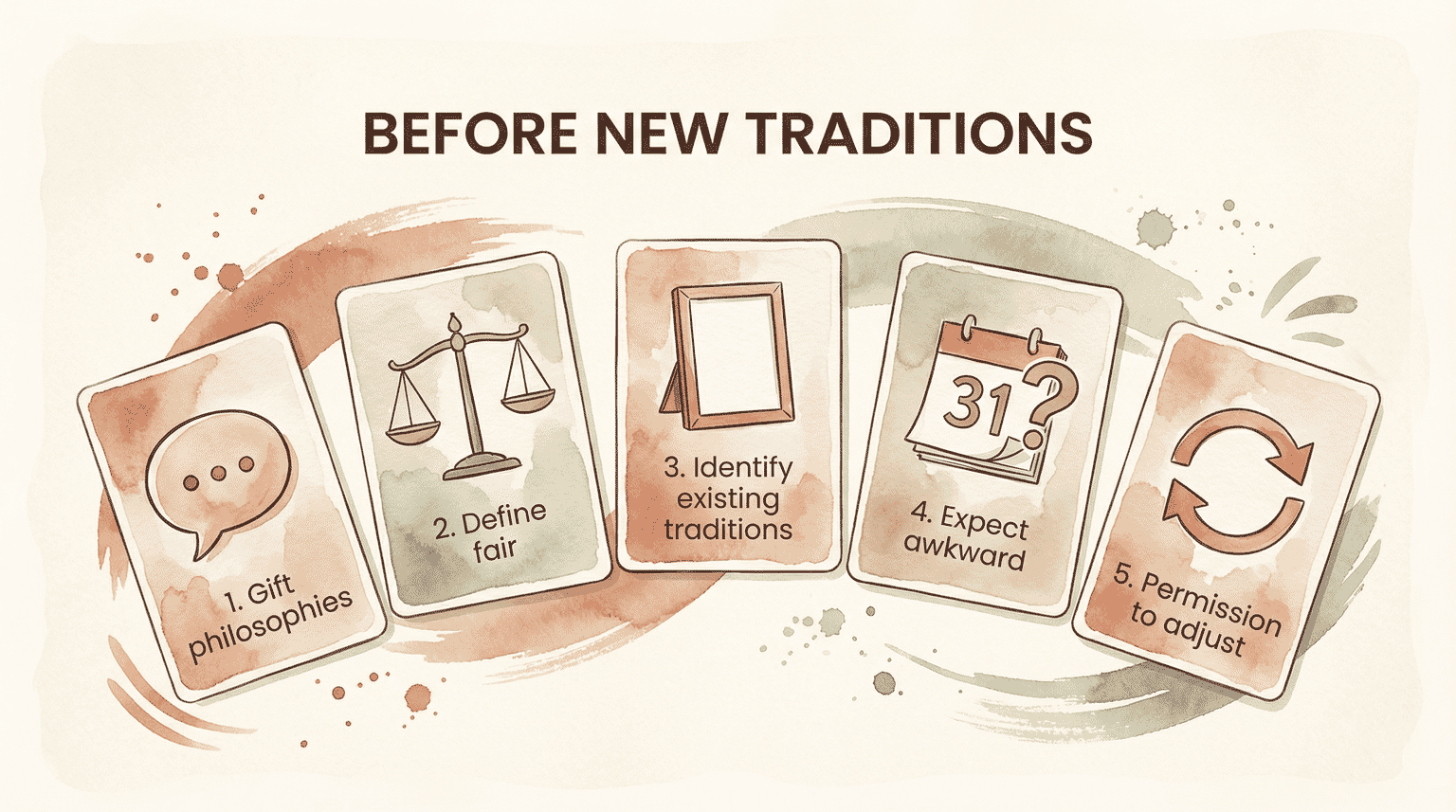
Use this readiness checklist before creating new traditions:
- Have you discussed your different gift philosophies? (Budget, frequency, meaning)
- Do you agree on what “fair” means—and that it might not mean “equal”?
- Have you identified which existing traditions matter most to each child?
- Are you prepared for traditions to feel awkward the first time?
- Have you given yourselves permission to adjust as you go?
Honor What Already Exists
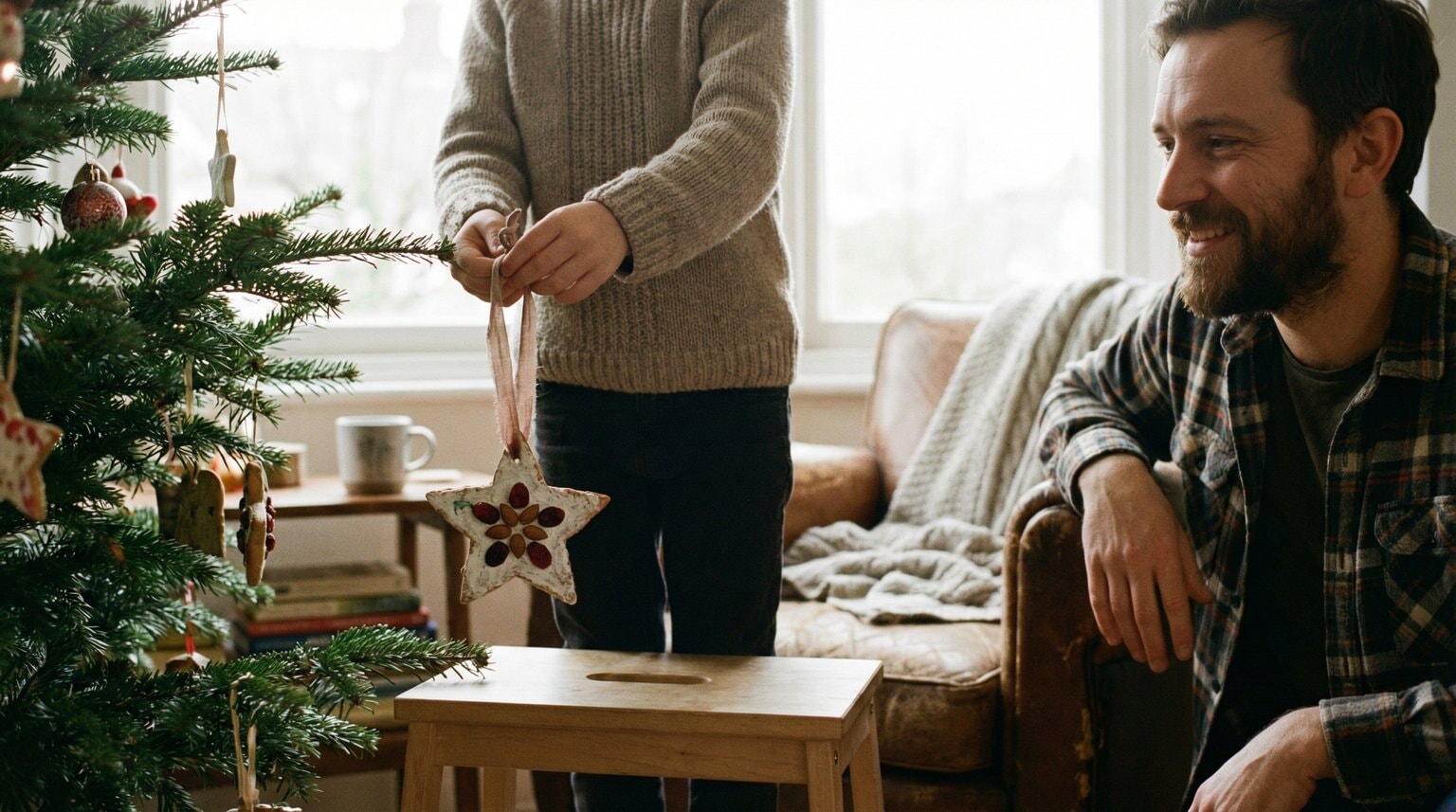
This is where most blended families go wrong: they rush to create shiny new traditions without acknowledging what each family is losing.
Children’s sense of security often lives in these small rituals. The way mom always made pancakes on Christmas morning. The specific order presents got opened. These aren’t just habits—they’re anchors to identity and belonging.
“Parents have to work hard at providing consistency in routines, schedules, and communication so the children’s lives don’t feel disrupted.”
— Claudia de Llano, LMFT, Family Therapist
Before adding anything new, inventory what exists:
- What gift traditions does each family already have?
- Which ones matter most to each child? (Ask them directly)
- Which traditions can travel to the new family structure?
- Which ones belong to “before” and need to be honored differently?
Research consistently shows that blended families thrive when they combine old and new intentionally—not by discarding history, but by weaving it into something fresh. Children merely living in the same home doesn’t create family; shared experiences with respected histories do.
Try this: Create a “traditions we brought with us” photo album or ornament collection where each child contributes something from their original family. This signals that their history matters, even as you build something new together.
If you’re looking for broader family gift tradition ideas beyond blended-family-specific approaches, our comprehensive guide can help you think through the full landscape.
Create One Signature Gift Tradition
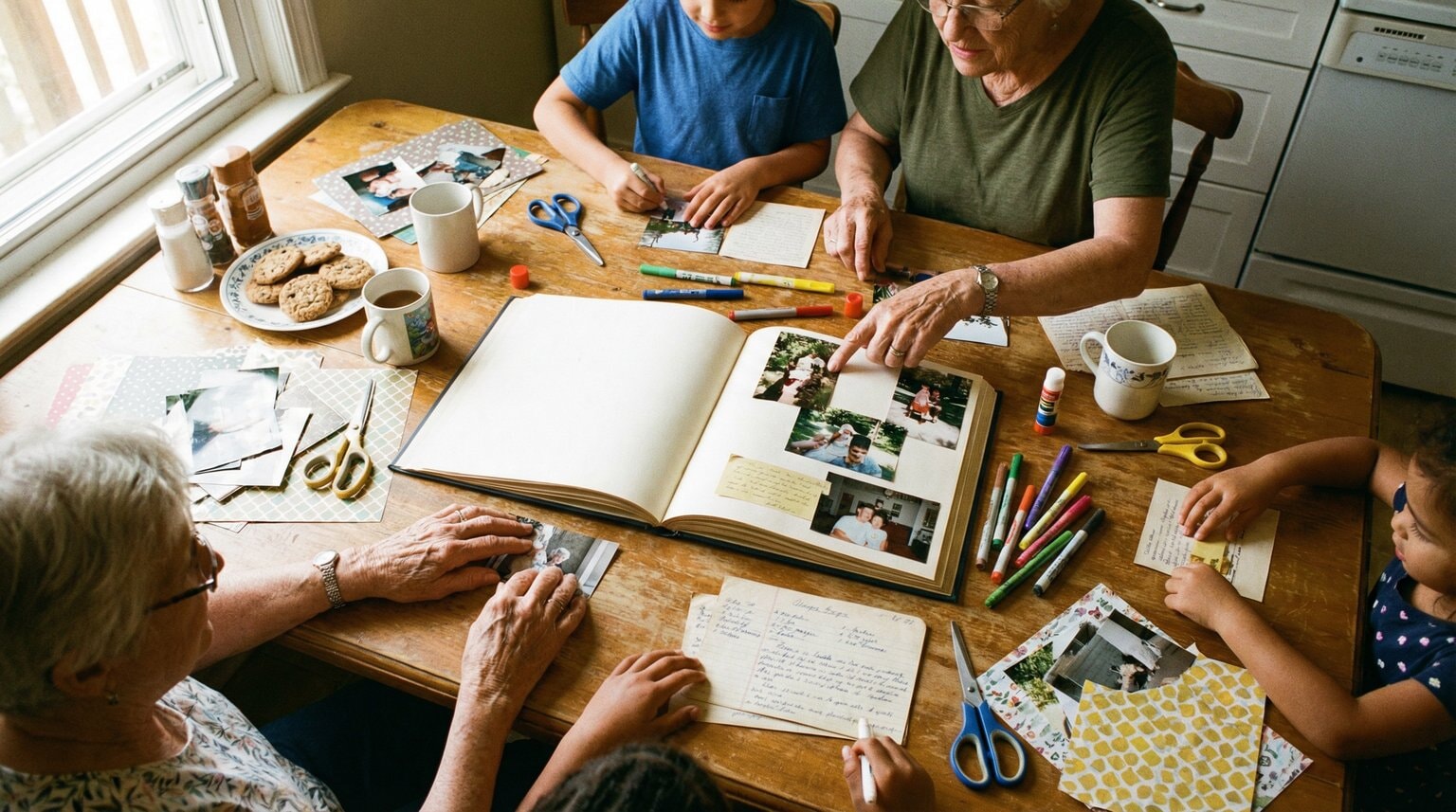
Here’s my biggest piece of advice: start with one tradition, done well.
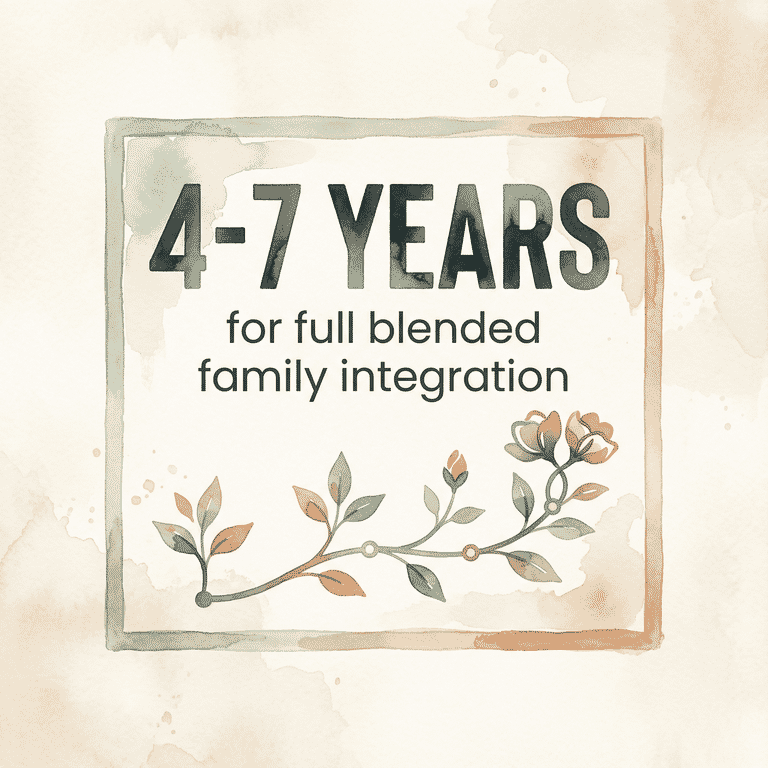
Don’t overhaul everything at once. Research from Cornell University indicates the adjustment process takes 4-7 years for full family integration. Gift traditions are a marathon, not a sprint.
Choose traditions that require collaboration—not just participation—and that work regardless of custody schedules.
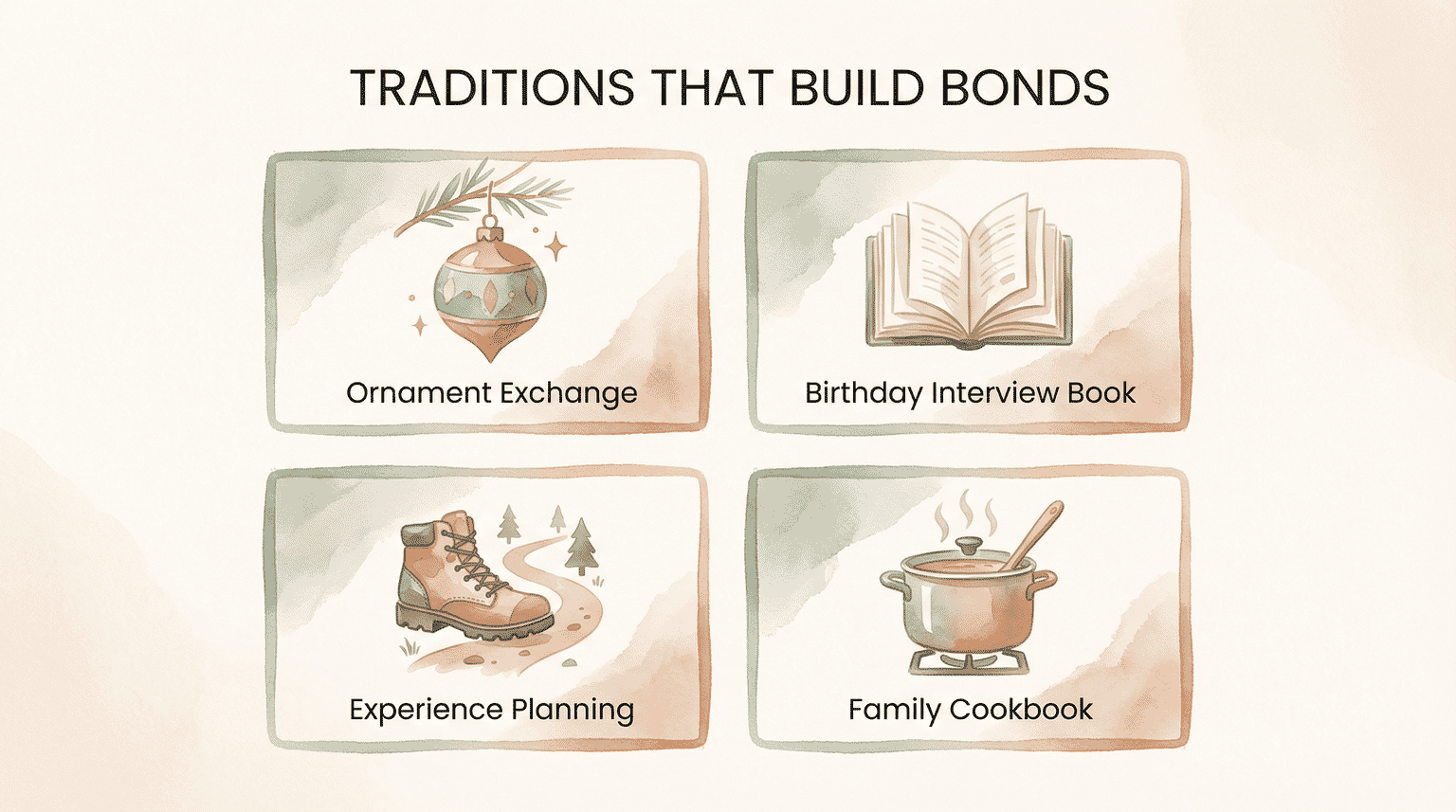
Eight gift traditions that build blended family bonds:
- Family ornament exchange: Each person selects an ornament for another family member, specifically building cross-sibling connections between step-siblings.
- Birthday interview book: Same questions asked annually (“What’s your favorite memory from this year?”), creating shared family documentation over time. Works beautifully for ages 6 and up.
- Experience planning night: The whole family collaboratively chooses one shared activity gift—a day trip, concert, or adventure. Teens often prefer this to physical gifts.
- New family cookbook gift: Each member contributes a favorite recipe; assemble into a family cookbook that grows each year.
- Milestone celebration jar: All siblings contribute small amounts toward major purchases for each other—building investment in each other’s joy.
- “Our spot” tradition: Annual gift tied to a meaningful family location you’ve discovered together (not from either previous family).
- Secret sibling gift exchange: Specifically pairs step-siblings to choose for each other, with a modest budget and emphasis on thoughtfulness.
- Monthly gratitude gift: Not objects—written notes or small acts of service acknowledging each family member.
Start with whichever feels most natural for your family’s personality. One tradition that sticks is worth more than five that fizzle.
Make Gift-Giving Feel Fair
Let’s address the elephant in the room: should stepchildren get the same gifts as biological children?
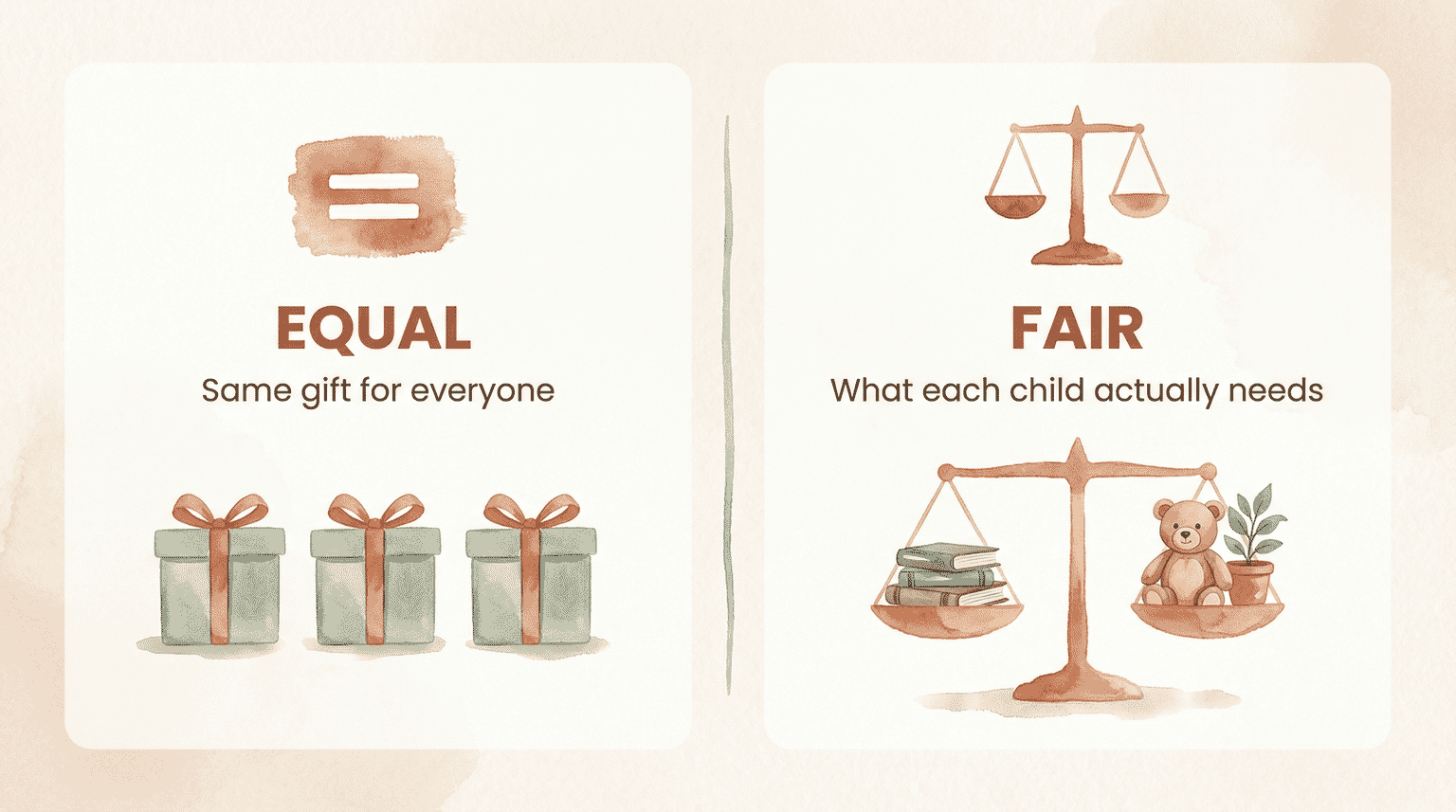
The research-backed answer: aim for fairness, not identical treatment.
According to University of Illinois Extension research, children in blended families specifically struggle with territorialism regarding possessions and parental attention. They need items and experiences they control—and voice in what matters to them.
This means different children may genuinely need different things. A 15-year-old starting to drive has different needs than a 7-year-old who wants LEGO sets. Explaining this openly builds trust.
Scripts for fairness conversations:
“In our family, we try to make sure everyone feels valued, and that might look different for each person.”
“What makes a birthday special for you might be different from what makes it special for [sibling]. Help me understand what matters most to you.”
The Institute for Family Studies research found something powerful: when children have input into how their family takes shape, they shift from being “victims of circumstances” to “contributors to what is being built.” Apply this to gift traditions by involving all children in decisions—not just about what they receive, but about how your family celebrates together.
If you’re navigating budget differences between households or complex logistics with ex-partners, our guide to coordinating gift traditions across multiple households addresses the practical challenges directly.
Navigate the First-Year Gift Calendar
Your first year as a blended family will include multiple gift-giving occasions. Map them out, set realistic expectations, and celebrate small wins.
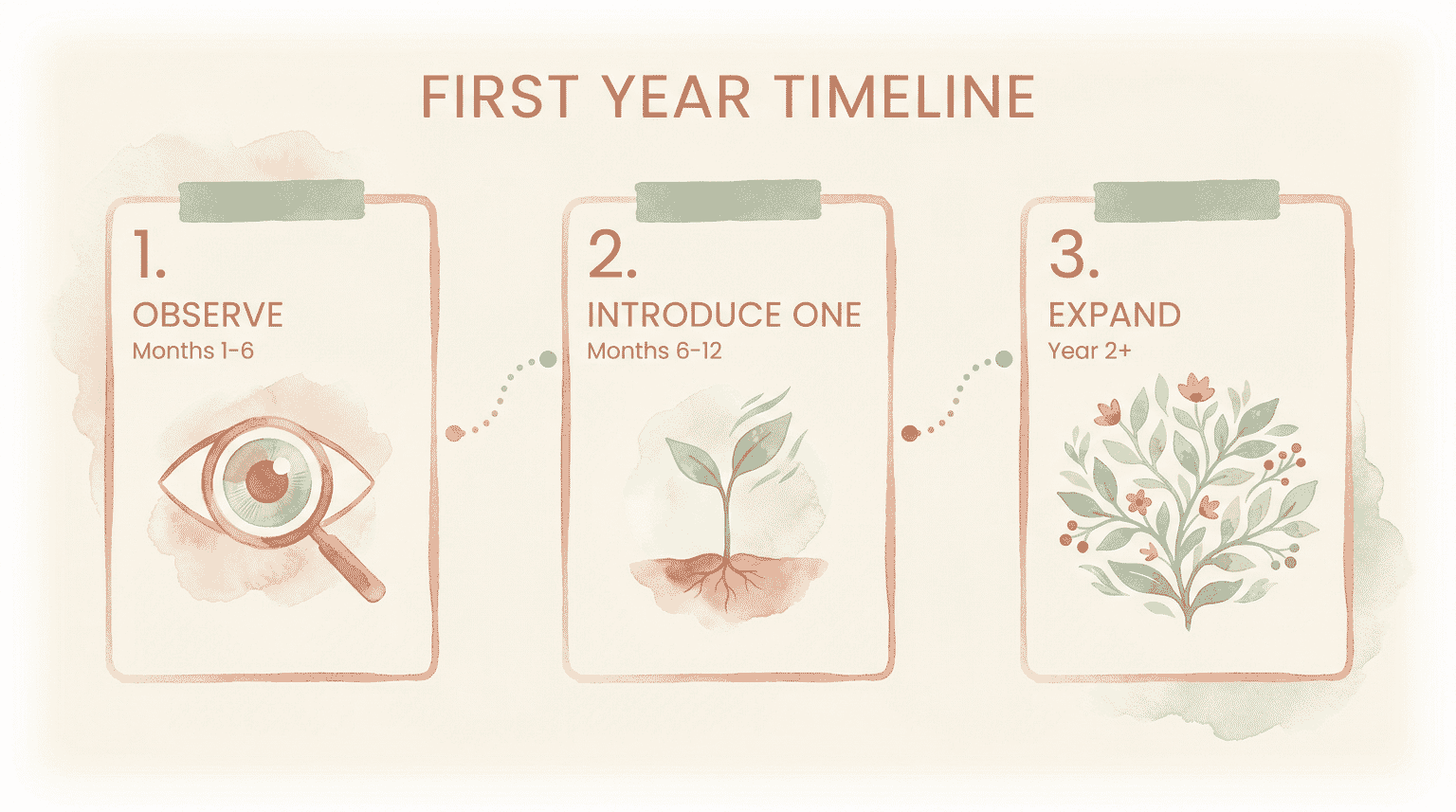
A timeline that works:
- Months 1-6: Observe. Watch what each child responds to. Don’t overhaul existing patterns yet.
- Months 6-12: Introduce one small, new tradition. Keep it simple and low-pressure.
- Year 2+: Gradually expand based on what’s working. Let children take more ownership.
HelpGuide’s research specifically recommends that blended families have highest success rates when couples wait two years or more before making major changes, rather than compounding transitions. This applies to traditions too.
The families I’ve seen struggle most are the ones who tried to create a “fresh start” by wiping the slate clean. The ones who thrive? They layer new experiences on top of respected histories.
After each gift occasion, debrief together:
- What felt good?
- What felt awkward?
- What would we adjust next time?
This isn’t admitting failure—it’s informed commitment to getting it right over time.
When a Gift Tradition Isn’t Working
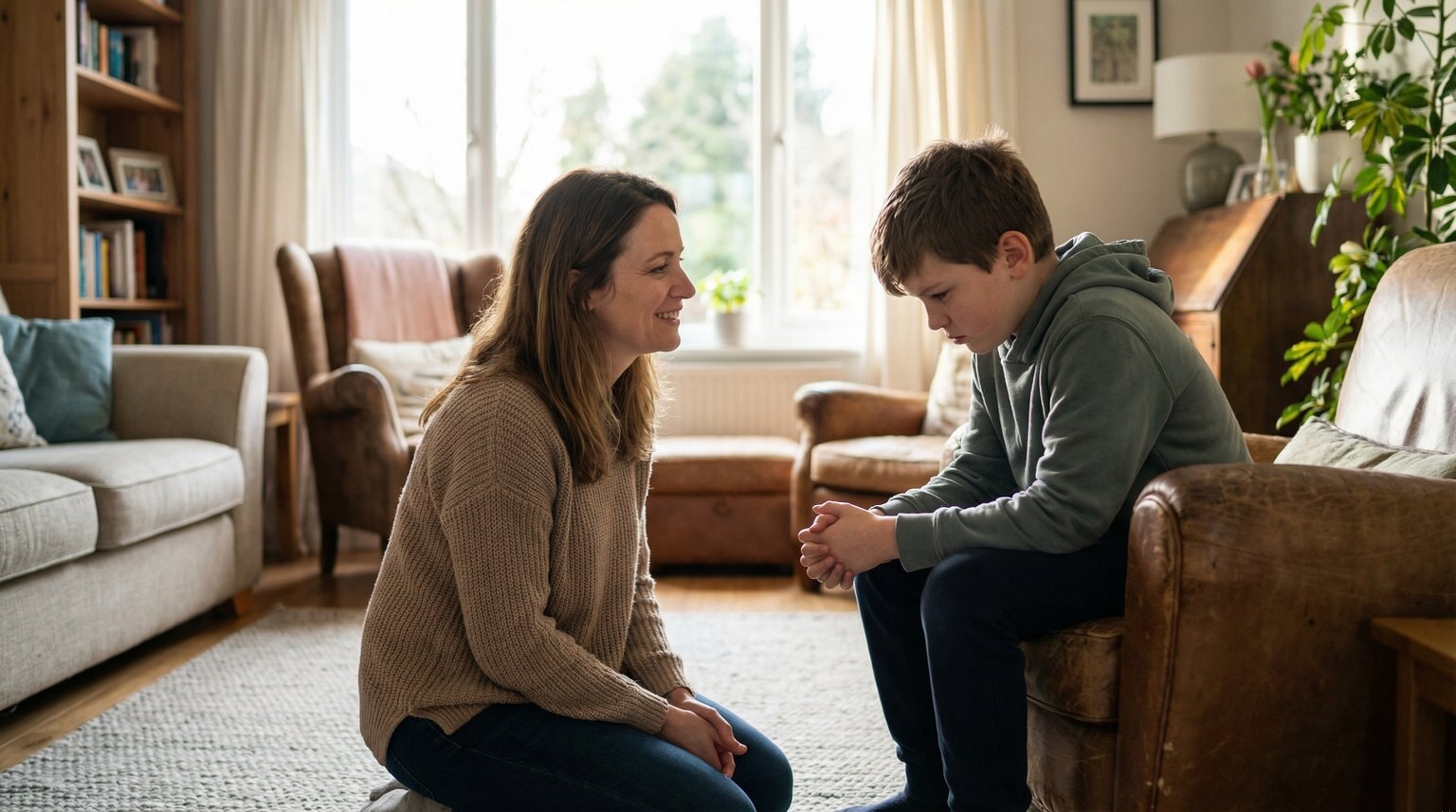
Here’s what no one tells you: even good traditions can struggle at first. Children’s resistance doesn’t automatically mean the tradition is wrong.
“It’s important to validate, respect, and support the children’s feelings by establishing open communication, mutual trust, and an atmosphere of love.”
— Samantha Quigneaux, LMFT, National Director of Family Therapy Services at Newport Healthcare
Distinguish between normal resistance and genuine mismatch:
- Normal resistance: Eye-rolling, minimal participation, testing boundaries. Give it time.
- Tradition mismatch: Genuine distress, consistent refusal across multiple occasions, expressions of feeling excluded or misunderstood. Modify or retire.
Age matters here. Children ages 10-14 typically have the most difficult time adjusting to stepfamily dynamics—they need more time before accepting new approaches. Offer choices within structure rather than imposing. Teens may need autonomy to opt out occasionally while still feeling included. Younger children under 10 often adapt more easily but watch for non-verbal cues.
When resistance shows up, try:
“I noticed [tradition] didn’t feel great this time. Can you help me understand what would make it better?”
“We’re still figuring this out as a family. What’s one thing that would help?”
De Llano’s advice resonates here: “Rather than reacting to tantrums, talking back, or acting out, step into the child’s behavior with care, respect, and curiosity for what they are feeling and going through.”
What Success Actually Looks Like
Let me recalibrate your expectations: success isn’t perfection.
Success looks like:
- Children referencing traditions unprompted (“Are we doing the ornament thing this year?”)
- Step-siblings choosing thoughtful gifts for each other without being forced
- Traditions feeling less awkward the second and third time
- Family members laughing about early disasters (“Remember when…”)
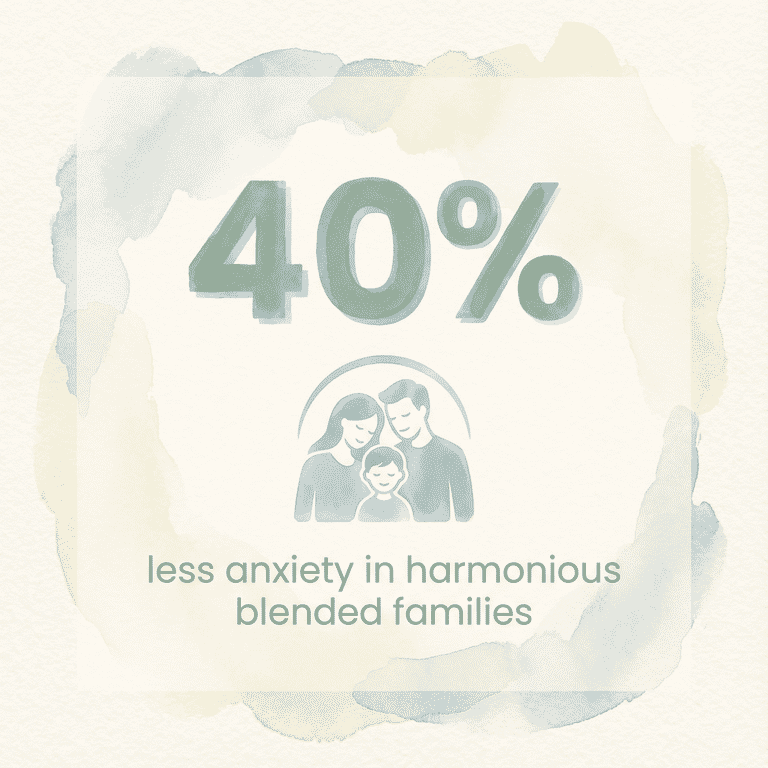
Research shows that children in harmonious blended families are 40% less likely to experience anxiety, and families practicing effective communication report a 35% increase in overall satisfaction.
Gift traditions won’t solve everything—for persistent gift problems in blended families, you may need different strategies—but they create regular, positive touchpoints that build toward those outcomes.
The science of family bonding tells us something important here. Shared positive experiences create neural pathways that literally wire family members to feel safer together. Every successful holiday, every tradition that lands well, strengthens those connections.
“Parenting in a blended family isn’t about eliminating differences; it’s about harmonizing them.”
— Dr. Emily Carter, Family Psychologist
Your gift traditions don’t need to erase anyone’s history. They need to write a new chapter—together.
Frequently Asked Questions
How do you create traditions in a blended family?
Start by honoring existing traditions from both families before adding new ones. Involve children in deciding what to keep, adapt, or retire. Then introduce one new tradition that requires collaboration, not just participation. Research shows children included in forming family traditions report more positive feelings about their stepfamily.
How long does it take a blended family to adjust?
Cornell University research indicates full family integration can take 4-7 years. Most blended families that dissolve do so within the first 1-5 years. Gift traditions work best as a long-term bonding strategy—start small and build gradually rather than expecting immediate results.
Should stepchildren get the same gifts as biological children?
Aim for fairness, not identical treatment. Different children may need different things, and explaining this openly builds trust. Give all children input into gift tradition decisions rather than focusing solely on equal dollar amounts—this shifts them from feeling like observers to contributors.
What age is hardest for blended families?
Children ages 10-14 typically have the most difficult time adjusting to a stepfamily. They need more time to bond before accepting new family dynamics and often resist changes to established traditions. For this age group, offer choices within gift tradition structures rather than imposing new approaches.
I’m Curious
How have you blended gift traditions in your stepfamily? I’d love to hear what new traditions you’ve created together—and which battles you decided weren’t worth fighting.
Your blended family wisdom helps other parents navigating this exact challenge.
References
- HelpGuide – Blended Family and Step-Parenting Tips – Age-specific adjustment guidance and bonding ritual recommendations
- Daniel Dashnaw Couples Therapy – Creating New Family Traditions – Research on why new traditions symbolize fresh beginnings
- Verywell Mind – How to Thrive As a Blended Family – Expert perspectives on stepparent-stepchild relationships
- University of Illinois Extension – Helpful Hints for Unifying a Blended Family – Statistics and practical unification strategies
- Institute for Family Studies – Preparing Couples for Blended Family Living – Research on including children in family formation
- Our Illuminated Path – Parenting in Blended Families – Statistics on communication and family harmony outcomes

Share Your Thoughts