
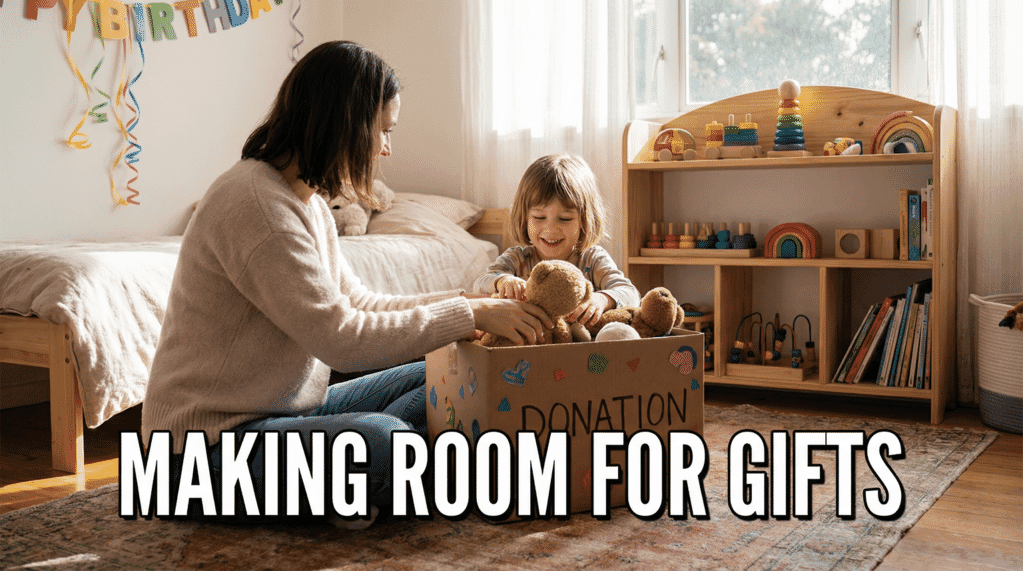
Three days before my youngest’s fourth birthday, I found myself stepping on a forgotten puzzle piece at 2 AM—and realized we’d run out of floor space six months ago. Sound familiar?
Here’s the thing: your child’s birthday is actually a built-in reset button for toy chaos. Not a massive decluttering project—just a simple ritual that makes space for what’s coming.

A birthday toy purge is a quick pre-birthday ritual where families clear out unused toys to make physical and mental space for new gifts—turning an annual event into a natural reset moment.
Princeton neuroscience researchers found that visual clutter competes for attention in the brain—which is why fewer toys often means better focus and better play. Making room before the birthday isn’t just about storage. It’s about giving new gifts a fighting chance.
Key Takeaways
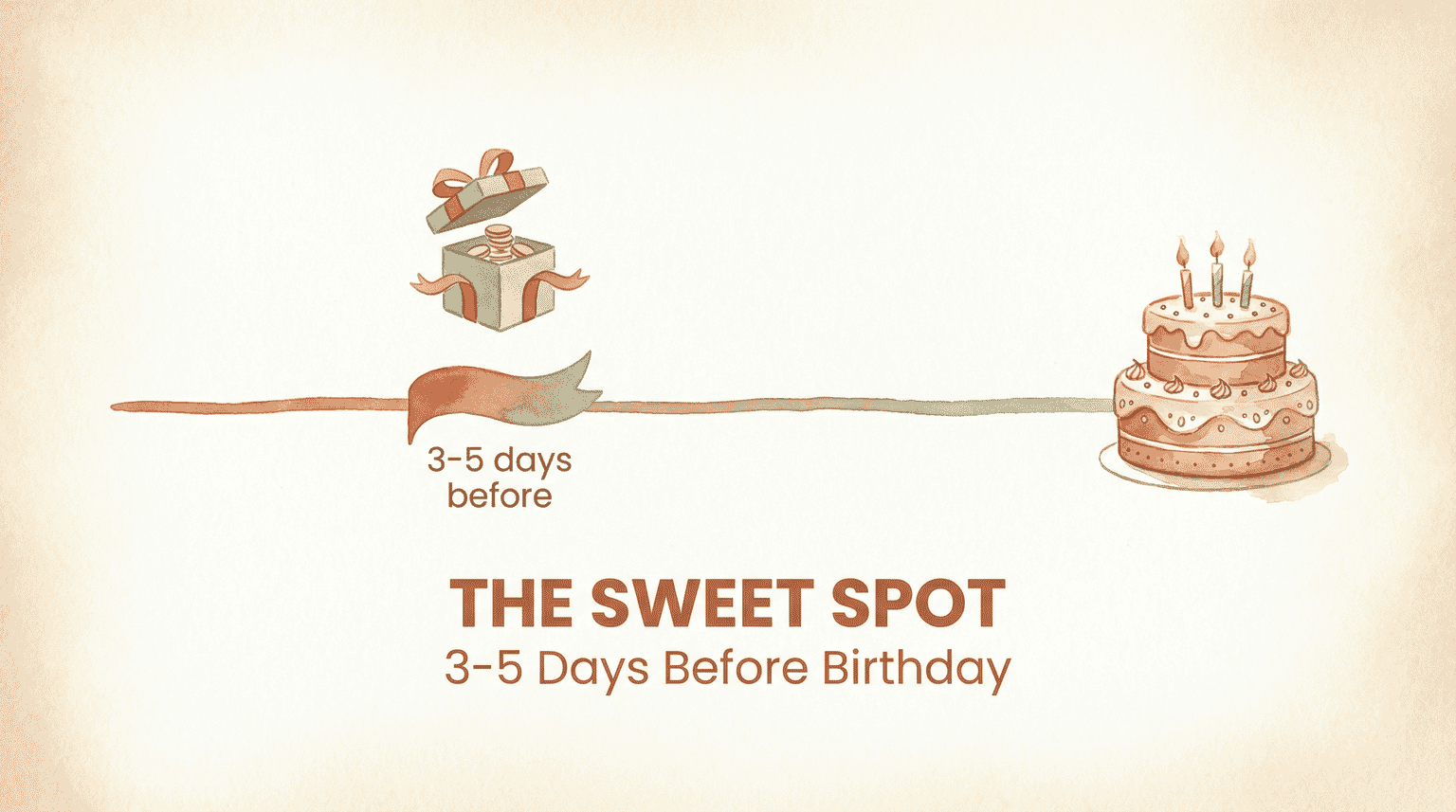
- Three to five days before the birthday is the sweet spot for timing your purge
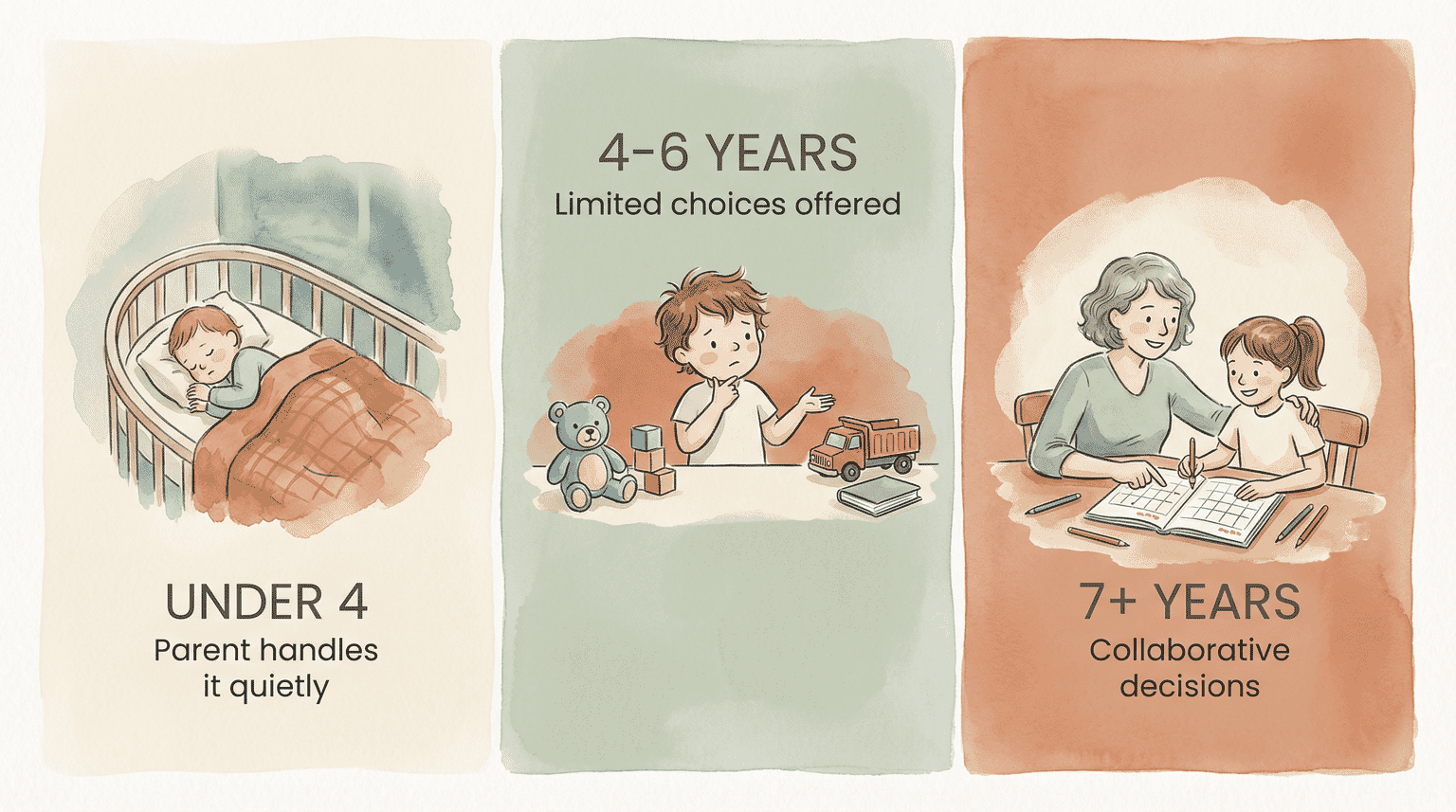
- Match involvement level to your child’s age—under 4s do best when you handle it quietly
- Frame donation as helping another child enjoy something your kid has outgrown
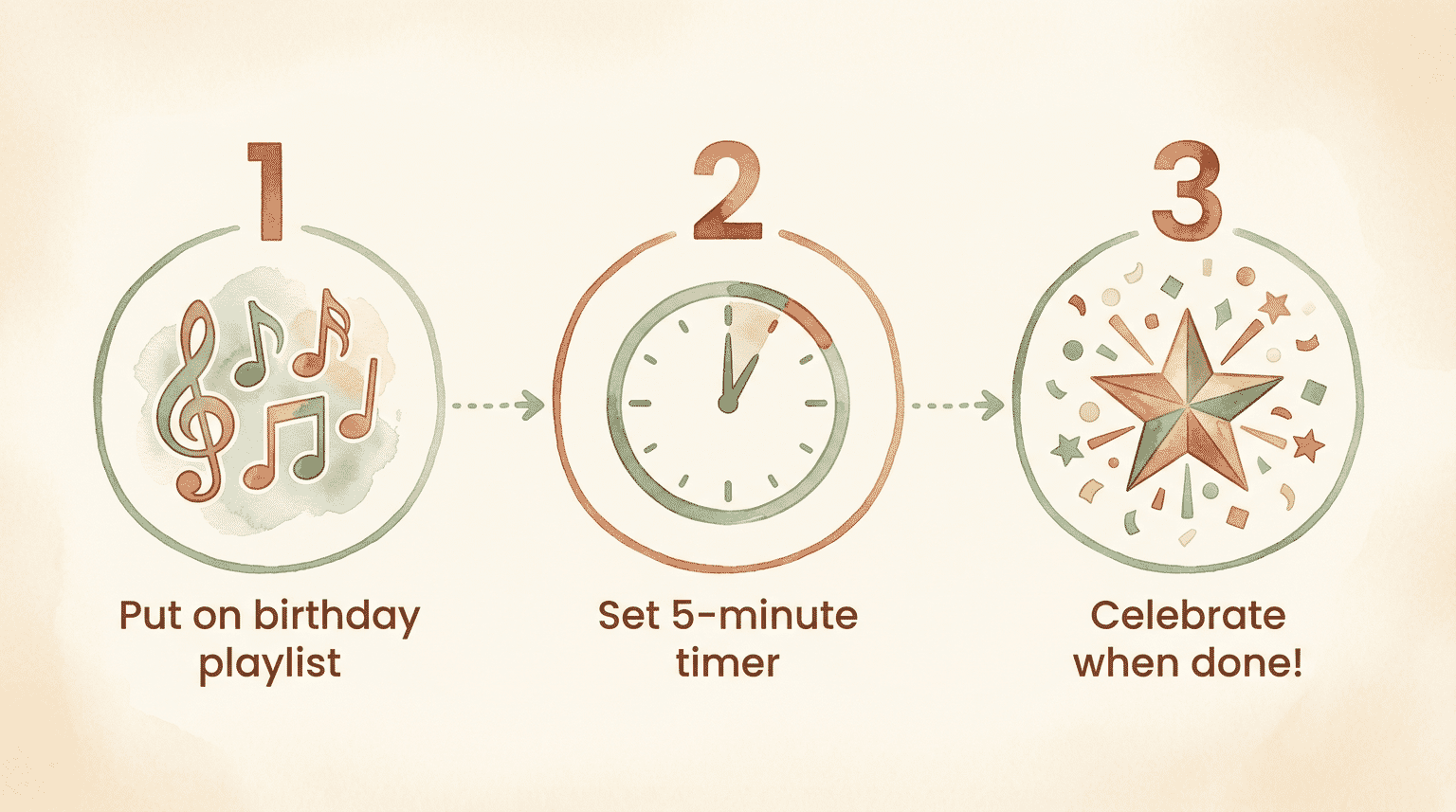
- Position the purge as birthday prep, not a chore—five minutes with music, then celebrate
When to Do It

Three to five days before the birthday works best. This window builds excitement (“We’re making room for new things!”) without creating anxiety about change happening too fast. Your child can process the transition while focused on the celebration ahead.
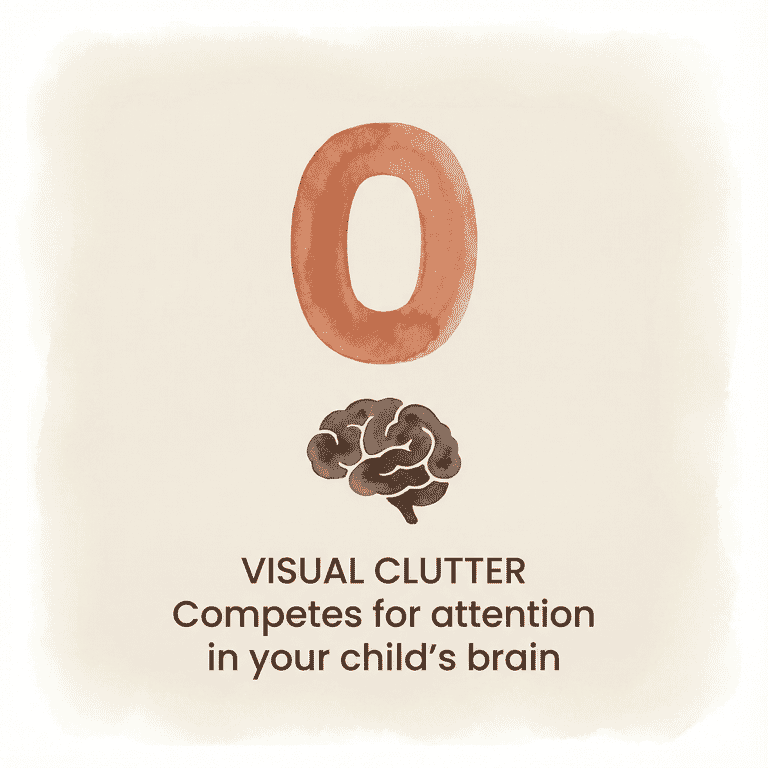
When toys pile up, your child’s brain has to work harder just to decide what to play with. That mental load drains the energy that could go toward actual play.
Clearing space before new gifts arrive means those birthday presents won’t immediately disappear into the chaos. They’ll actually get played with.
If you want this approach year-round rather than just at birthdays, the one-in-one-out approach gives you an ongoing system.
Who Decides
It depends on age and temperament. Kids under 4 typically do best when you handle it while they’re at preschool or asleep—no drama, no negotiations. Children 4-6 can choose between limited options: “Which three stuffed animals are your very favorites?” Kids 7 and older often thrive making real decisions collaboratively.
I’ve seen this play out eight times now. Pushing too much involvement too early backfires. Trust your gut on what your kid can handle.
Where It Goes

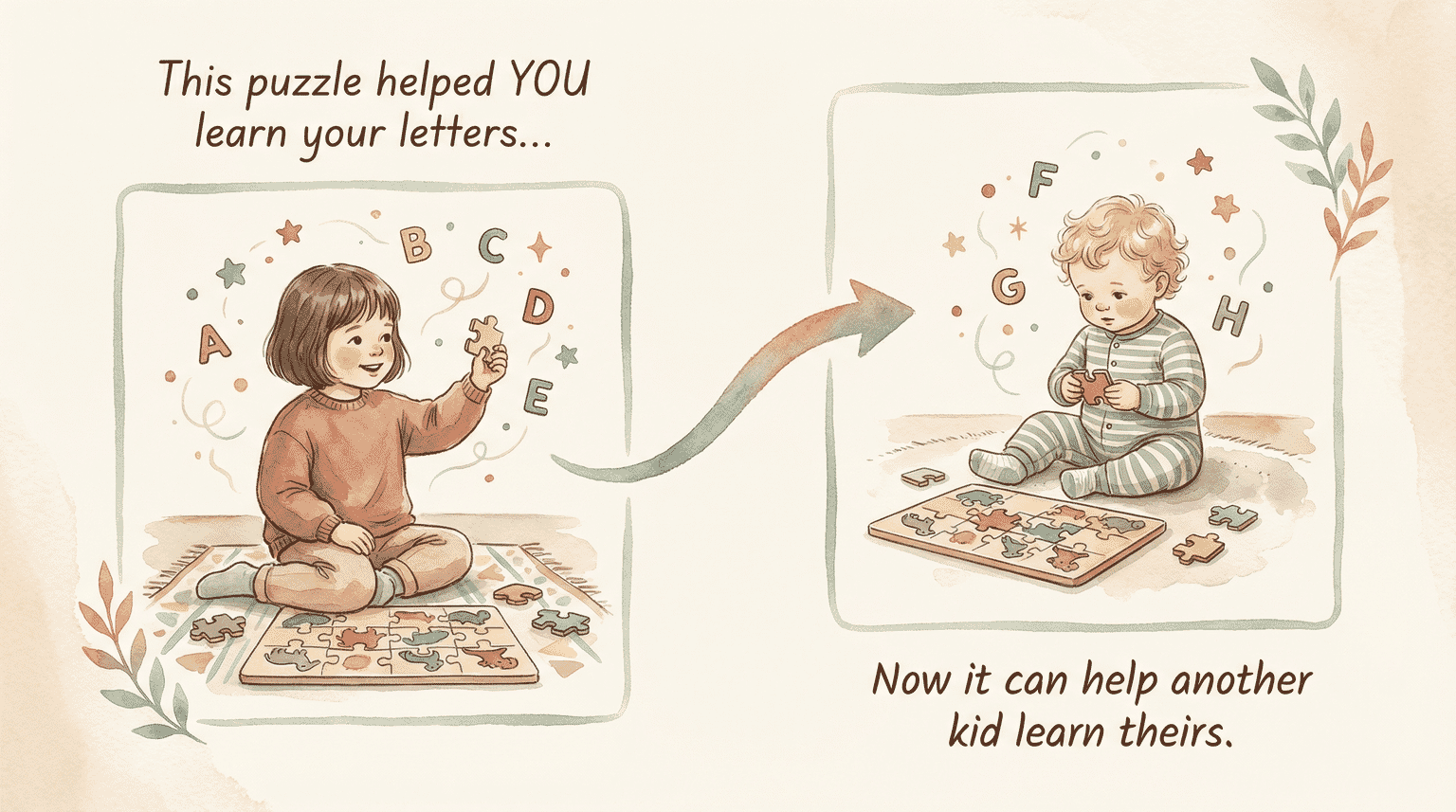
Frame donation as helping another child enjoy something your kid has outgrown. “This puzzle helped you learn your letters—now it can help another kid learn theirs.”
When possible, let older children see where donations go. That trip to the donation center transforms abstract “giving away” into concrete helping.
The neuroscience of letting go reveals something unexpected about how children process change.
“When we hold too tightly to what no longer serves us—whether a belief, a feeling, or an object—we block growth.”
— Susan David, PhD, Harvard University
Letting go is a skill worth practicing early. Kids who learn to release what they’ve outgrown develop emotional flexibility that serves them well beyond the playroom.
And honestly? Watching your child willingly choose to help another kid is one of those parenting moments that makes all the stepped-on puzzle pieces worth it.

How to Make It Fun

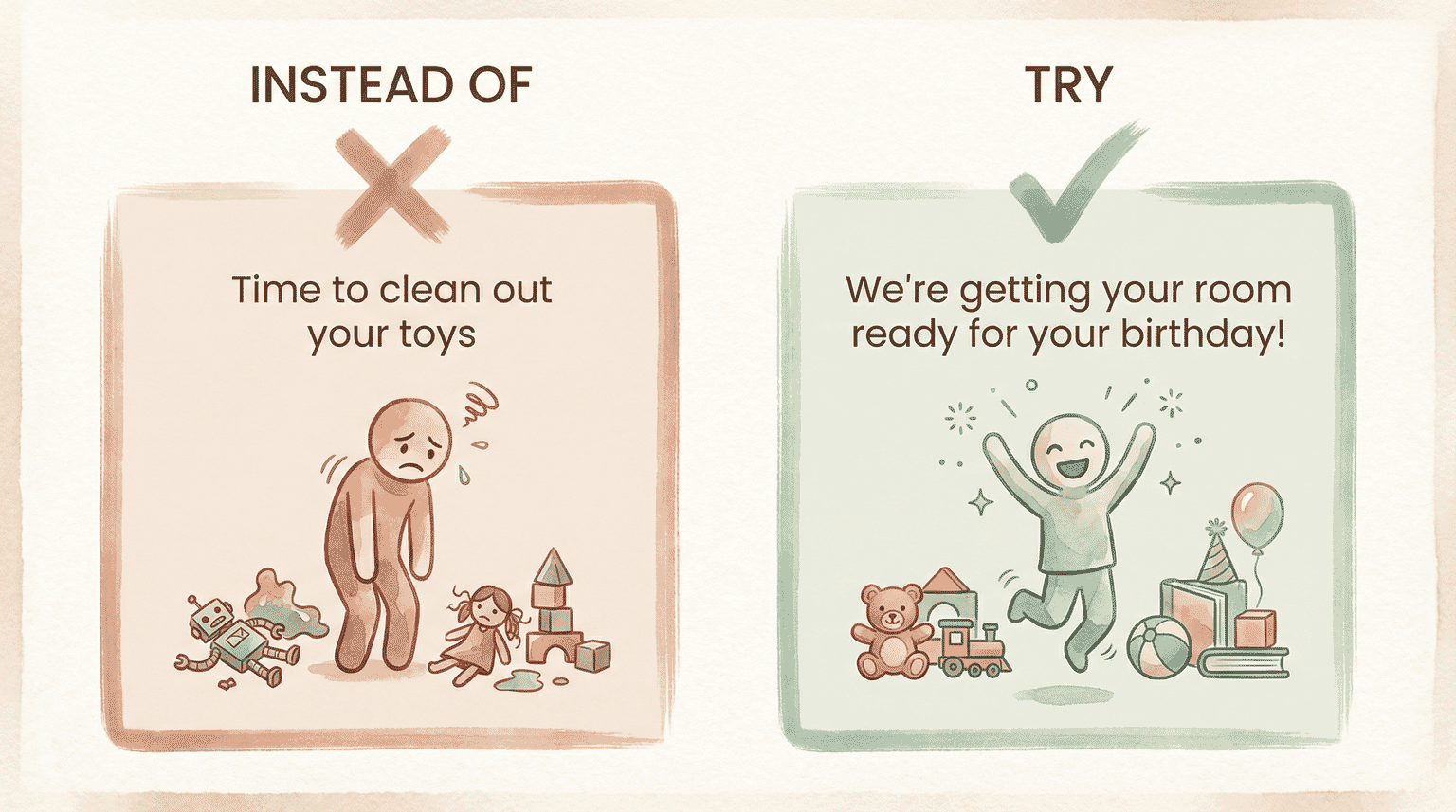
Position this as part of birthday prep, not a separate chore. The language you use matters more than you’d think.
Put on birthday-playlist music. Make it five minutes, not an hour. Celebrate when you’re done.
For families wanting to go deeper on teaching kids about gift values, that’s a whole conversation worth having—but it doesn’t have to happen during the purge itself.

Frequently Asked Questions
When should you purge toys before a birthday?
Three to five days before works best. This timing builds excitement about “making room for new things” without rushing the emotional processing. Children stay focused on the upcoming celebration rather than dwelling on what’s leaving.
Should kids help decide which toys to donate?
It depends on age. Children under 4 do best with parent-led purging, kids 4-6 can choose between limited options, and children 7+ often thrive with collaborative decision-making. Match the involvement level to your child’s readiness.

Share Your Story
Do you purge toys before birthdays? I’m curious what’s worked—and whether “making room” language has helped your kids let go more willingly.
Your purge strategies might be exactly what another parent needs to hear.
References
- Princeton University Neuroscience Institute – Research on visual clutter and neural attention
- UCLA Center on Everyday Lives of Families – Study linking cluttered environments to stress responses
- Susan David, PhD, Harvard University – Research on emotional agility and letting go

Share Your Thoughts