
You’re standing in the card aisle again, flipping past generic “Happy 5th Birthday!” cards with cartoon characters your kid doesn’t even recognize. There has to be something more meaningful than this—something your child will actually treasure decades from now.
There is. And it takes about 20 minutes once a year.
Birthday letters—written to your child’s future self—might be the simplest tradition with the biggest payoff. My librarian brain couldn’t let this go without understanding why they work so well, and what I found surprised me.

Key Takeaways
- Birthday letters become “meaningful emotional objects” that recipients treasure for decades, according to longitudinal research
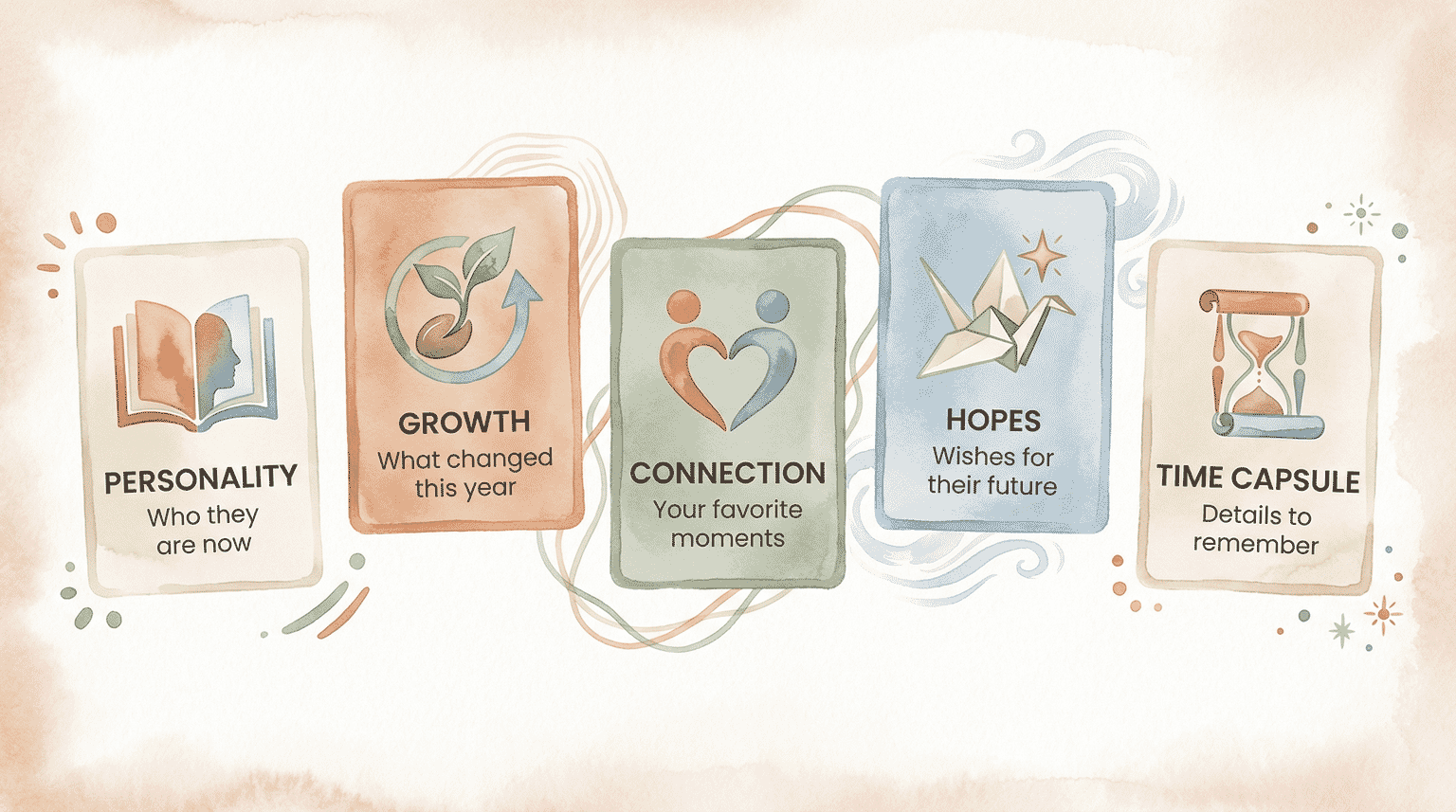
- Focus on five prompt categories: personality captures, growth moments, connection memories, hopes, and time capsule details
- One page takes just 20-30 minutes—consistency matters more than comprehensiveness
- Store letters in a fireproof box with digital backups, then present the complete collection at a milestone like their 18th birthday
Why Birthday Letters Become Treasured
Here’s what the research actually shows: birthdays aren’t just fun celebrations—try a scavenger hunt gift opening!—they become woven into who we are. A 2021 study from Frontiers in Psychology found that “symbols and events that are connected to us and to the groups to which we belong truly become a part of us.” Birthday numbers even show up in measures of self-esteem.
This isn’t sentimentality—it’s identity formation.
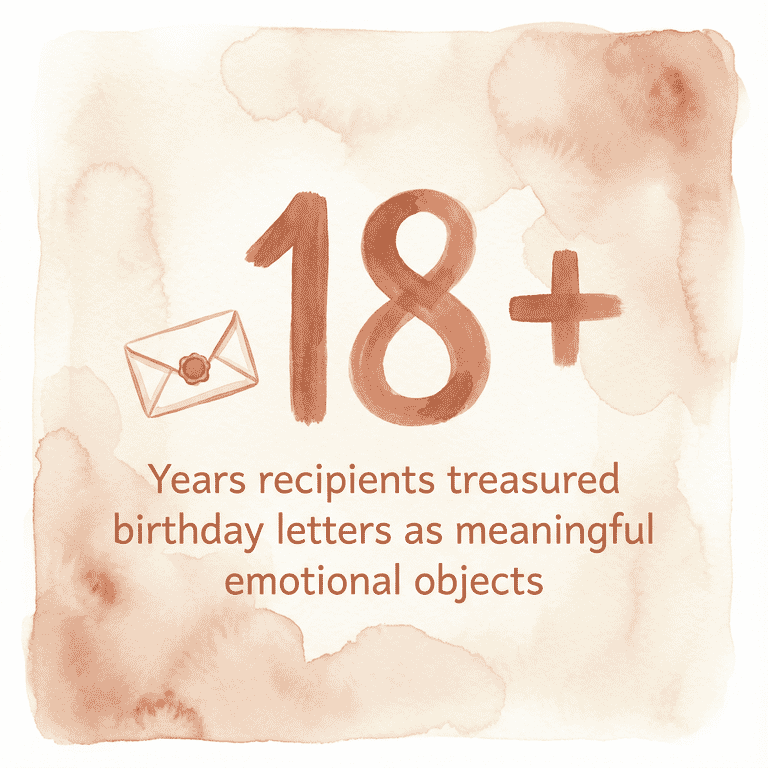
Even more compelling: research tracking birthday communications over decades found that consistent annual written messages transformed into “meaningful emotional objects.”
Recipients reported feeling “a little bit special” and “looked after.” One participant noted that “over the years I began to feel I knew the team members, although I had never met any”—proof that written words build connection even across time and distance.
That’s what you’re creating: a paper trail of love your child can hold in their hands at 18, 25, or 40.
What to Write: Prompts That Actually Work

The blank page stops most parents before they start. Here’s my framework after writing these for eight kids across every age:
Personality Captures (Who They Are Right Now)
- What makes them laugh until they can’t breathe?
- What’s their current “thing” they talk about constantly?
- How do they approach problems—dive in or observe first?
- What phrase do they overuse adorably? (Write it exactly as they say it.)
These details feel obvious now but become precious. My 17-year-old recently read that at age 4, she insisted on wearing her “cozies” (pajamas) under her clothes to preschool. She had zero memory of this—but now it’s part of her story.
Growth Moments (What Changed This Year)
- What can they do now that they couldn’t last birthday?
- What fear did they overcome?
- What surprised you about how they’ve matured?
This category works especially well during early elementary years when interests and abilities shift rapidly.
Connection Memories (Your Relationship Highlights)
- Your favorite ordinary moment together this year
- A conversation that made you see them differently
- Something they did that made you proud (be specific)
Hopes and Blessings (Future-Oriented)
- What you wish for their coming year
- A quality you hope they keep forever
- What you want them to know when life gets hard
Time Capsule Details (The Mundane That Becomes Magic)
- Current favorite food, song, book, show
- Best friend’s name
- What they want to be when they grow up
- Something funny they said recently (exact quote)
Research on written birthday traditions suggests recipients value feeling “looked after”—these specific details prove you were paying attention.
Sample Phrases to Get You Started
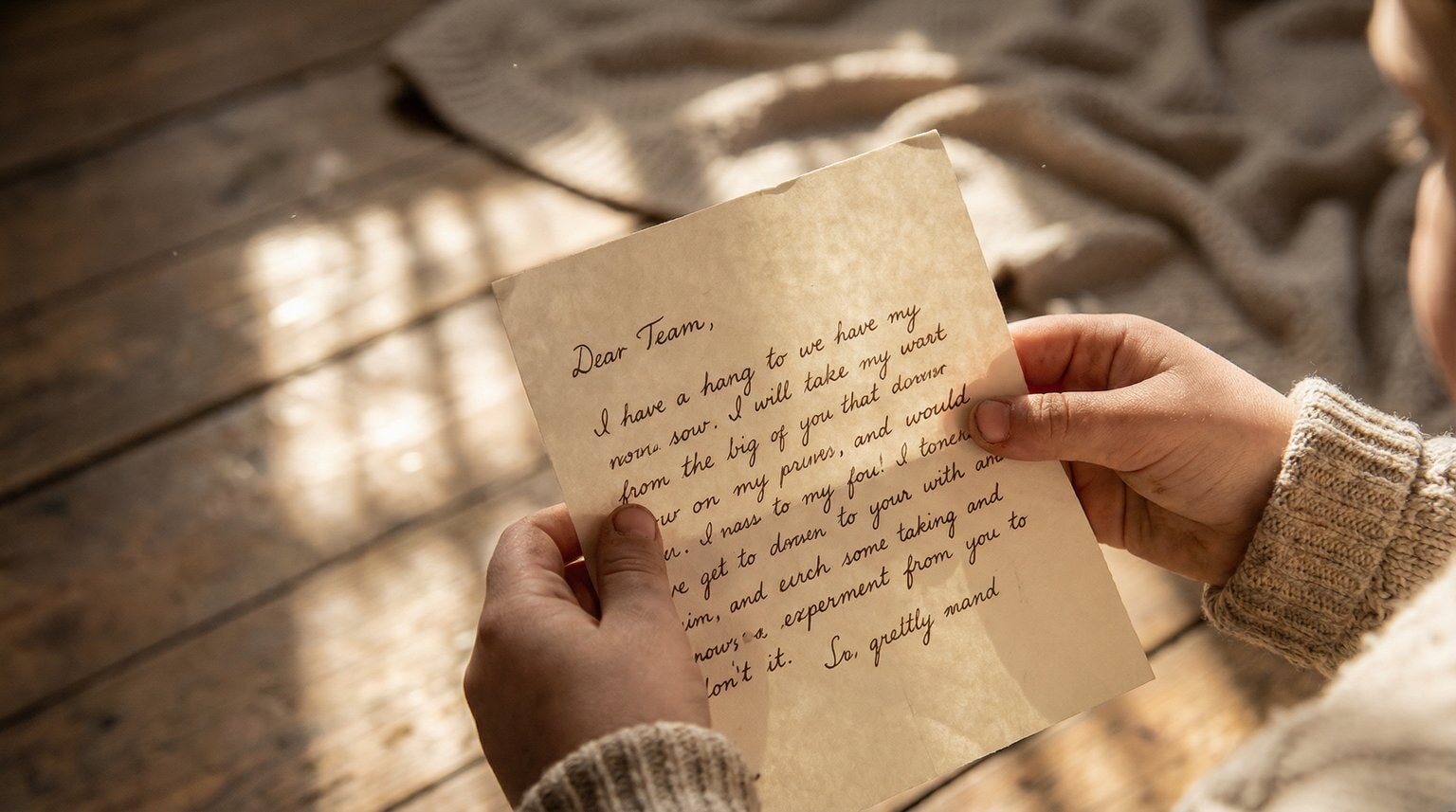
The hardest part is the first sentence. Steal these:
Opening Lines
- “Today you turn 6, and I want you to know exactly who you were at this moment.”
- “By the time you read this, you probably won’t remember…”
- “If I could bottle who you are right now, here’s what I’d save…”
- “This year, you became someone who…”
- “Dear Future [Name], let me tell you about Present [Name]…”
Closing Sentiments
- “I can’t wait to see who you become, but I already love who you are.”
- “Carry this with you: you have always been enough.”
- “Until next year’s letter—I’m so glad I get to be your mom/dad.”
The “Before and After” Difference
The difference between a forgettable letter and one your child reads over and over comes down to specificity.
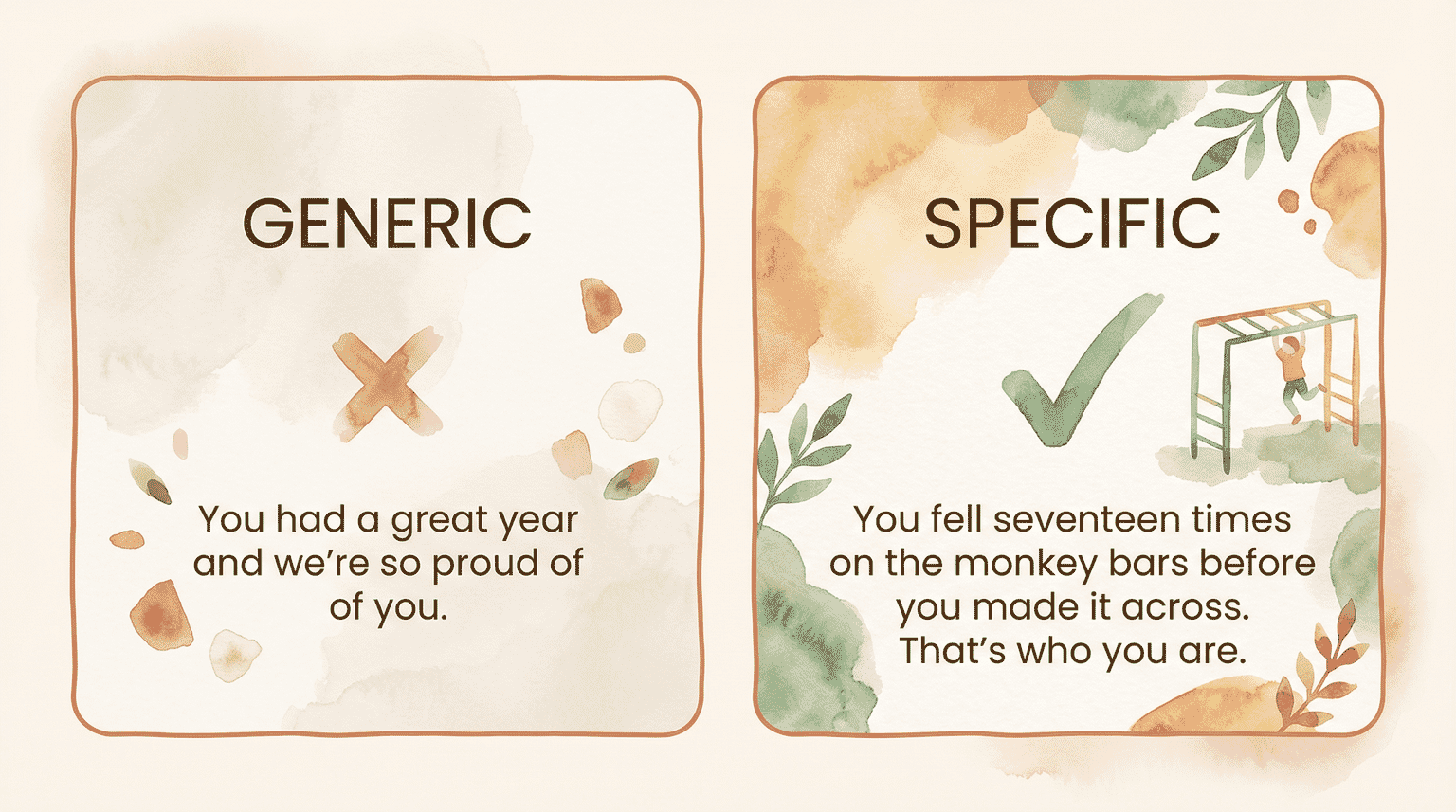
The specific version is what your child will read and reread. It captures who they are, not just that you love them (they already know that).
What to Avoid Writing

Not everything belongs in a birthday letter. Recipients in long-term studies valued feeling “special” and “looked after”—not documented or evaluated. Avoid:
- Comparisons to siblings: “Unlike your brother at this age…” creates weight your child doesn’t need to carry.
- Weight or appearance comments: What seems innocent now may land differently later.
- Excessive correction or advice: This isn’t a performance review.
- Embarrassing stories without permission: What’s funny to you may feel violating to your teenager.
- Pressure-laden expectations: “I know you’ll become a doctor” burdens more than blesses.
Write like you’re talking to a future adult who deserves respect and privacy—because you are.
Format and Storage Options
Your letters need to survive 18+ years. Here’s what works:
Physical Options
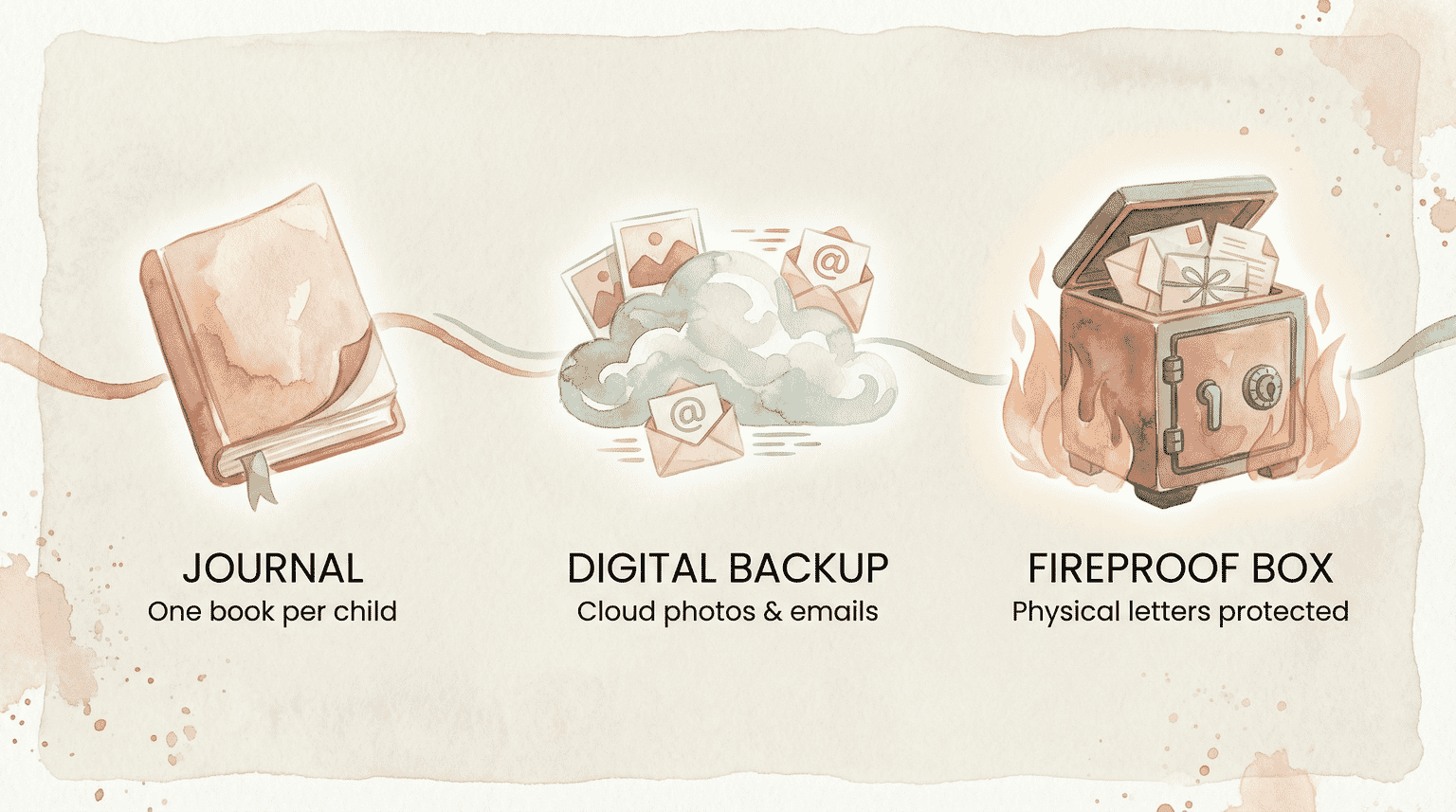
- Dedicated journal: One book per child, letter each year. Simple and contained.
- Individual letters: Separate pages stored in a keepsake box. More flexible.
- Card-based: A meaningful card each year with extended message inside.
Digital Backup
- Photograph each letter immediately
- Store in cloud folder labeled by child and year
- Email copies to yourself with “[Child’s Name] Birthday Letter” in subject line
Hybrid Approach (What I Do)
Physical letters in a fireproof box, digital photos backed up to cloud. The physical matters for the moment they open them—paper is irreplaceable. The digital is insurance.
For families building other meaningful family traditions that build connection, birthday letters fit naturally alongside photo books, memory jars, or annual interview questions.
Building a Sustainable Practice
Eighteen years is a long commitment. Here’s how to actually maintain it:
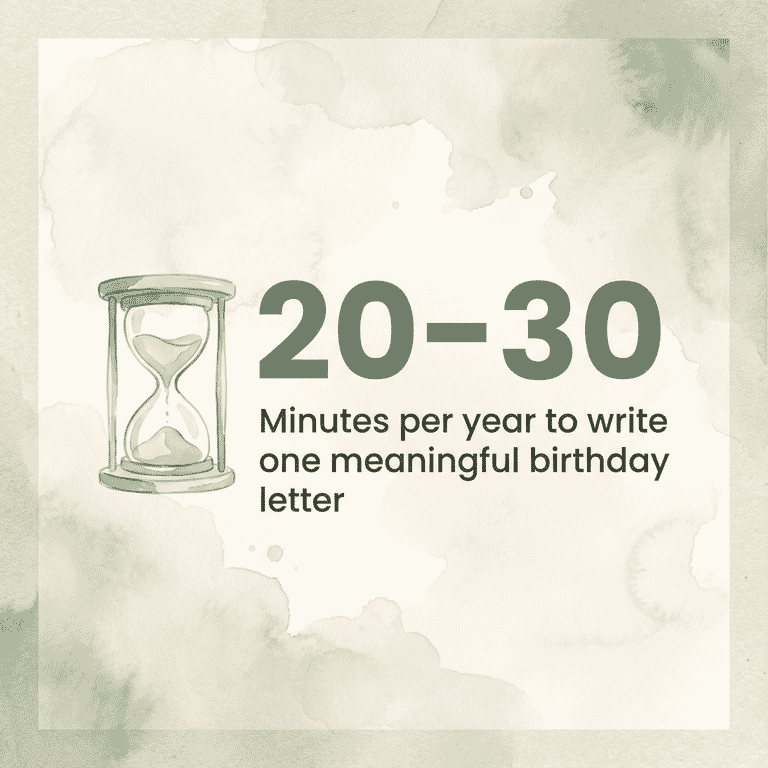
Time Reality: One page takes 20-30 minutes. That’s less time than choosing a birthday gift online.
Scheduling That Works: Set a calendar reminder one week before their birthday. Write during the “birthday prep” window you’re already in. Some parents write the night before, after decorating.
When You Miss a Year
Write it late. Acknowledge the gap. My letter to my 12-year-old on his 11th birthday arrived two months late. I wrote: “This letter is late because life got chaotic—but my love for you never takes a break.” He didn’t care about the timing.
The Good-Enough Standard
Research on family traditions shows that consistency creates impact more than comprehensiveness. A simple one-page letter every year beats elaborate letters that fizzle out by age 7.
Including Others in the Tradition

Partner Coordination
- Both write separate letters (different perspectives)
- Alternate years
- Write one joint letter together
Any approach works. The key is deciding upfront so no one assumes the other is handling it.
Grandparent Letters
Invite grandparents to write their own annual letters. These become even more precious after grandparents are gone. Some families pair birthday interview questions with letter writing as complementary traditions—interviews capture the child’s voice, letters capture yours.
Sibling Contributions
Older siblings can write to younger ones starting around age 8-9. Keep it voluntary and low-pressure—a sentence or drawing counts.
When and How to Give the Letters
Milestone Delivery (Most Common)
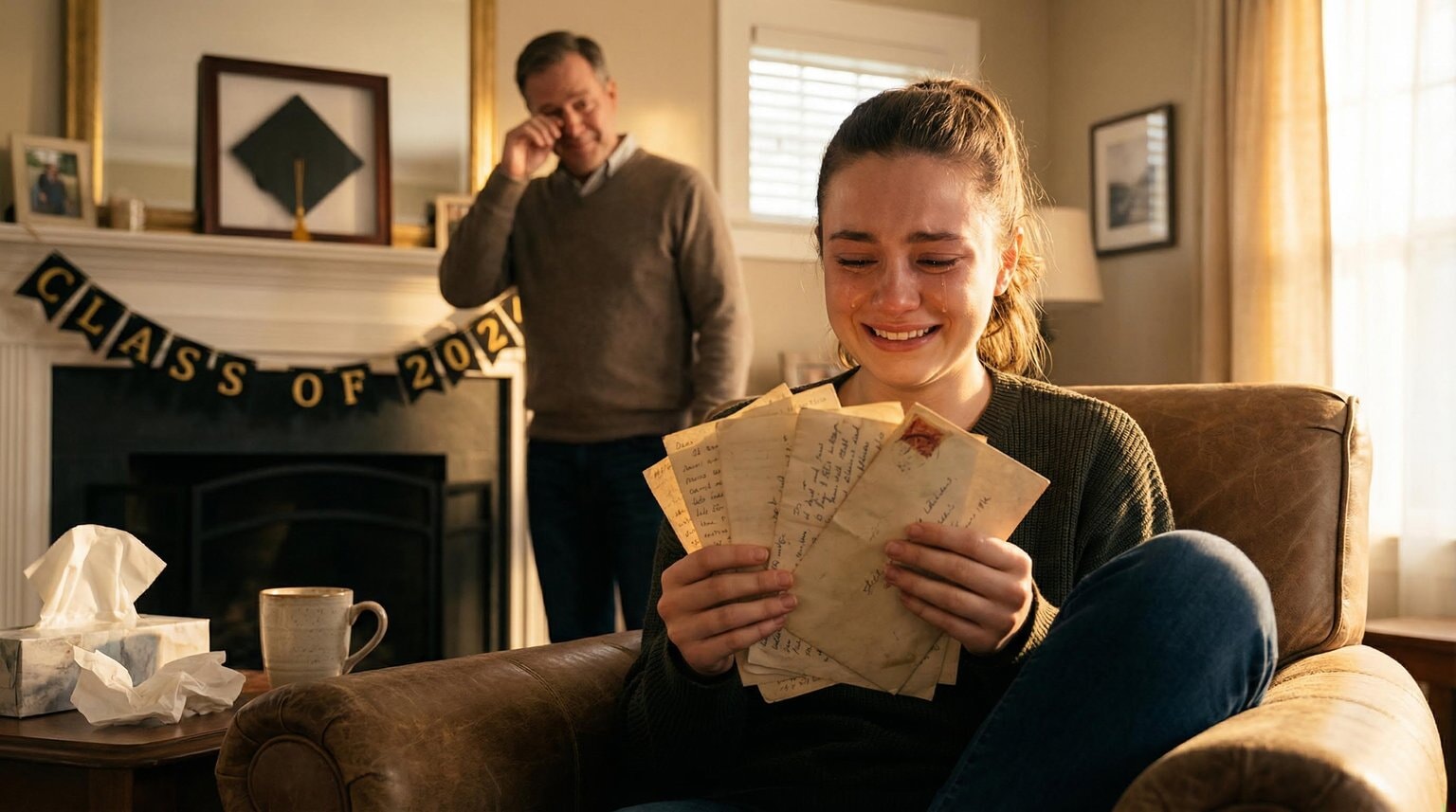
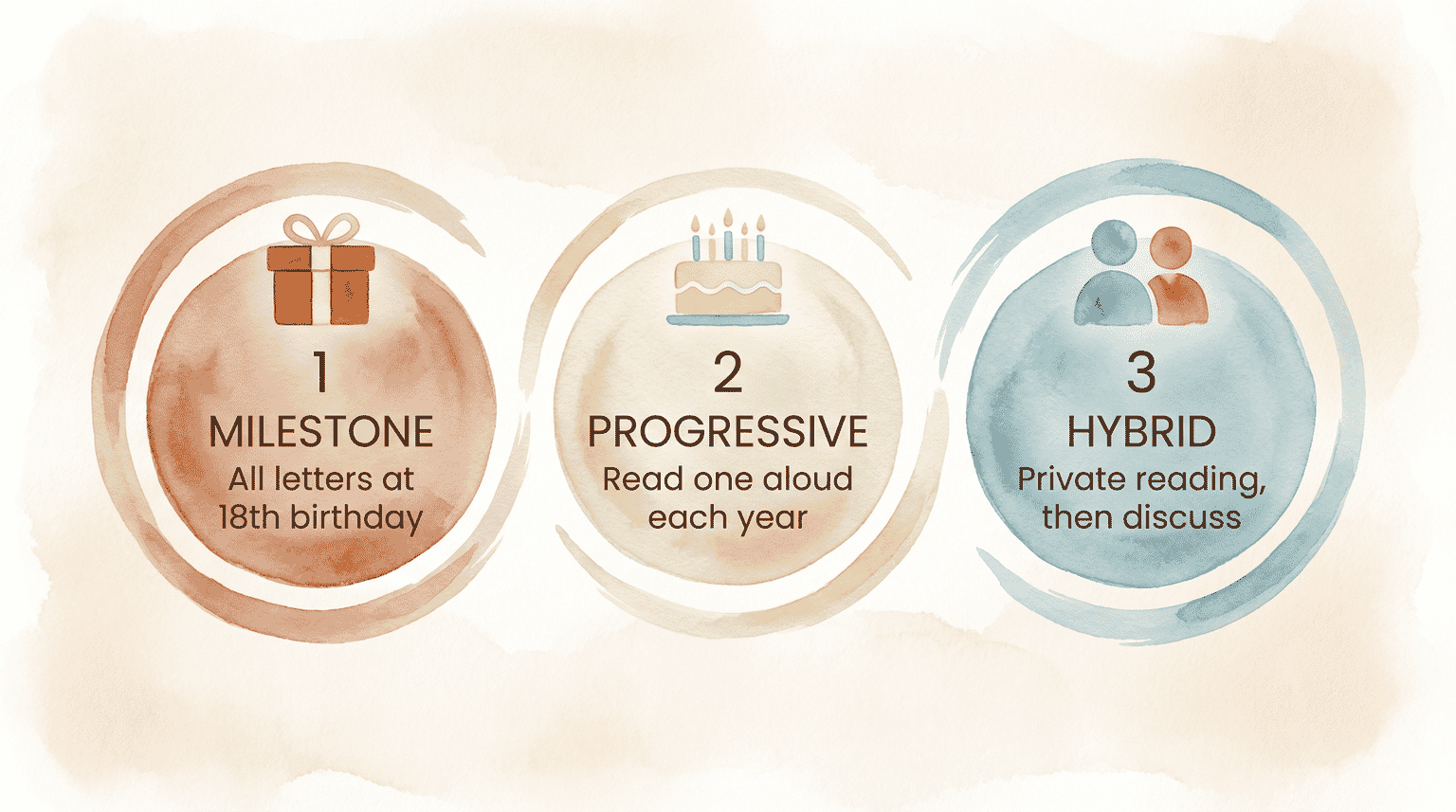
Present all letters together at 18th birthday, high school graduation, or wedding day. The collection reveals a complete narrative arc—watching themselves grow through your eyes.
Progressive Sharing
Read one letter aloud each birthday as part of the celebration. Child experiences the tradition actively rather than receiving everything at once.
Reading Rituals
- Private reading: Give the collection and let them absorb it alone first
- Reading together: Parent reads letters aloud while child listens
- Hybrid: They read privately, then you discuss together
The research on written birthday communications emphasizes that “the cards mark, and have helped create, an ongoing evolving relationship.” The giving moment itself becomes part of the tradition’s power.
Prepare Yourself
Watching your 18-year-old read letters from when they were 3 will wreck you (in the best way). Have tissues. Give them space to feel whatever comes up.
Frequently Asked Questions
What do you write in a birthday letter to your child?
Focus on five categories: personality captures (who they are right now), growth moments (what changed this year), connection memories (favorite moments together), hopes for their future, and time capsule details like current favorites and funny quotes. Aim for warmth and specificity over perfection.
When should you give your child their birthday letters?
Most parents choose milestone delivery—18th birthday, graduation, or wedding day—presenting all letters as a collection. Alternatively, read one letter aloud each birthday as an ongoing ritual. The collection approach creates the most impact as a complete narrative.
How do you start a birthday letter tradition?
Start with your child’s next birthday. Use five prompts: who they are now, what made you proud, your favorite memory together, what you hope for them, and small details you want to remember. Schedule 20-30 minutes, write one page, and commit to consistency over eloquence.
How long should a birthday letter be?
One page is ideal—meaningful enough to matter, short enough to sustain for 18+ years. Consistency beats comprehensiveness. A one-page letter takes 20-30 minutes and remains something your child can actually absorb when they receive the collection.
I’m Curious
Have you written birthday letters to your kids? I’m curious whether you plan to give them all at once or read them along the way—and whether keeping it up every year has been harder than expected.
I read every comment and love hearing which prompts resonate with different families.
References
- Identity Formation and Birthdays – Frontiers in Psychology (2021) – Research on how birthdays become integrated into personal identity
- Birthday Card Communications Study – PMC (2022) – Longitudinal research on how written birthday traditions build lasting emotional connections

Share Your Thoughts