
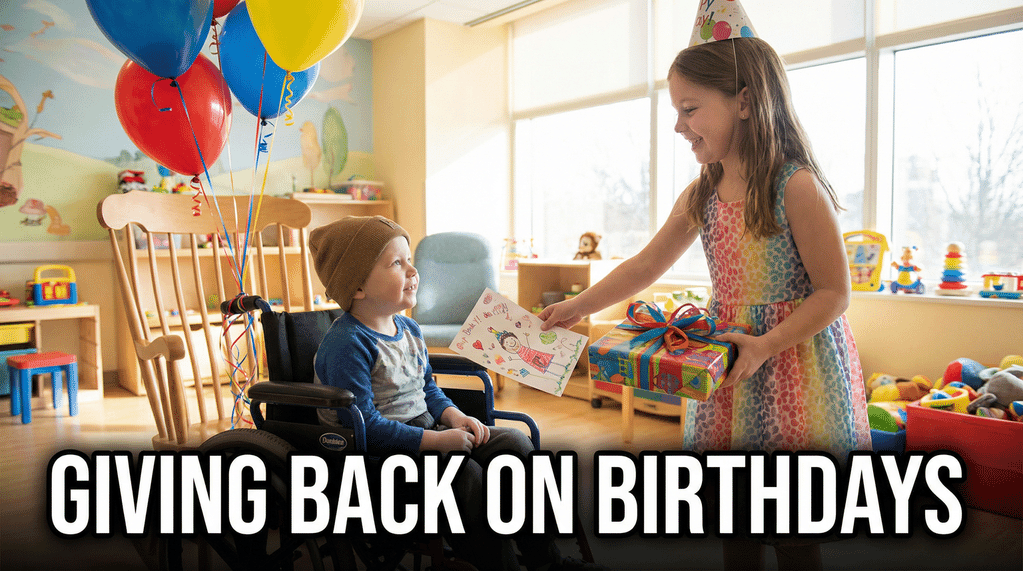
Standing in the party supply aisle, I had an unexpected thought: my daughter’s seventh birthday was approaching, and I was more worried about the gifts she’d receive than excited about celebrating her. Too many? The wrong things? Another pile of toys forgotten by Tuesday? That’s when my librarian brain kicked in—what if birthdays could teach something beyond “here’s your stuff”?
A birthday giving tradition is a family ritual where children participate in acts of generosity on their birthday—whether donating gifts, creating handmade presents for others, or selecting charitable causes—transforming the day from purely receiving into an opportunity to practice gratitude and connection.
Research examining over a century of American birthday practices confirms what most parents intuitively sense: “For well over a century, U.S. parents have apparently gone to great lengths to create happy birthdays for their children.” Birthdays carry psychological weight—they’re not just cake and candles. They’re how children understand their place in the family, the passage of time, and their own developing identity.
But here’s what I’ve observed across eight kids and countless birthday parties: the happiest birthday kids aren’t necessarily the ones with the biggest pile of presents. They’re the ones who feel connected—to family, to friends, to something meaningful beyond themselves.
As one teacher in a 2024 study on reimagined birthday celebrations put it:
“Learning to be a great human being… how to be a giver and a receiver, and how to make people feel special and care for each other, I think it is the biggest life lesson.”
— Early Childhood Educator, ERIC Birthday Celebrations Study
That’s the tradition worth building. Here’s how to start.
Key Takeaways
- Children experience “helper’s high” when giving—boosting mood, self-esteem, and even immune function
- Kids as young as 3-4 can create meaningful handmade gifts that demonstrate emotional thoughtfulness
- Children play with only 5% of their toys daily—experience gifts create lasting memories without the clutter
- Letting children choose where their generosity goes builds ownership rather than obligation
- Start small and build gradually—traditions deepen over years, not overnight
Reverse Birthday Traditions: When Your Child Gives
The most powerful shift you can make is flipping the script entirely. Instead of only receiving, your child also gives on their birthday. This isn’t about depriving them—it’s about expanding what birthdays mean.
The Birthday Donation Tradition
The simplest version: your child selects one gift to donate for every gift received, or chooses a charity to support with a portion of birthday money. The key word is selects—you don’t pick for them.
Research on gift psychology from Psychreg explains why this matters. The “endowment effect” shows that people value things more when they feel involved in selecting them. Self-determination theory confirms that autonomy increases satisfaction.
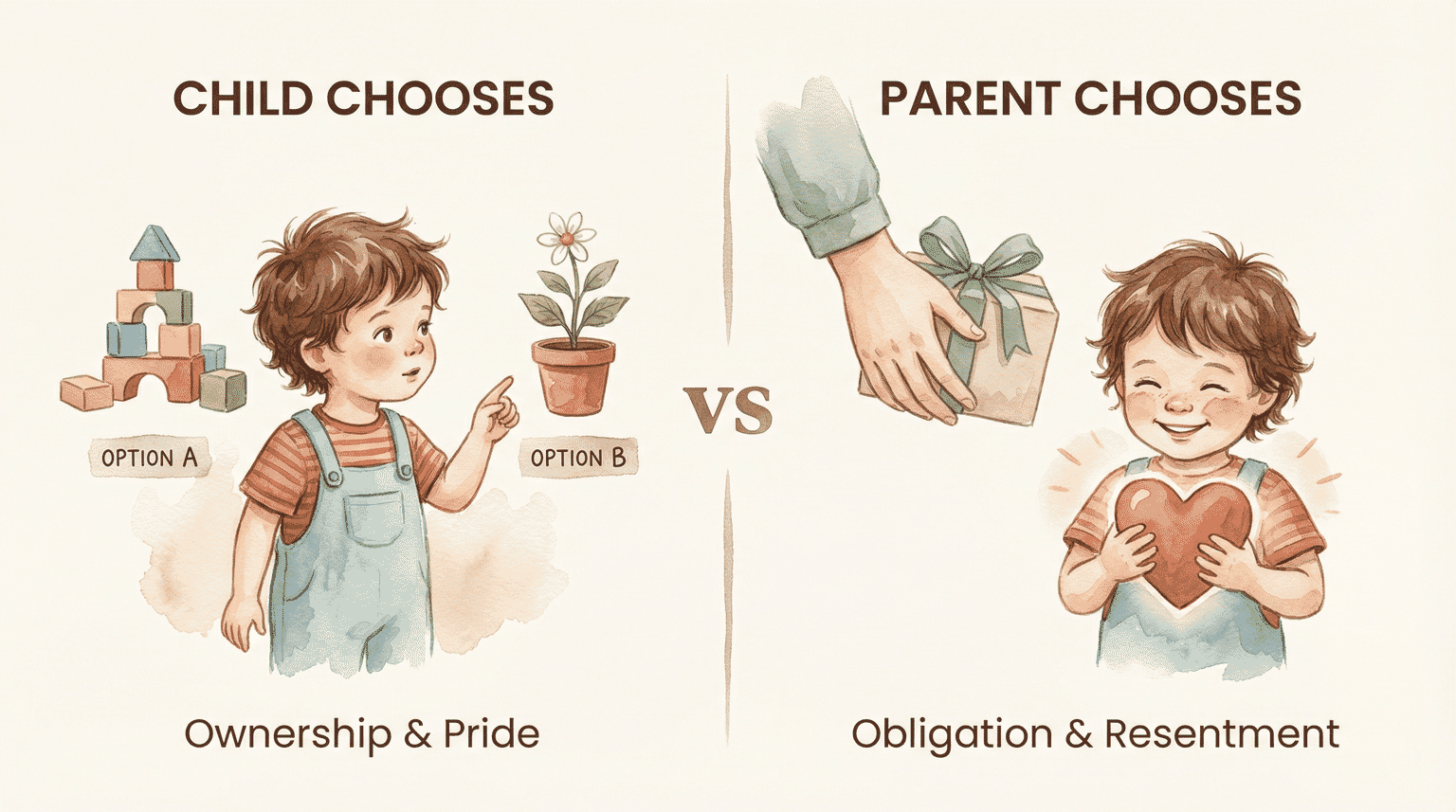
Translation: if your child picks the charity or chooses which toys to donate, they’ll feel ownership over the generosity rather than resentment. I’ve seen this work beautifully starting around age 4, when kids can participate meaningfully in choosing between two or three pre-selected options. By 7 or 8, most children can research causes themselves with guidance.
The “Give One, Get One” Approach
For families wanting to maintain celebration while adding giving, try pairing each received gift with a give. Your child opens a present, then selects a toy from their collection to pass along. Some families do this during the party itself; others make it a quiet birthday-week activity.
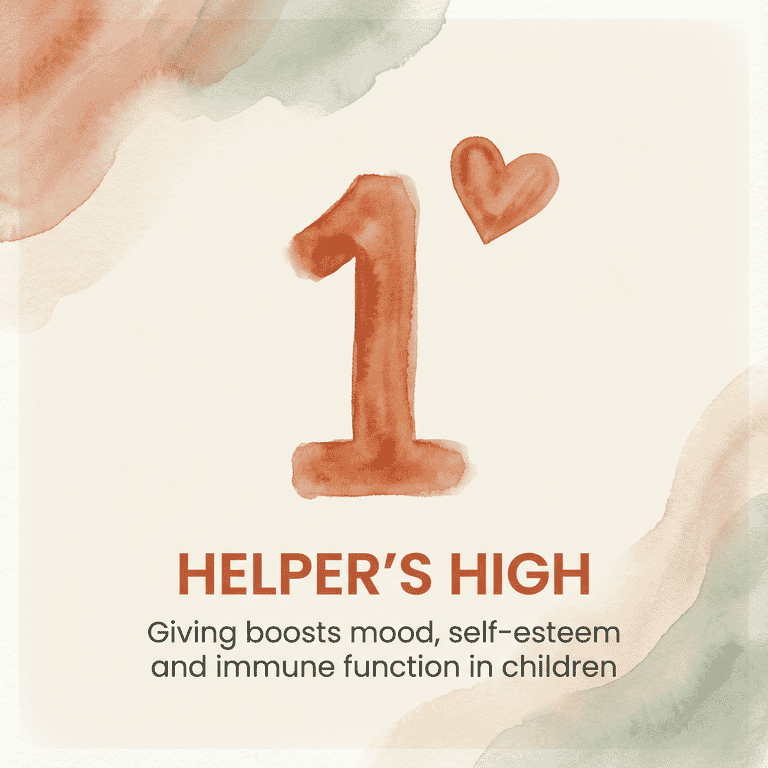
NIH researchers documenting charitable giving have identified a phenomenon called “helper’s high”—giving can lower stress levels, boost self-esteem and mood, and may even enhance immune function.
This isn’t just feel-good language. The neurological benefits are real, and children experience them just as adults do.
A 13-year-old who established a birthday giving tradition described it this way: “Any time I’ve ever helped someone feel better, my heart soars and I can’t help but smile the rest of the day… Giving is something I love doing.”
That’s not obligation talking. That’s a child who’s experienced the genuine reward of generosity. For more ideas on extending giving beyond birthdays, explore family volunteering activities that build on these same principles.
Handmade Gift Traditions: Children Creating for Others
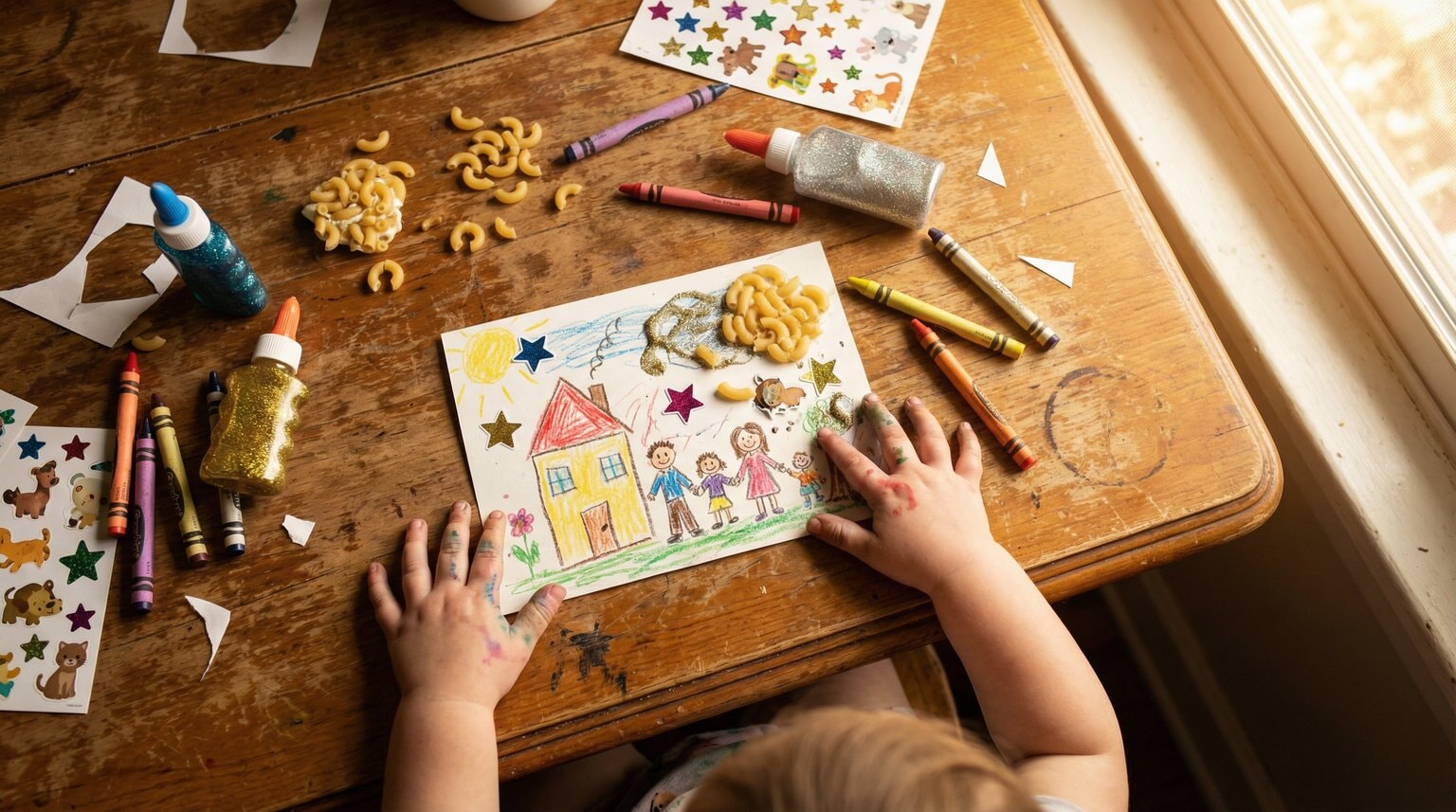
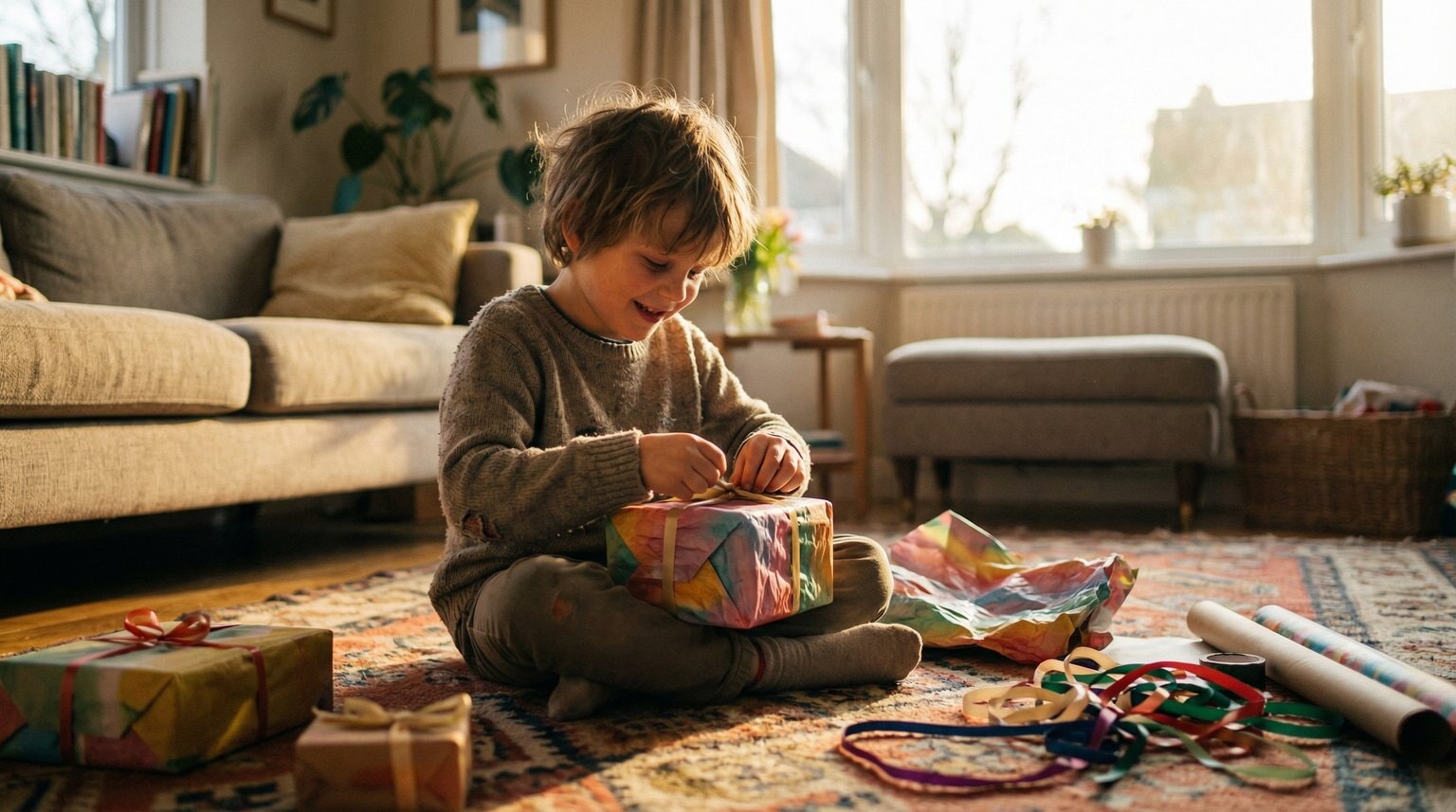
My 6-year-old spent three days making her grandmother a birthday card last month. Three days. The card featured approximately 47 stickers, some macaroni, and a drawing that might have been a horse or possibly our minivan. Grandma cried.
Handmade gifts matter because they require children to think about someone else—what they like, what would make them happy, what colors they prefer. This is sophisticated social-emotional work disguised as craft time.
The ERIC researchers observed preschoolers (ages 3-5) creating birthday gifts for classmates and found the results remarkable. Children demonstrated what researchers called “emotional thoughtfulness”—focusing on what would please the receiver rather than what they wanted themselves.
One teacher noted: “You could just really see how well the children knew each other and their connections they’d make like ‘No, she needs a pink purse because that’s her favorite color.'”
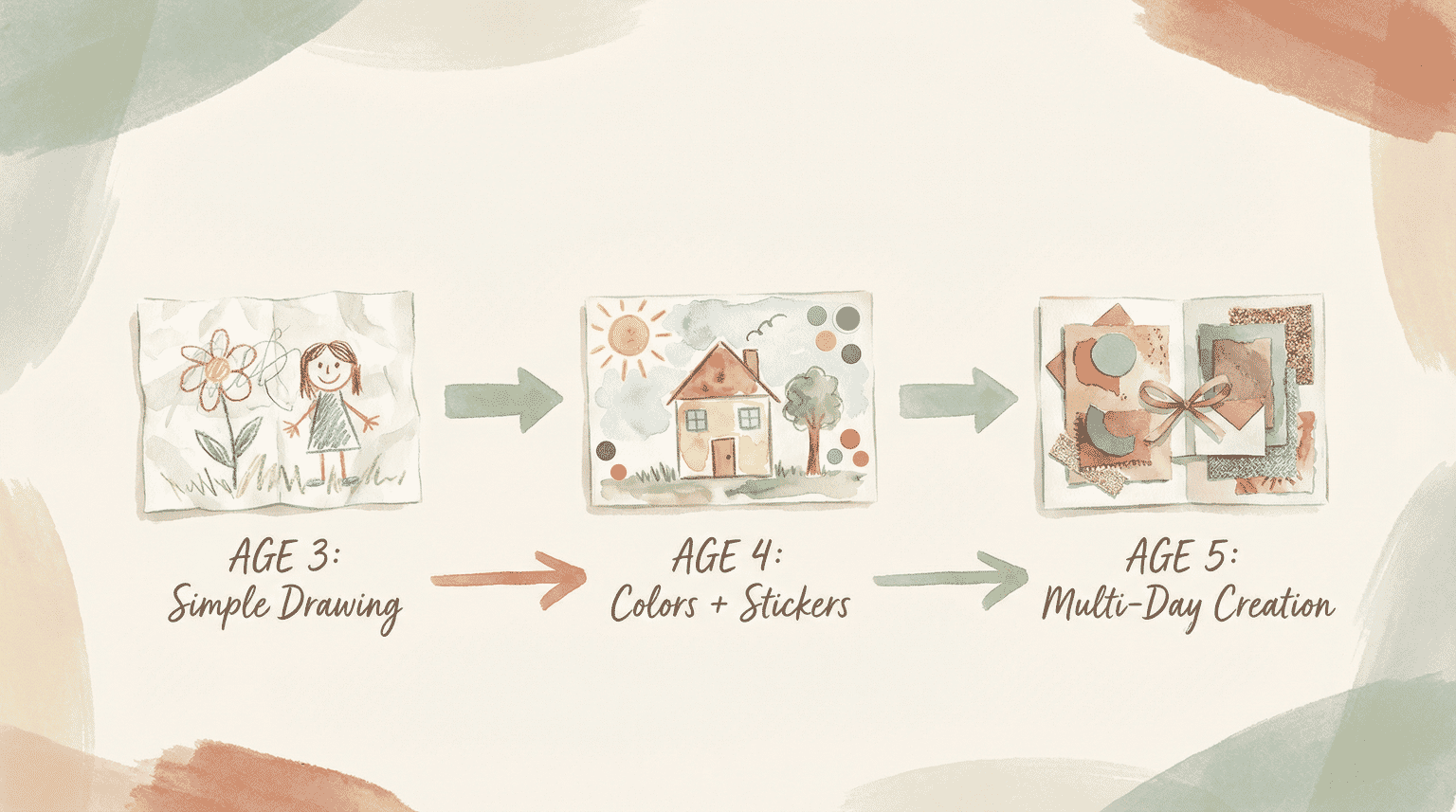
Even more interesting: the children’s gift creation “evolved, becoming increasingly complex over the course of the school year.” A 3-year-old might start with a simple drawing. By year’s end, the same child might spend multiple days on an elaborate construction. This is developmental progression in action.
For families wanting to understand more about what children can handle at different ages, age-appropriate giving milestones provides a detailed breakdown by developmental stage.
Experience-Based Giving Traditions
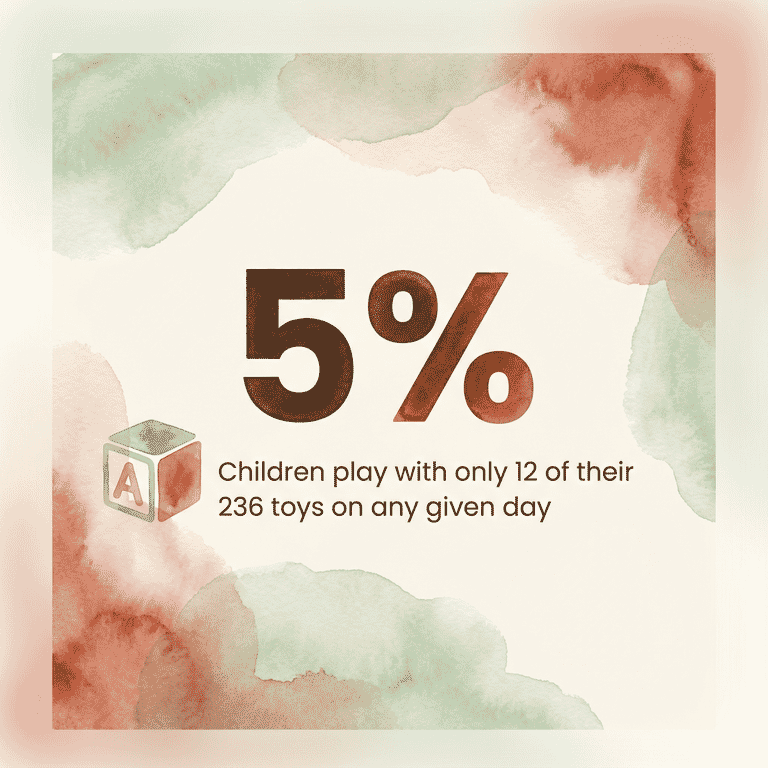
Here’s a statistic that stopped me cold: LSE researchers examining sustainable consumption found that children own an average of 236 toys but play with only 12 favorites daily—that’s just 5% of their collection. Worse, children typically lose interest in new toys within 36 days.
This isn’t an argument against all toys. It’s an argument for balance. When 95% of toys sit untouched, we’re not creating joy—we’re creating clutter and overwhelm.
The sheer volume of unused toys can actually diminish play quality, as children struggle to focus or feel overwhelmed by too many options.
Experience gifts—a zoo membership, tickets to a show, a special outing with a grandparent—create memories without adding to the toy pile. A 2021 survey found that 71% of people actually prefer experience-based gifts over material items. Research consistently shows that experiential gifts lead to higher happiness levels for receivers than material goods.
Consider building experience-based traditions into birthday celebrations:
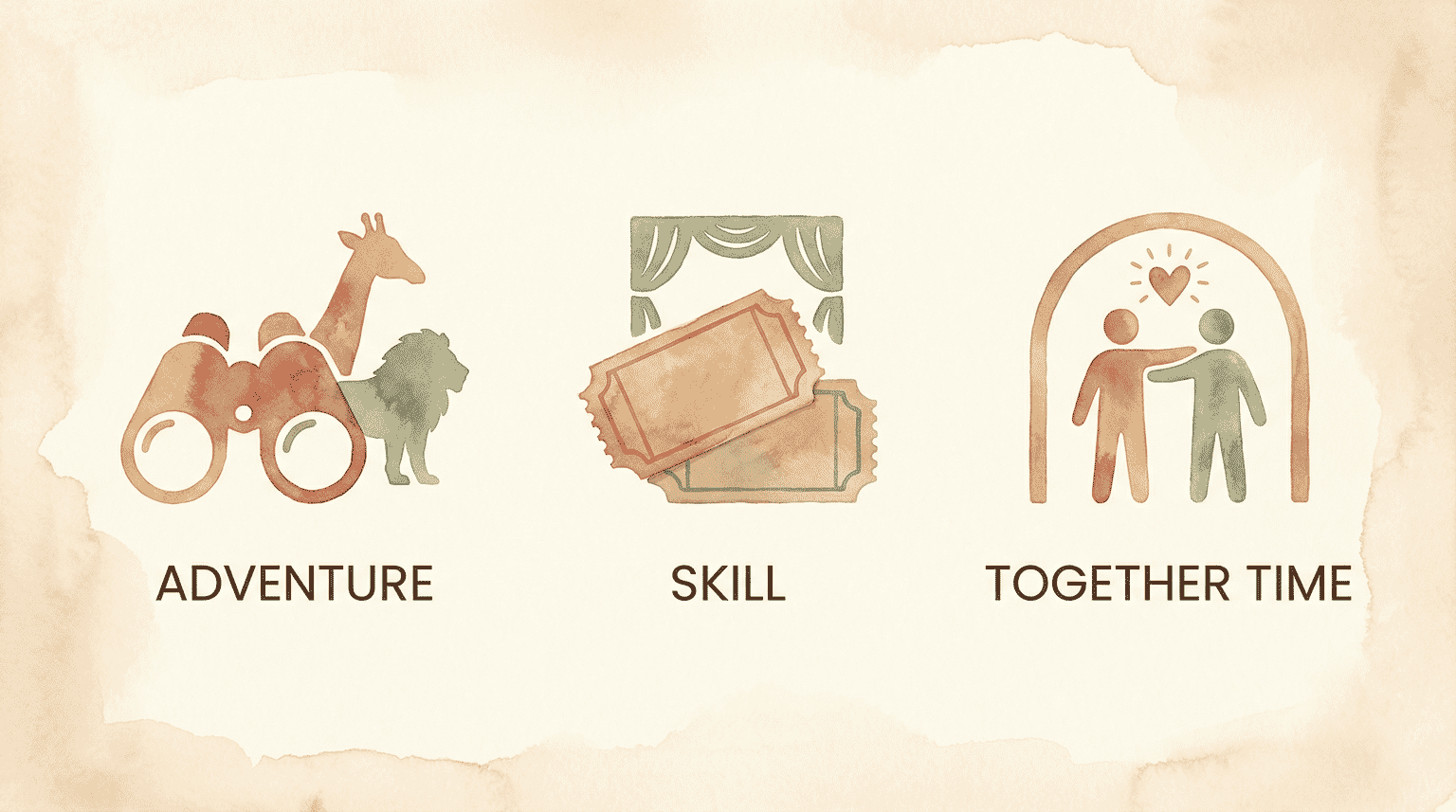
- The birthday adventure: One special outing chosen by the birthday child
- The skill gift: Lessons in something they’ve wanted to learn
- The together gift: An experience shared with the giver (concert tickets, cooking class, camping trip)
Earlier research on play quality demonstrated something parents observe intuitively: with fewer toys, children engage in longer play sessions and use toys in more creative ways. The same principle applies to birthday gifts—thoughtful curation beats overwhelming quantity.
Charitable Selection Traditions: Letting Children Lead

The most meaningful birthday giving traditions involve children choosing where their generosity goes. This isn’t parents announcing “we’re donating to X this year.” It’s children researching, considering, and deciding.
Elizabeth Dunn, a University of British Columbia psychology professor who studies giving, explains the underlying principle: “People get joy from using their financial resources to benefit others. It’s something that unites us as humans.”
But that joy depends on autonomy. When children feel forced into generosity, they experience compliance, not connection. When they choose it, they experience ownership.
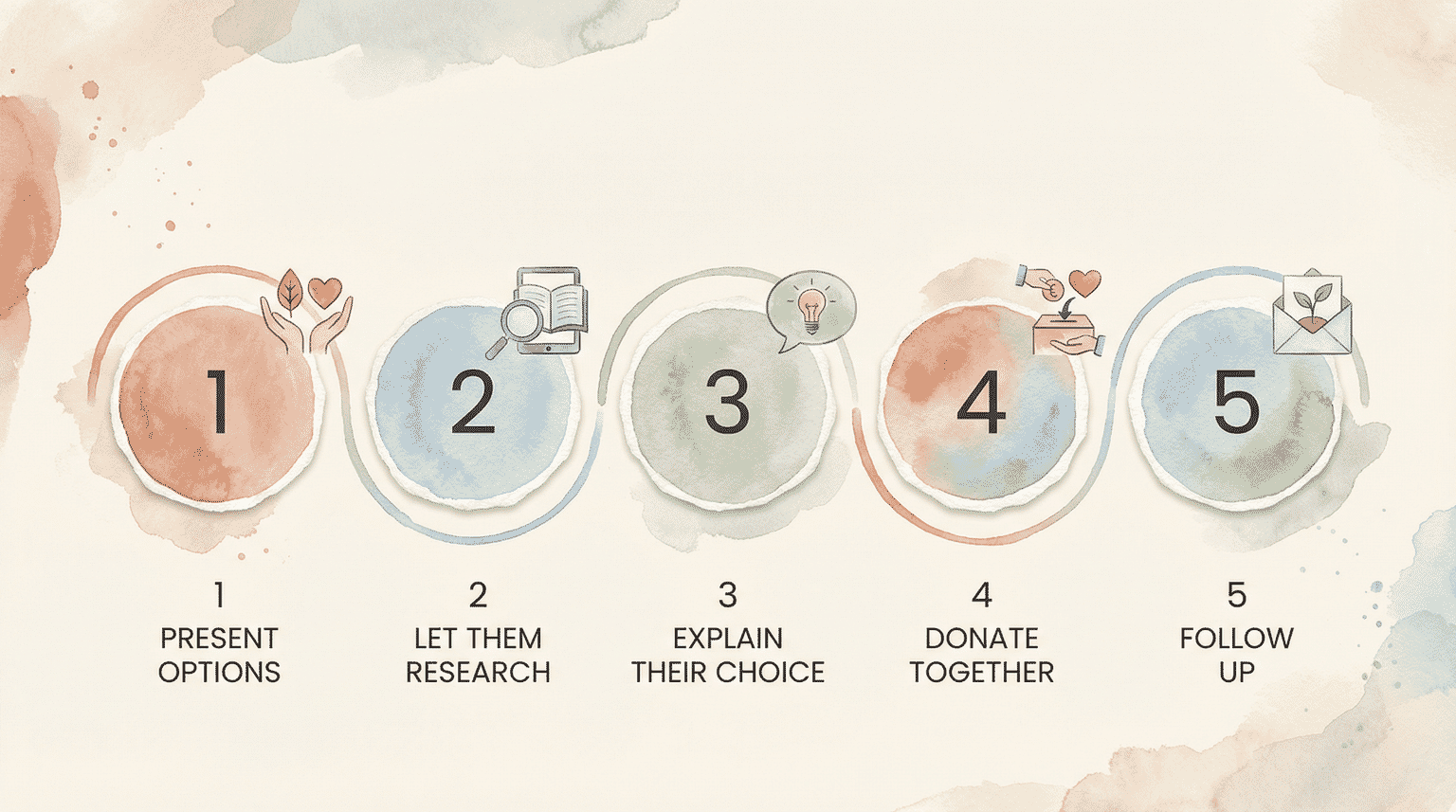
A simple framework for charitable selection:
- Present 2-3 pre-vetted options appropriate to your child’s interests (animals, hunger, environment, local causes)
- Let them research at an age-appropriate level—websites, videos, stories about impact
- Have them explain their choice to family members
- Make the donation together so they see the action completed
- Follow up if possible—share thank-you letters, impact reports, photos
This connects naturally to broader conversations about teaching gift-giving values that extend beyond birthdays into everyday generosity.
Making It Work Without Resentment
Let’s be honest: the fastest way to ruin birthday giving traditions is to make them feel like punishment. “You can’t have a party unless you donate half your gifts” isn’t teaching generosity—it’s breeding resentment.
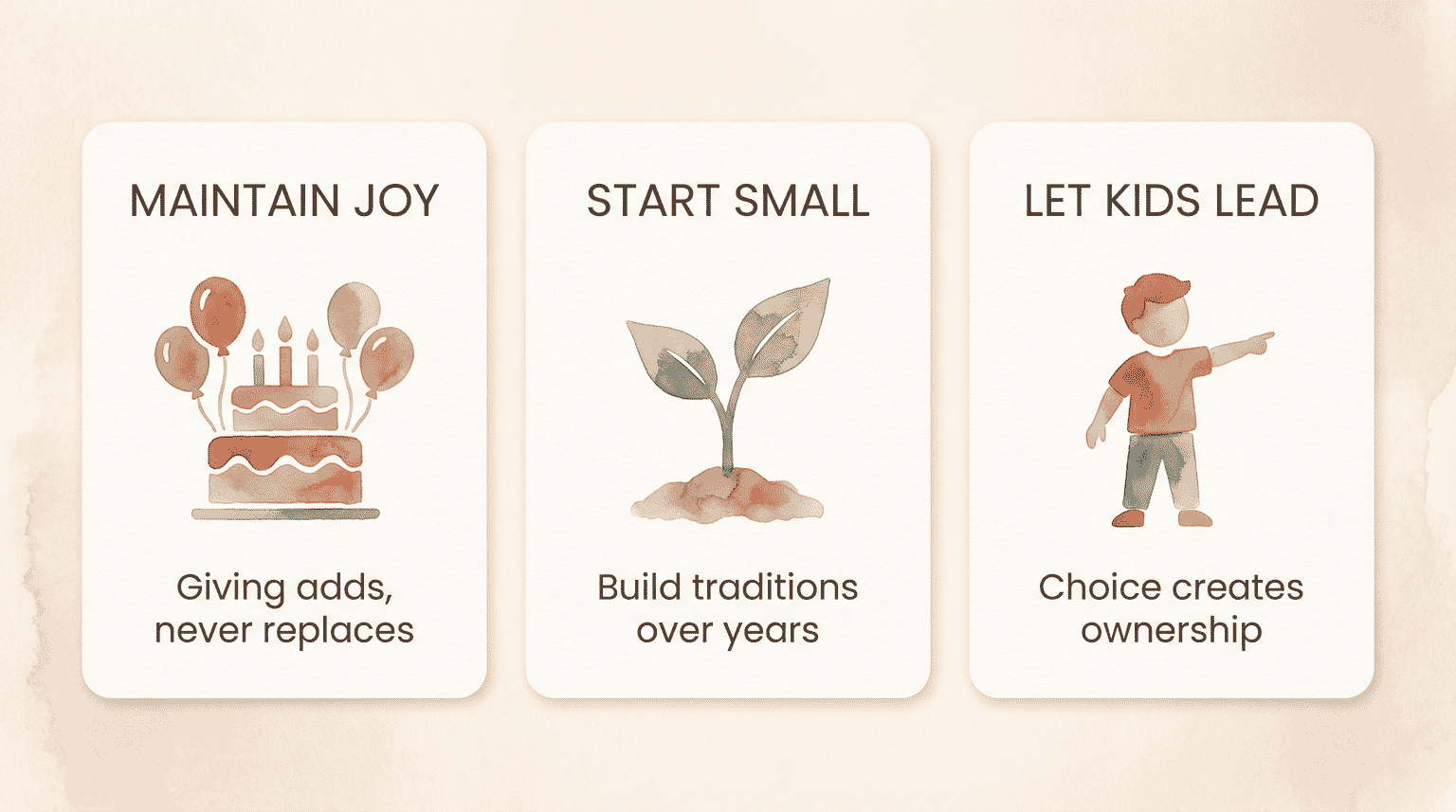
The balance requires three things:
Maintain genuine celebration. Birthday giving traditions should add to the birthday, not replace the joy. Your child still gets cake, attention, and presents they want. Giving becomes part of the fullness of the day, not compensation for it.
Start small and build. First year: maybe just choosing one toy to pass along. Second year: selecting a charity for $10 of birthday money. Third year: creating handmade gifts for grandparents. Traditions deepen over time.
Let children lead whenever possible. A child who picks the charity, selects which toys to donate, or chooses what to make for siblings feels ownership rather than obligation. Even small choices matter—”Would you rather donate to the animal shelter or the food bank?”
Research on gift-giving confirms that recipients appreciate involvement in selection. The same applies to giving: children who participate in decisions value the outcomes more.
Starting Your Tradition This Year
If you’re reading this with an upcoming birthday on the calendar, start simple:
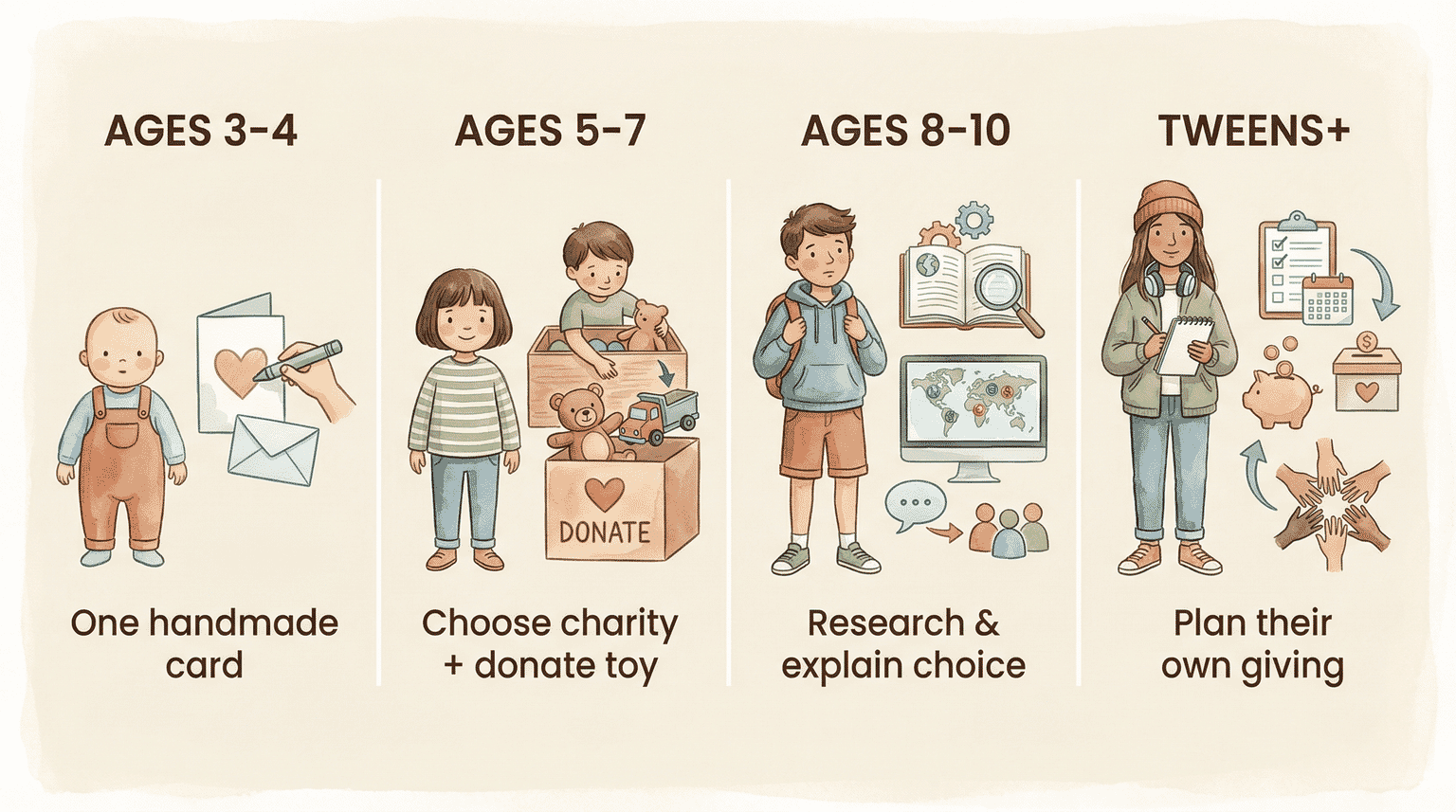
- For ages 3-4: Create one handmade card or picture for a family member
- For ages 5-7: Choose between two charities for a small donation; select one outgrown toy to donate
- For ages 8-10: Research a cause, explain their choice, participate in making the donation
- For tweens and teens: Plan and execute a giving component themselves—organizing a donation drive, volunteering on their birthday, or creating meaningful handmade gifts
The tradition will evolve. That’s the point. My oldest started with sticker-covered cards at age 4; at 17, she organized a coat drive for her birthday last year. The seeds you plant now grow in ways you can’t predict.
What matters most isn’t the specific tradition you choose. It’s that birthdays become about connection—to the people who love your child, to the community around them, and to the deeper meaning of marking another year of life.
Frequently Asked Questions
How do I teach my child to give on their birthday?
Start with a “reverse birthday” tradition where your child selects one gift to donate or chooses a charity to support. Research documents a “helper’s high” in children who give—boosting mood and self-esteem. Begin around age 4 when children can participate meaningfully in selection, and let them lead the choice to build genuine investment rather than obligation.
What age can children start giving birthday gifts?
Children as young as 3-5 can create meaningful handmade gifts for others. Researchers observed preschoolers demonstrating “emotional thoughtfulness”—focusing on what recipients would like rather than their own preferences. Gift-giving capacity naturally increases in complexity as children develop through elementary years.
How do you start a birthday donation tradition?
Let your child choose the cause—research shows people value what they help select. Start simply: ask your child to pick one category of gift to donate, or choose between 2-3 pre-selected charities. Maintain celebration balance by framing giving as an addition to their birthday, not a replacement for receiving.
What are meaningful birthday traditions for families?
The most meaningful traditions involve children actively participating, not just receiving. Experience-based gifts, handmade gift exchanges between siblings, and reverse giving traditions where children donate all create lasting impact. Consistency matters more than complexity—simple traditions repeated annually build deeper meaning than elaborate one-time events.
Over to You
Does your family do birthday giving? I’d love to hear how you balance receiving and giving—and whether kids embrace it or need convincing each year.
Your birthday traditions might be exactly what another parent needs to hear.
References
- PMC Identity Selection Study – Historical research on birthday psychology and parental investment in children’s celebrations
- ERIC Birthday Celebrations Study – Research on preschoolers’ capacity for meaningful gift-giving and emotional thoughtfulness
- NIH Record on Helper’s High – Documentation of psychological and physiological benefits of giving in children
- Psychreg Gift Psychology – Research on autonomy, selection involvement, and gift appreciation
- LSE Sustainable Birthday Study – Research on toy utilization, consumption patterns, and play quality

Share Your Thoughts