

Standing in the toy aisle, you’re surrounded by flashing buttons, electronic voices, and boxes promising to “teach” your child everything from letters to coding. Meanwhile, your 4-year-old is captivated by a simple play kitchen display, already whispering to invisible customers about today’s specials.
Here’s the thing: your child’s instinct is backed by serious research. Ages 3-6 represent what developmental psychologists call the “high season” of imaginative play—a window where pretend play delivers its most powerful developmental benefits. And the toys that support this window? They’re often the simplest ones.
Key Takeaways
- Ages 3-6 are the “high season” of imaginative play—pretend play benefits are strongest during this window
- Simple, open-ended toys outperform electronic alternatives because they require children’s brains to do the imagining
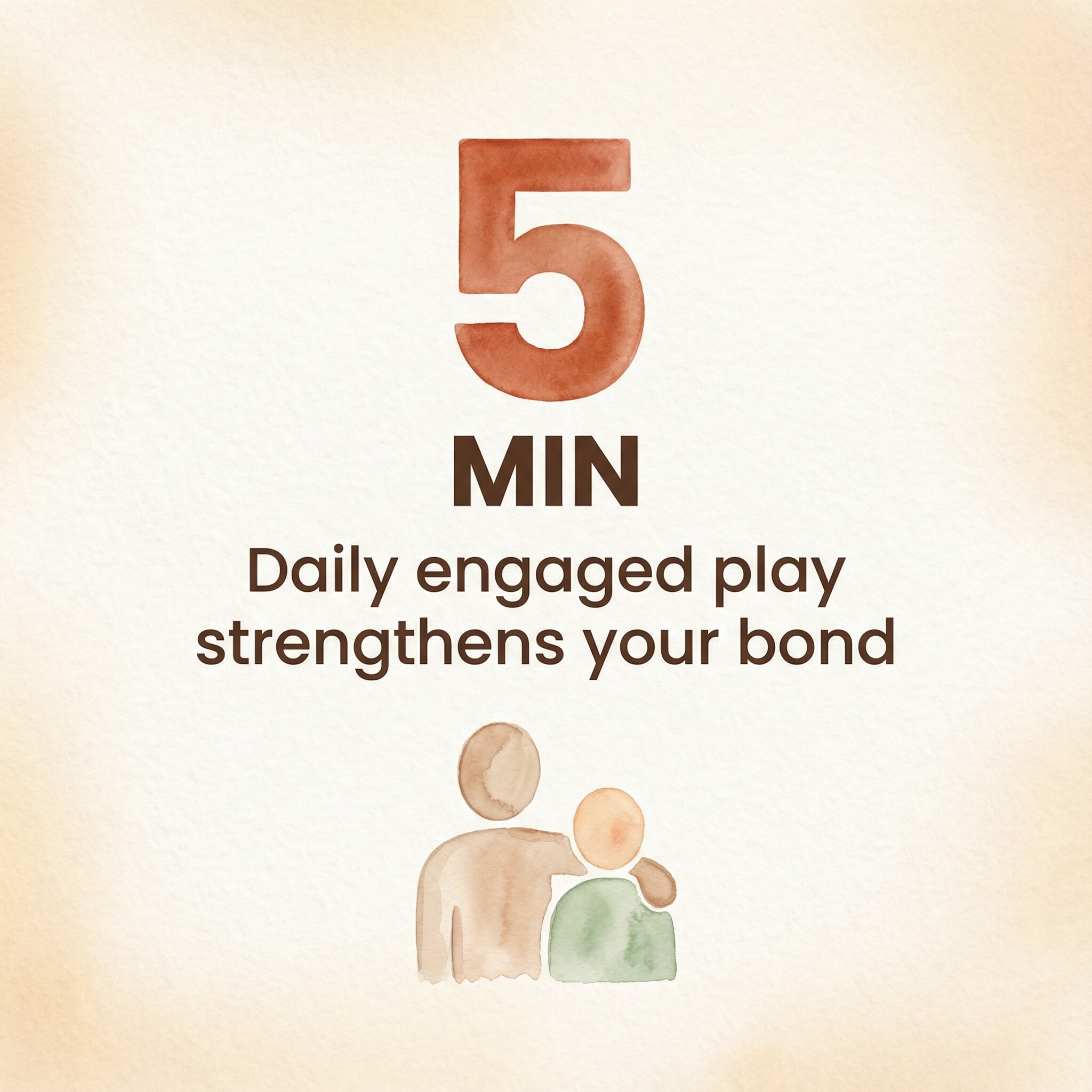
- Just 5 minutes of engaged daily play strengthens your bond more than an hour of half-attention
- Toys that can become many things (blocks, scarves, cardboard boxes) build more cognitive flexibility than single-purpose toys
Why the “Imagination Window” Matters
A 2024 meta-analysis from Springer’s Educational Psychology Review found something striking: the correlation between pretend play and social competence is 0.26 points higher for 3-year-olds than for 8-year-olds. In other words, pretend play matters at every age—but it matters most right now.
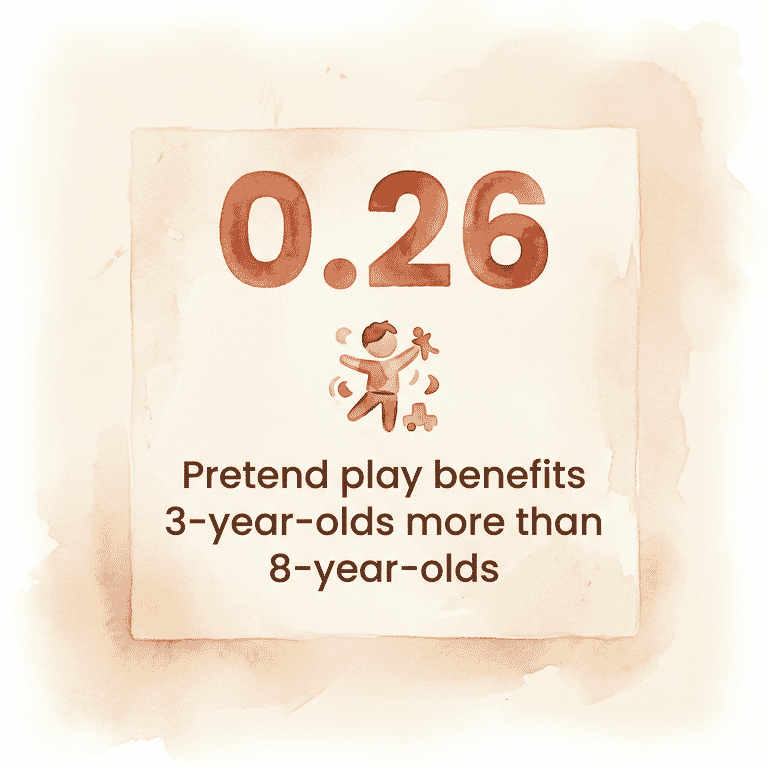
This isn’t a small difference. It means the imaginative play your preschooler does today is building social foundations more efficiently than the same play will in a few years.
The window doesn’t close completely—but it does narrow. That’s why investing in quality pretend play now pays dividends.
Dr. David F. Bjorklund, Professor of Psychology at Florida Atlantic University, describes pretend play as a “metaphoric multivitamin” for child development. His 2024 research found that play-based preschool approaches offer more significant long-term advantages than direct instruction—with children from play-focused programs actually outperforming their direct-instruction peers by third grade.
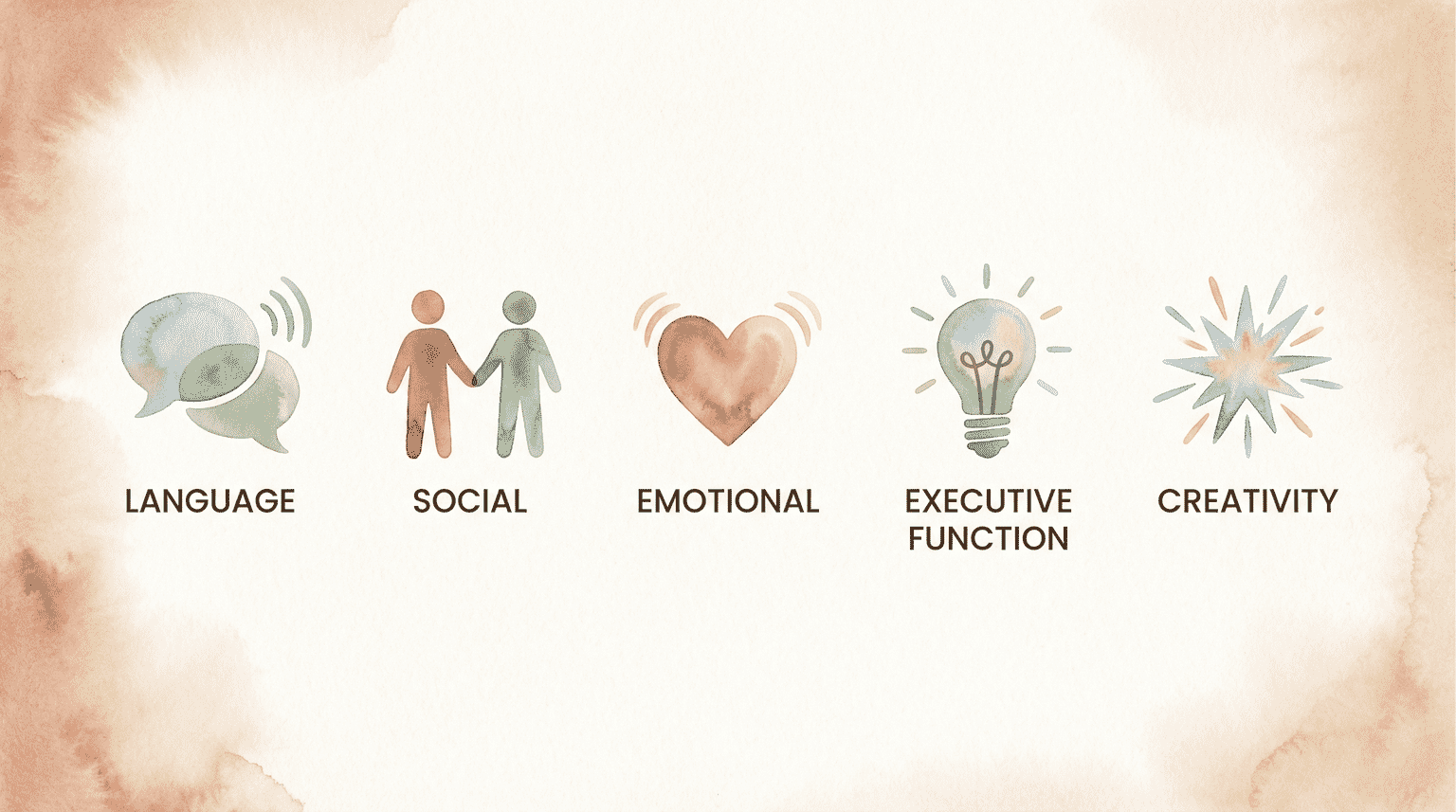
When your preschooler transforms a cardboard box into a spaceship, their brain is building five core capacities:
- Language skills through narrative construction and vocabulary experimentation
- Social competence through cooperation, turn-taking, and role negotiation
- Emotional regulation through processing feelings in a safe context
- Executive function through planning, flexible thinking, and impulse control
- Creativity through divergent problem-solving and imagination
Understanding the science behind developmental play helps explain why that simple play kitchen captivates your child more than the electronic learning tablet.
Dress-Up and Costume Play
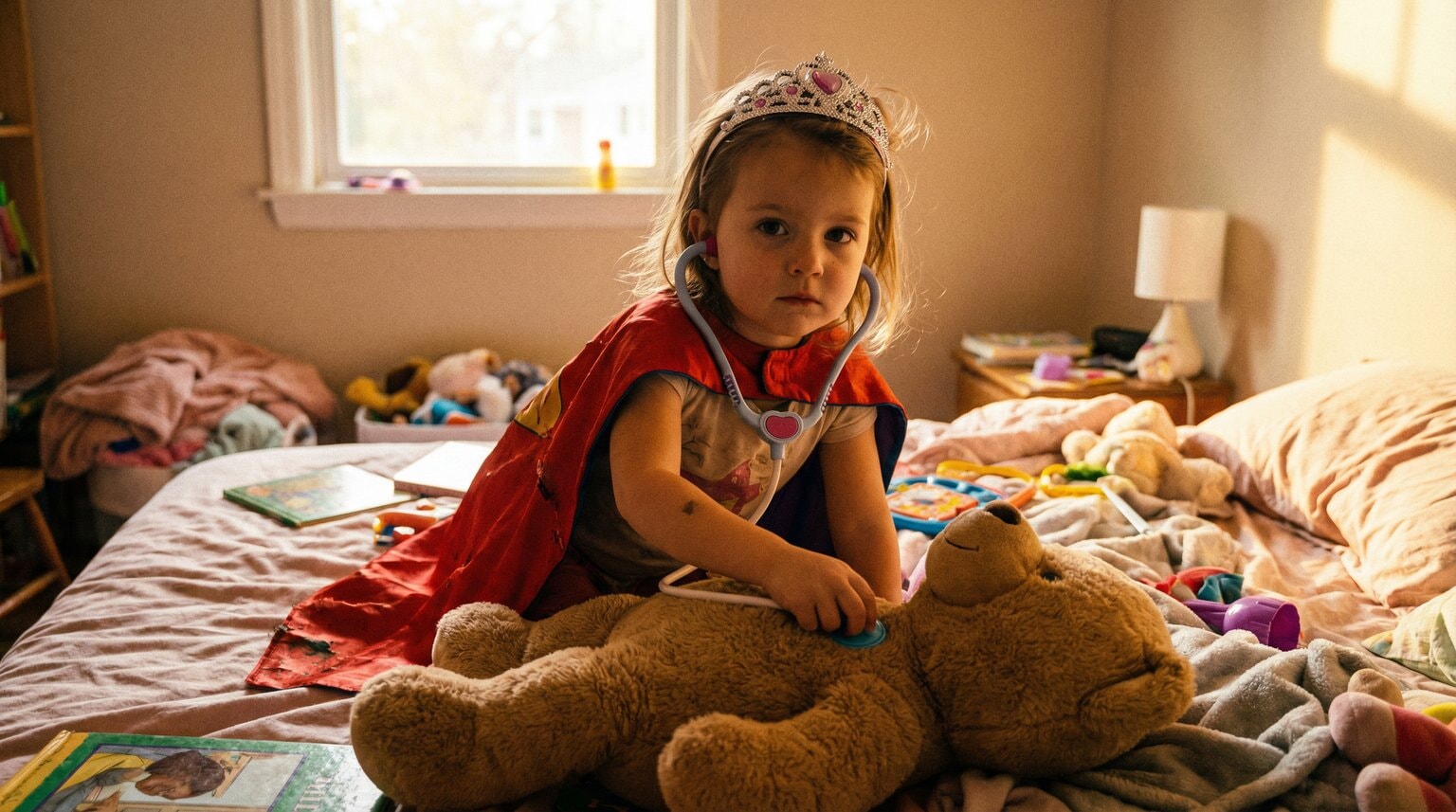
My 4-year-old spent three weeks as “Dr. Superhero Princess”—complete with a cape, tiara, and toy stethoscope. Ridiculous? Sure. But she was doing exactly what her brain needed.
Why it works: Dress-up supports role enactment, perspective-taking, and narrative skills. Research shows complex role-play emerges around ages 3-4, when children begin appropriately modifying their behavior based on pretend scenarios. When your child becomes a firefighter or a veterinarian, they’re practicing what it feels like to be someone else—a foundation for empathy.
What to look for:
- Ages 3-4: Simple capes, hats, and single-piece costumes they can put on independently
- Ages 5-6: Full costume sets with accessories that support extended storylines
- Any age: Open-ended pieces (scarves, fabric lengths) that can become anything
The best dress-up items don’t dictate a single character. A simple crown can make your child a queen, a birthday celebrant, or a magical creature—the ambiguity is the point.
Kitchen, Tool, and Domestic Play
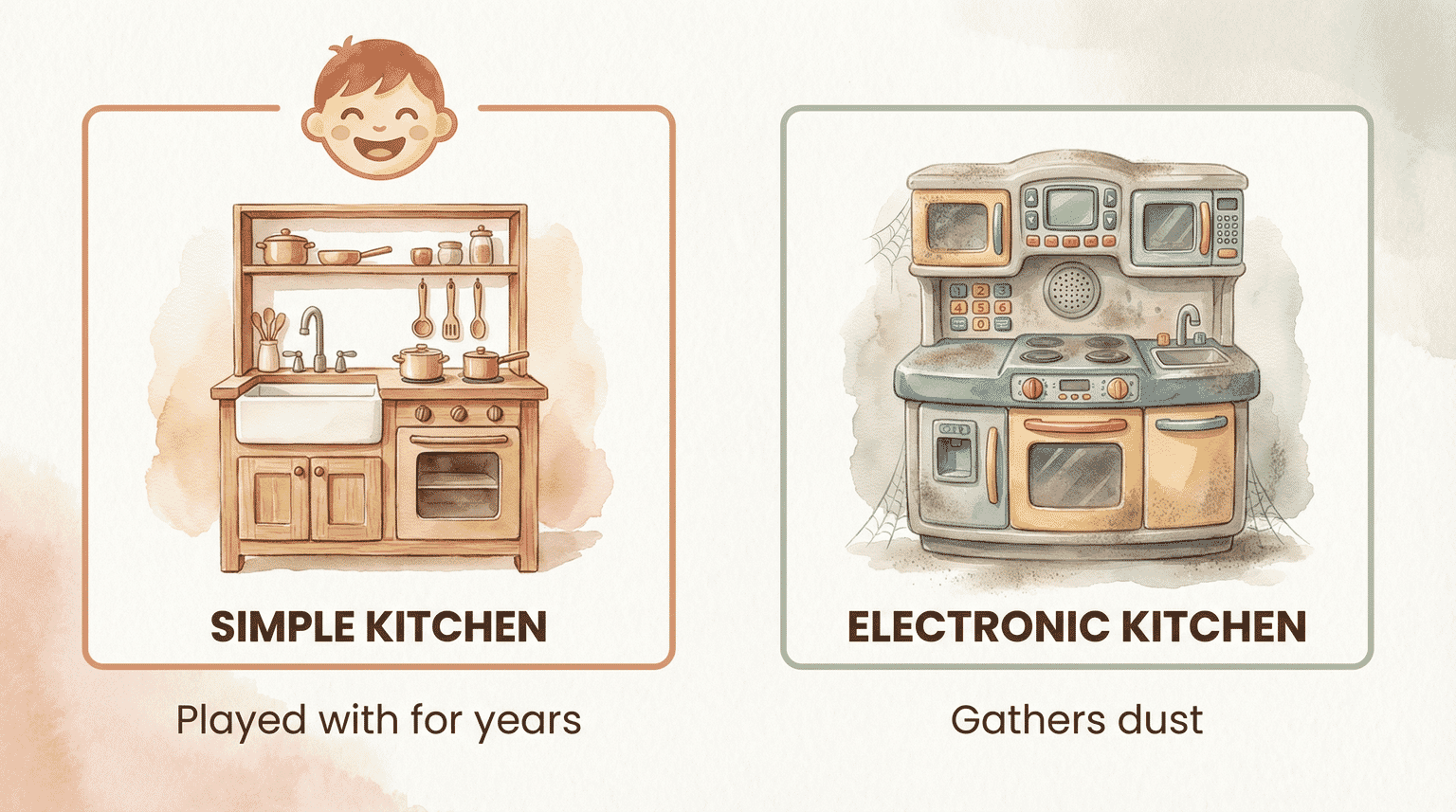
Here’s what I’ve watched happen with eight children: the elaborate electronic play kitchen with 47 sounds eventually gathers dust, while the basic wooden one gets played with for years.
Why it works: Domestic play lets children rehearse real-world sequences they observe daily. Research from PMC/NIH notes that the American Academy of Pediatrics specifically recommends play in a family context for healthy development. When your child “cooks dinner,” they’re practicing sequencing, social scripts, and the give-and-take of domestic life.
What to look for:
- Ages 3-4: Basic kitchen or tool sets with fewer pieces and larger components
- Ages 5-6: More elaborate multi-piece sets that support complex scenarios
- Any age: Real-looking (but safe) props that connect to your family’s actual routines
The developmental value comes from the process of pretending, not from electronic bells and whistles. A play kitchen that requires your child to imagine the sizzling sound is doing more cognitive work than one that makes the sound for them.
Figures, Dolls, and Small Worlds
This one surprised me until I saw the brain research. A 2024 Child Mind Institute study found that brain regions associated with social processing and empathy were more active in children playing with dolls than when they played on tablets—even when playing alone.
Why it works: Figures and dolls enable narrative construction and emotional processing. Your child creates scenarios, assigns feelings, works through conflicts, and practices social dynamics in miniature.
This isn’t “just playing with dolls”—it’s social-emotional training happening in real time.
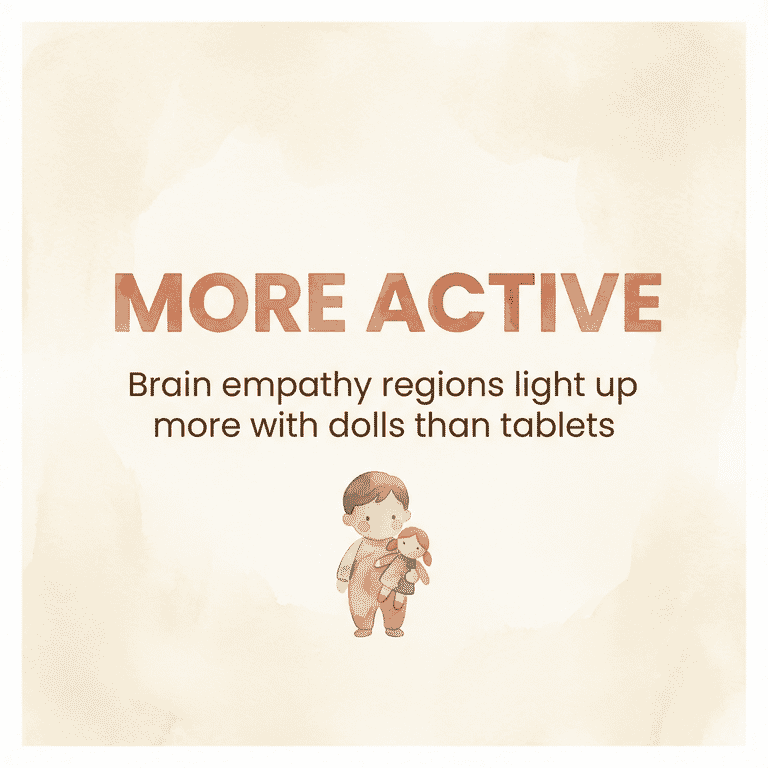
The neuroscience of pretend play reveals something unexpected about how children develop empathy.
“Pretend play is a way for children to work on important areas of development, while also building specific skills that have potential long-term benefits for socially, emotionally, academically, and beyond!”
— Dr. Kathryn L. Keough, Child Mind Institute
What to look for:
- Ages 3-4: Simple figures with minimal accessories, sturdy enough for enthusiastic handling
- Ages 5-6: More complex playsets with multiple characters and settings
- Any age: Figures representing diverse people and roles, supporting varied storylines
The “small world” effect—where children create entire scenarios with figures—activates social cognition whether or not another child is present. Solitary doll play still builds empathy.
Building and Construction Sets

Researchers at MDPI Intelligence (2023) found that children who played with “divergent” toys like blocks were more innovative and flexible problem-solvers than children who played with single-solution puzzles. The blocks group could transfer and generalize their problem-solving skills broadly.
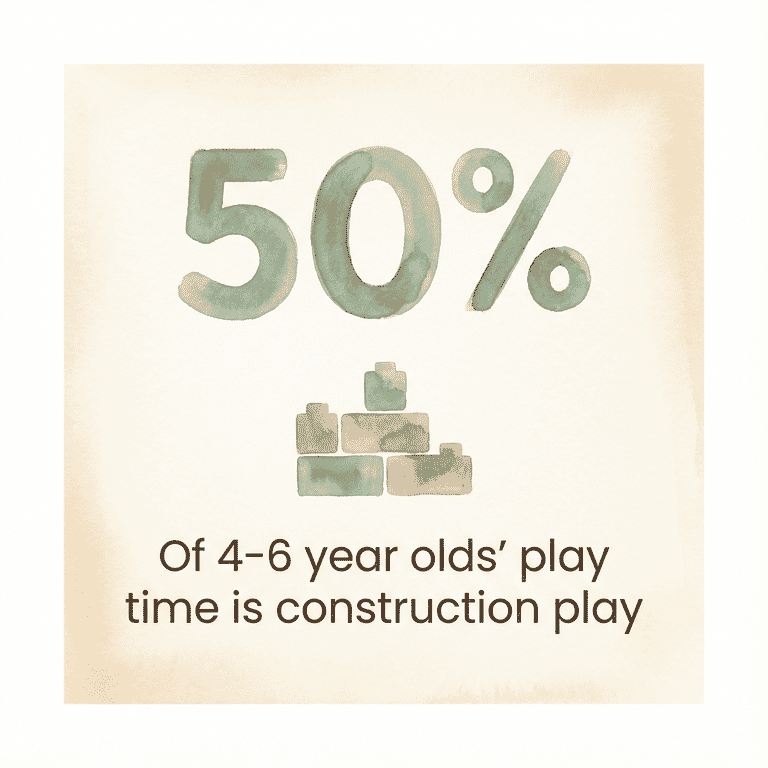
Why it works: Construction play builds spatial reasoning, divergent thinking, and cognitive flexibility. Research shows constructive play occupies about 40% of a 3.5-year-old’s play time, increasing to 50% for ages 4-6. This is what children’s brains want to do during this window.
Open-ended vs. single-outcome matters here. A bin of basic blocks that can become anything supports different cognitive work than a set designed to build one specific spaceship.
When children choose construction play naturally, they’re following their developmental instincts.
What to look for:
- Ages 3-4: Large blocks (wooden or soft) that are easy to grip and stack
- Ages 5-6: Smaller blocks, interlocking systems, and sets with more pieces
- Any age: Materials with multiple affordances—they can become many different things
My librarian brain couldn’t ignore this: longitudinal research suggests complex block play in early childhood correlates with later mathematical understanding. The spatial reasoning transfers.
Role-Play Accessories and Props

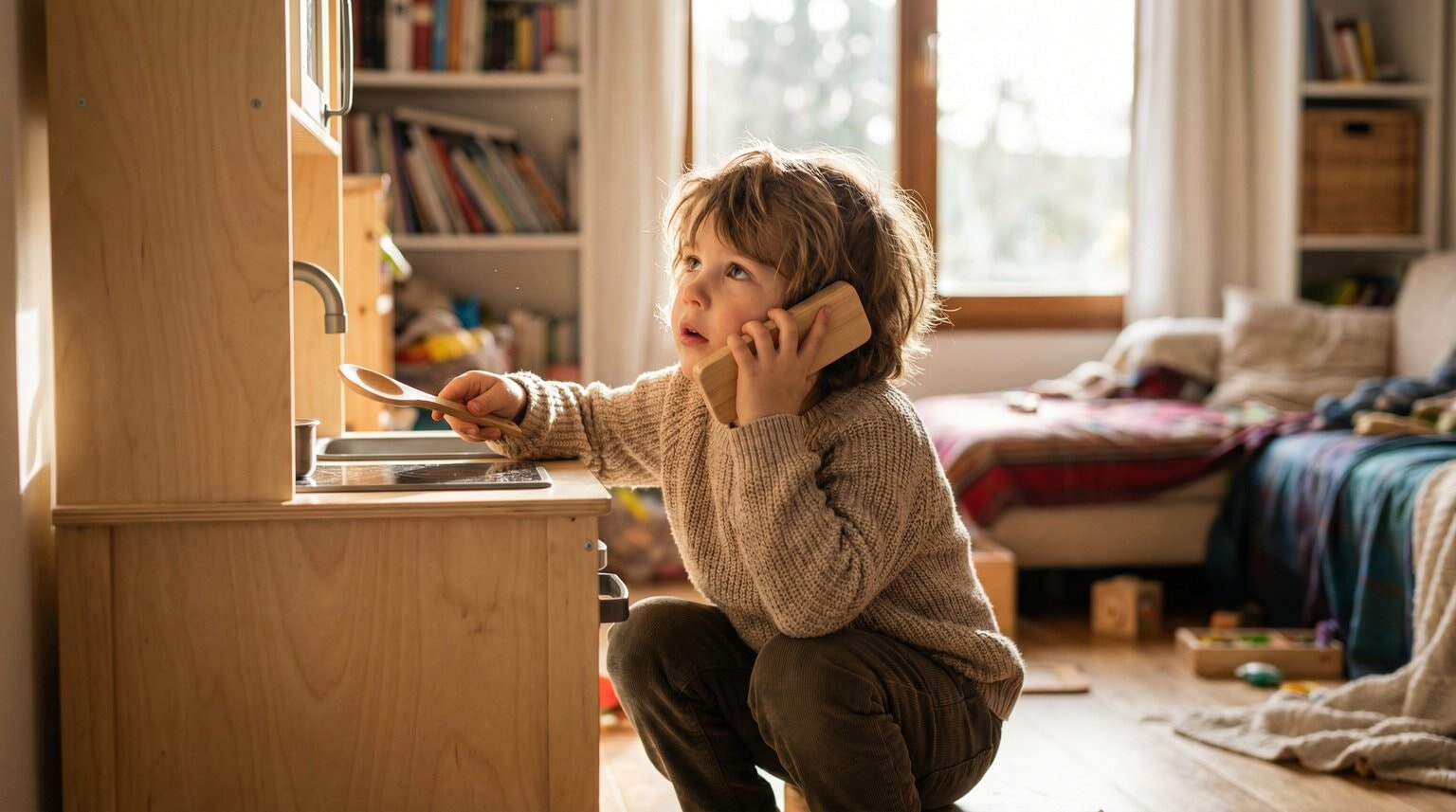
Around age 3, something remarkable happens: children develop symbolic play capacity. A banana genuinely becomes a telephone. A stick transforms into a magic wand. This isn’t confusion—it’s cognitive sophistication.
Research from the Child Mind Institute confirms that symbolic play—using objects to represent other things—emerges strongly around age 3 and marks a significant developmental milestone.
Why it works: Open-ended props require children to do more cognitive work. A highly realistic toy phone does the imagining for the child. A wooden block they decide is a phone requires them to hold two realities simultaneously—what the object is and what it represents.
Studies show that children provided with low-structure toys exhibit higher frequencies of complex pretend play. The simpler the prop, the harder the brain works.

What to look for:
- Fabric pieces (scarves, felt squares) that become anything needed
- Simple props (play food, basic figures) without electronic features
- Everyday objects (cardboard boxes, wooden spoons) repurposed for play
- “Loose parts” materials (safe items from nature, wooden shapes)
I’ve watched my children turn a cardboard box into a car, a house, a boat, a time machine, and a veterinary clinic—all in one afternoon. No toy I’ve ever purchased has matched that versatility. There’s a reason toddlers prefer boxes over expensive toys.
The Parent’s Role
Here’s the best news from the research: you don’t need to orchestrate elaborate play sessions. Child Mind Institute research found that just 5 minutes daily of engaged parent-child play strengthens your relationship significantly.
Follow your child’s lead. The 2023 study from Early Childhood Research Quarterly found that quality matters more than quantity for pretend play benefits.
When you join their world—becoming the restaurant customer they’ve assigned you to be—you’re doing it right.
Research shows that parents who use “mental state” language during play (“I wonder if the teddy feels scared” or “What do you think will happen next?”) help increase their children’s play complexity. You don’t need to direct—just narrate feelings and wonder aloud.
A few minutes of genuine engagement beats an hour of half-attention while you check your phone. Your children know the difference.
For help navigating specific age considerations, our age-appropriate gift guide breaks down developmental milestones in detail.
What to Skip
Not all “pretend play” toys deliver equal value. The research is clear on what to avoid.
“Pretend play is associated with a host of enhanced cognitive abilities such as executive function, language and perspective taking, which are important to education, making the minimization of pretend play unwise.”
— Dr. David F. Bjorklund, Professor of Psychology, Florida Atlantic University
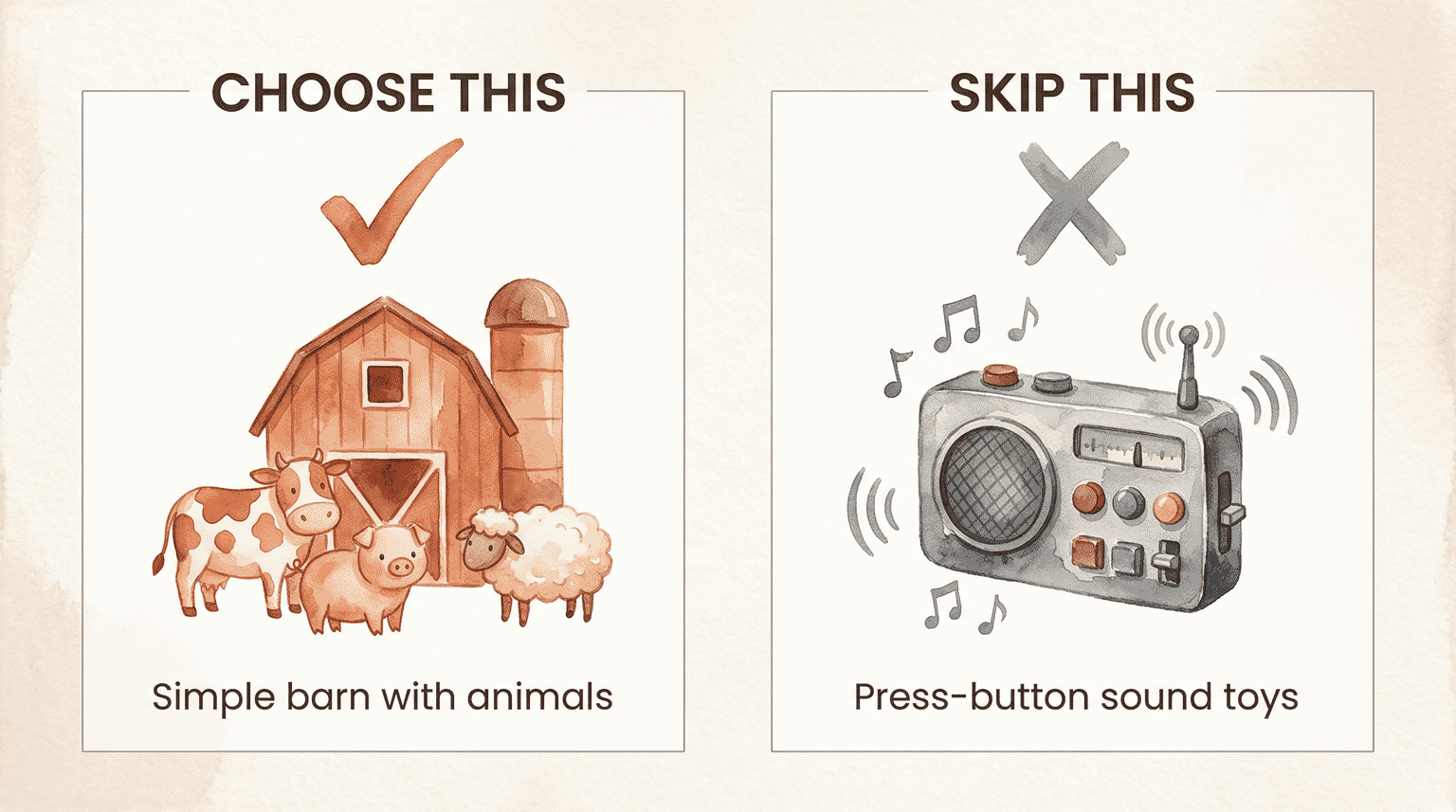
Toys that do the imagining for your child—with predetermined sounds, scripted interactions, and single-use purposes—minimize the cognitive work. The brain regions that light up during pretend play are activated by the pretending, not by pressing buttons that produce results.
When comparing options:
- Choose open-ended over prescribed: A barn with generic animals beats a “press the cow for moo” toy
- Choose simple over electronic: The imagination supplies better sound effects than speakers
- Choose multi-use over single-purpose: Props that become many things outlast single-scenario toys
Frequently Asked Questions
What toys are best for imaginative play?
Open-ended materials that allow multiple uses: dress-up clothes, play kitchens, dolls and figures, building blocks, and simple props like scarves and boxes. Research shows children playing with “divergent” toys like blocks demonstrate greater problem-solving flexibility than those using single-purpose toys.
What age is best for pretend play?
Ages 3-6 represent the “Imagination Window”—what researchers call the “high season” of imaginative play. A 2024 meta-analysis found the correlation between pretend play and social competence is significantly higher for 3-year-olds than for older children, making this window especially valuable.
What are the benefits of pretend play for preschoolers?
Pretend play builds language skills through narrative construction, social competence through cooperation, emotional regulation through processing feelings, executive function through planning and flexible thinking, and creativity through divergent problem-solving. Research shows it activates brain regions responsible for higher-order thinking and empathy.
How can I encourage my child’s imagination?
Provide open-ended toys, follow your child’s lead during play, and aim for 5 minutes of engaged play daily. Use “mental state” language during play (“I wonder if she feels happy”) to increase complexity. Most importantly, resist correcting “unrealistic” scenarios—the unrealistic parts are where the cognitive work happens.
Are dress-up clothes good for development?
Yes. Dress-up supports role enactment, perspective-taking, and narrative skills. Research shows social pretend play—which dress-up naturally facilitates—correlates more strongly with developmental outcomes than solitary play with the same materials.

Over to You
What pretend play setup has gotten the most mileage in your house? In mine, a $15 play kitchen has outlasted every expensive toy by years. I’d love to hear what your 3-6 year old keeps coming back to—especially the surprising things that weren’t marketed as “imagination toys” at all.
I read every comment—your real-world pretend play wins always surprise me.
References
- Child Mind Institute – The Power of Pretend Play – Developmental milestones and benefits of imaginative play
- Florida Atlantic University – Play it Forward – Long-term advantages of play-based learning
- Springer Educational Psychology Review – Meta-analysis on pretend play and social competence
- MDPI Intelligence – Research on divergent toys and problem-solving
- Early Childhood Research Quarterly – Social pretend play and preschooler development
- Child Mind Institute Blog – Brain research on dolls versus tablets
- PMC/NIH – Constructive play intervention research

Share Your Thoughts