
You’ve given your kids a beautiful life. They have warm beds, full fridges, and birthday parties with themes. So why does your 7-year-old sigh when she opens a gift that isn’t exactly what she wanted? Why does your 10-year-old assume new cleats will just… appear before soccer season?
Here’s what I’ve learned across 8 kids and 1,200+ gifts tested: appreciation doesn’t develop automatically, even in loving homes. As Forbes psychologist Traverse Mark puts it, “Gratitude is a powerful and beneficial quality, but it doesn’t always come naturally to everyone. It needs to be actively cultivated and practiced.”
My librarian brain couldn’t let that go without investigating. What I found changed how I approach this in my own house—and it’s not about guilt trips or poverty tourism. Here’s what actually works.
Key Takeaways
- Appreciation doesn’t develop automatically—even in loving homes, it requires intentional modeling and daily practice
- Guilt trips backfire; questions and conversations help kids discover gratitude themselves
- Consistent daily rituals create brain changes—expect meaningful shifts within 3-6 months
- Experience builds perspective faster than explanation—contribution and service trump lectures
Why Appreciation Doesn’t Come Automatically
Before we fix this, let’s understand what we’re working against.
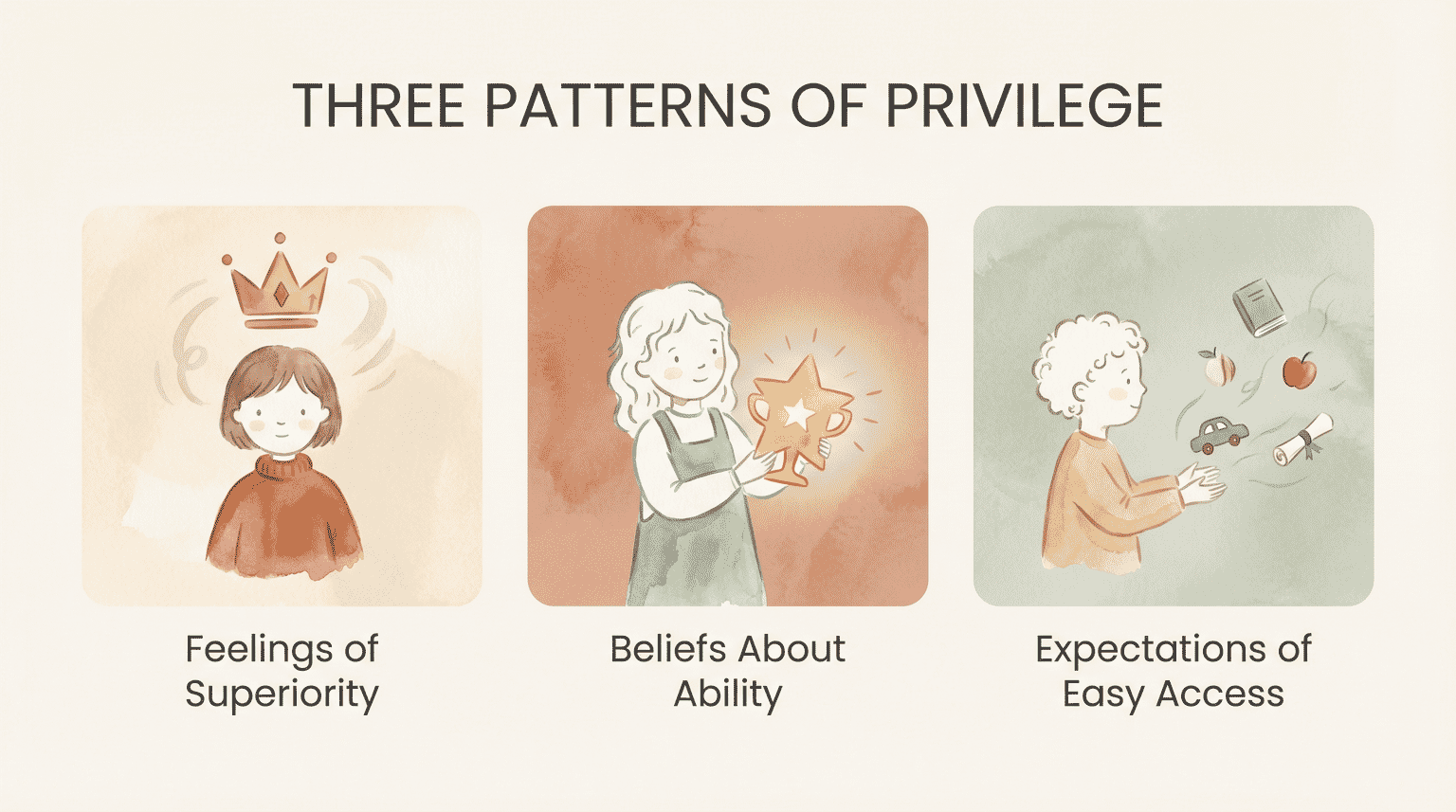
Stanford research on sustained privilege identified three psychological patterns that develop when children grow up comfortable. First, feelings of cultural superiority—when kids are consistently surrounded by “the best,” they start believing that’s simply what they deserve.
Second, beliefs about superior abilities—without seeing how external constraints affect others, children assume their success comes entirely from being smart or working hard. Third, expectations of easy acquisition—when resources have always appeared with minimal effort, kids naturally expect that pattern to continue.
This isn’t a parenting failure. It’s what happens when children never encounter friction or see what life looks like without cushions.
Research also shows that overparenting—solving every problem, removing every obstacle—accelerates entitlement. When we consistently smooth the path, our kids learn to expect others will always do the same.
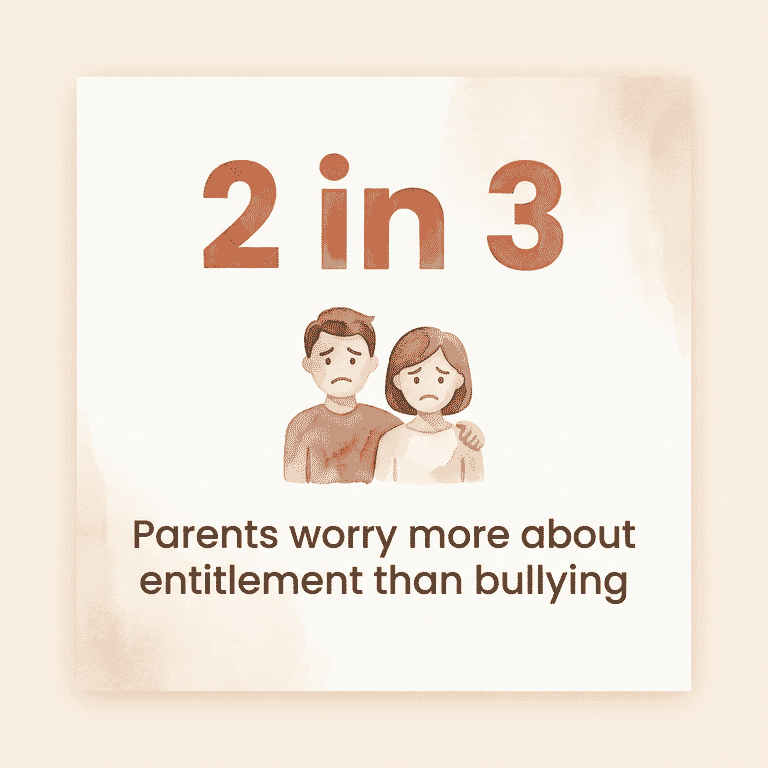
The good news? These patterns respond to intentional strategies. Two-thirds of parents worry more about entitlement than traditional childhood concerns like bullying.
You’re not alone in this—and there’s a clear path forward.
Strategy #1: Model Gratitude Out Loud
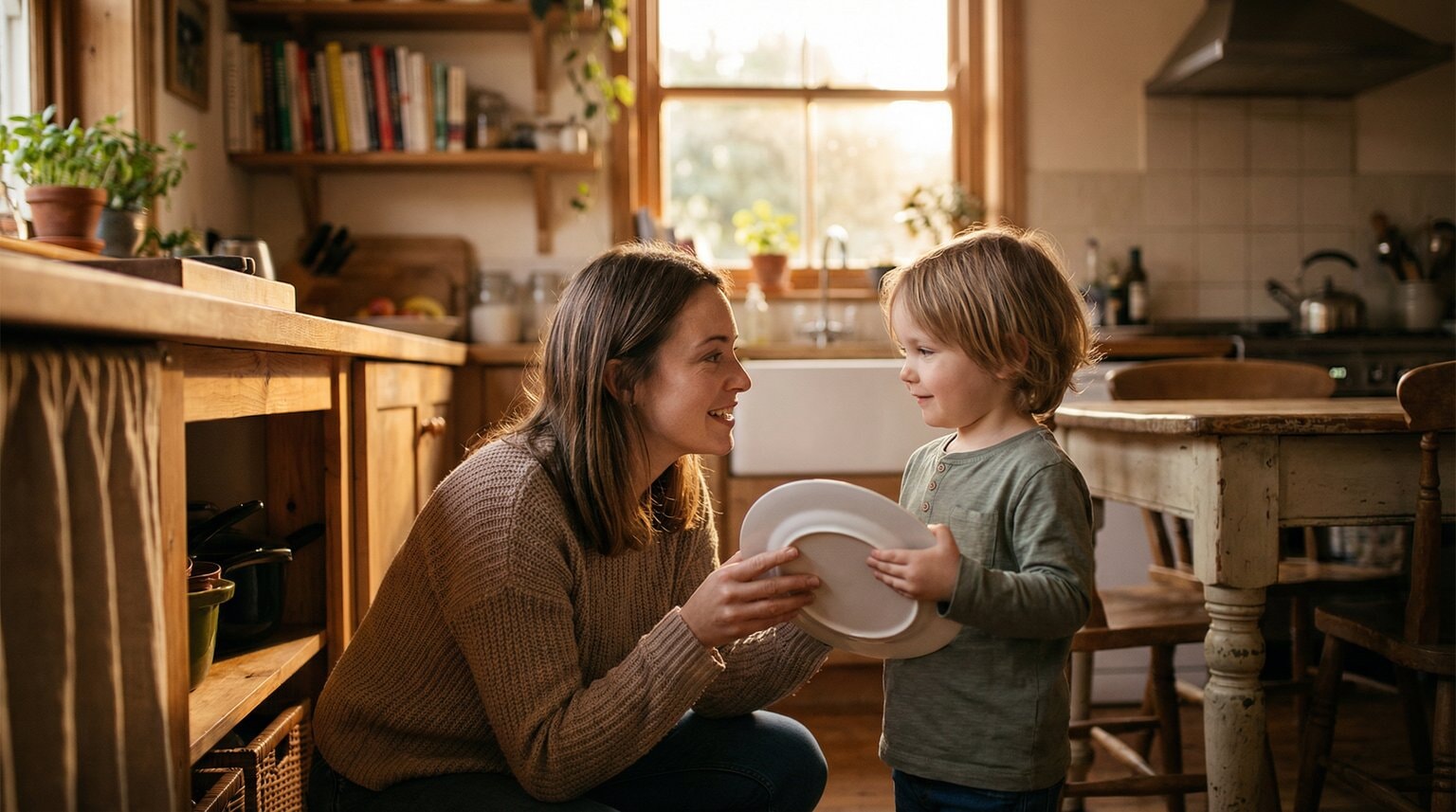
The most powerful thing you can do costs nothing and takes seconds: narrate your own appreciation in real-time.
I’ve watched this work with my own kids. When I say, “I’m so grateful the traffic was light—we actually made it on time,” my 6-year-old hears what gratitude sounds like in everyday moments. When I tell my 12-year-old, “Thank you for being patient while I finished that call—I know you were waiting,” she experiences appreciation directed at her.
Utah State family researchers found that parents with high gratitude levels provided more socialization opportunities aimed at teaching children to be grateful. Translation: grateful parents naturally create grateful kids—not through lectures, but through demonstration.
Try this today:
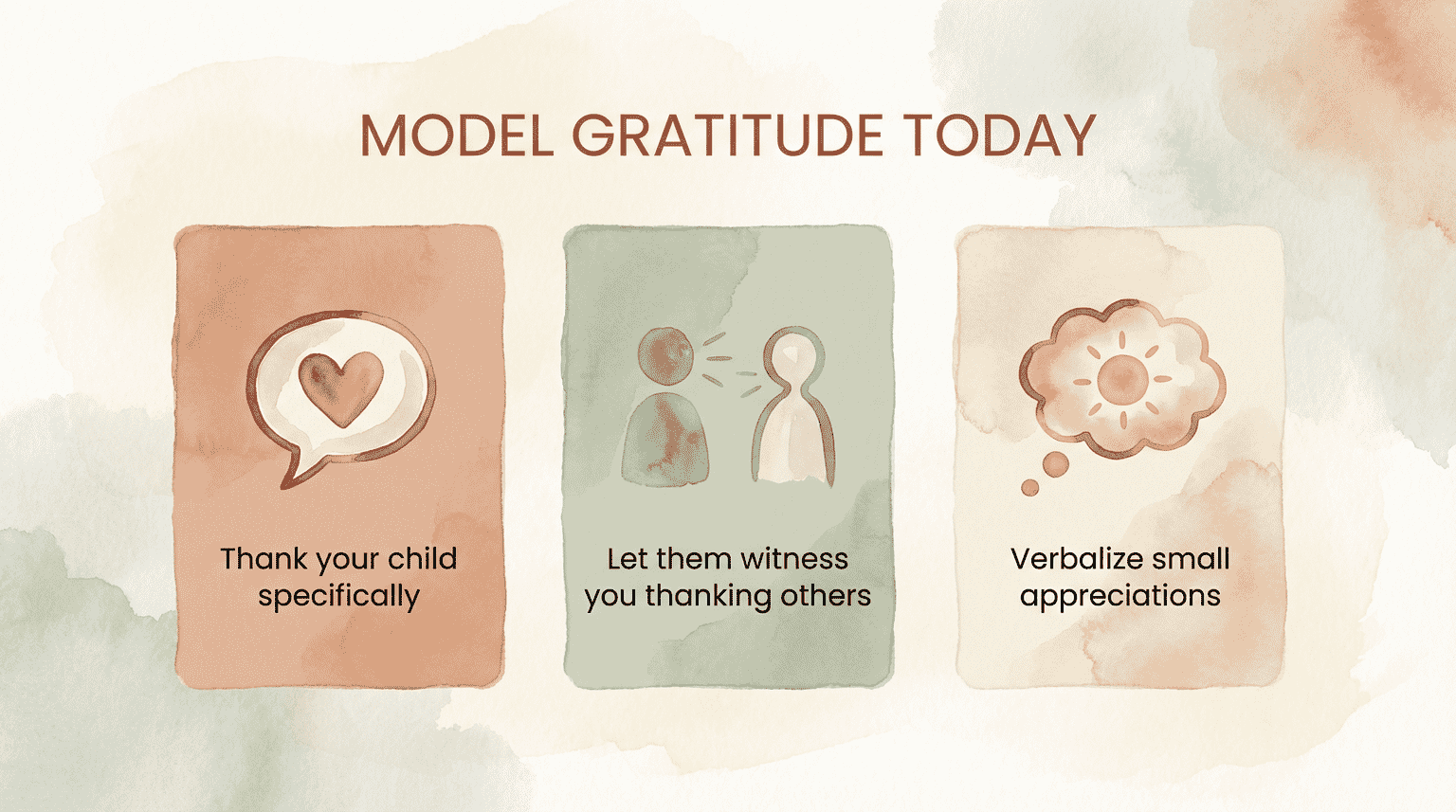
- Express gratitude TO your children specifically (“I appreciate that you cleared your plate without being asked”)
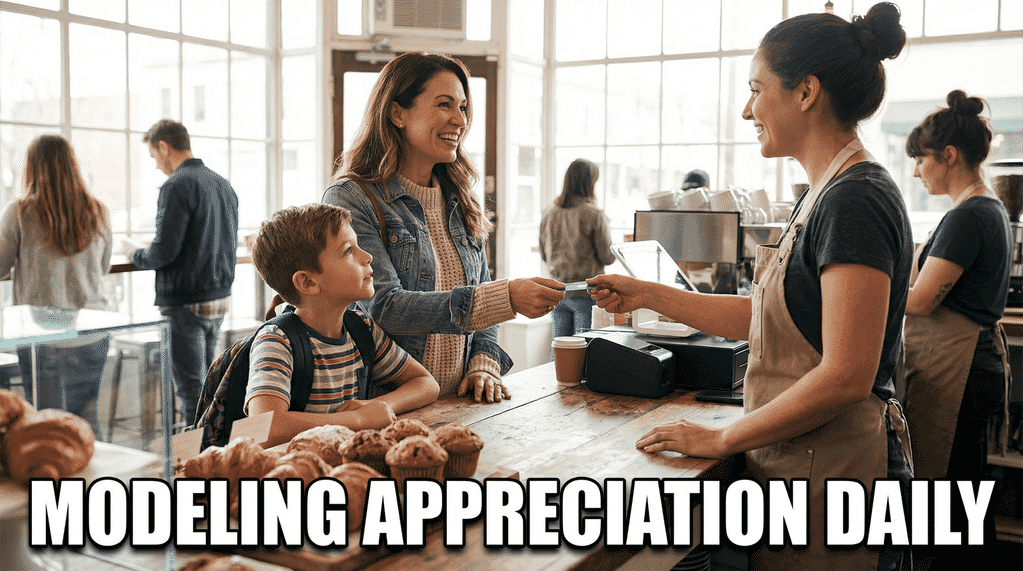
- Let them witness you thanking others meaningfully—the barista, the neighbor, their teacher
- Verbalize what you’re grateful for, even when it feels small (“I’m so glad we have this time together”)
“We try and take every situation that they face… and show them the faith perspective of each thing that happens, good or bad, and to remind them when something good happens… how they should be thankful.”
— Parent, Utah State University Study
You don’t need a faith framework for this to work. You just need to say it out loud.
Strategy #2: Create Daily Gratitude Rituals
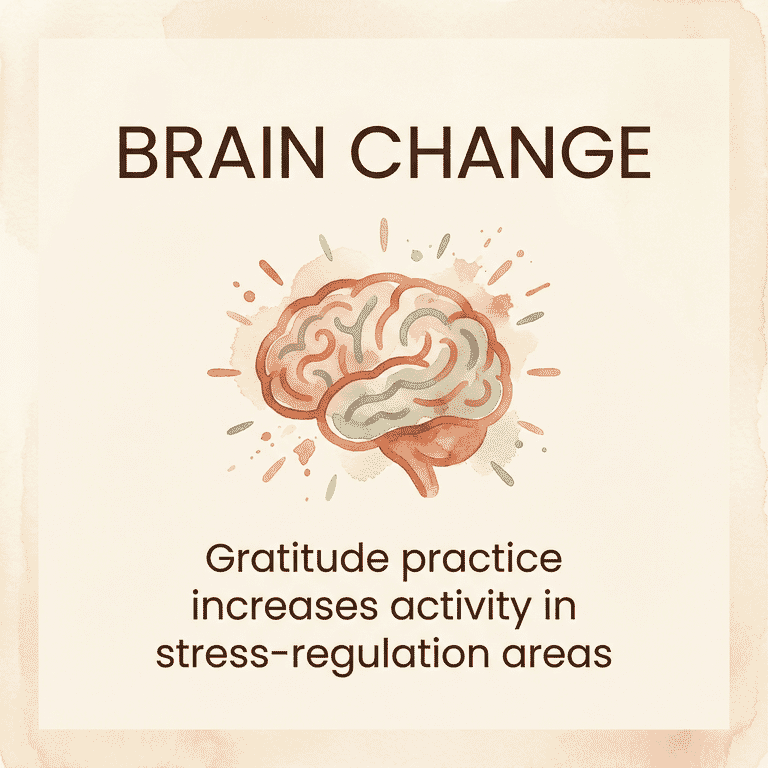
Habits build neural pathways. When children practice gratitude regularly, brain imaging research from EarlyYears.tv shows increased activity in the hypothalamus—regulating stress and sleep—and the ventral tegmental area, associated with feelings of reward.
In other words: gratitude practice literally changes the brain.
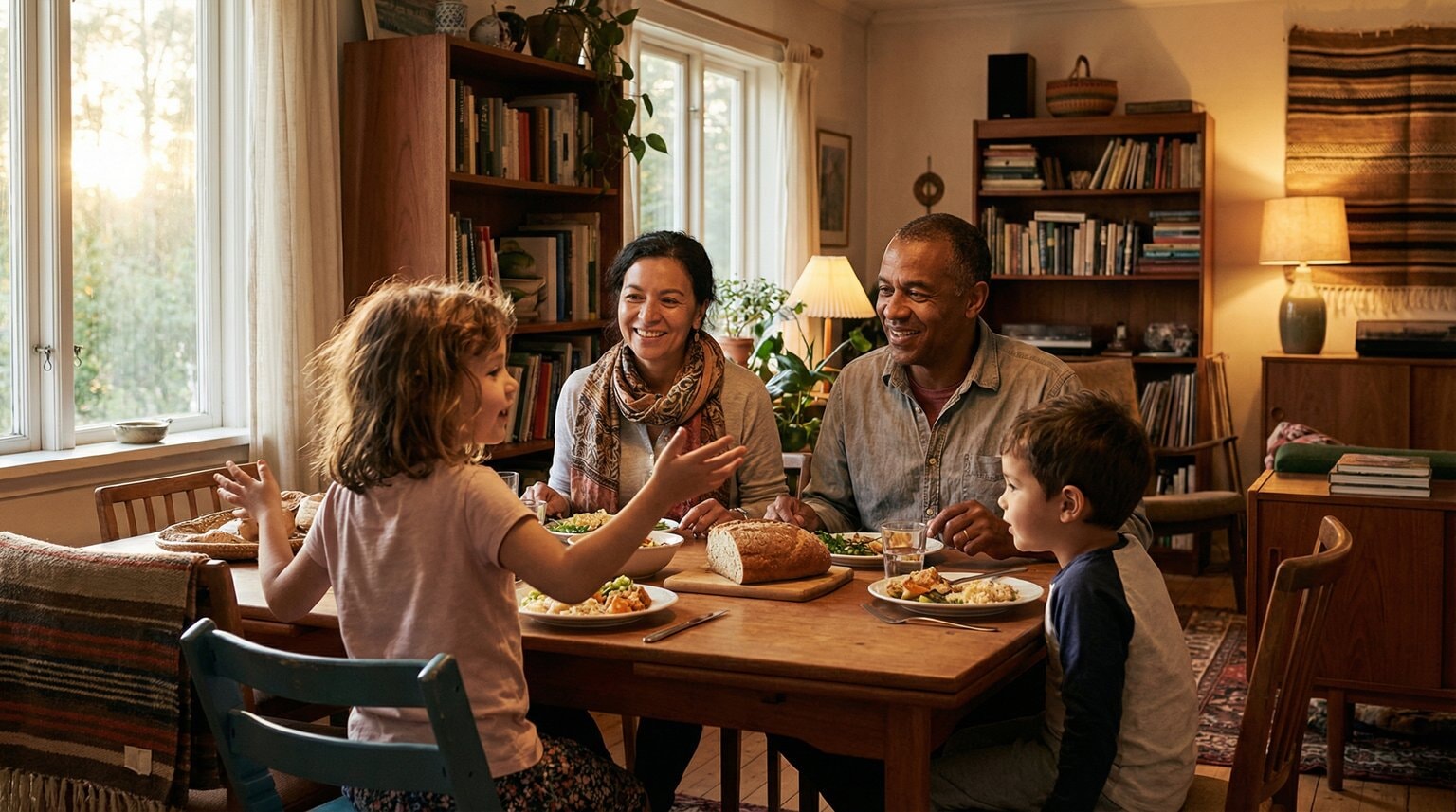
At my house, we use mealtime “highs and thankfuls”—simpler than gratitude journals for young kids.
“We go around the table before dinner and always say what we’re thankful for, which kind of gives us all a chance to go through our days.”
— Lutheran Mother, Utah State University Study
Rituals that work:
- Mealtime thankfuls: Each person shares one thing they appreciated about their day
- Bedtime three-things: Before lights out, name three good things from today
- Car ride “I noticed” game: “I noticed something kind today—did you?”
What to say: “[Child’s name], what’s one thing that made you smile today? I’ll share mine too.”
The key is consistency over perfection. A 30-second ritual done daily beats a 20-minute gratitude lecture done once. Research on habit formation shows extended practice periods outperform standalone interventions every time.
Strategy #3: Build Perspective Through Contribution
Here’s something I’ve observed eight times: experience creates perspective faster than explanation.
You can tell your kids they’re fortunate until you’re exhausted. Or you can create situations where they discover it themselves.
Stanford researchers found that the psychology of entitlement develops specifically because privileged children lack exposure to constraints others face. Without seeing challenges, they can’t appreciate their absence.
Concrete tactics:
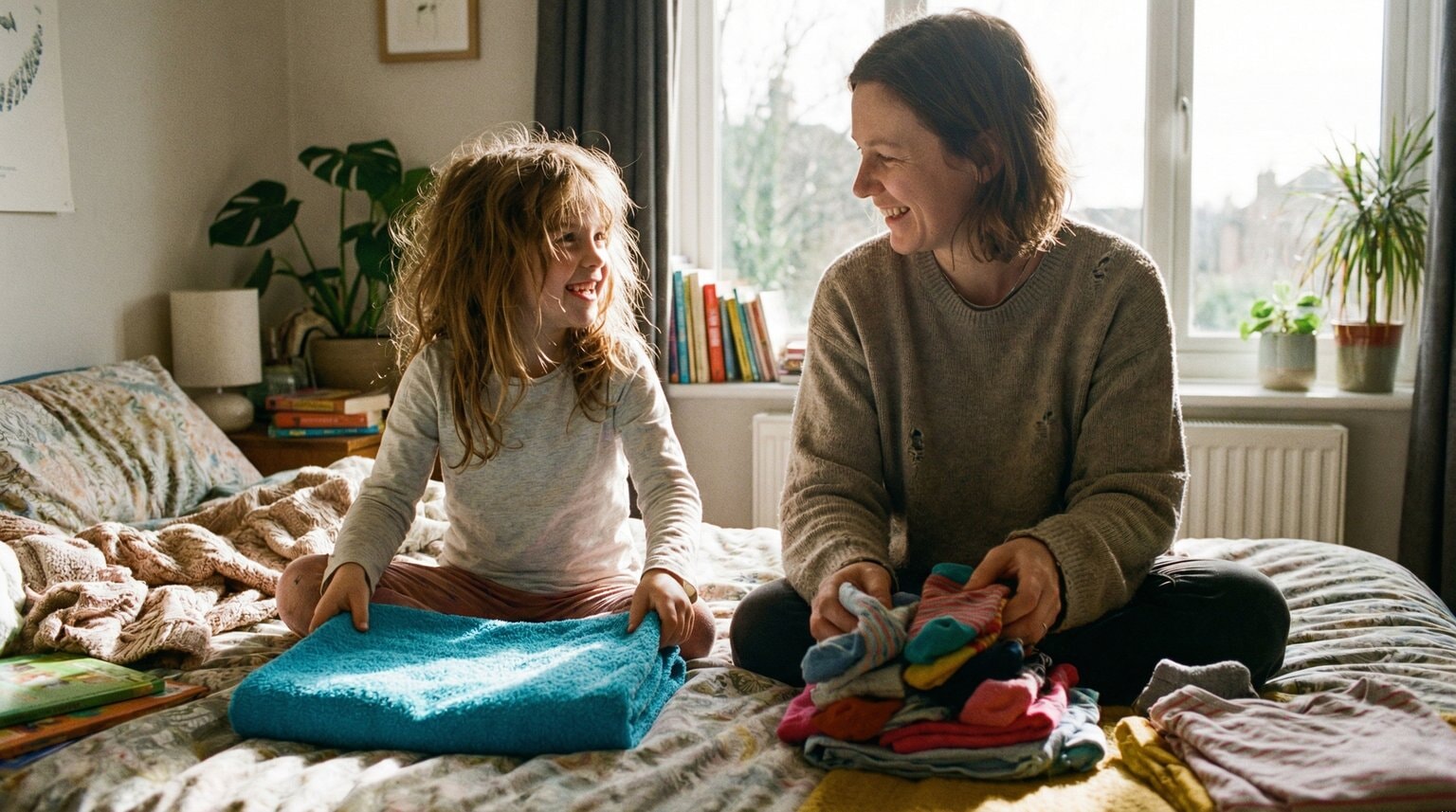
- Age-appropriate household contributions: Not chores-for-payment, but contributions as a family member. My 8-year-old helps fold laundry because she’s part of this household, not because she earns screen time.
- Family service together: Shelter meal prep, park cleanups, packing care packages. Do it as a family and talk about what you notice.
- The “giving basket” before birthdays and holidays: Before receiving, we give. Kids choose items to donate from their own rooms.

A meta-analysis of prejudice reduction research found that intergroup contact and cooperation interventions were more promising than activities where participants were passive observers. In other words: doing beats watching or hearing about.
Your 6-year-old doesn’t need a lecture about food insecurity. She needs to help pack meals and notice that some kids don’t have what’s in her lunchbox.
Strategy #4: Navigate Gift Moments Deliberately
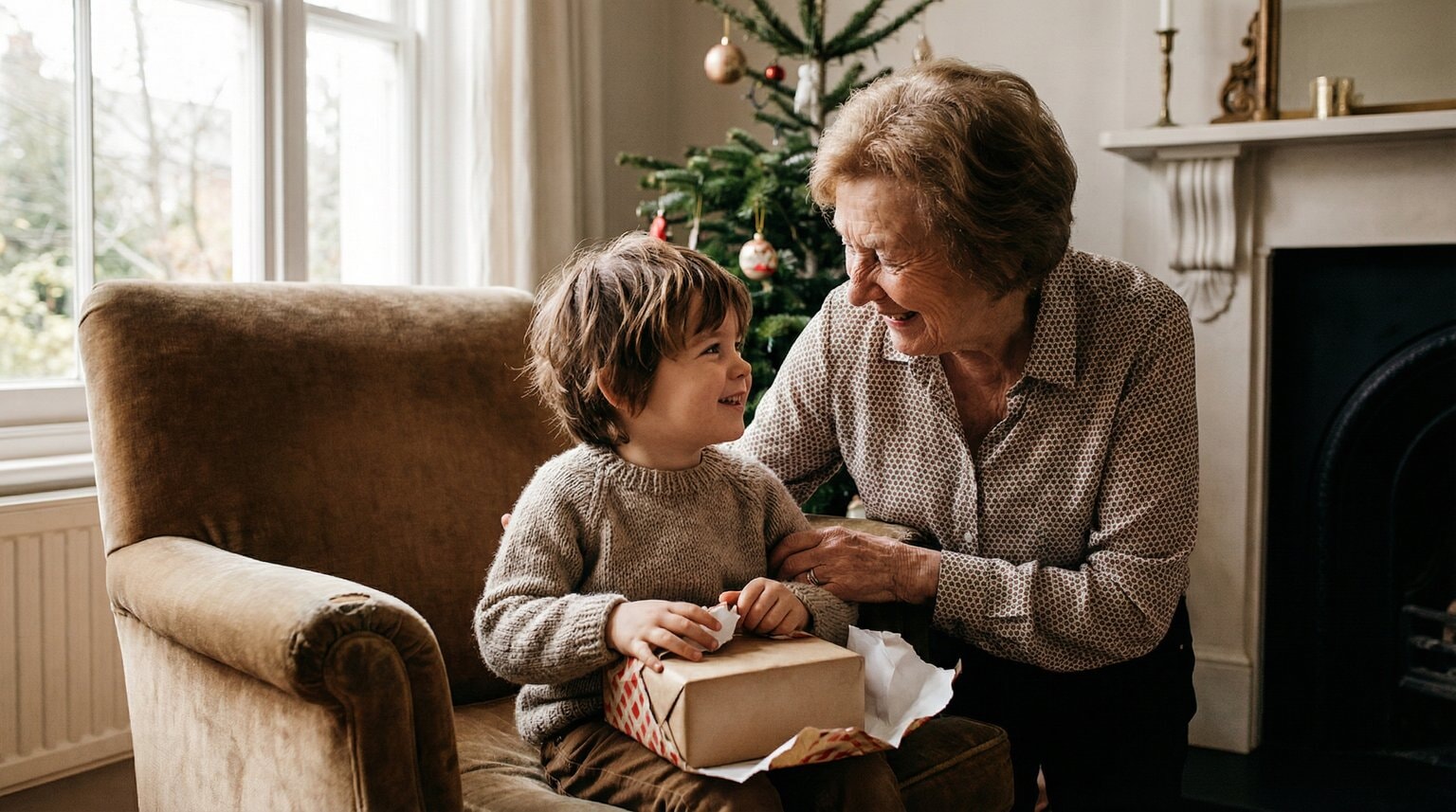
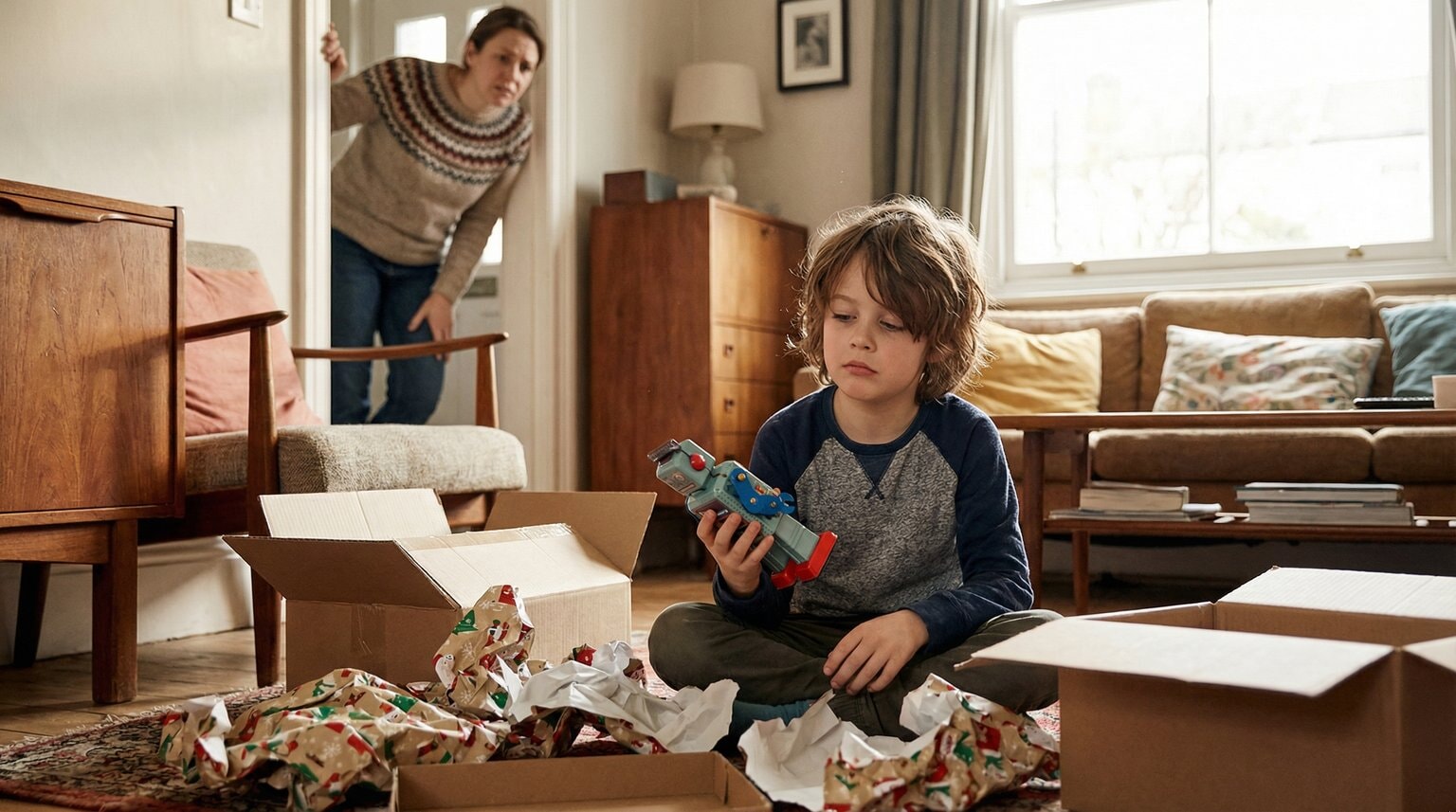
Birthdays and holidays are the highest-stakes gratitude teaching moments. I’ve learned (the hard way, around kid #3) that these moments need preparation.
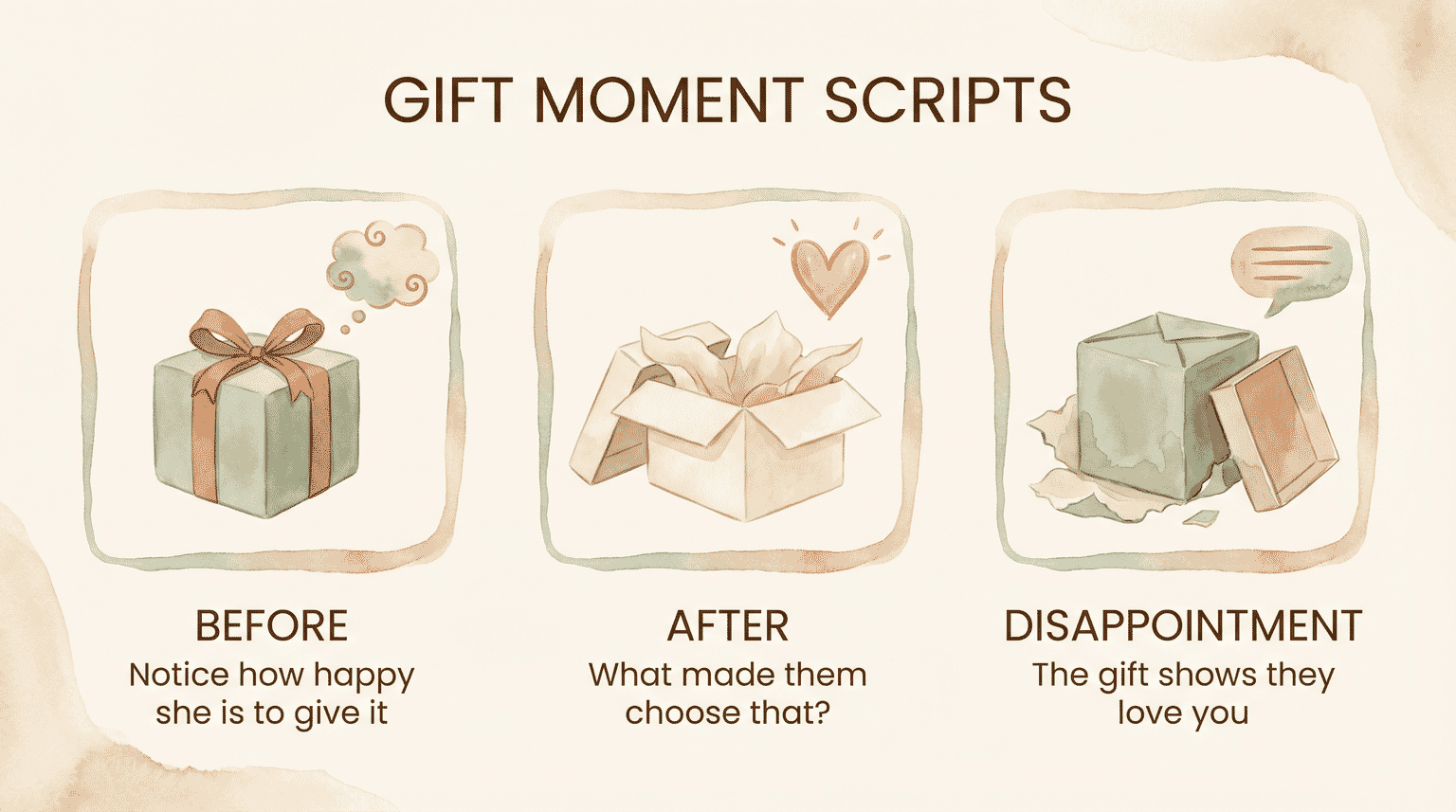
Before gifts:
Try saying: “Grandma chose this because she was thinking specifically about you. When you open it, look at her face and notice how happy she is to give it to you.”
This shifts focus from what’s in the box to who chose it and why.
After gifts:
Try saying: “What do you think made Aunt Susan choose that for you?”
This builds the cognitive habit of considering others’ intentions.
When gifts disappoint (because they will):
Try saying: “I can see that wasn’t what you expected. The gift is how Aunt Susan shows she loves you. What could you say to let her know you appreciate that she was thinking about you?”
This acknowledges the feeling without excusing ingratitude.
Thank-you notes remain powerful. Drawing for young kids, writing for older ones—it’s the practice of stopping to recognize the giver that matters. For a complete framework on teaching gift-receiving values, see our guide on meaningful gift practices.
Strategy #5: Practice Gratitude Conversations, Not Lectures
Here’s what doesn’t work: telling kids how grateful they should be.
Here’s what does: asking questions that help them discover gratitude themselves.
Research consistently shows that active participation outperforms passive observation. This applies to appreciation too.
Instead of stating, ask:
- “What do you think it takes for food to get from a farm to our table?”
- “Some kids your age help their families earn money. What do you think that’s like?”
- “We have a really nice house. What are you grateful for about it?”
“One of the key things that my parents did, which I am very grateful for, is they give us a good amount of freedom to think, to process things without them.”
— Devon, 17, Utah State University Study
When kids arrive at appreciation through their own thinking—rather than being told what to feel—it sticks.
What NOT to say: “You should be grateful—other kids have nothing.”
For more age-by-age gratitude development guidance, explore our comprehensive gratitude teaching guide.
What Actually Backfires
Some well-intentioned approaches create the opposite effect.
Guilt-tripping (“Think about starving children”): Research from Indiana University shows that guilt about privilege causes individuals to detach and externalize blame rather than develop genuine awareness. Shame doesn’t create gratitude—it creates defensiveness.
Forced gratitude performances (“Say thank you like you MEAN it!”): This breeds resentment and teaches children that gratitude is performance rather than genuine feeling.
One-time “poverty tourism” without processing: Taking kids to volunteer once, without ongoing conversation, can actually create “othering”—seeing less fortunate people as fundamentally different—rather than connection.
Comparing to less fortunate to induce guilt: This backfires through externalization. Kids distance themselves from the comparison rather than feeling connected to it.
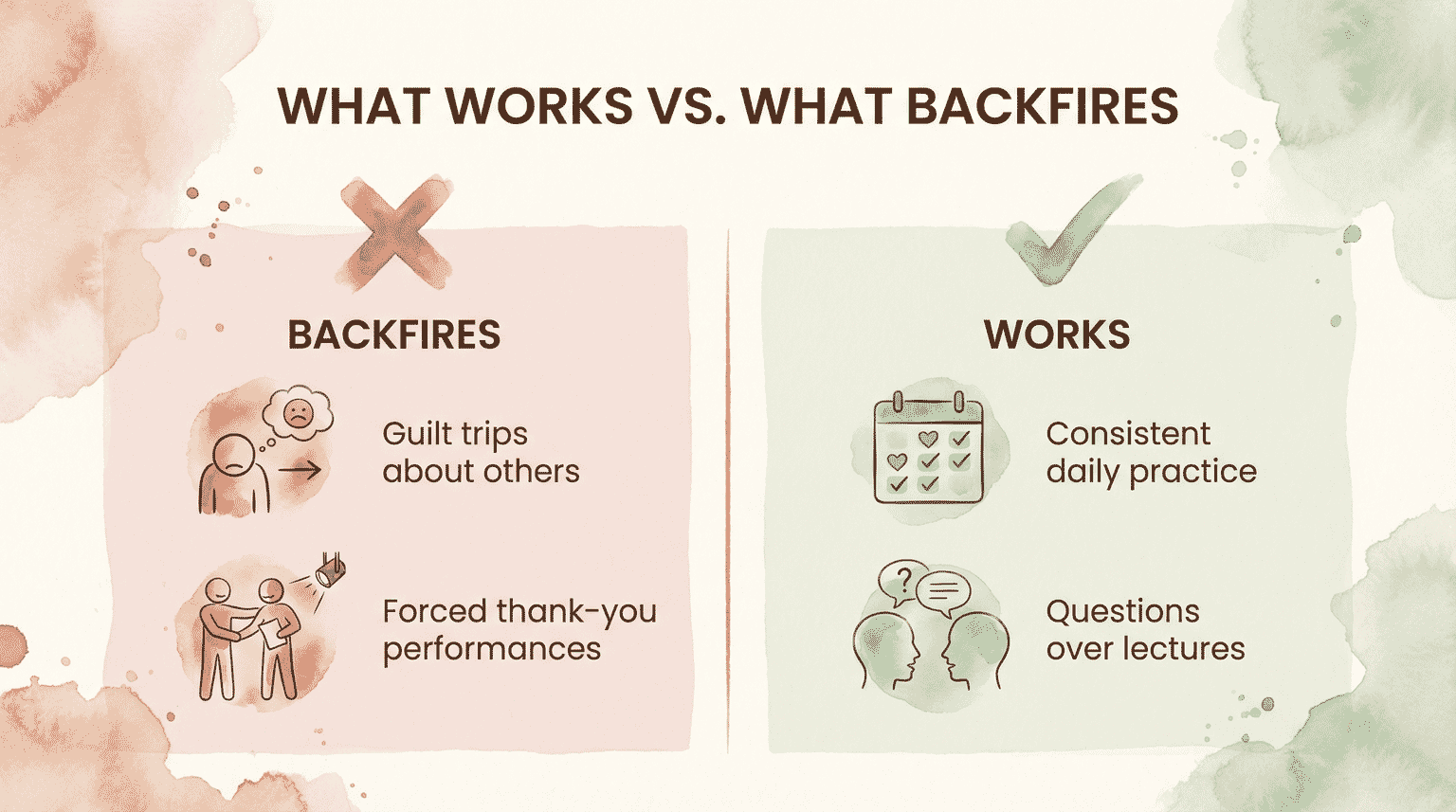
The better approach: consistent, low-pressure practices over extended periods. A meta-analysis found positive effects were greater when training was conducted over extended periods rather than as standalone activities.
For more on preventing entitled behavior patterns before they take hold, see our entitlement prevention guide.
Progress Markers: What to Expect and When
So how do you know if this is working?
Research suggests you’ll see meaningful shifts within 3-6 months of consistent practice—but here’s what the progression looks like:

First 3-6 months: More spontaneous “thank yous,” fewer complaints about what’s missing, beginning to notice others’ efforts.
6-12 months: Unprompted expressions of appreciation, recognition of non-material gifts (time, attention, effort), fewer entitled demands.
1-2 years: Perspective-taking in real situations, genuine interest in giving to others, handling disappointment with more grace.
2+ years: Gratitude becomes personality trait, not practiced behavior. Natural inclination toward contribution. Emotional resilience indicators.
Utah State research found that the relationship between mother’s emotional support and child’s self-esteem was fully mediated by the child’s levels of gratitude. In other words: gratitude isn’t just nice—it’s protective.
What Kids Say Actually Worked
Here’s what surprised me most in the research: kids value the relationship rituals create more than the gratitude content itself.
“When I was younger, I remember we used to pray before I went to bed. And I always liked that, not necessarily because we were praying, but just time when I was with my Mom and with my Dad just talking and being thankful.”
— Ryan, Teenager, Utah State University Study
It wasn’t the words. It was the connection.
The takeaway: rituals work when they feel like connection, not correction. And autonomy matters—kids need space to develop genuine appreciation, not perform it on command.
| Age Range | Gratitude Capacity | Strategy Focus |
|---|---|---|
| 3-4 | Basic “thank you” responses | Model out loud; simple daily ritual |
| 4-5 | Recognizes intentional kindness | Name the giver’s choice; post-gift processing |
| 6-8 | Distinguishes gratitude from happiness | Gratitude conversations; contribution responsibilities |
| 9-12 | Abstract appreciation; philosophical thinking | Service projects; perspective-building questions |
Understanding where your child falls developmentally helps you meet them where they are, rather than expecting too much too soon.
Frequently Asked Questions
How do you teach a child to be grateful when they have everything?
Teaching gratitude to privileged children requires intentional daily strategies, not passive hoping. Model appreciation out loud, create consistent rituals like mealtime thankfuls, build perspective through contribution and service, and practice conversations that ask questions instead of delivering lectures. Research shows meaningful improvement within 3-6 months of consistent practice.
Why is my privileged child so entitled?
Stanford research identifies three psychological mechanisms: sustained comfort creates feelings of cultural superiority, consistent success builds beliefs about superior abilities, and easy access to resources establishes expectations that acquisition should always be effortless. These patterns develop naturally without exposure to challenges—not through parenting failure.
How long does it take for gratitude practices to work?
Parents typically see initial changes—more spontaneous thank-yous, fewer complaints—within 3-6 months of consistent daily practice. By 1-2 years, children show unprompted appreciation and handle disappointment more gracefully. After 2+ years, gratitude becomes an integrated personality trait rather than practiced behavior.
What causes entitlement in children?
Entitlement develops through sustained privilege without challenge exposure, combined with overparenting that removes obstacles. When parents consistently solve children’s problems, children learn to expect others will always help—creating entitlement rather than appreciation for support received.
Share Your Story
How do you teach appreciation when your kids have it pretty good? I’d love to hear what’s worked for building gratitude without making them feel guilty for their circumstances.
Your gratitude stories help other parents navigate this tricky balance too.
References
- Gratitude Practices for Young Children – Research on developmental timelines and brain science of gratitude
- 2 Reasons To Embrace The ‘What A Privilege’ Trend—By A Psychologist – Forbes article on active gratitude cultivation
- Exploring Aspects, Expressions, and the Influence of Gratitude in Family Relationships – Utah State study on family gratitude practices and children’s perspectives

Share Your Thoughts