
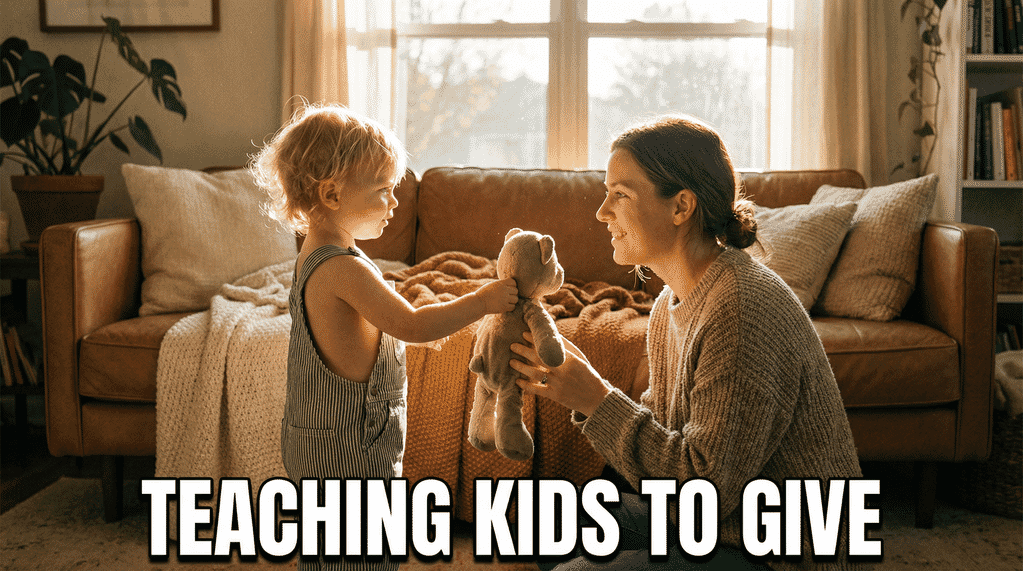
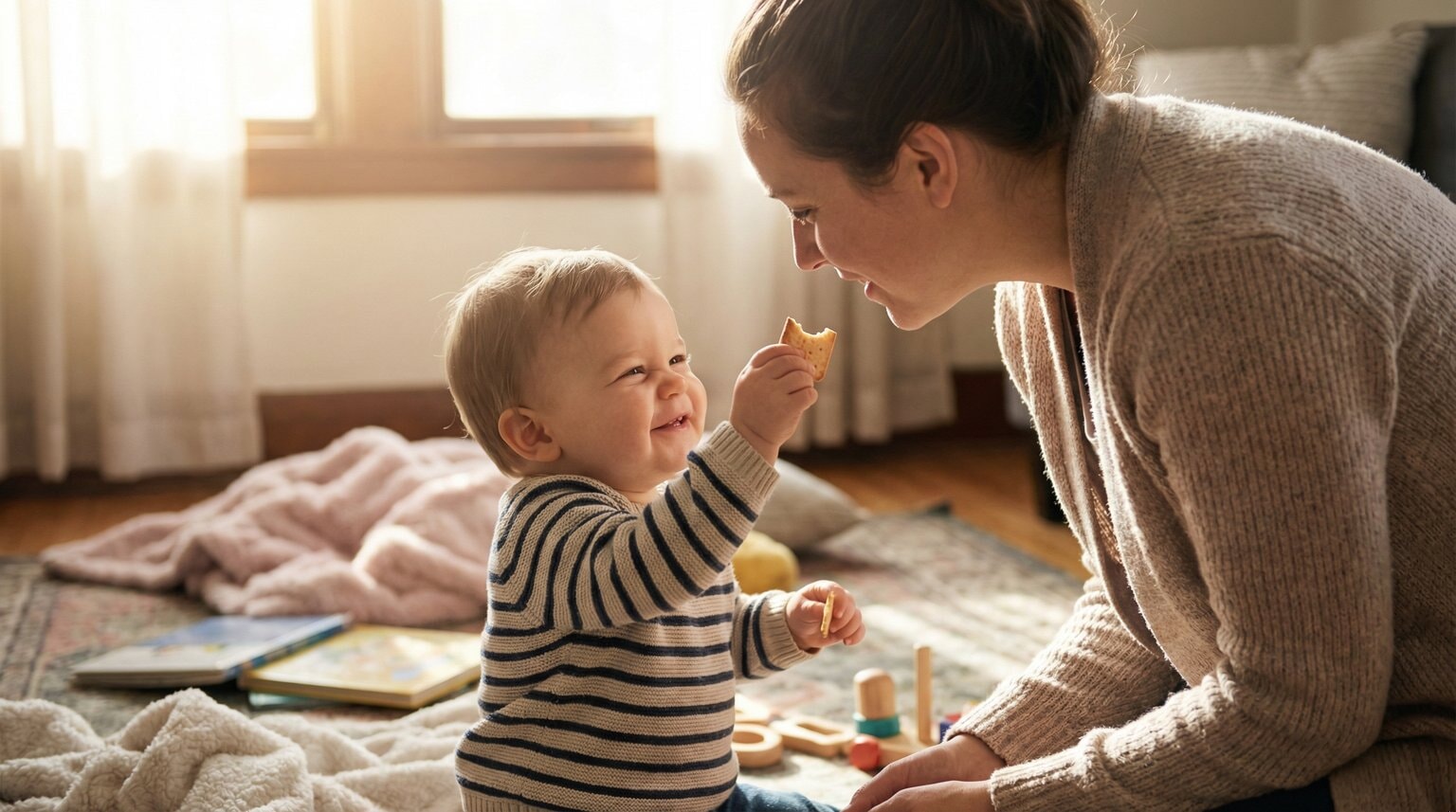
Your 14-month-old just toddled across the room to hand you a soggy Cheerio. It’s not much to look at, but here’s what you’re actually witnessing: the earliest form of human generosity in action.
Here’s what the research actually shows about children and giving—and it surprised me as much as it might surprise you. We don’t teach kids to be generous from scratch. They arrive wired for it.
Key Takeaways
- Over 80% of babies spontaneously help others before their first birthday—generosity is innate, not taught
- Children who share feel physically calmer afterward, creating a positive feedback loop for generous behavior
- Help children feel abundance before asking them to give—scarcity feelings reduce generosity
- Kids underestimate how happy their giving makes others—showing impact encourages more generosity
- Your role shifts from directing to consulting as children develop their own giving values
Why Children Are Built to Give
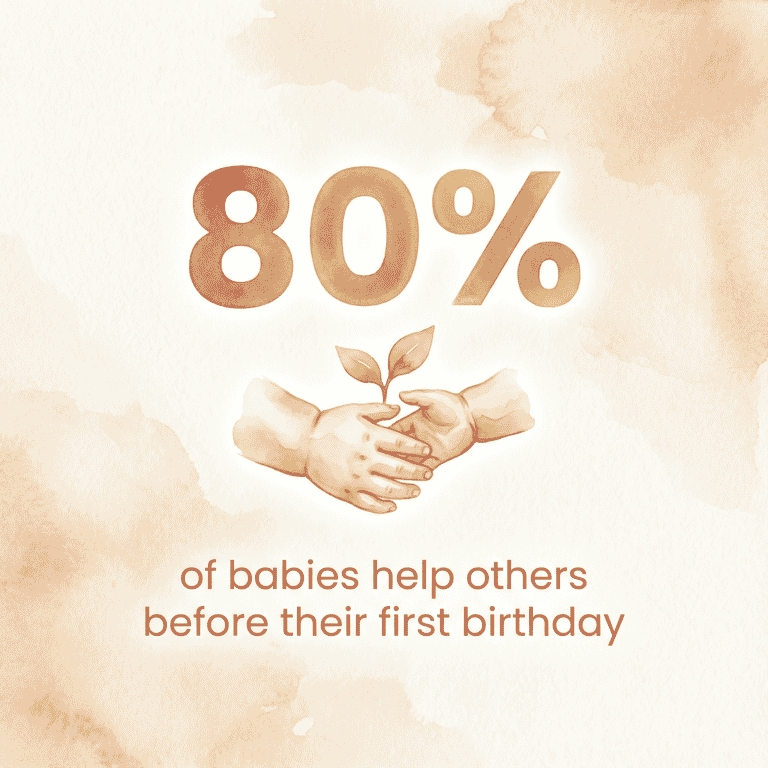
A 2025 study from Washington University found something remarkable: over 80% of babies 12 months and younger spontaneously helped researchers retrieve out-of-reach items—most within the first 20 seconds, without any prompting.
Let that sink in. Before their first birthday, the vast majority of babies are already trying to help others.
The researchers were stunned by these findings. They expected much lower rates of helping behavior in children so young.
This research fundamentally changes how we think about teaching generosity. We’re not starting from scratch—we’re nurturing something that’s already there.
“Young kids have much more advanced and innate abilities to learn prosocial behaviors and kindness and empathy than scientists ever thought. If you’re a parent, you should feel free to encourage these behaviors in them.”
— Rose Donohue, Washington University Researcher
I’ve watched this play out eight times now. The building blocks are already there—our job is simply to nurture what’s natural.
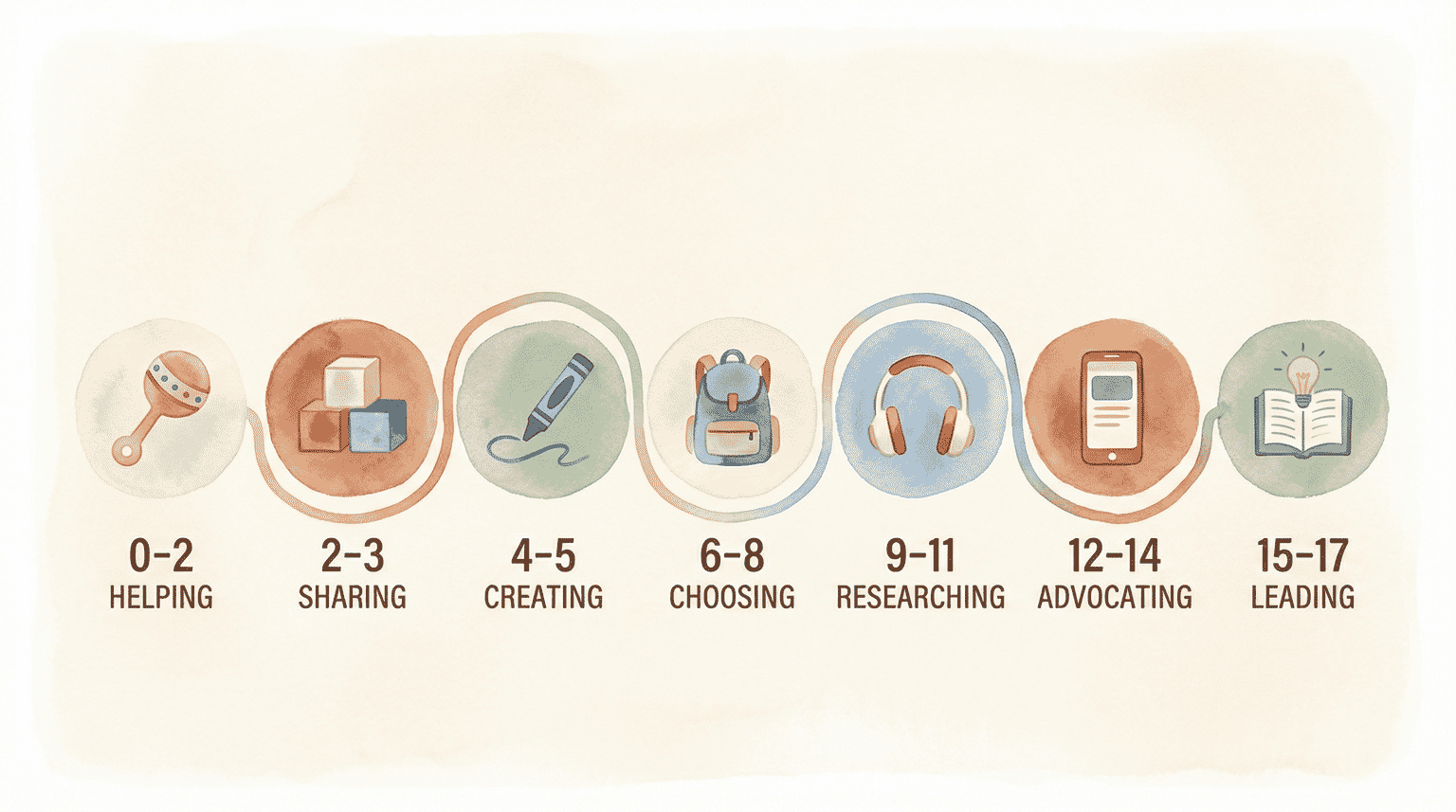
| Age | Giving Capacity | Sample Activities |
|---|---|---|
| 0-2 | Helping instinct | Retrieve items, give objects to caregivers |
| 2-3 | Guided sharing | Share toys with prompting, help with tasks |
| 4-5 | Creating to give | Make drawings/crafts as gifts, donate toys |
| 6-8 | Intentional giving | Choose recipients, write thank-you notes |
| 9-11 | Empathy-driven | Research charities, select meaningful gifts |
| 12-14 | Values-based | Independent projects, advocate for causes |
| 15-17 | Strategic giving | Plan budgets, sustained commitments |
This progression isn’t rigid—every child develops at their own pace. But understanding these general stages helps you meet your child where they are.
Ages 0-2: The Helping Instinct Emerges
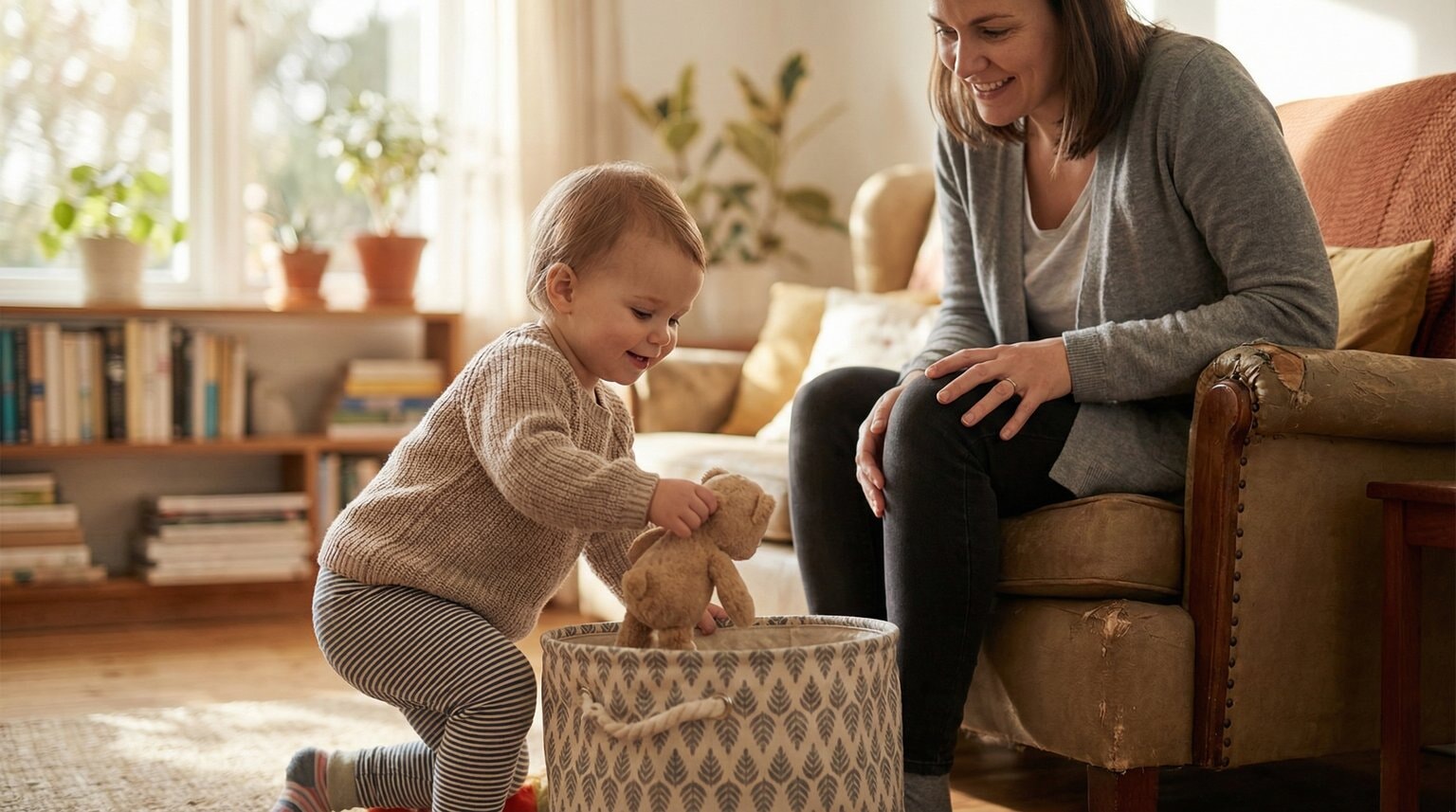
At this age, giving isn’t about charity—it’s about connection. Babies show their love through action.
Developmental milestones show that empathy emerges around 15 months, and by 18 months, children actively bring objects to caregivers and start “helping” with simple tasks. The Washington University researchers were stunned by what they observed.
“We were thinking the rates might be low… But the kids fully helped so much more than we thought they would, and at much higher rates than we expected.”
— Washington University Research Team
What giving looks like at this age:
- Handing you a toy (or that soggy Cheerio)
- “Helping” put items in baskets or bins
- Retrieving objects you’ve dropped
- Giving spontaneous hugs and kisses
Parent language: Keep it simple. Narrate their generous acts: “You’re giving Mommy your ball! That’s so kind.” They absorb these connections between action and meaning.
Ages 2-3: Sharing With Guidance
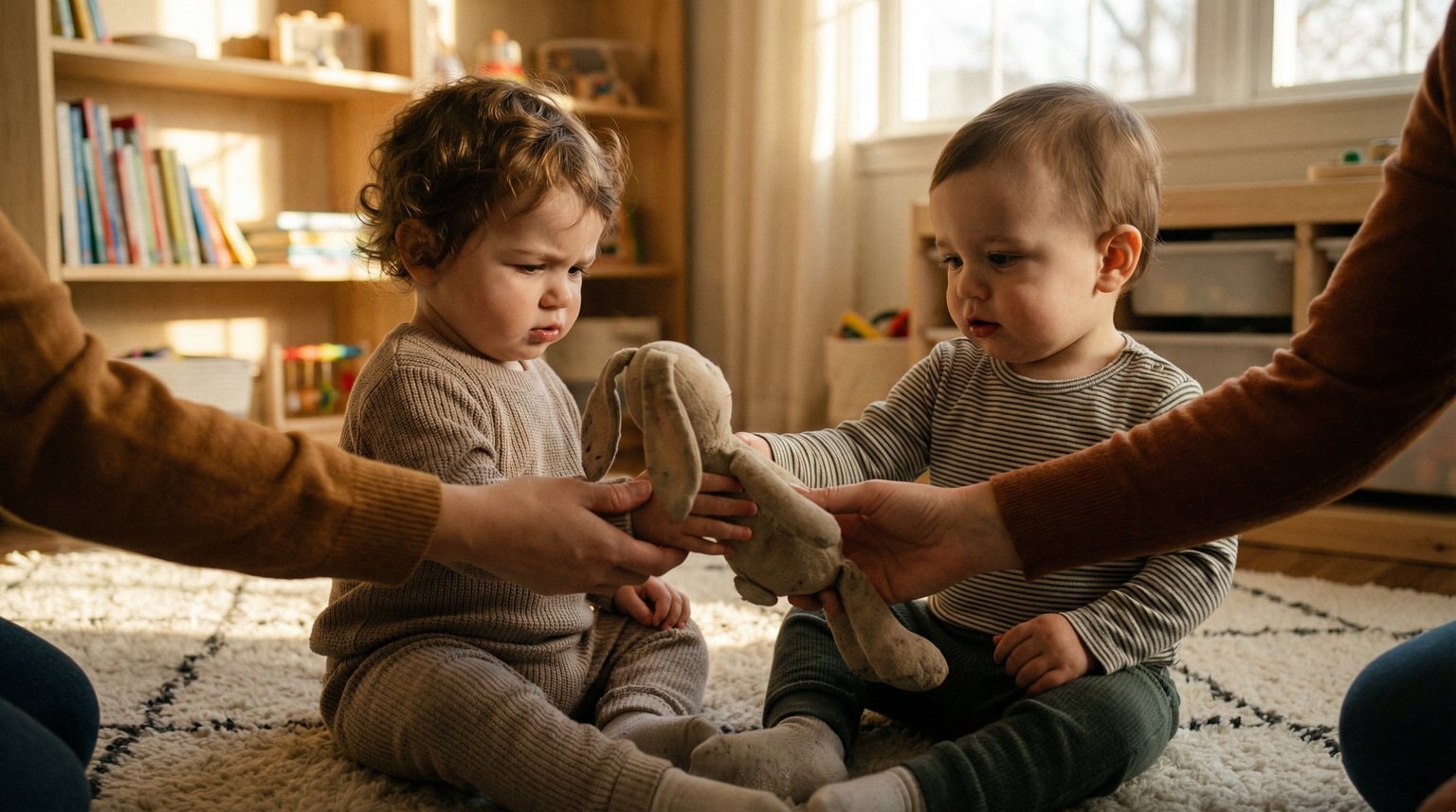
My librarian brain couldn’t let this go without checking—and here’s the reality: true sharing mastery doesn’t arrive until around age 3. Before that, children understand “mine” and “yours” but need scaffolding to share willingly.
This is developmentally normal. Your two-year-old isn’t selfish—they’re just not quite there yet.
What giving looks like at this age:
- Sharing toys with adult prompting and support
- Helping with simple household tasks (carrying light items, wiping surfaces)
- Putting coins in collection jars (they love the sound!)
- Offering comfort to upset siblings or pets
Parent language: “Let’s give this to Grandma together” works better than expecting independent generosity. Make it a partnership.
Ages 4-5: Creating to Give
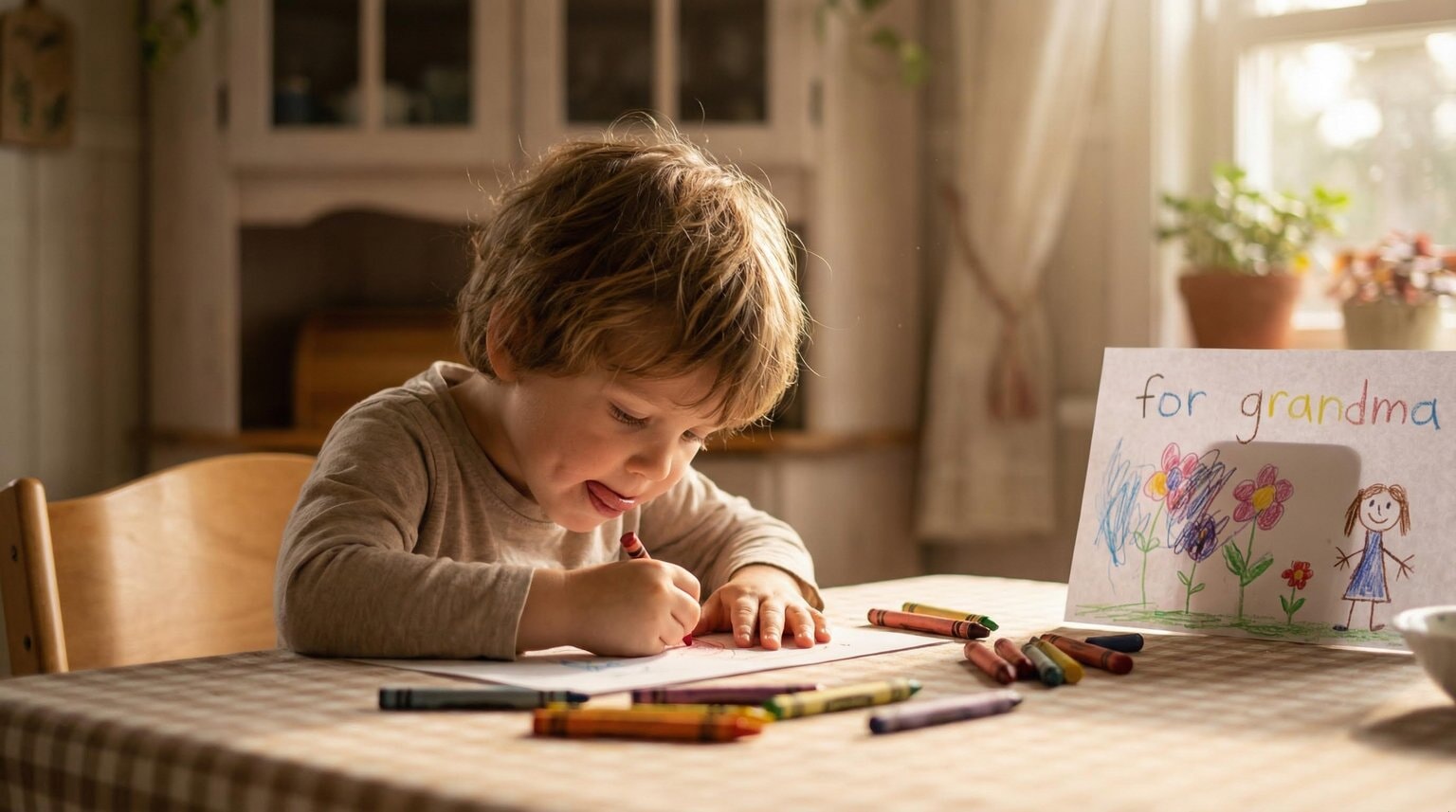
This is when giving gets genuinely magical. The capacity for symbolic sharing emerges, and children begin understanding that others have feelings—the early building blocks of theory of mind.
A 2020 study from UC Davis found something fascinating about this age: preschoolers who shared with others were physiologically calmer afterward.
In other words, giving actually soothes them. My 4-year-old’s elaborate crayon drawings for relatives aren’t just cute—they’re good for her.
This calmer state reinforces the generous behavior that produced it, creating a positive feedback loop that encourages more giving.
“Being in a calmer state after sharing could reinforce the generous behavior that produced that good feeling.”
— Paul Hastings, UC Davis Researcher
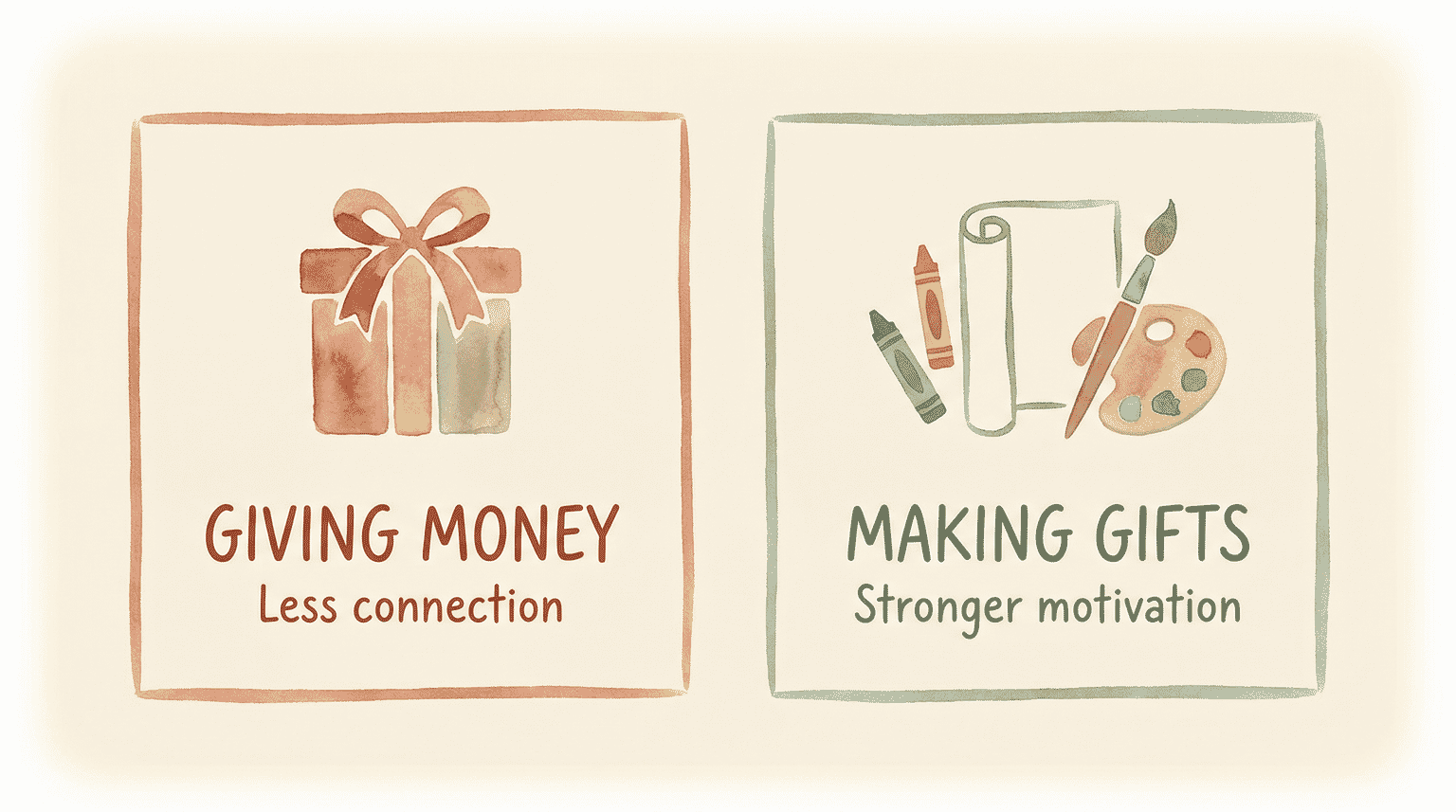
Research on preschool interventions found that when four-year-olds created puzzle pictures to give to teachers or friends, they developed stronger prosocial motivation than children who were simply praised or rewarded for good behavior. The act of making something to give creates genuine intrinsic motivation.
What giving looks like at this age:
- Drawing pictures as gifts (endless pictures, in my experience)
- Making simple crafts for family members
- Donating toys they’ve outgrown
- Helping younger siblings with tasks
- Choosing items for food bank donations
Parent language: “Who should we make this for?” puts them in the driver’s seat. “What do you think Grandpa would like?” builds perspective-taking.
Ages 6-8: Intentional Giving Begins
Here’s where things get interesting—and where parents need to understand a crucial barrier.
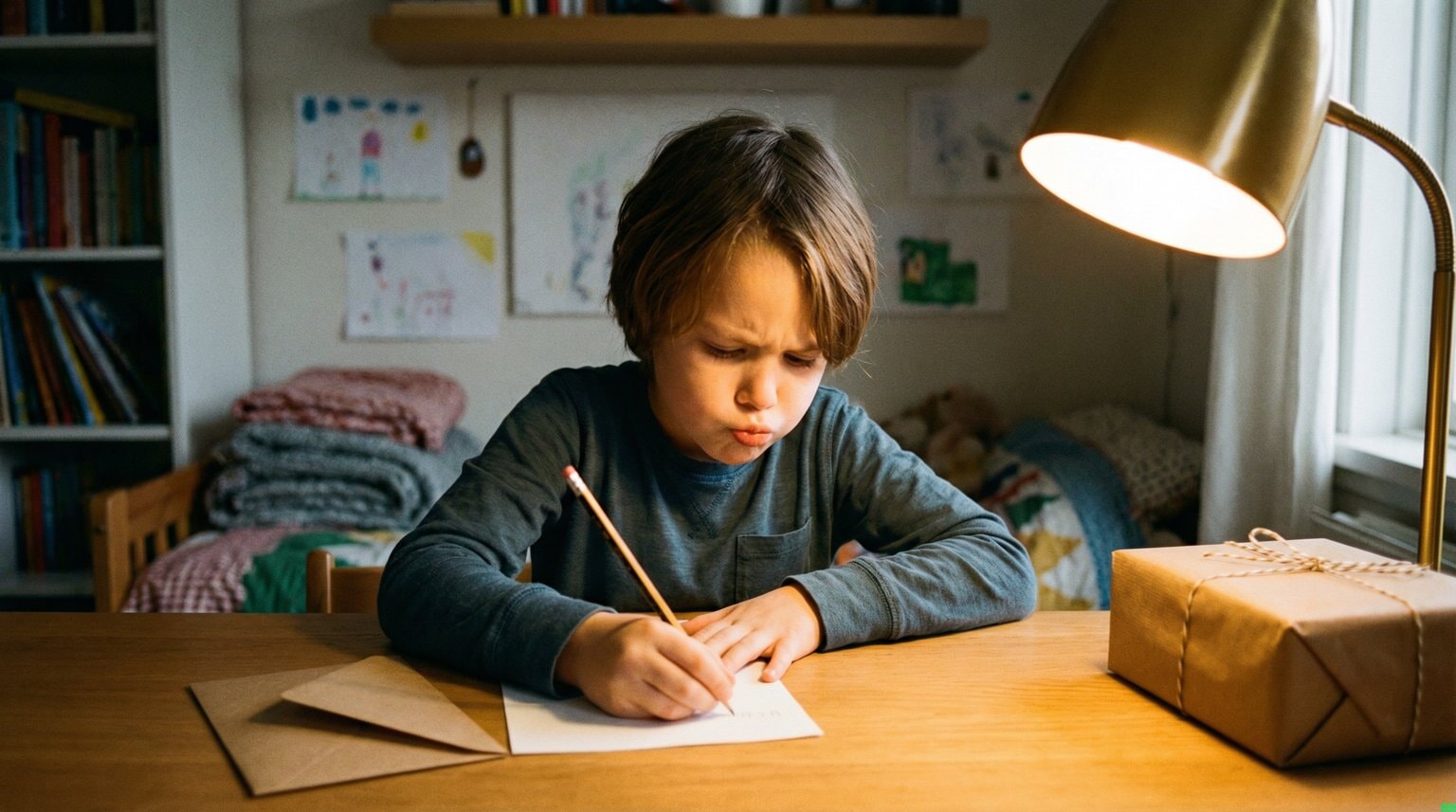
Research from Stony Brook University (2024) studied 101 children and found something that explains a lot: kids consistently underestimate how happy their giving makes recipients.
“Children, like adults, didn’t fully anticipate just how happy their recipient would be, and that’s an important barrier to consider when encouraging kindness.”
— Margaret Echelbarger, Stony Brook University Researcher
If your 7-year-old seems hesitant to give, it might not be selfishness—they genuinely don’t realize how much their giving matters.
There’s another factor worth knowing. A 2024 study published in the Journal of Experimental Child Psychology found that among children ages 6-8, those who recalled experiences of scarcity shared fewer tokens, while those primed with feelings of abundance were more generous.
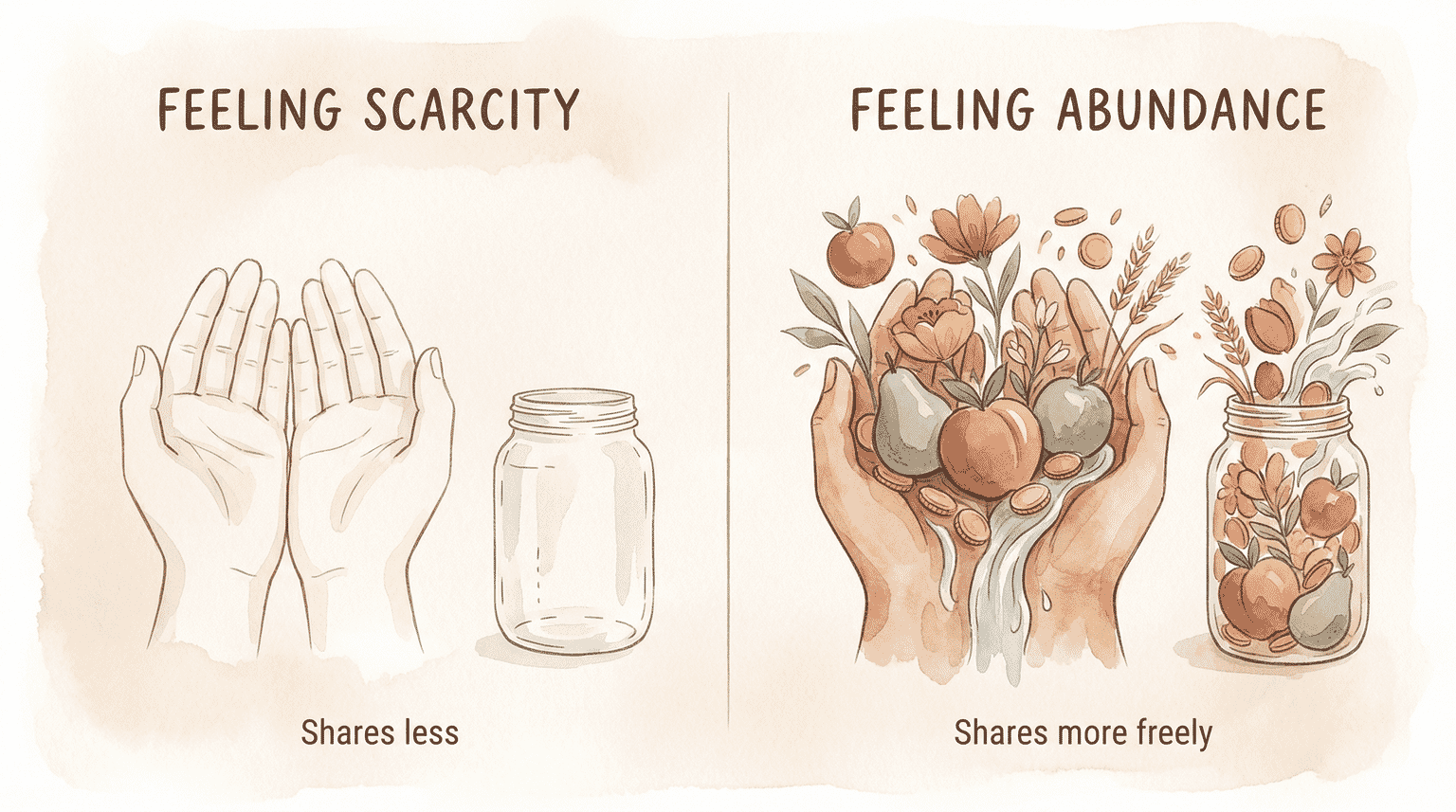
Help children feel they have enough before asking them to give.
What giving looks like at this age:
- Choosing who receives their donations
- Writing simple thank-you notes
- Participating in birthday giving traditions
- Donating a portion of allowance or gift money
- Helping plan family giving projects
Parent language: “How do you think she felt when she opened your gift?” helps them connect action to impact—bridging that underestimation gap.
Ages 9-11: Empathy-Driven Giving
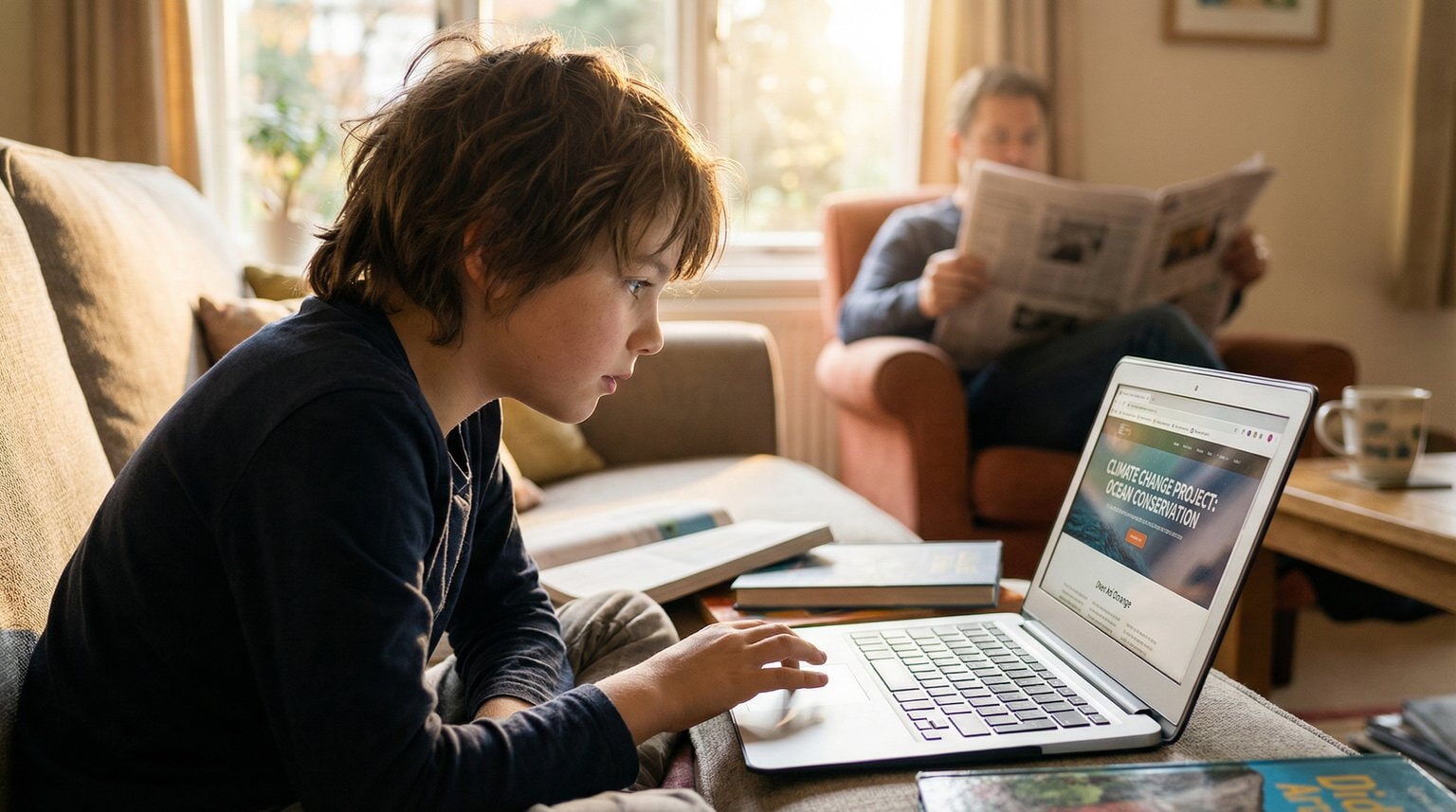
Abstract thinking is emerging, and with it comes a more sophisticated understanding of others’ perspectives. This is when children can research causes that matter to them and make intentional choices about where their generosity goes.
But there’s a developmental shift to understand. Research shows that as children mature, their prosociality becomes more selective—they begin considering “the cost, contexts, and recipients of prosocial behavior.”
Your 10-year-old who gives thoughtfully to one cause but seems indifferent to another isn’t being inconsistent. They’re developing values.
Studies on elementary-age children found that having friendships across different social groups expanded children’s willingness to help beyond their immediate circle. Encouraging diverse friendships may broaden who they’re willing to give to.
What giving looks like at this age:
- Researching charities and causes independently
- Volunteering with supervision (animal shelters, food banks)
- Selecting meaningful gifts for specific people’s interests
- Organizing giving projects at school or in the neighborhood
- Teaching younger siblings about sharing
Parent language: “What cause matters to you?” This isn’t about your values anymore—it’s about helping them discover their own.
Ages 12-14: Values-Based Giving
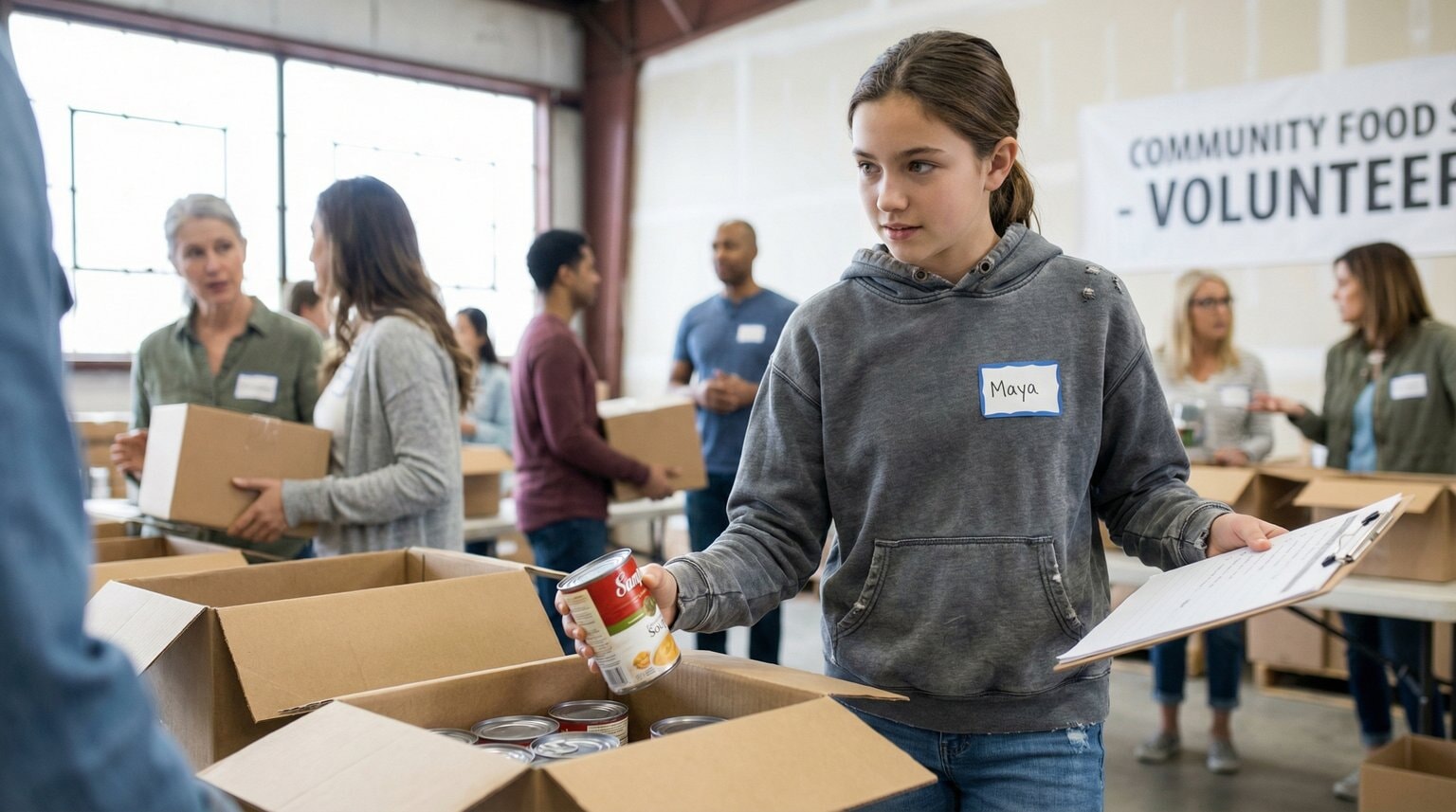
Welcome to identity formation. Pre-teens are actively figuring out what they believe, and giving becomes part of that exploration.
Here’s something I wish someone had told me with my older kids: research indicates that children ages 11-13 may actually become less automatically generous toward unfamiliar recipients than younger children.
This isn’t backsliding—it’s the selectivity that comes with developing personal values. They’re learning to give meaningfully rather than indiscriminately.
What giving looks like at this age:
- Independent volunteer projects
- Budgeting gift money for others
- Advocating publicly for causes they believe in
- Teaching younger children in structured settings
- Planning and executing giving initiatives
Parent language: “What do you believe in?” acknowledges their emerging autonomy. “How do you want to make an impact?” respects their agency.
If you’re thinking about what values you want gifts to reinforce in your family, this is the age when those conversations become particularly meaningful.
Ages 15-17: Strategic Generosity
Abstract reasoning is mature, long-term thinking is possible, and teens can manage sustained commitments. This is giving at its fullest expression—time, talent, and treasure all available.
What giving looks like at this age:
- Planning annual giving budgets
- Sustained volunteer commitments (weekly, monthly)
- Mentoring younger children
- Community leadership roles
- Organizing larger-scale charitable efforts
- Making independent decisions about giving priorities
Parent language: Your role shifts from direction to consultation. “How do you want to make a difference?” opens dialogue. “What would you need to make that happen?” offers support without control.
I’ve seen my teenagers surprise me with their generosity when given genuine autonomy. The groundwork we laid in earlier years shows up here—not in what they give, but in that they give thoughtfully.
Making It Work: Practical Strategies for Any Age
Model What You Want to See
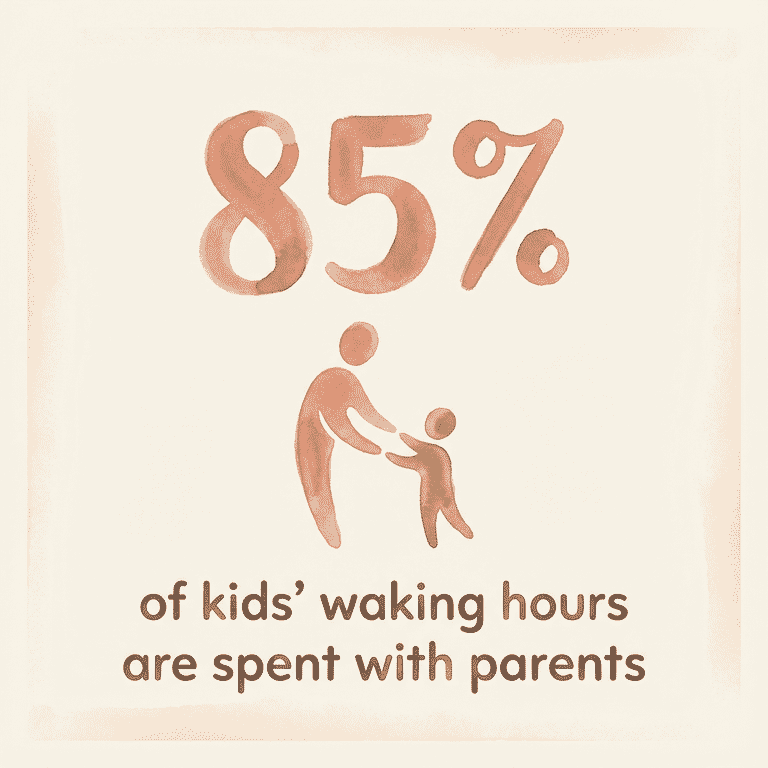
Research from the University of Chicago found that 85% of a child’s waking hours from birth to age 18 are spent with parents or in parent-chosen contexts. Even small daily modeling adds up enormously over time.
Let children see you give. Narrate your choices: “I’m making soup for the Johnsons because their mom is sick.” “I’m donating these clothes because another family can use them.”
The research is clear—they’re watching. And those small moments add up to something big.
Create Abundance Before Asking
Remember that scarcity study? Children who feel they have enough give more freely. Before asking your child to donate toys, help them notice what they have. Before discussing charitable giving, acknowledge their generosity in other areas.
This isn’t manipulation—it’s creating the emotional conditions where generosity feels natural rather than threatening.
Show Them the Impact
Since children underestimate how their giving affects others, make the impact visible. Show them the thank-you note from Grandma. Let them see the family receiving donations. When possible, connect their giving to real faces and real gratitude.
When Giving Is Hard
Sometimes children resist giving, and that’s okay. Developmental resistance—a toddler who won’t share, a preschooler who hoards—is usually just a phase. Consistent modeling and low-pressure opportunities typically resolve it.
Concerning patterns look different: complete unwillingness to ever share, distress about others receiving anything, or giving that’s performative rather than genuine. If you’re struggling with the balance between encouraging generosity and creating guilt or shame, our guide on teaching charity without guilt goes deeper.
Frequently Asked Questions
At what age can children start giving to others?
Children demonstrate helping behavior as young as 12 months old. Washington University research found that over 80% of babies spontaneously help by retrieving out-of-reach items for adults. By 18 months, children actively bring objects to give to caregivers and begin helping with simple household tasks.
How do I teach my child to be generous?
Model giving behavior openly—children spend 85% of their waking hours in parent-influenced contexts. Help children feel abundance before asking them to share, as research shows scarcity feelings reduce generosity. Most importantly, show children the impact of their giving; studies find children underestimate how happy their generosity makes recipients.
What can a 5-year-old donate?
Five-year-olds excel at creating gifts: drawings, simple crafts, or handmade cards. They can donate gently-used toys with parental guidance, help choose items for food drives, and assist with household tasks that benefit others. Research shows making things to give develops stronger prosocial motivation than simply giving money.
Do kids benefit from giving?
Yes—research from UC Davis found that preschoolers who shared with others were physiologically calmer after giving. This calmer state reinforces generous behavior, creating a positive feedback loop. Children also develop empathy, perspective-taking skills, and stronger social connections through giving experiences.
I’m Curious
How do your kids give? I’d love to hear what works at different ages—from toddler Cheerio sharing to teen volunteer hours. These real examples help other parents know what to expect.
Your generosity stories help other parents see what’s possible at each stage.
References
- Washington University Infant Helping Study – Research on prosocial behavior in babies under 12 months
- Stony Brook University Kindness Research – Study on children’s perception of giving impact
- UC Davis Prosocial Behavior Study – Research on physiological benefits of giving in young children
- Journal of Experimental Child Psychology Scarcity Study – Research on how abundance vs. scarcity affects children’s sharing

Share Your Thoughts