

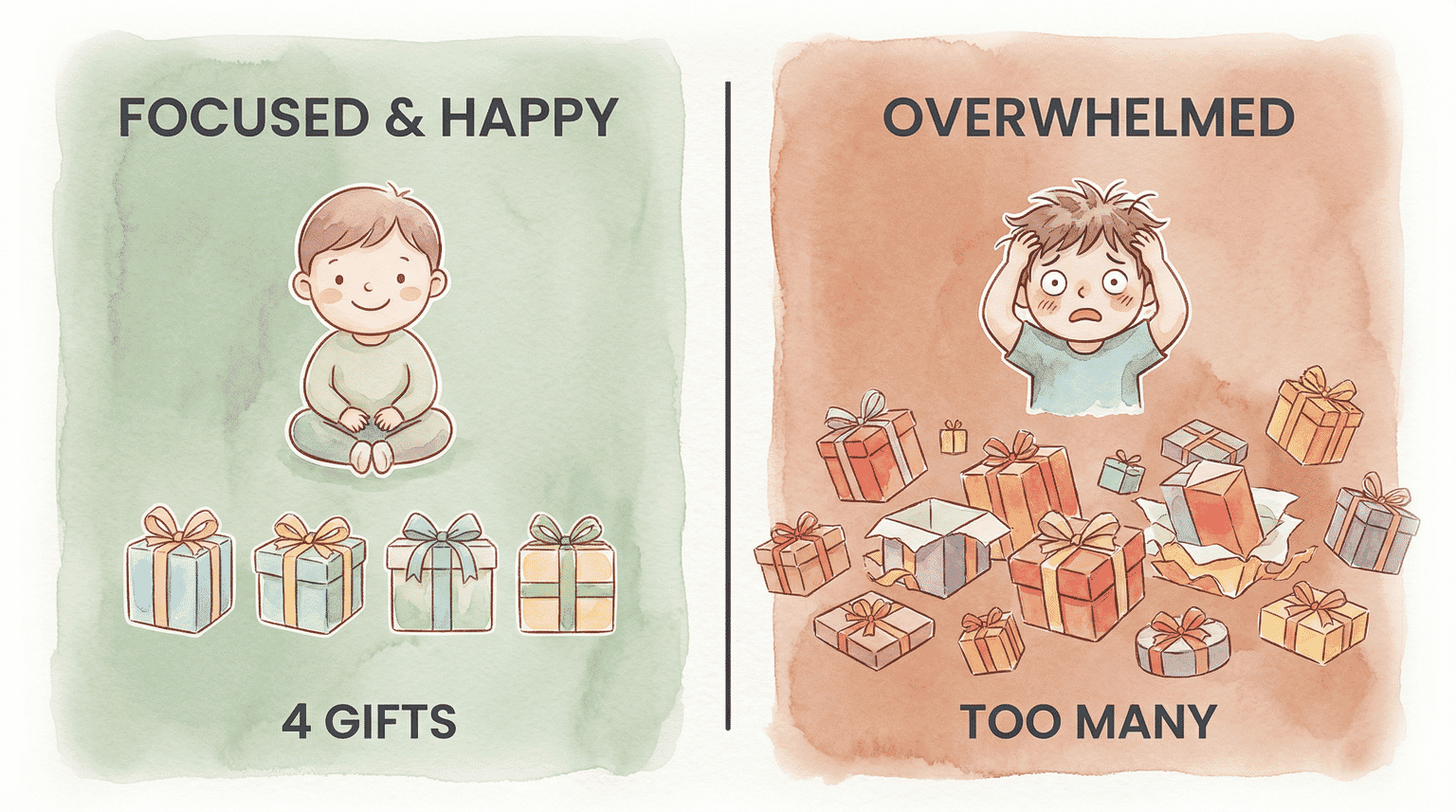
The 4-gift rule is a gift-giving framework where each child receives exactly four presents: something they want, something they need, something to wear, and something to read. Research shows this approach reduces overwhelm while helping children appreciate each gift more deeply—and in my house of eight kids, it’s the only thing that keeps Christmas morning from becoming a tear-soaked blur of wrapping paper chaos.

Key Takeaways
- The 4-gift rule gives each child one thing they want, need, wear, and read
- Research shows kids play twice as long and show higher creativity with fewer toys
- Too many presents cause “overstimulation fatigue” where children can’t fully engage with anything—consider experience gifts matched to age
- Variations like the 3-gift or 5-gift rule offer flexibility while keeping intentional limits
The Four Categories
Here’s how the framework breaks down:
Want: The thing they’ve been dreaming about. A LEGO set, a specific doll, that video game they won’t stop mentioning.
Need: Something practical they’d receive anyway. New headphones, a lunchbox, art supplies for school.
Wear: Clothing or accessories. Cozy pajamas, light-up sneakers, a favorite character hoodie.
Read: A book matched to their interests. A graphic novel, chapter book series, or picture book for little ones.
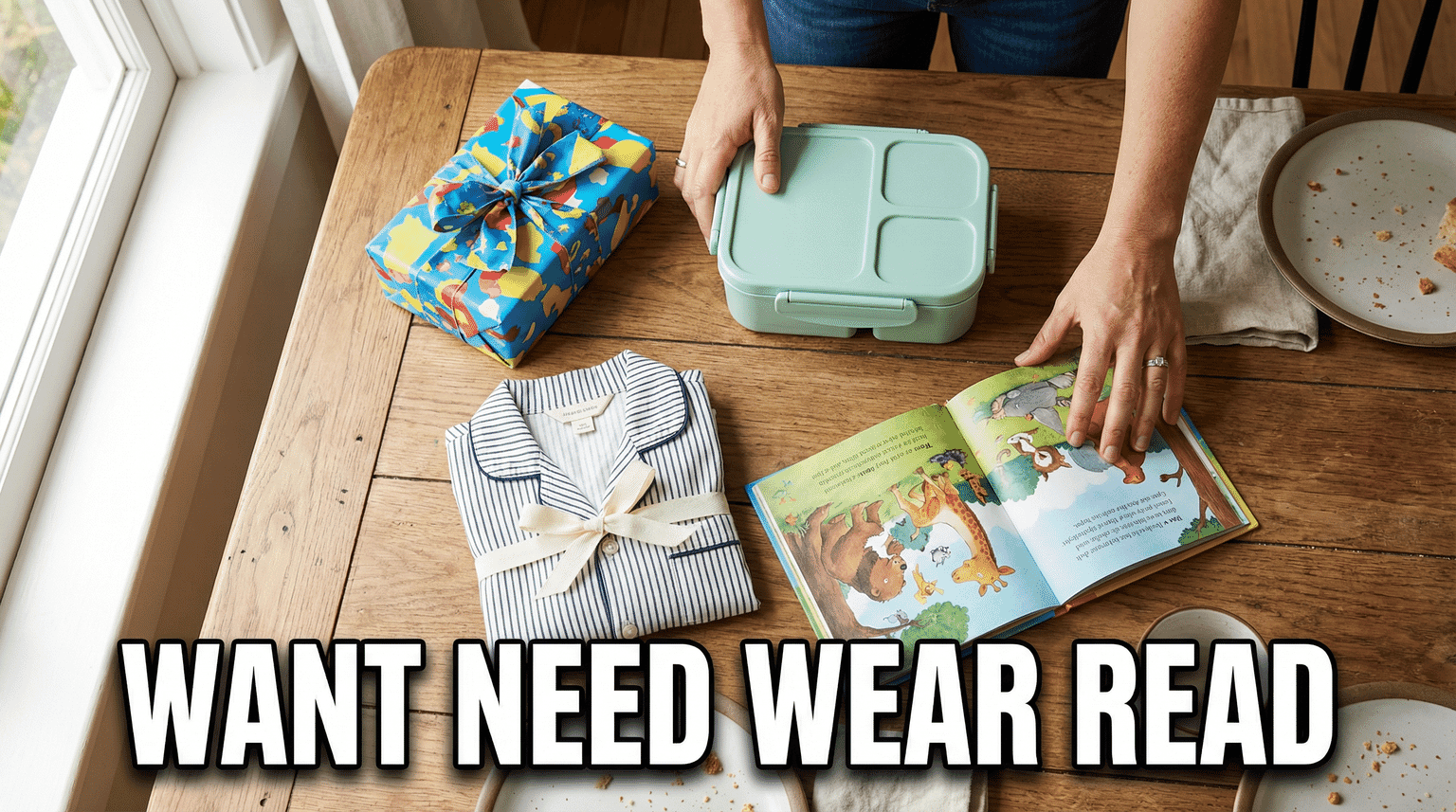
Simple structure. Clear boundaries. Four presents that actually get opened with excitement instead of obligation.
Why Fewer Gifts Work Better

My librarian brain needed to know why this works—and the research backs it up.
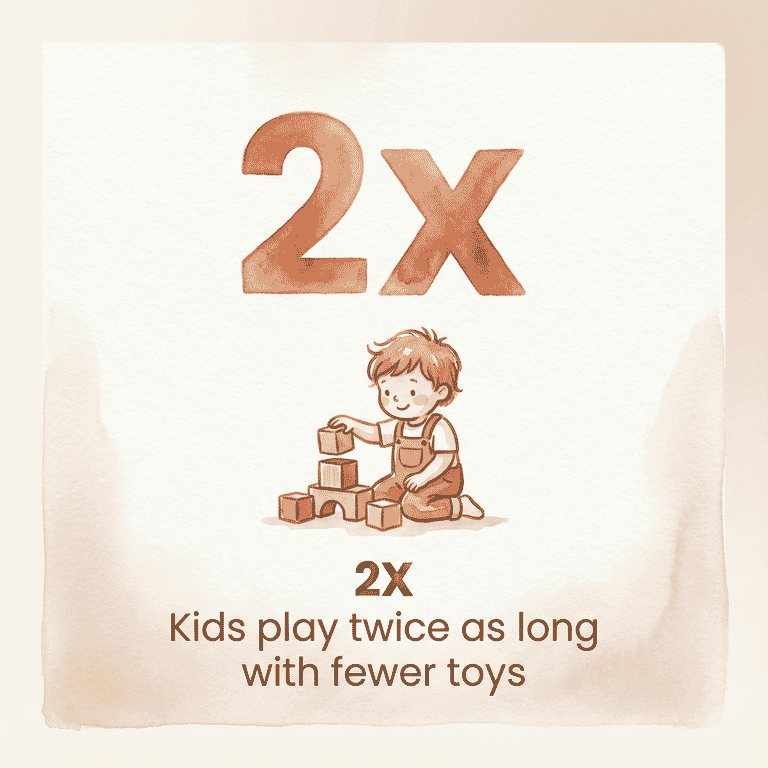
University of Toledo researchers found that toddlers given fewer toys played twice as long and showed higher creativity and focus than those surrounded by dozens.
This finding aligns with broader research on how gifts affect children’s brains. When options are limited, kids dive deeper into play instead of bouncing between distractions.
The neuroscience of giving reveals something unexpected about how children process abundance.
“An overload of presents can make it harder for kids to focus, appreciate, and play creatively. Psychologists call this ‘overstimulation fatigue’: when a child’s attention is fragmented by choice, they struggle to fully engage with any single toy…”
— Devon Kapler, Family Wellbeing Expert
I’ve watched this play out eight times now. Fewer gifts means more attention on each one—and kids who actually remember what they received.
Instead of the frantic rip-and-toss chaos, you get genuine moments of discovery. Each present gets its own spotlight.
Quick Variations

Not sold on exactly four? The 3-gift rule (inspired by the Three Wise Men) works beautifully for minimalist families. The 5-gift rule adds a fifth category—typically an experience or something to give—for families wanting slightly more flexibility while keeping the intentional structure.

Both build on the same principle: thoughtful limits over overwhelming abundance.
Ready to implement this with your family? Our detailed guide to the 4-gift rule covers age-specific examples, budget strategies, and scripts for explaining the approach to grandparents.
Frequently Asked Questions

What is the 4-gift rule for Christmas?
The 4-gift rule is a Christmas approach where each child receives four presents: something they want, something they need, something to wear, and something to read. It simplifies holiday shopping while ensuring meaningful, varied gifts.
Does the 4-gift rule work?
Yes. University of Toledo research found toddlers with fewer toys played twice as long and showed higher creativity.
Limiting gifts prevents what psychologists call “overstimulation fatigue”—when too many choices fragment attention and reduce appreciation.
What is the 5-gift rule?
The 5-gift rule adds a fifth category—typically “something to do” (an experience) or “something to give” (encouraging charitable giving). It maintains the same principle of thoughtful limits over abundance.
Over to You

Do you use the 4-gift rule? I’m curious how you handle grandparents, extended family, and the inevitable “but everyone else gets more” conversation.
Your 4-gift rule stories help other parents navigate the simplicity shift.
References
- University of Toledo research via The Sun – Research on toy quantity and child engagement

Share Your Thoughts