
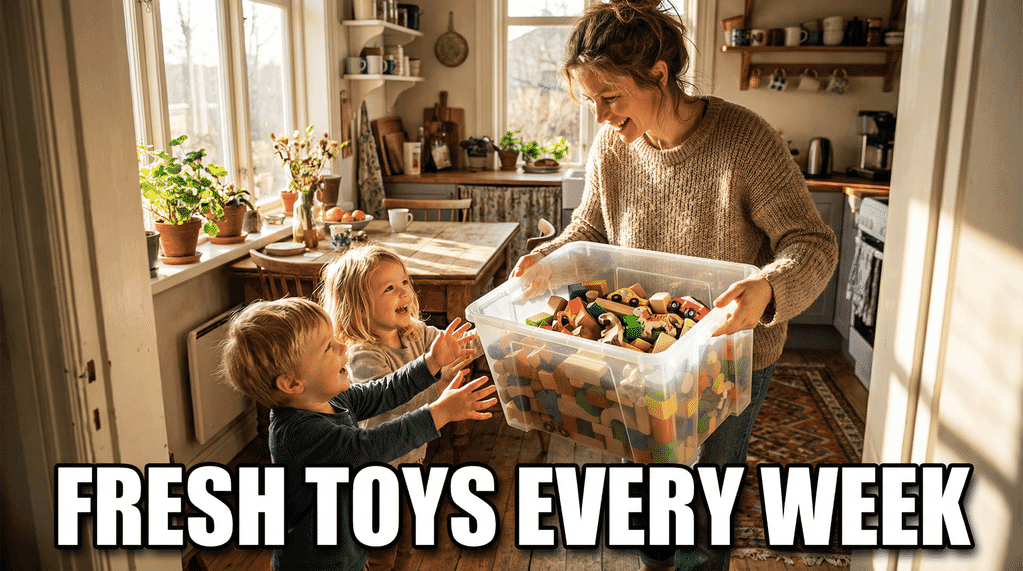
My 4-year-old has 47 toys in her bedroom. I know this because I counted them last Tuesday after watching her wander from basket to basket, pick something up, drop it, and announce she was “bored.” Meanwhile, her 2-year-old brother spent 25 minutes with a single wooden train—the only toy I’d left out after clearing the rest for cleaning.
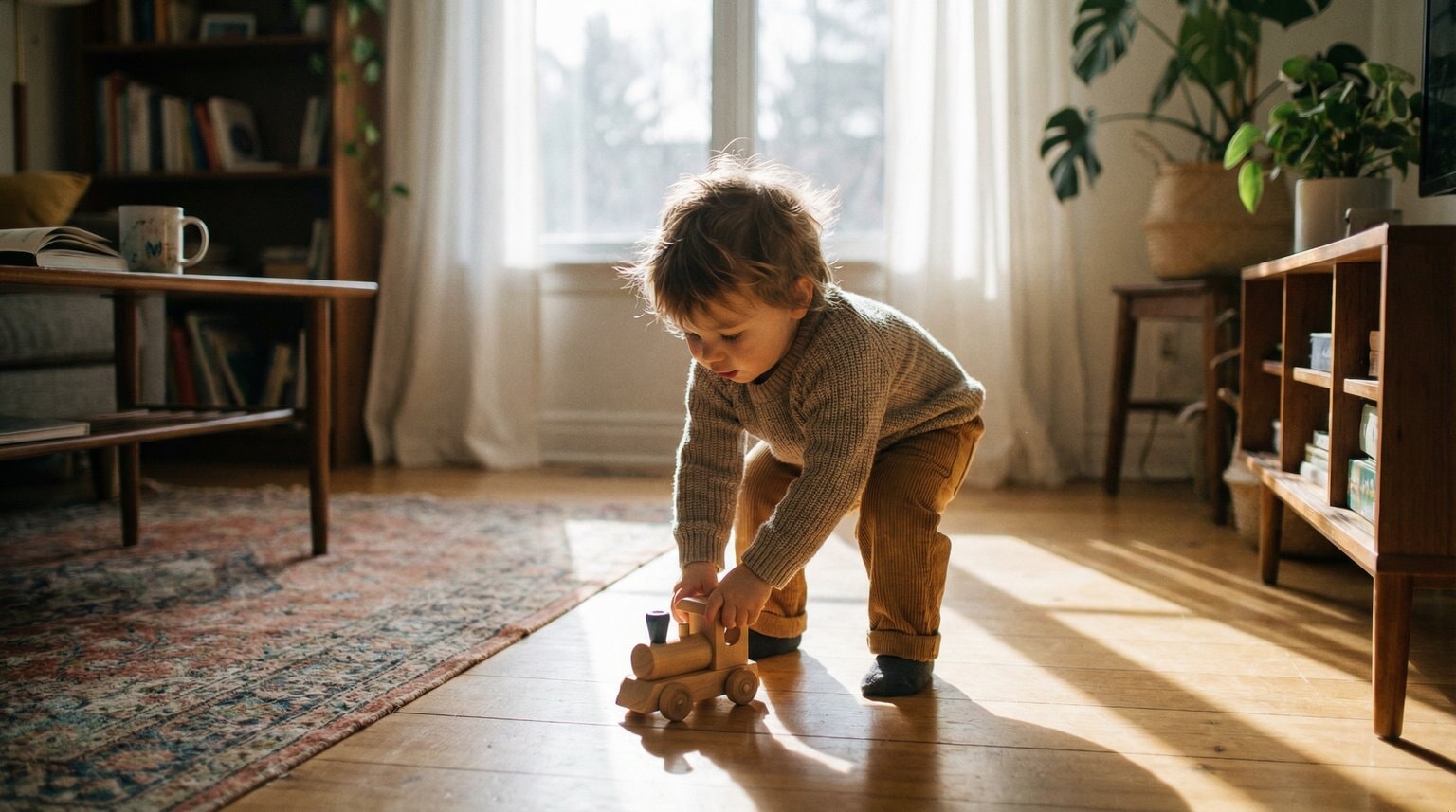
Here’s what the research actually shows: fewer toys leads to deeper, more creative play. And once you understand why, implementing a rotation system becomes less about organization and more about working with your child’s brain instead of against it.
Key Takeaways
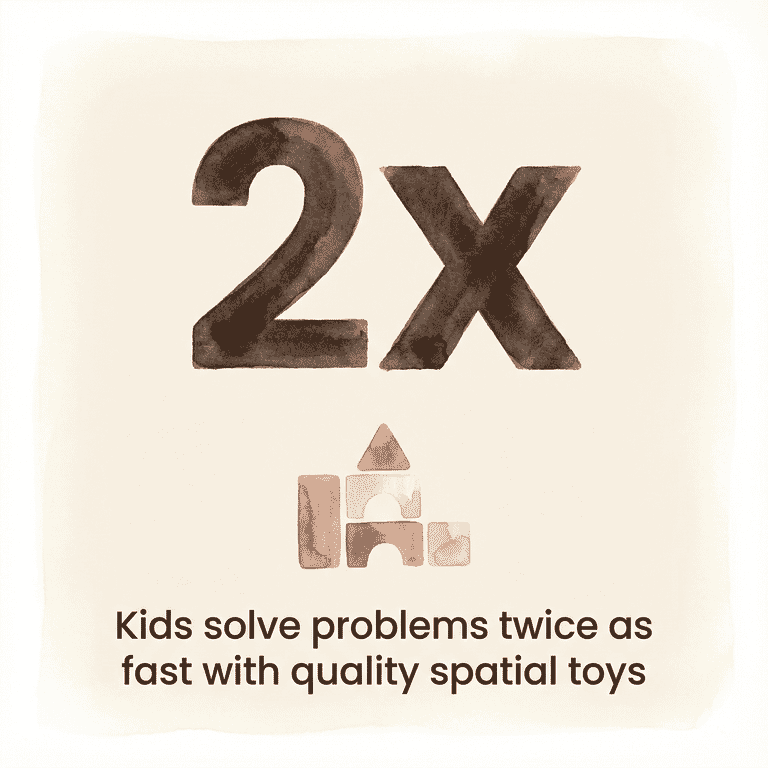
- Children solve problems twice as fast when playing with curated spatial toys versus overwhelming options
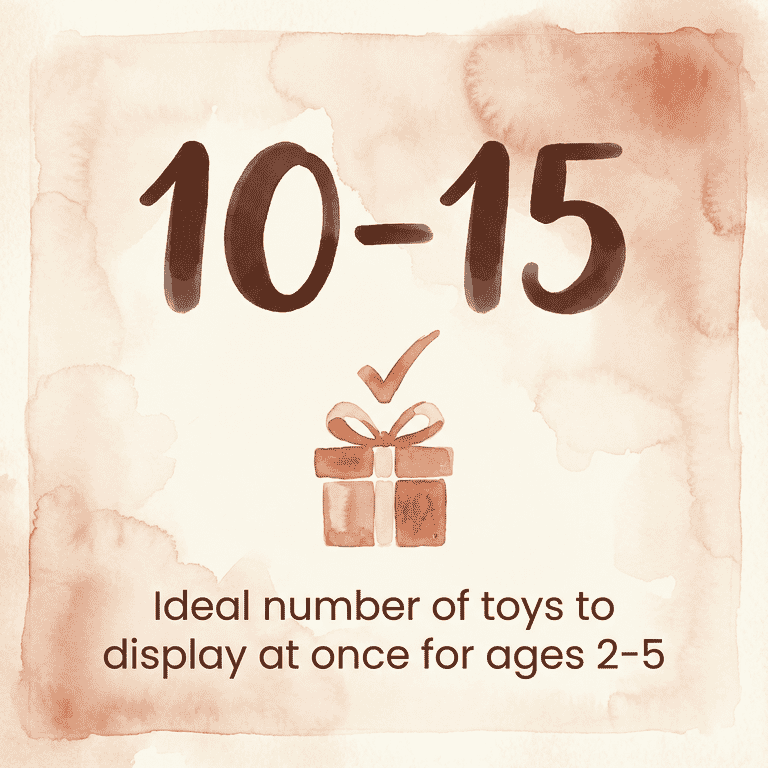
- The ideal display amount is 10-15 toys for ages 2-5, rotated weekly
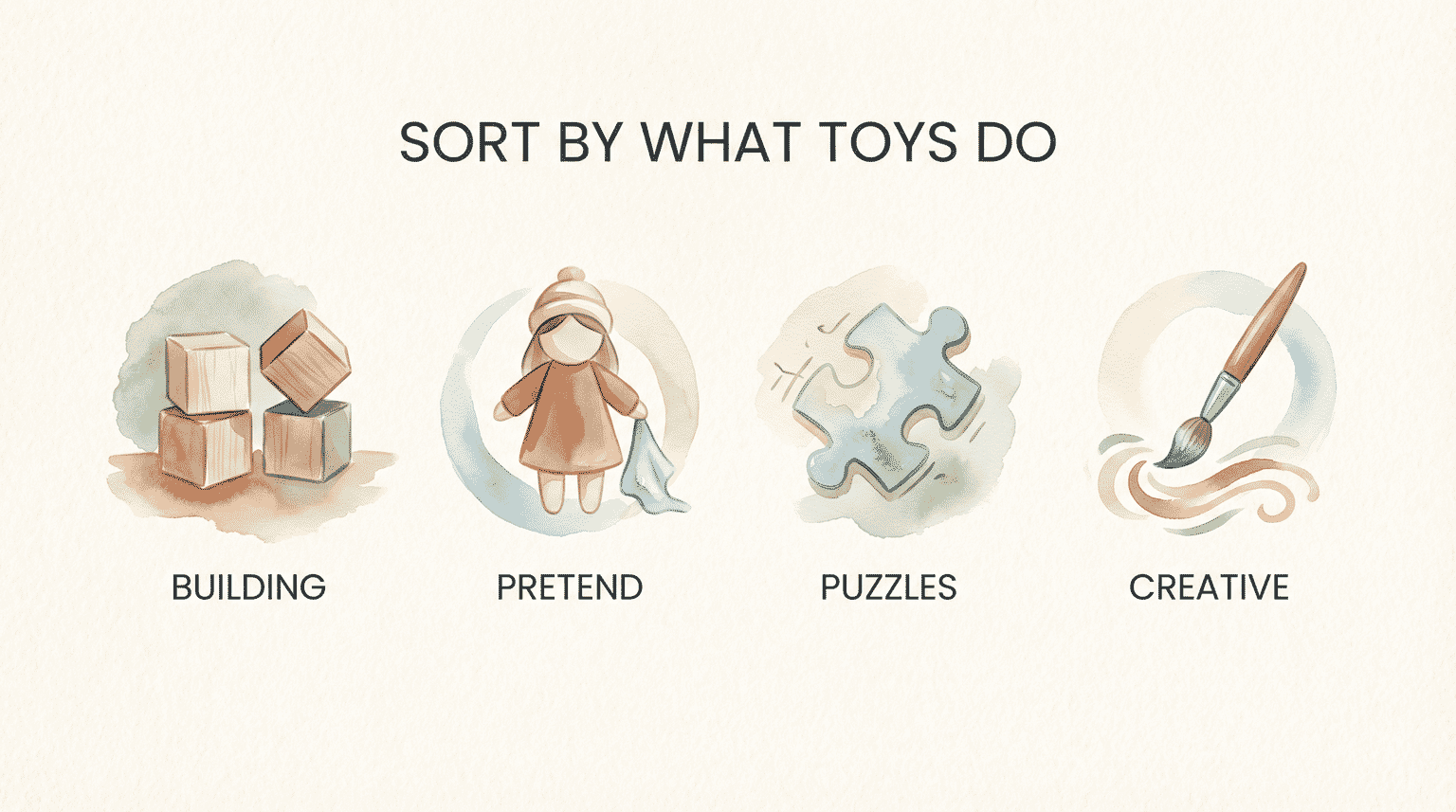
- Sort toys by what they do (building, pretend, puzzles, creative)—not by theme or character
- Children over 5 can become partners in the rotation process, helping decide what goes in each bin
The 4-Bin Rotation Framework
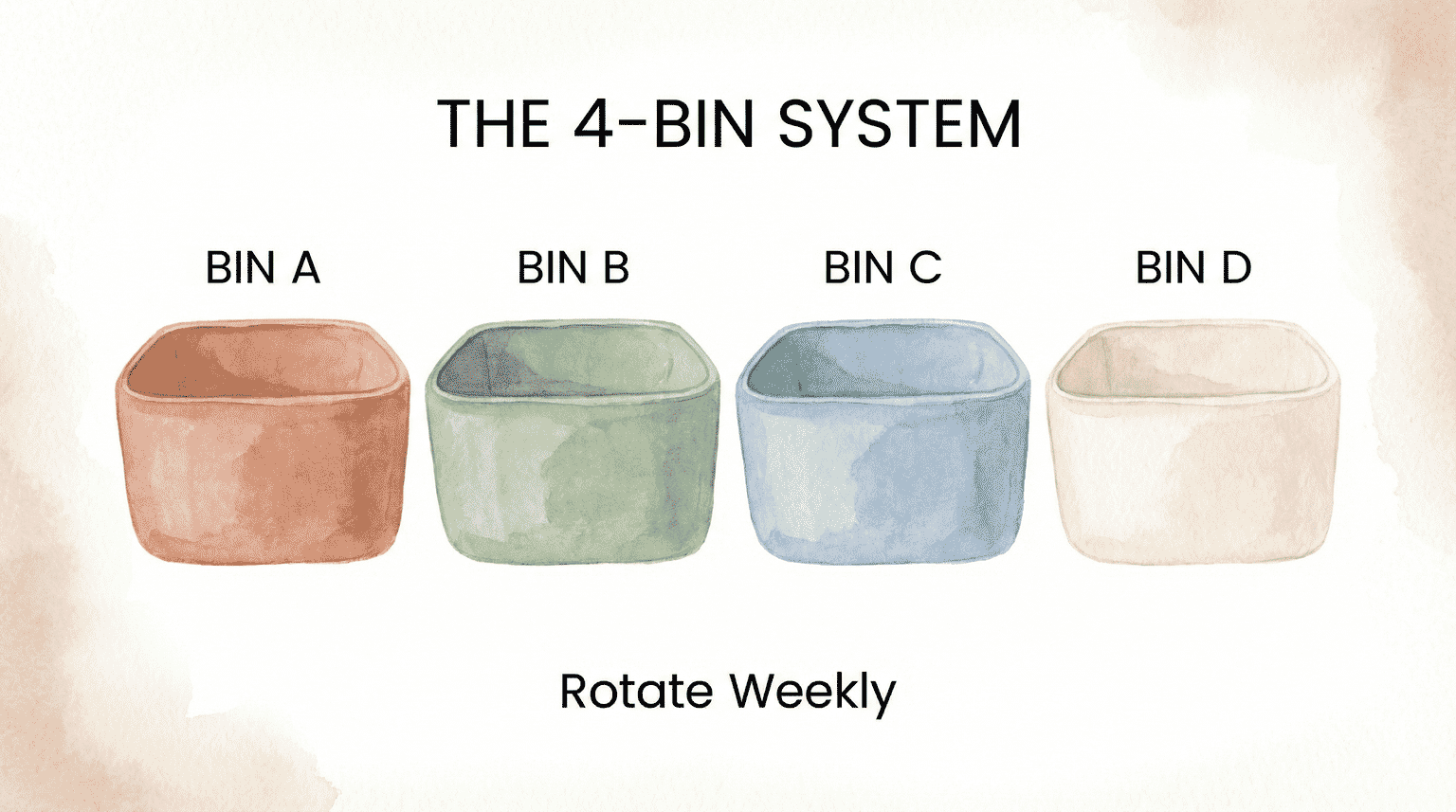
Before we dig into the science, here’s the system in its simplest form: divide your toys into four balanced bins, keep one bin out at a time, rotate weekly. That’s it. Everything else is refinement.
A toy rotation system is an organizational method where parents divide children’s toys into separate groups (typically 3-4), display only one group at a time, and regularly swap which group is accessible—reducing overwhelm while maintaining novelty and supporting deeper play.
The framework works because it aligns with how children’s brains actually process their environment. Professor Shannon Pruden from FIU puts it simply: “Kids aren’t just absorbing information, they’re thinking critically and strategically much earlier than we used to believe.” When we flood them with options, we’re actually working against their natural capacity for focused engagement.
Why Rotation Works: The Cognitive Load Mechanism
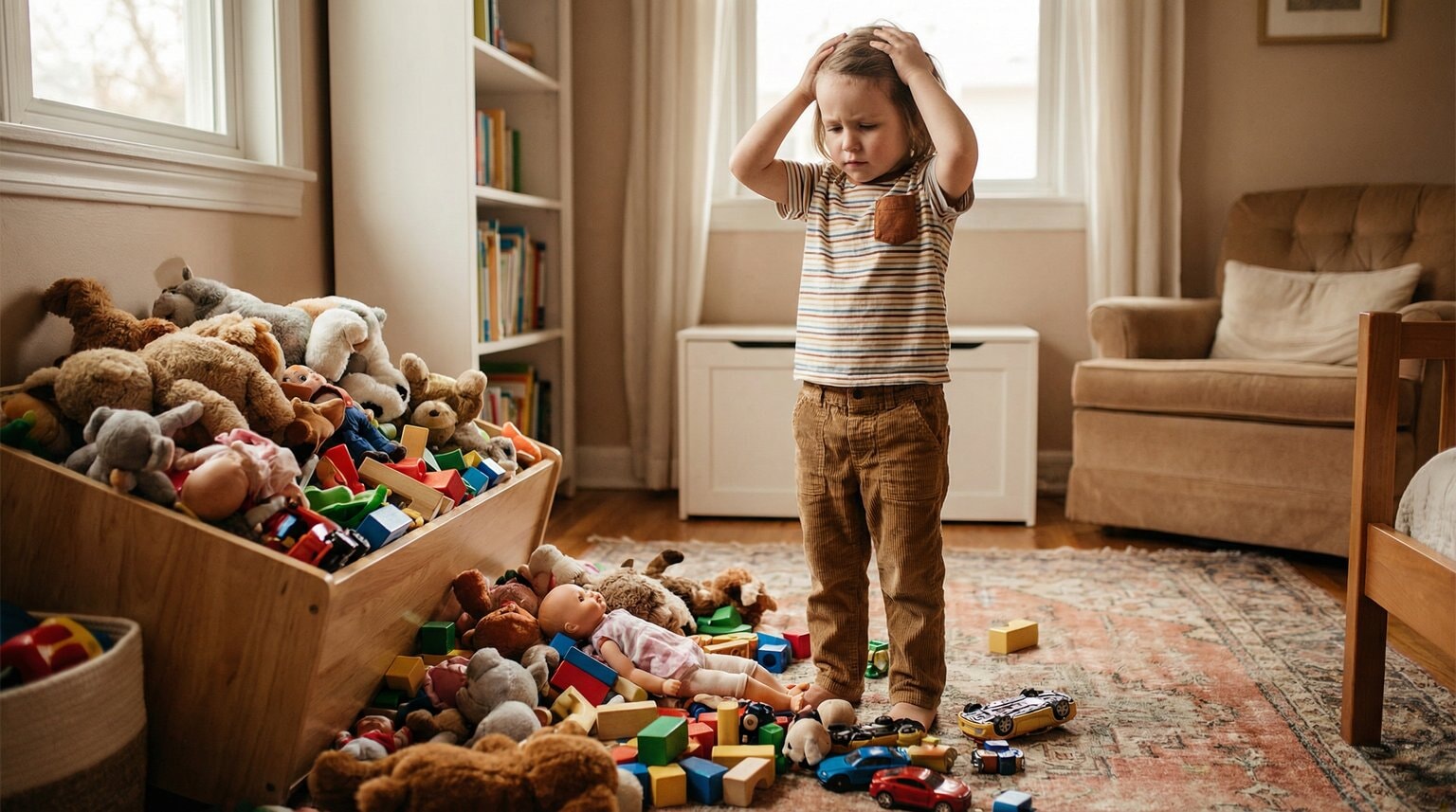
I’ve watched this happen eight times now—give a child too many choices and they either freeze or flit. But give them a curated selection, and suddenly they’re building elaborate block towers or staging intricate stuffed animal weddings for half an hour.
A 2023 NIH study documented something fascinating about how children interact with objects. Researchers found that infants’ manual exploration functions as a “haptic spotlight”—they direct focused attention purposefully and selectively to particular objects. But here’s the catch: when cognitive demands increase, motor performance suffers, and vice versa.
In my house, this looks like my 6-year-old attempting to choose between 15 different LEGO sets, getting overwhelmed, and building nothing. Or my toddler facing a toy bin so stuffed he can’t even see what’s inside, so he dumps everything out and walks away.
What child development experts call “cognitive bandwidth”—the mental energy available for learning—gets depleted when children face too many options. Rotation works by reducing this decision fatigue while maintaining novelty.
Each time the bins switch, familiar toys feel fresh again. The research confirms what exhausted parents suspect: children spend more than half their waking hours manipulating objects during play.
Repeated, extensive, and varied practice is essential for development. But “varied” doesn’t mean “unlimited.” It means thoughtfully curated experiences with different types of objects over time.
How to Start: The Step-by-Step System
Step 1: The Complete Toy Audit
Gather every toy from every room. Yes, all of them—the ones under the couch, the happy meal toys in the car, the bath toys. You need to see the full scope before you can organize it.
When I did this for the first time, I filled our entire living room floor. It was humbling. And clarifying.
Step 2: Sort by Category, Not Theme
Forget organizing by character or color. Sort by what the toy does:
- Building/Construction (blocks, LEGO, magnetic tiles)
- Pretend Play (dolls, action figures, play food, dress-up)
- Puzzles/Problem-Solving (puzzles, shape sorters, matching games)
- Creative/Sensory (art supplies, playdough, sensory bins)
This matters because FIU researchers found that children using quality spatial toys—blocks, puzzles, pattern games—solved problems twice as fast as those using piecemeal approaches. Each bin needs balance across developmental domains, not just variety for variety’s sake.
Step 3: Create Four Balanced Bins
Each bin should contain 10-15 items total, with representation from each category. My librarian brain loves a good framework:
| Bin | Building | Pretend | Puzzles | Creative |
|---|---|---|---|---|
| A | Wooden blocks | Play kitchen items | Shape sorter | Playdough |
| B | Magnetic tiles | Dollhouse figures | Floor puzzle | Crayons/paper |
| C | LEGO Duplo | Dress-up clothes | Stacking cups | Finger paints |
| D | Train tracks | Stuffed animals | Matching cards | Sensory rice bin |
Notice how each bin has something from every category. This ensures your child has balanced play opportunities no matter which bin is currently active.
Step 4: Set Up Display Space
Keep displayed toys at child height on open shelving or in clear, accessible bins. The goal is visibility and independence—your child should be able to see and reach everything currently available.
Step 5: Establish Your Rotation Rhythm
Start with weekly rotations. Research from Cognitive Development journal (2022) shows children learn equally well whether reintroduced to materials after short delays or longer breaks. The “perfect” timing matters less than consistency.
Storage Systems That Actually Work
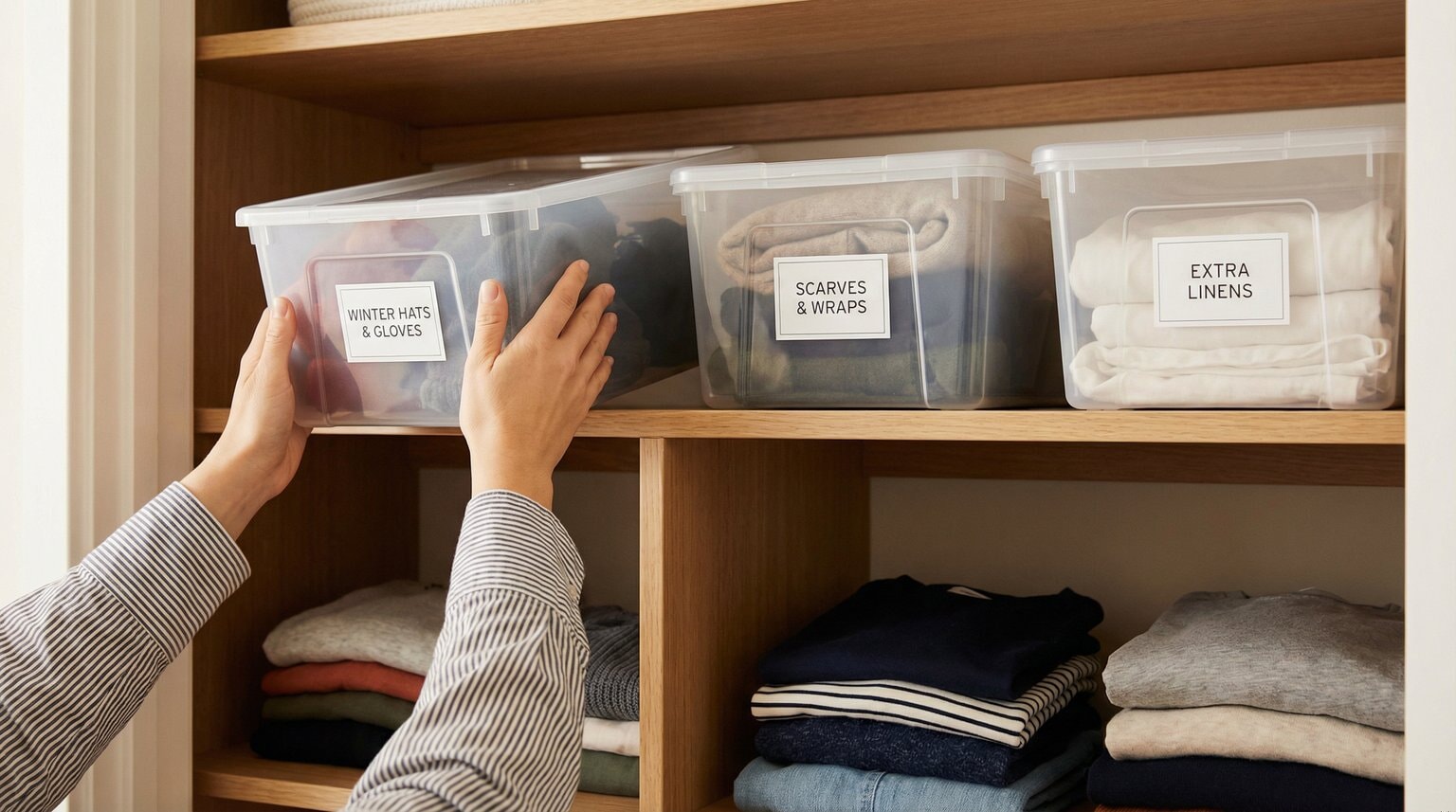
The hidden storage is where rotation succeeds or fails. If the other bins are visible, you’ll face constant requests. If they’re inaccessible to you, you’ll skip rotations.
What works in my house:
- High closet shelf with labeled bins (out of sight, easy to grab)
- Garage shelving system for larger items
- Under-bed storage for the current “out of rotation” bins
Small space adaptation: Even two bins work—one active, one stored. Rotate weekly. You’ll still see benefits. If rotation feels like too much structure, start simpler with the one-in-one-out rule.
Always-accessible items (outside the rotation): comfort objects and loveys, outdoor toys and sports equipment, books (rotate these separately if needed), and one or two absolute favorites per child.

When and What to Rotate
Behavioral Cues vs. Fixed Schedule
Watch for these signals that it’s time to rotate:
- Dumping toys without playing
- “I’m bored” despite full toy access
- Increased sibling conflict over the same items
- Toys scattered but not used
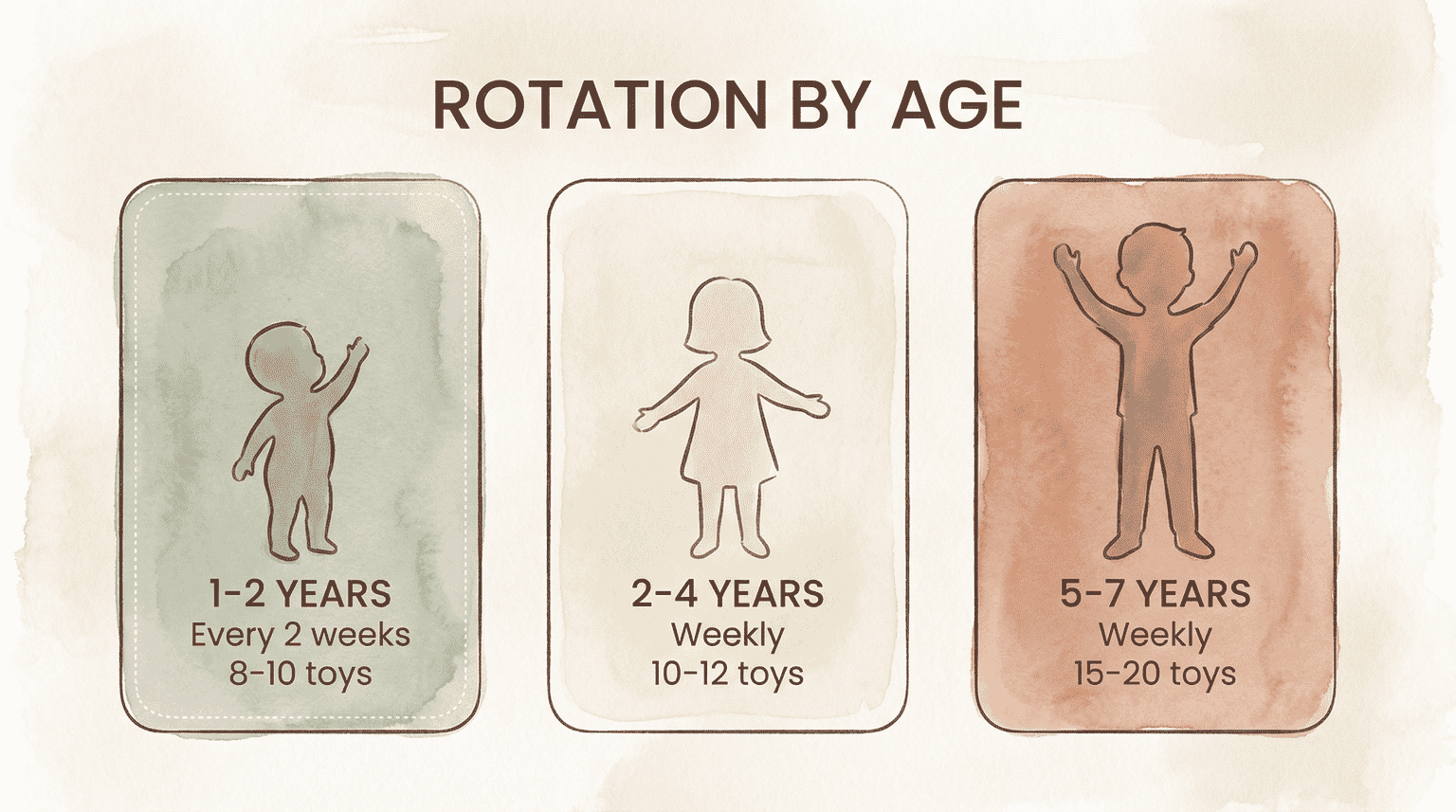
Age-Based Rotation Frequency
| Age Range | Rotation Frequency | Display Amount | Why |
|---|---|---|---|
| 12-24 months | Every 2 weeks | 8-10 toys | Needs repeated exposure for learning |
| 2-3 years | Weekly to bi-weekly | 10-12 toys | Beginning to transfer skills between toys |
| 3-5 years | Weekly | 12-15 toys | Benefits from variety within categories |
| 5-7 years | Every 1-2 weeks | 15-20 toys | Can participate in rotation decisions |
The cognitive science backs this up: 2022 research found that 2-year-olds may require repeated exposure to problems before transferring solutions, while 4-5-year-olds learn from much shorter exposures. Younger children benefit from longer time with the same toys.
When to Purge, Not Rotate
Rotation isn’t a solution for too many toys overall. If your four bins are overflowing, it’s time to reduce total inventory. Signs you need to purge:
- Bins won’t close properly
- You’ve forgotten what’s in certain bins
- Some toys haven’t been touched in 6+ months across multiple rotations
- Your child has developmentally outgrown items
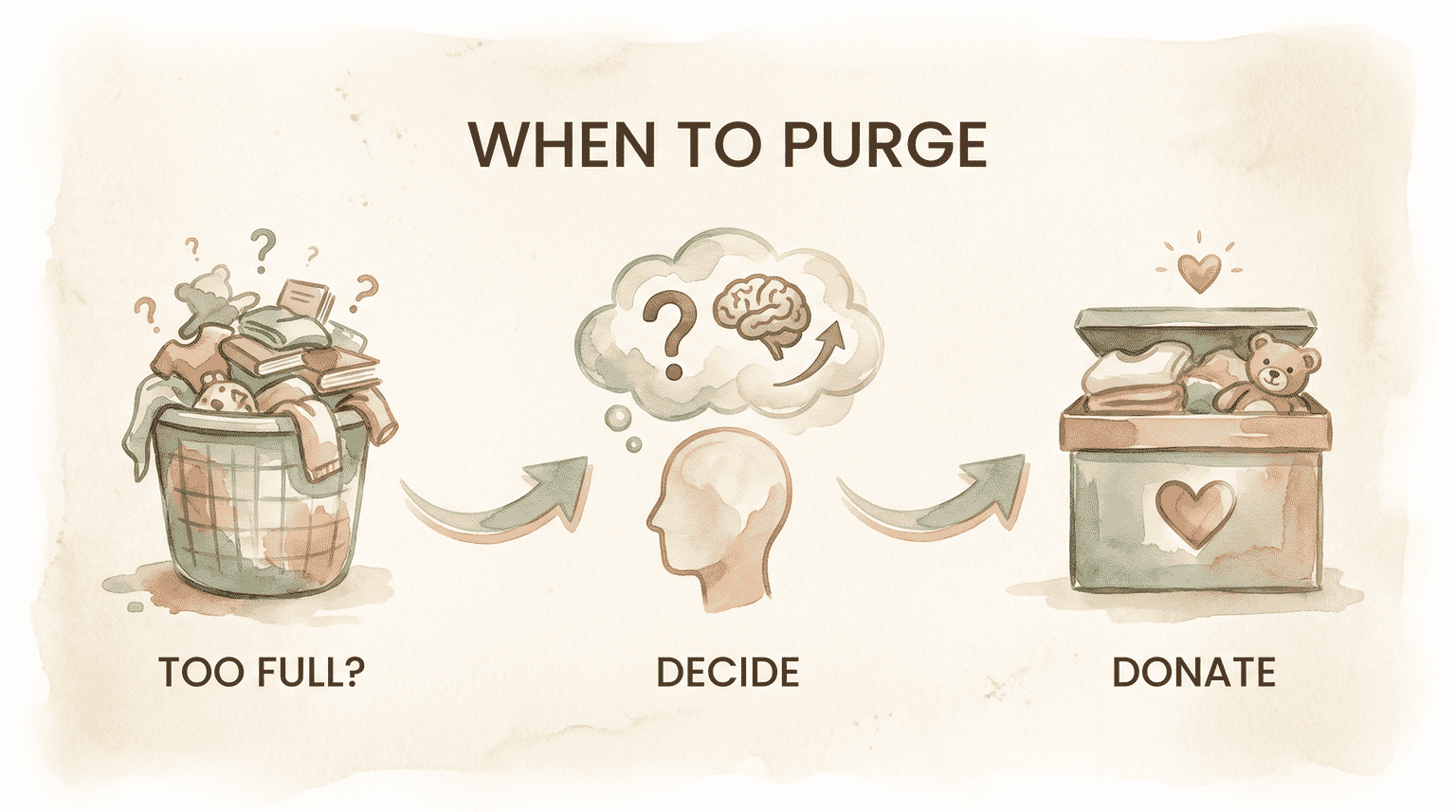
When it’s time to let go, consider teaching your child about donation—making them partners in the process rather than victims of it.
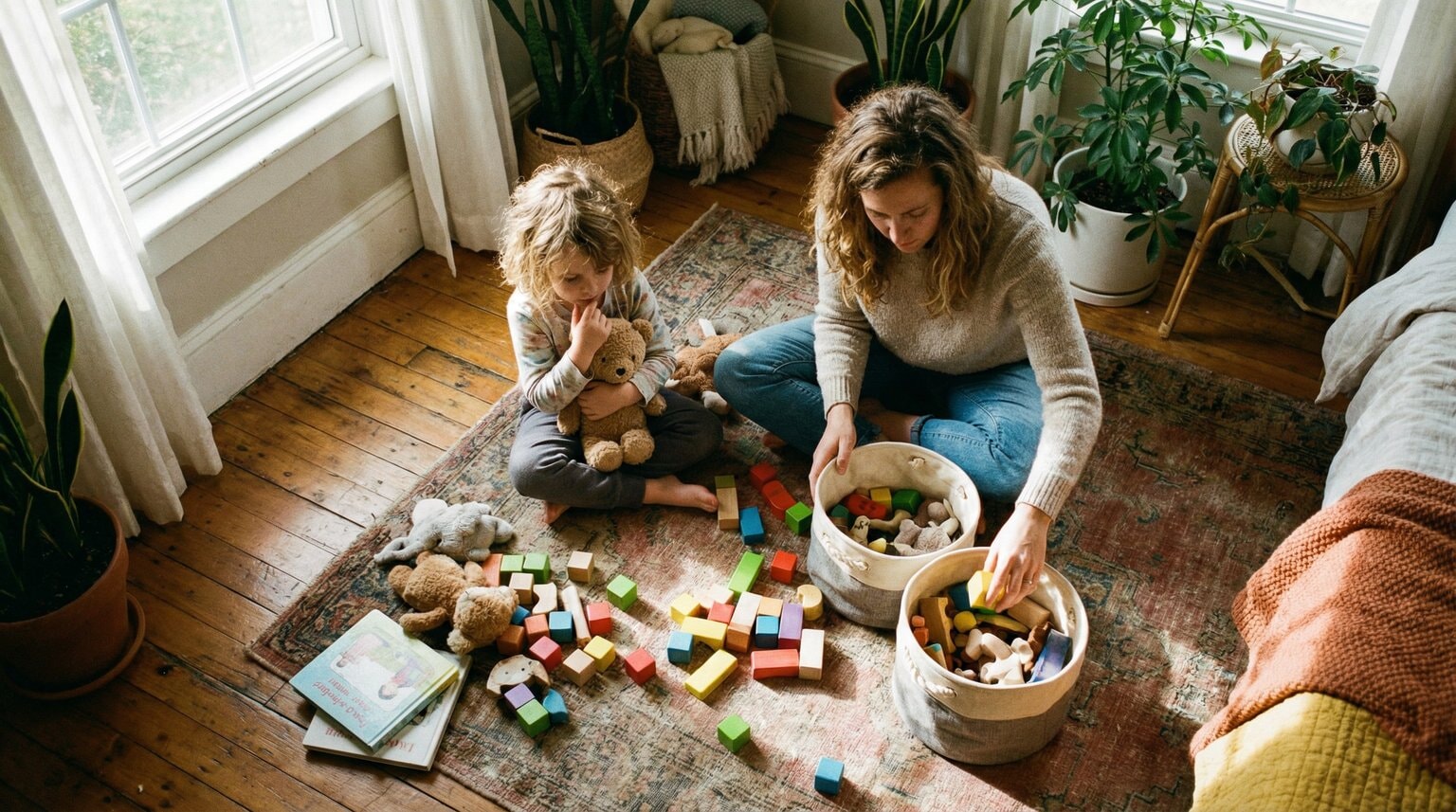
Making Kids Partners in the System
Age-Appropriate Involvement
Ages 2-3: No involvement needed. They won’t notice if you rotate while they sleep.
Ages 4-5: Simple explanations work. “Some toys are taking a rest. They’ll come back!”
Ages 6-7: Full participation possible. Let them help decide what goes in each bin.
Handling Resistance
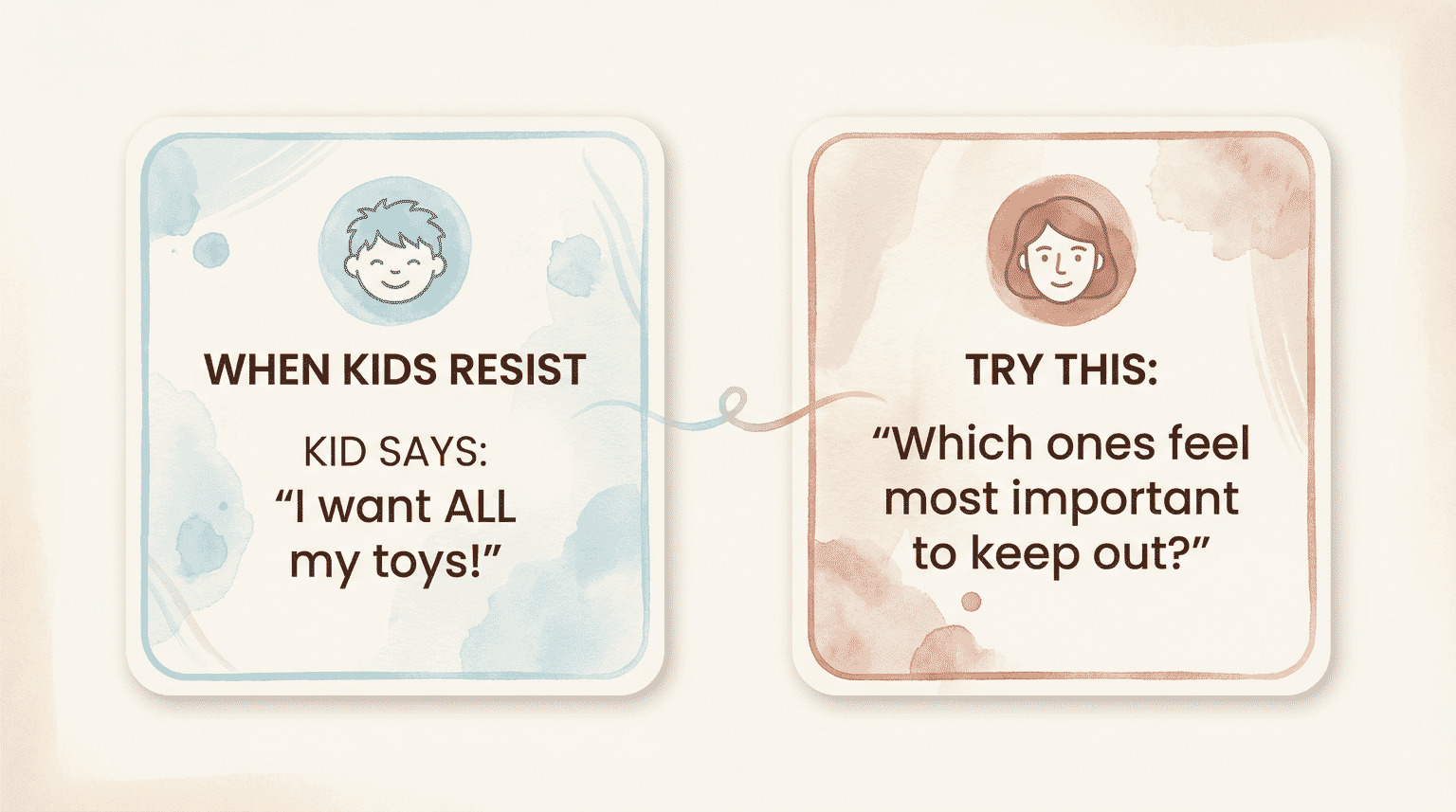
When your child says: “I want ALL my toys!”
Try: “I hear you. Which ones feel most important to keep out right now? Those can be your ‘always toys.'”
When your child says: “Where’s my [specific toy]?”
Try: “That one’s resting right now. It’ll come back soon—and it’ll feel like new again when it does.”
FIU doctoral student Karinna Rodriguez found that children engage more deeply than we assume: “We now know young kids don’t just get the right answer—they’re often using the same mental tools as adults. That tells us we can start supporting these skills much earlier than we thought.” Involve them when developmentally appropriate.
Managing the Toy Economy

The rotation system solves toy overwhelm inside your home. But what about the constant influx from birthdays, holidays, and well-meaning grandparents?
Gift-Giver Communication Scripts
To relatives before gift-giving occasions:
“We’ve started a rotation system that’s really working for us. [Child] gets so much more from each toy now. Would you consider [experience gift/contribution to bigger item/consumable like art supplies]?”
When surprise gifts arrive: (Try the doorstep script.)
“Thank you so much—[Child] is going to love this! We’ll add it to the rotation so it gets the attention it deserves.”
For deeper strategies on managing gift-giving expectations, especially with extended family, I’ve found that leading with the “why” helps. Most grandparents genuinely want their gifts to be played with.
They’ll often support a system that makes that more likely. Frame it as ensuring their gift gets the attention and appreciation it deserves.
Partner Alignment
If you’re implementing this and your co-parent is skeptical, try a one-month experiment. Document what you observe. In my experience, watching a child actually play with fewer toys is more convincing than any argument.
Maximizing Rotation Benefits
Professor Shannon Pruden’s research points to something parents can do during any play session: “When we use spatial words in everyday situations—like talking about how to stack groceries or fit toys into a bin—we’re supporting the brain’s ability to reason and problem-solve.”
Talk about what your child is doing during play. “You put the big block under the small one. Now it’s taller than before.” These simple descriptions turn ordinary play into cognitive development opportunities—no special toys required.
Frequently Asked Questions
How many toys should be out at once?
Research suggests 10-15 toys works best for most children ages 2-5. A 2023 NIH study found that too many choices depletes children’s cognitive bandwidth for meaningful play. Start with fewer and adjust based on your child’s engagement patterns.
How often should I rotate toys?
Most families find weekly rotations work well, though children under 2 benefit from bi-weekly schedules that allow more repeated exposure. The research shows children learn equally well whether reintroduced to toys after short or long breaks—consistency matters more than perfect timing.
Does toy rotation really work?
Yes, and the cognitive science explains why. Children have limited mental energy for processing options. FIU researchers found that children with focused play opportunities solved problems twice as fast. Rotation reduces decision fatigue while maintaining novelty.
What age should you start toy rotation?
You can begin around 12 months when functional play emerges, though benefits are clearest from ages 2-5. Younger children need more repeated exposure to learn from toys, while older children (4-5) learn from shorter exposures—so rotation rhythm can adjust as your child develops.
How do I organize toys for rotation?
Sort by category (building, pretend, puzzles, creative) rather than theme. Create 3-4 balanced bins with 10-15 items each, ensuring variety across developmental domains. Store inactive bins out of sight and rotate one complete bin at a time.
Your Turn
Have you tried toy rotation? I’m curious how long it lasted and whether your kids noticed. Mine didn’t realize toys were “gone”—they just rediscovered them with excitement weeks later. What’s been your experience?
Your rotation wins and fails help other parents figure out what actually works.
References
- Young Children’s Interactions with Objects: Play as Practice and Practice as Play – NIH research on object manipulation and the “haptic spotlight” in infant play
- Building Preschoolers’ STEM Skills is Child’s Play – FIU research on spatial reasoning and problem-solving in young children
- Generalizing Solutions Across Functionally Similar Problems – Cognitive Development research on how 2-5 year-olds transfer learning

Share Your Thoughts