
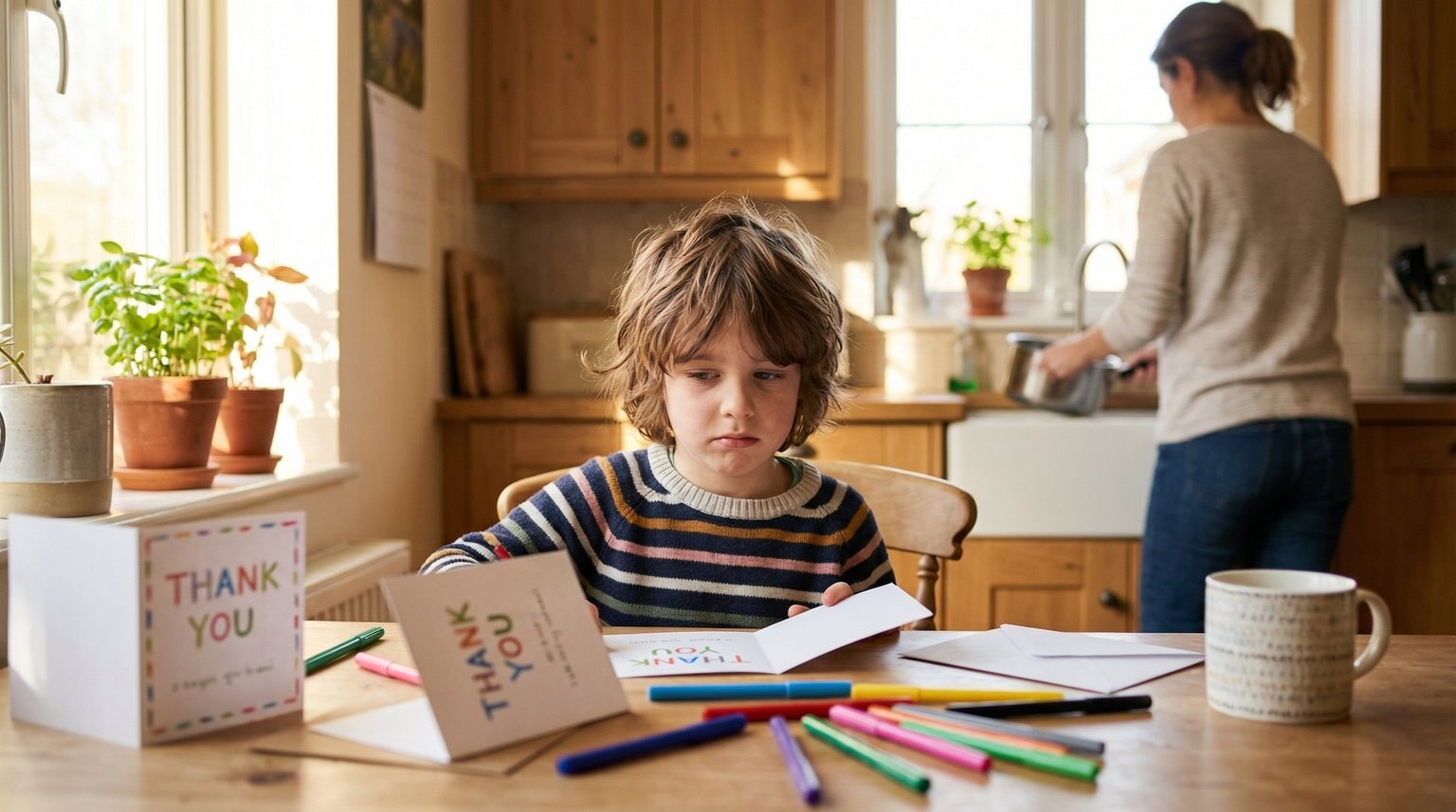
Your child opens a gift, lights up for approximately four seconds, then moves on to the next package. Two weeks later, you’re staring at a stack of blank thank-you cards wondering how to get words out of a kid who “doesn’t know what to write.”
Here’s a formula so simple they’ll actually remember it.
Key Takeaways
- The 3-sentence formula: name the gift, say what you like, tell how you’ll use it
- One sentence of thanks per grade level is the research-backed benchmark for kids. (Get the full template.)
- Modeling gratitude out loud works better than demanding thank-yous
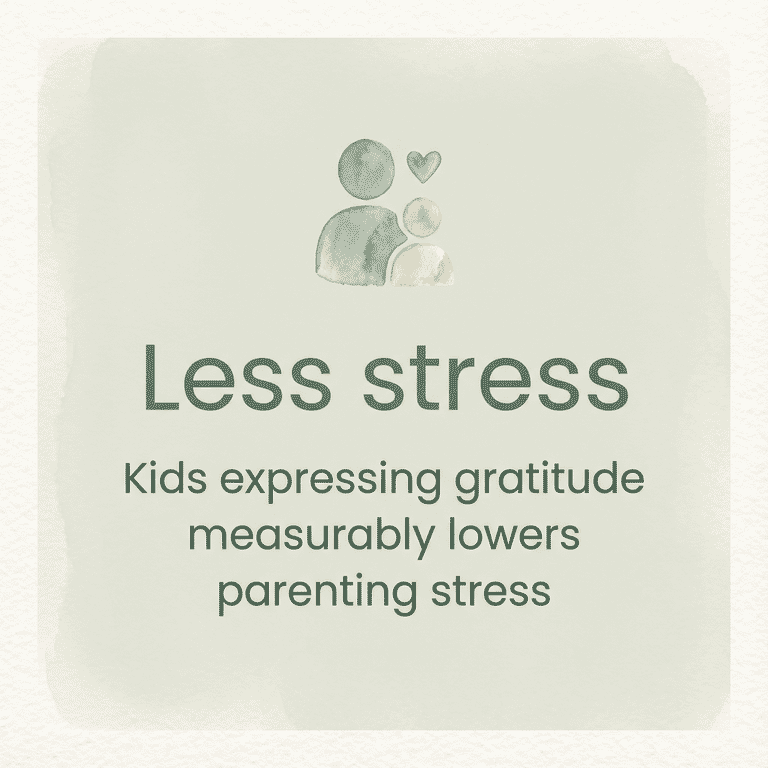
- Kids expressing appreciation actually lowers parenting stress
The Formula
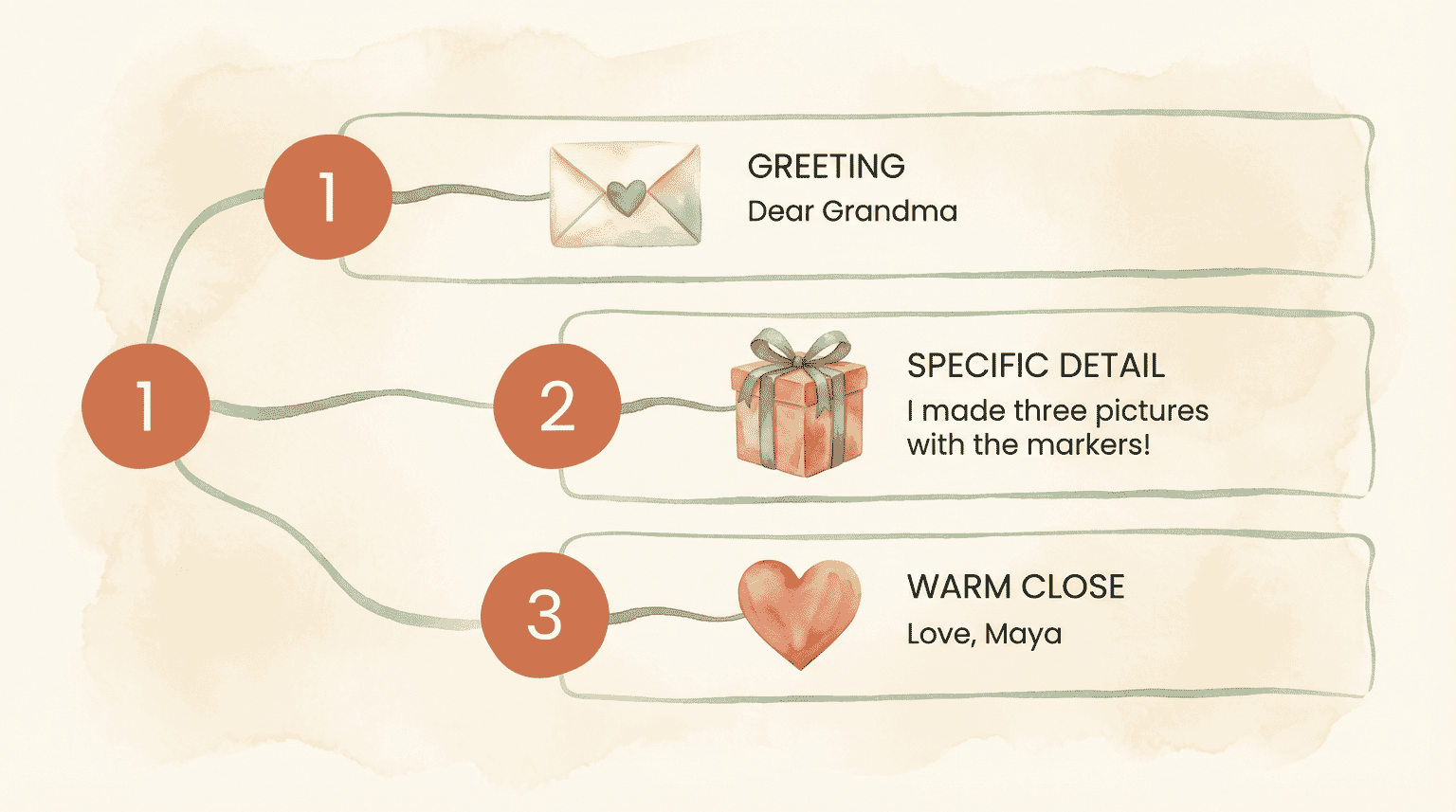
Three sentences. That’s it.
- Thank them for the specific gift. “Thank you for the art supplies.”
- Say what you like about it. “I love all the different colors.”
- Tell how you’ll use it (or how you’ll think of them). “I’m going to make you a picture with them!”
Michigan State University Extension recommends one sentence of thanks per grade level as a benchmark—making three sentences perfect for most elementary-age kids. Younger children can start with just the first sentence. Older kids might add a fourth.
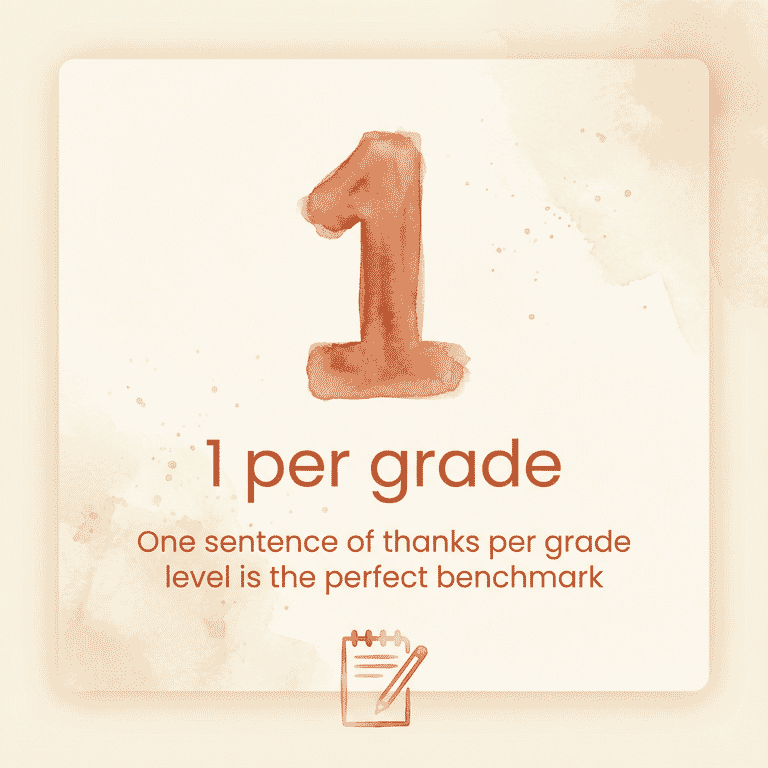
This benchmark takes the pressure off everyone. A first-grader writing one heartfelt sentence? That’s a win. A fourth-grader managing four sentences? Right on track.
The goal isn’t perfection—it’s building a habit they can grow into over time.
If you’re wrestling with a child who fights every thank-you note, I’ve got a whole guide on getting reluctant kids to write thank-you notes.
Why Three Sentences Works

The secret isn’t in forcing gratitude—it’s in guiding reflection.
“It’s really about just walking them through that reflection piece—not talking for them or lecturing them about how grateful they should be, but just asking some really open-ended questions.”
— Andrea Hussong, PhD, University of North Carolina at Chapel Hill
That’s exactly what these three sentences do. Each one prompts a different reflection: What did I get? What do I like about it? What will I do with it?
For a deeper dive into teaching kids gratitude beyond thank-you notes, that’s where the real foundation gets built.
Research from the University of Illinois (2024) found that perceived gratitude from children actually lowers parenting stress. Teaching kids to express appreciation isn’t just polite—it strengthens the whole family.
When kids can articulate what they’re thankful for, everyone feels more connected.
Prompts to Try
Hand your child these fill-in-the-blank starters:
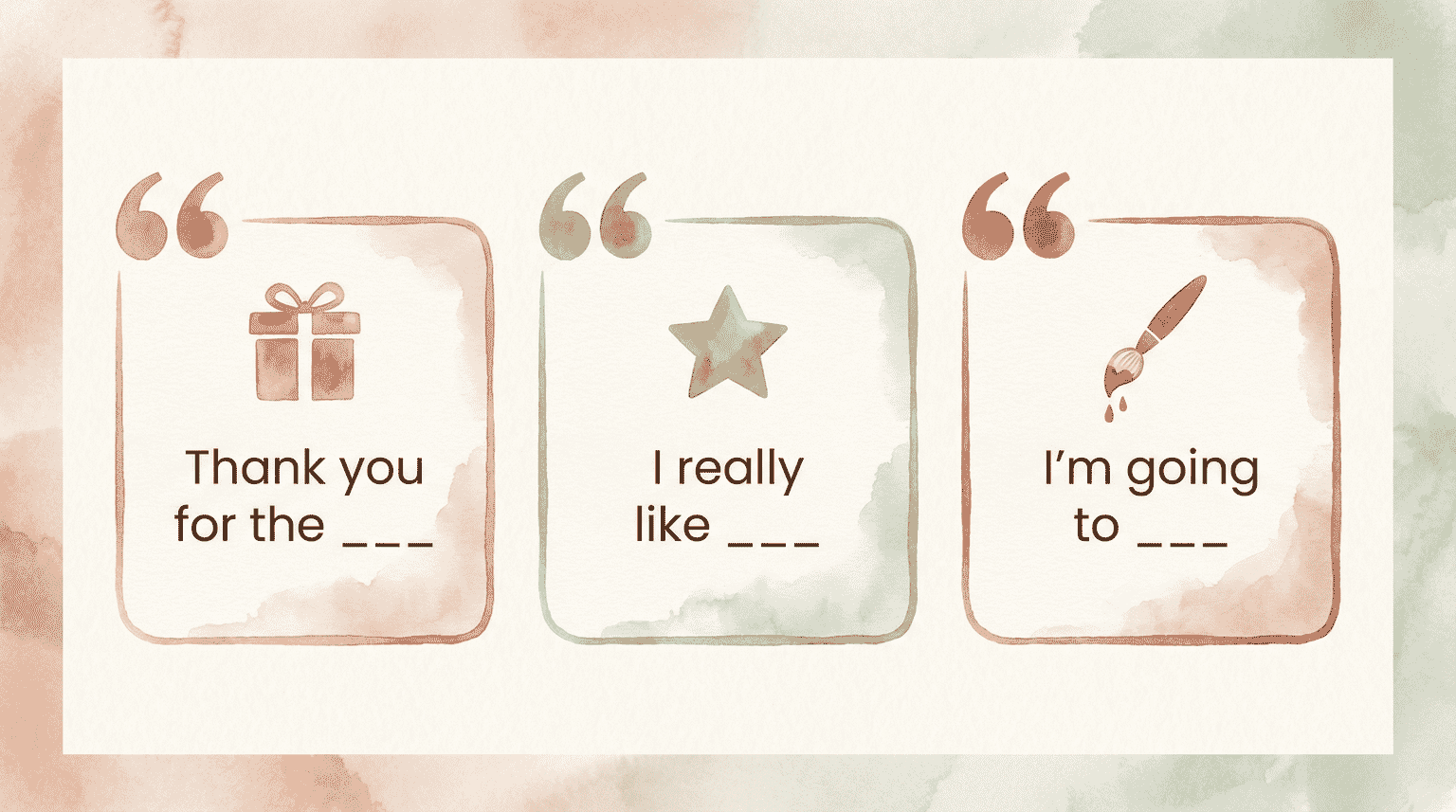
Sentence 1: “Thank you for the ___.”
Sentence 2: “I really like ___” or “My favorite part is ___.”
Sentence 3: “I’m going to ___” or “I’ll think of you when I ___.”
In my house, this sounds like me asking: “What do you like about it?” and “What are you going to do with it?” I’ve done this eight times over and the prompts work better than any lecture about being grateful.
One Modeling Tip

University of Michigan’s child development experts emphasize that modeling gratitude works better than demanding it.
“Modeling gratitude can be the best way to help children internalize the manner, habit, and sincerity of expressing appreciation.”
— Christine Snyder, Director of Child and Family Care, University of Michigan
The difference between modeling and demanding is everything when it comes to building genuine gratitude habits.
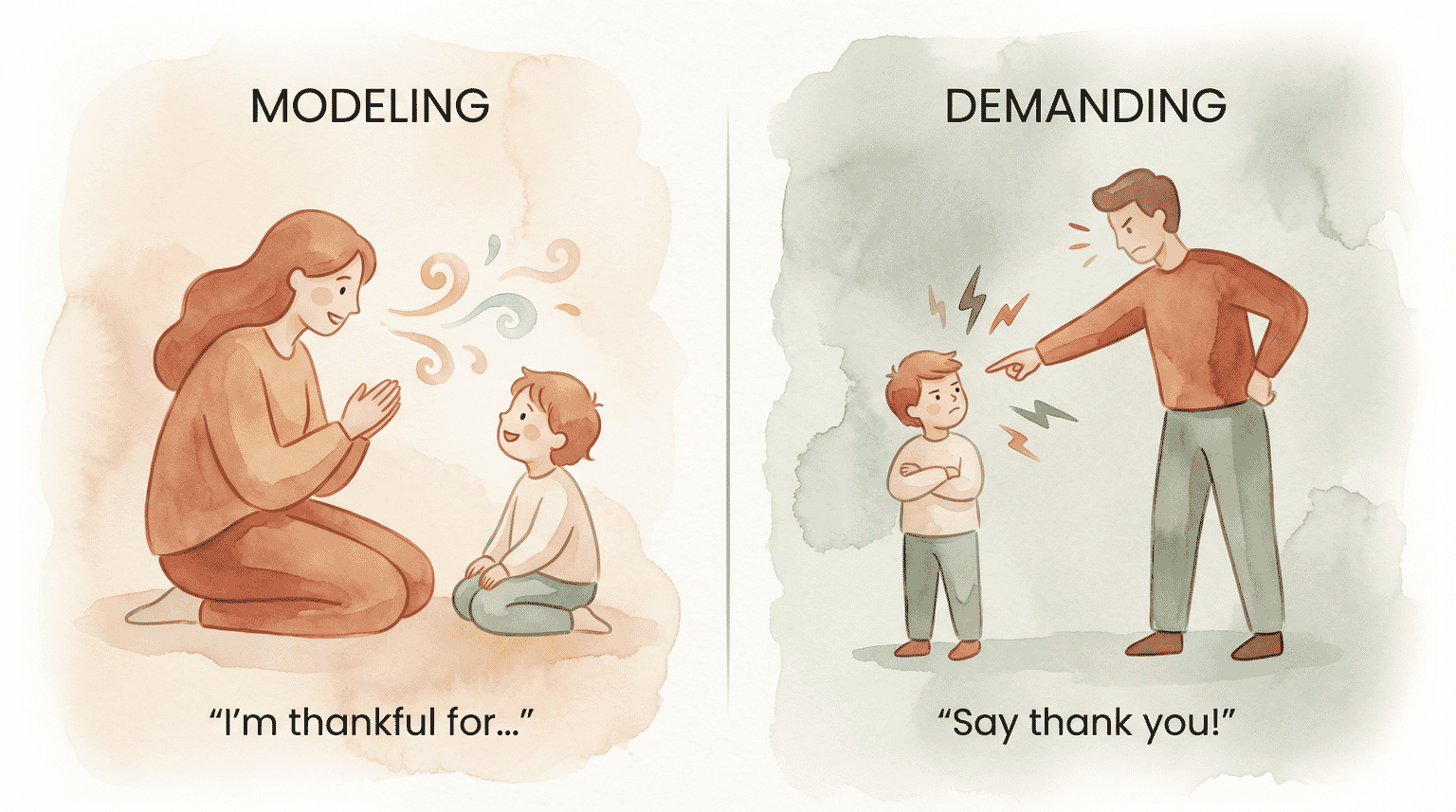
Let them hear you say what you’re thankful for—and why—out loud. That’s how three sentences eventually stops feeling like homework and becomes habit.
Join the Conversation
Has a simple formula like this helped your kids with thank-you notes? I’m curious whether three sentences actually feels achievable—or whether the battle continues regardless.
Your experience might help another parent skip the thank-you battle.
References
- Michigan State University Extension – Gratitude practices and thank-you note guidelines for children
- University of Illinois Urbana-Champaign – Research on gratitude in family relationships
- University of Michigan Human Resources – Modeling gratitude for children

Share Your Thoughts