
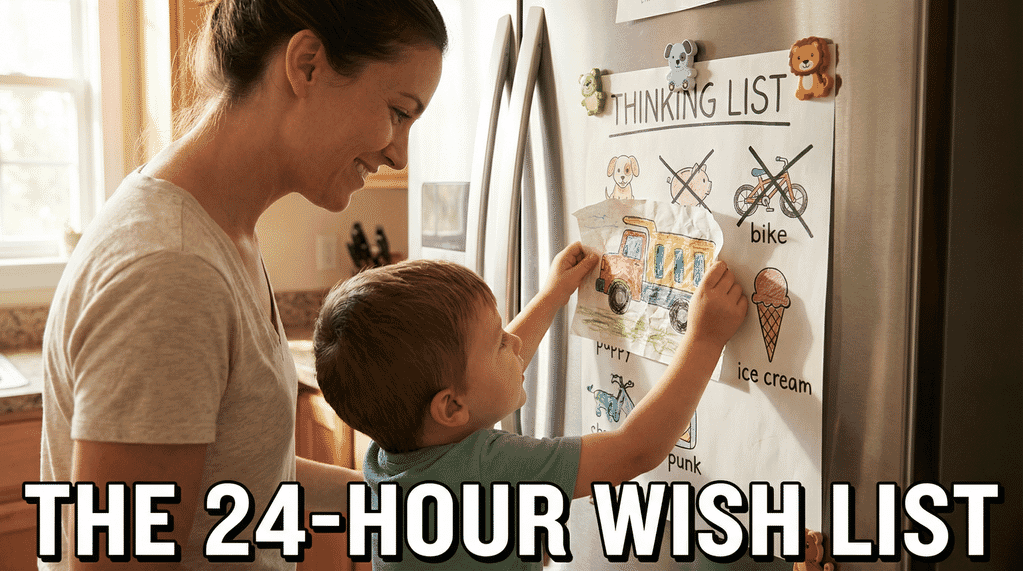
Your kid just watched an unboxing video and is now absolutely certain they need that toy. Here’s a simple strategy that turns “I want that NOW!” into something more manageable—and research on surprise and gift appreciation suggests it might actually make gifts more satisfying when they do arrive.

Key Takeaways
- The 24-hour rule creates a simple pause between “I want it” and any purchase decision
- About 90% of YouTube-inspired requests are forgotten within a day—the ones that stick tend to be genuine interests
- Research shows anticipation actually enhances satisfaction more than immediate acquisition
- Adapt the approach by age: younger kids draw their wishes, older kids manage their own lists
What Is the 24-Hour Rule?
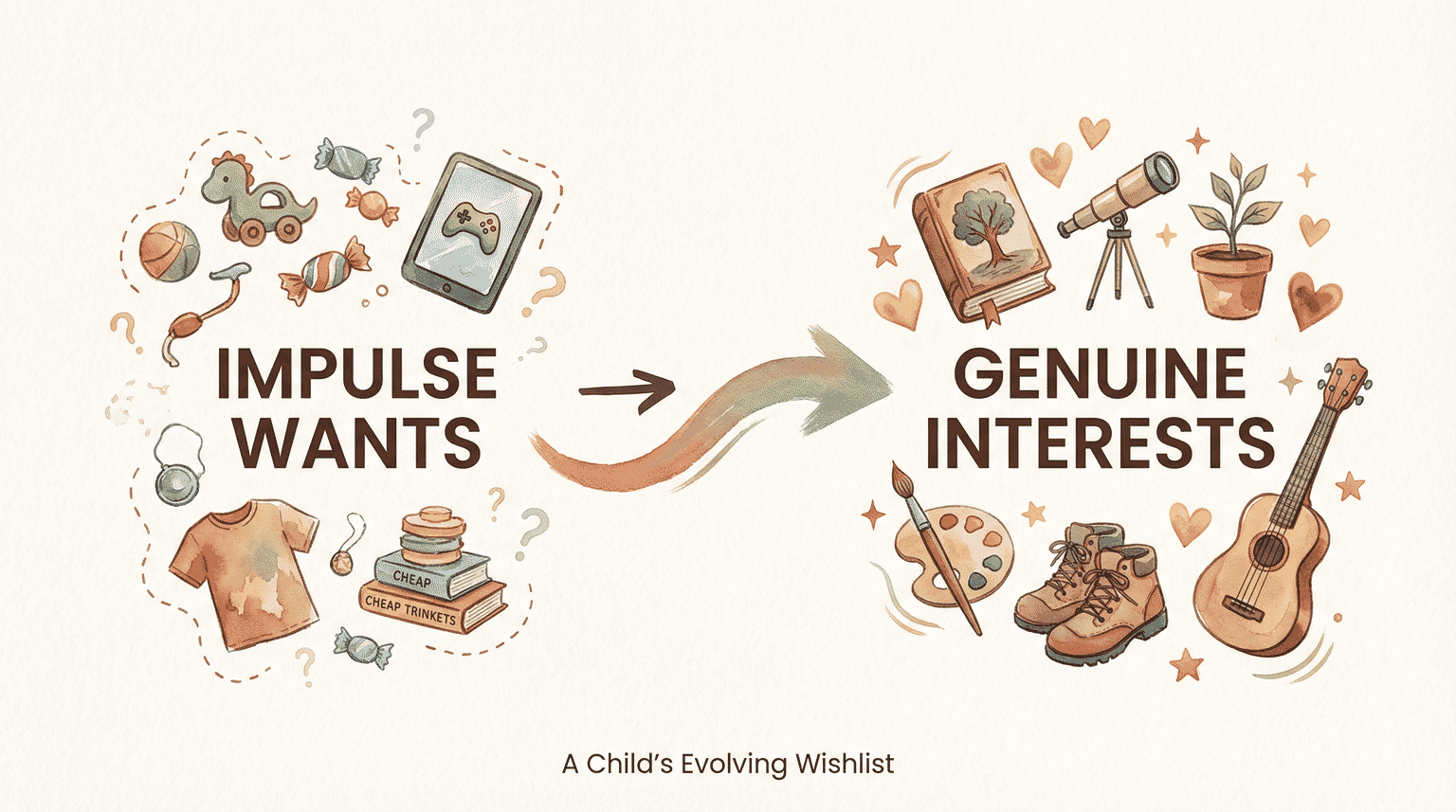
The 24-hour rule is a parenting strategy where children wait 24 hours after requesting an item before any purchase decision is made. If they still want it after waiting—and can explain why—you discuss whether to proceed. This simple pause helps kids distinguish impulse wants from genuine interests.
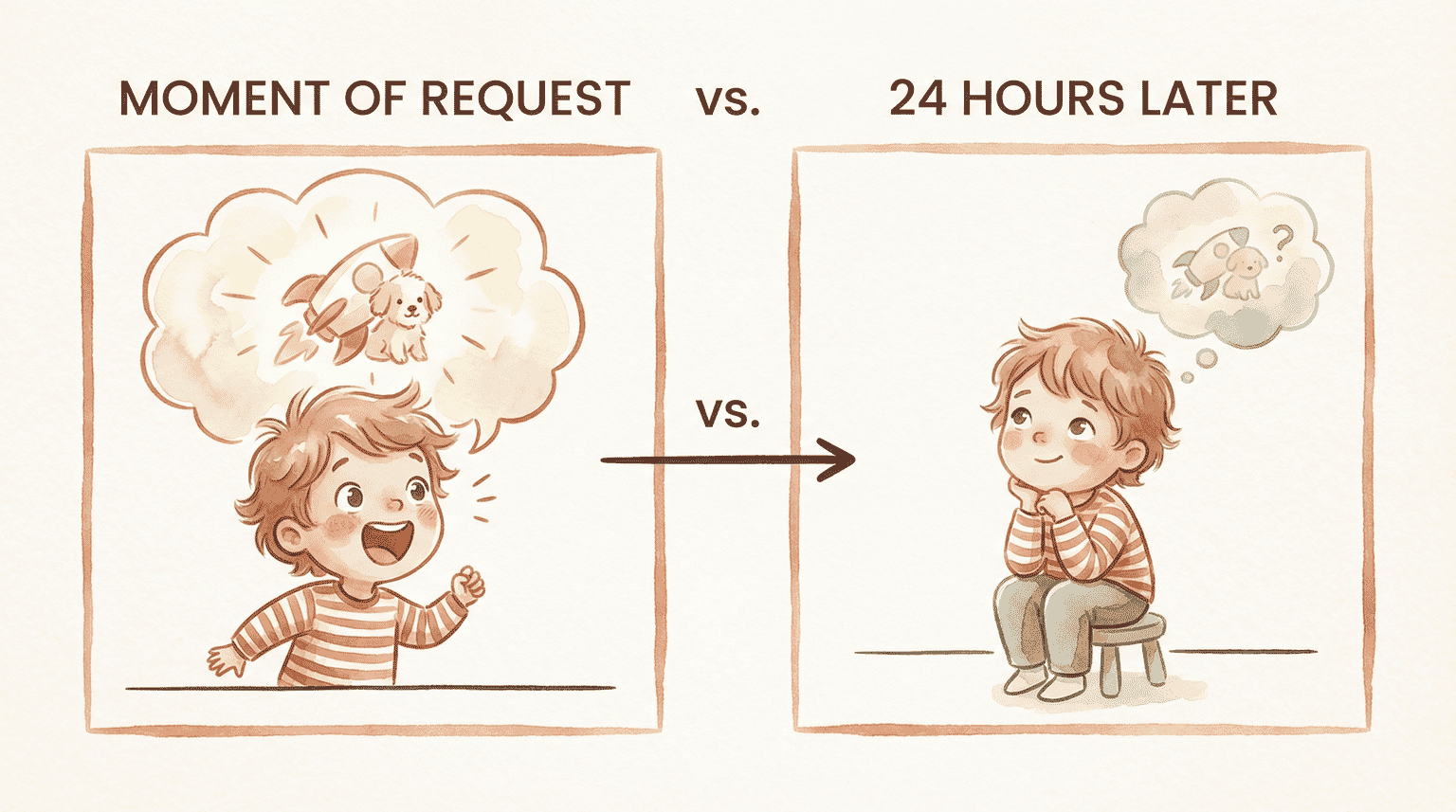
The beauty of this approach is its simplicity. No complicated reward systems. No lengthy explanations about advertising tactics. Just a pause that does the heavy lifting for you.
Why Waiting Actually Works

Here’s what the research shows: uncertainty before receiving something actually prolongs positive feelings. Consumer psychologists have documented that anticipation can enhance satisfaction more than immediate acquisition. In other words, the waiting isn’t punishment—it’s accidentally making eventual gifts more enjoyable.
I’ve watched this play out eight times now. My kids forget about 90% of YouTube-inspired requests within a day. The things they remember? Those tend to be genuinely good fits.

That 90% figure isn’t from a lab study—it’s from years of watching my own kids cycle through obsessions. The slime kit that was “absolutely essential” at 4pm? Completely forgotten by breakfast.
The requests that survive the 24-hour test tend to reflect genuine interests rather than algorithmic manipulation. That’s information worth having before you spend money.
A 2025 study on gift-giving found that receivers care more about why a gift was given than the specific item itself. Teaching kids to think through their requests builds exactly this kind of intentionality.
When kids learn to articulate why they want something, they’re developing a skill that serves them well beyond toy requests. They start to understand their own preferences and priorities.
And honestly? It makes gift-giving more meaningful for everyone involved. A thoughtfully chosen item beats an impulse purchase every time.

How to Use It
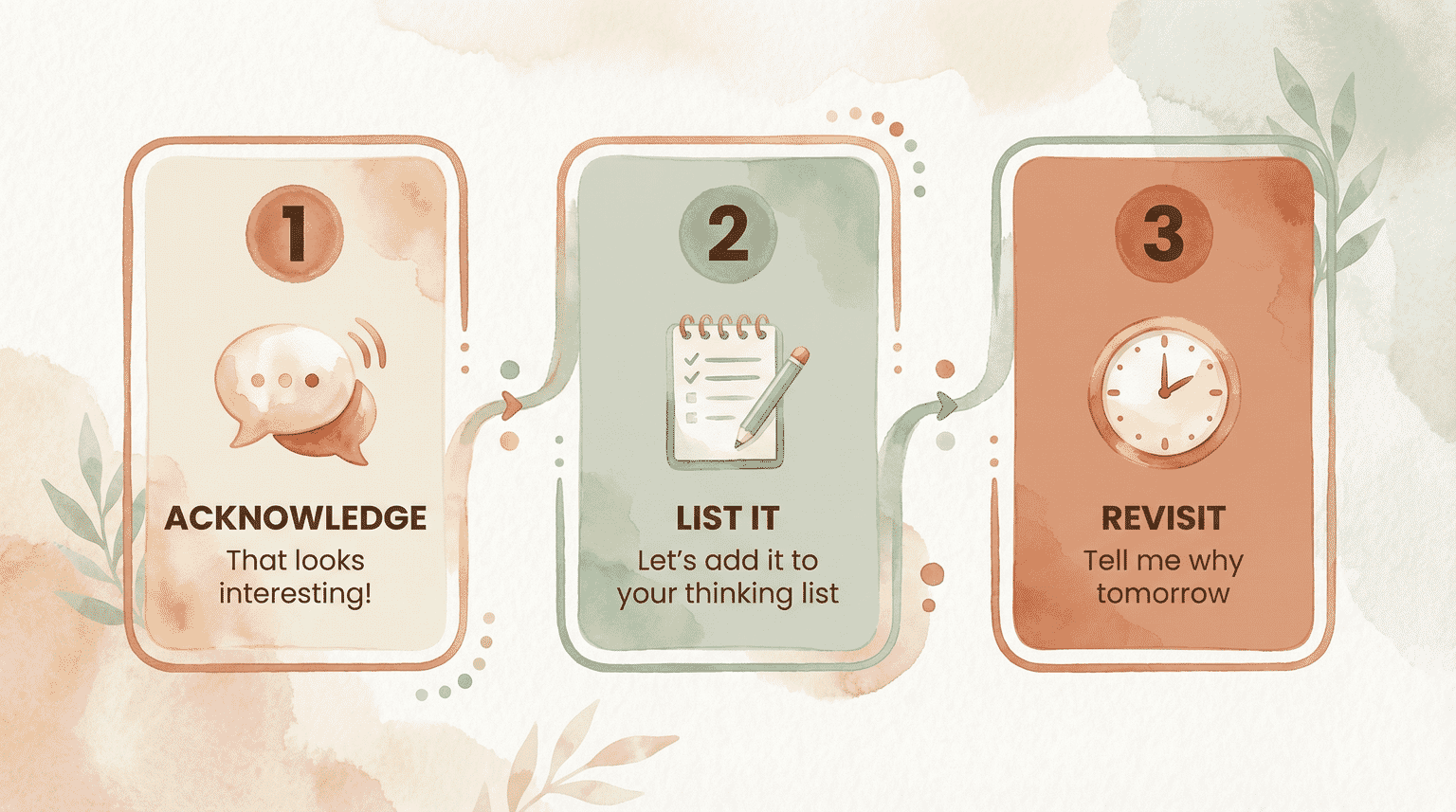
When your child announces their latest YouTube discovery:
“That looks interesting! Let’s put it on your thinking list. If you still want it tomorrow, tell me why and we’ll talk about it.”
— Suggested parent response
That’s it. No lectures about consumerism. No lengthy negotiations. Just a pause.
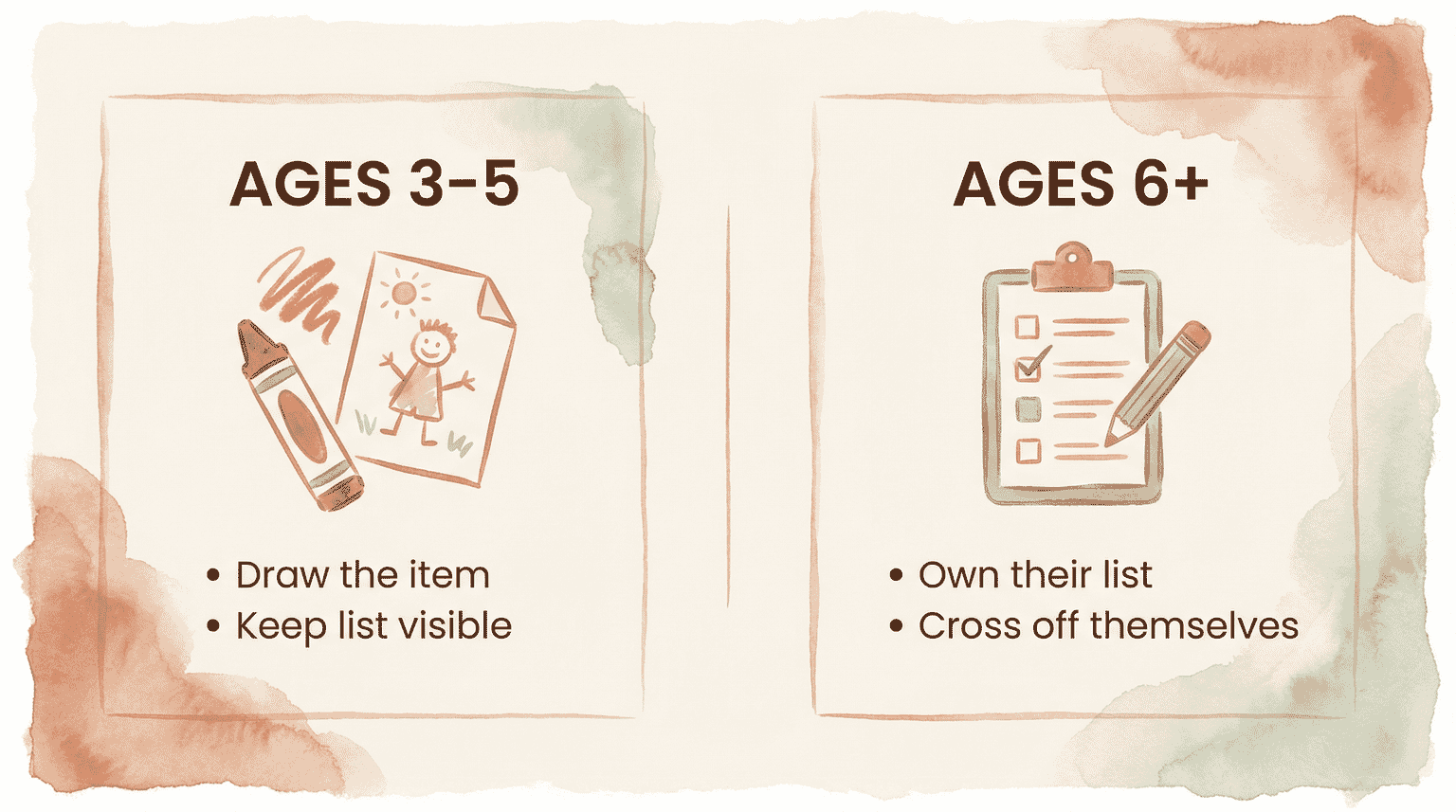
For younger kids (3-5): Keep a simple list they can see. Drawing a picture of the item helps them feel heard.
For older kids (6+): They can manage their own list—and you’ll be surprised how often they cross things off themselves.
The success indicator? When your child starts saying “I’ll put it on my list” before you prompt them. That’s impulse control developing in real time.

Want to understand more about YouTube’s influence on what kids want? Or if persistent requests are the bigger issue, here’s how to handle pester power.
Join the Conversation

Does the 24-hour rule work at your house? I’m curious whether waiting has genuinely changed what your kids ask for—or whether they remember absolutely everything and hold you to the list.
I read every response and learn something new about how kids actually think.
References
- The Surprise of Reaching Out – Research on how surprise and anticipation affect gift appreciation
- Money Can Buy Me Love – Study on intentionality in gift-giving and emotional impact

Share Your Thoughts