
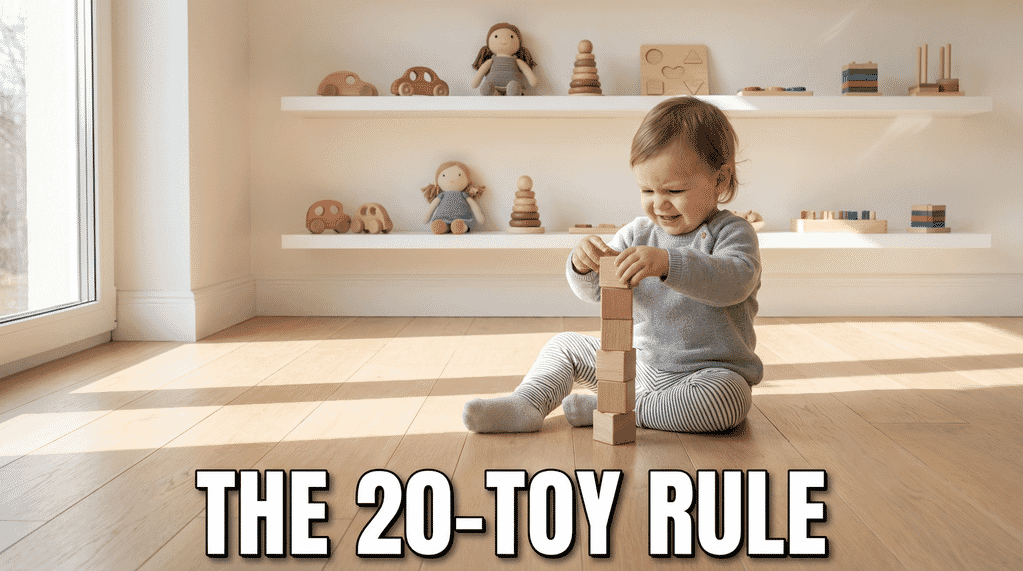
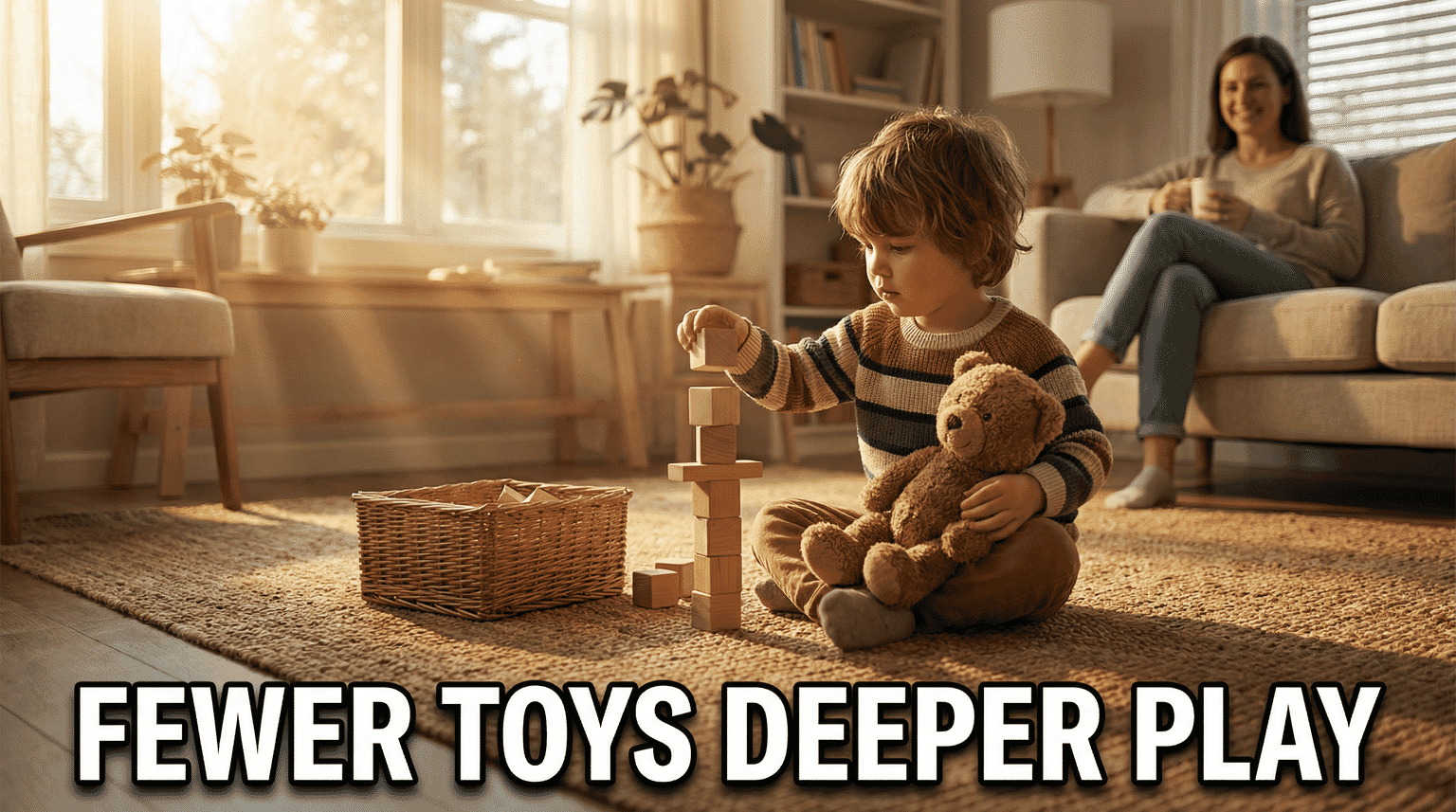
The 20-toy rule limits children to 20 toys available at any time. Based on research showing fewer toys promote deeper engagement and creativity, this approach reduces overwhelm and encourages more focused, imaginative play. Extra toys can be rotated or stored rather than discarded—the one-in-one-out rule keeps things manageable.
Key Takeaways
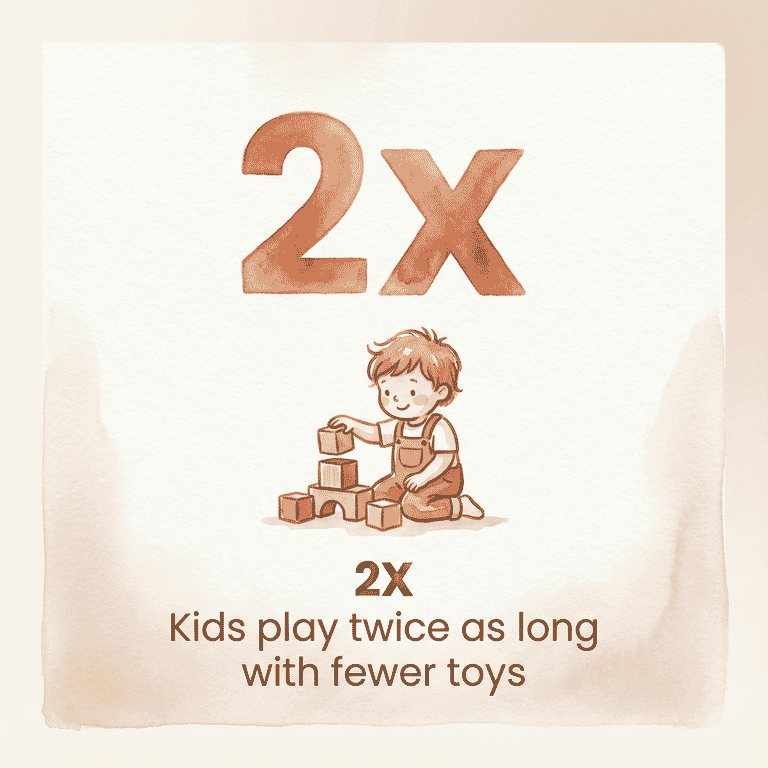
- Children play twice as long with fewer toys due to reduced decision fatigue
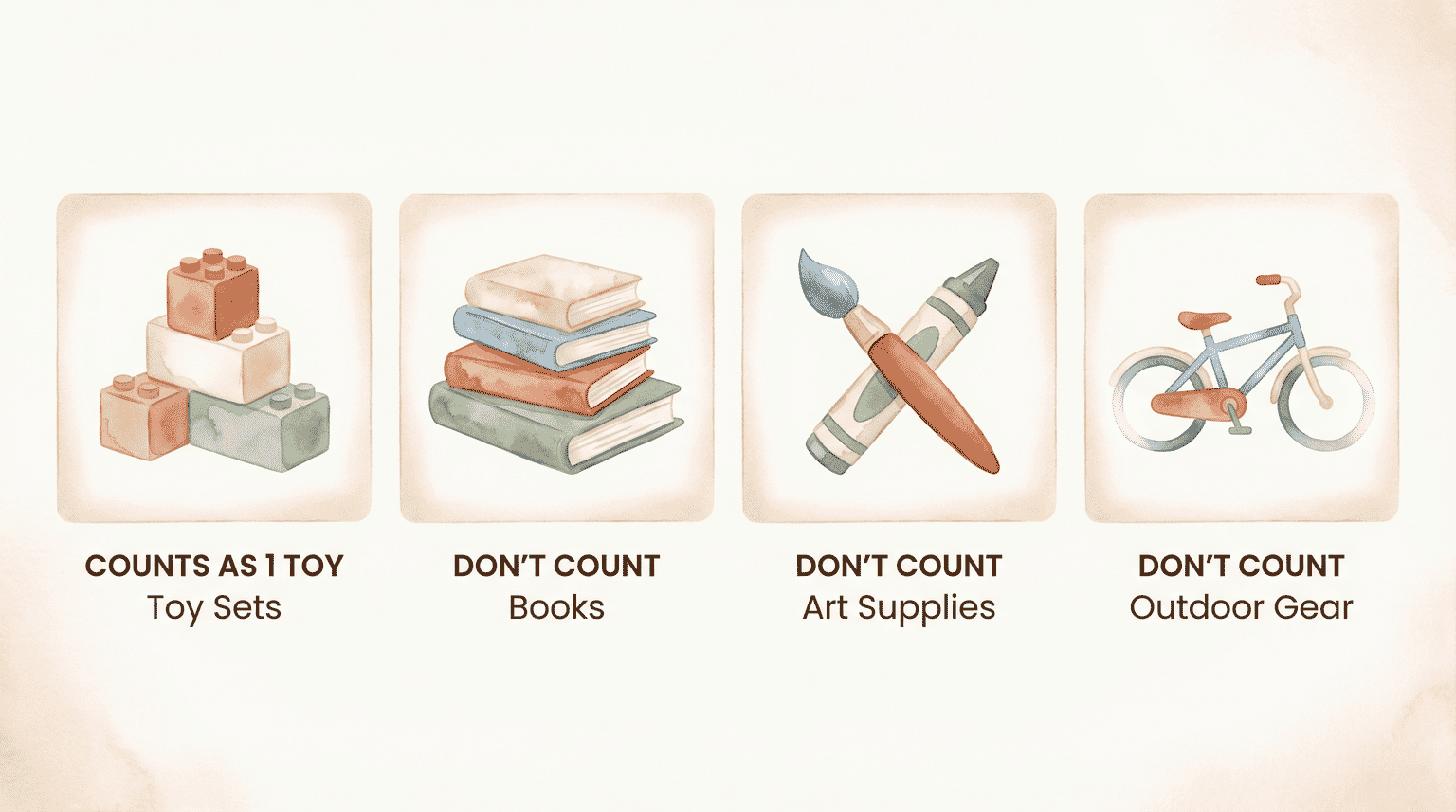
- Toy sets (all LEGO, all blocks) count as one toy—books, art supplies, and outdoor gear don’t count
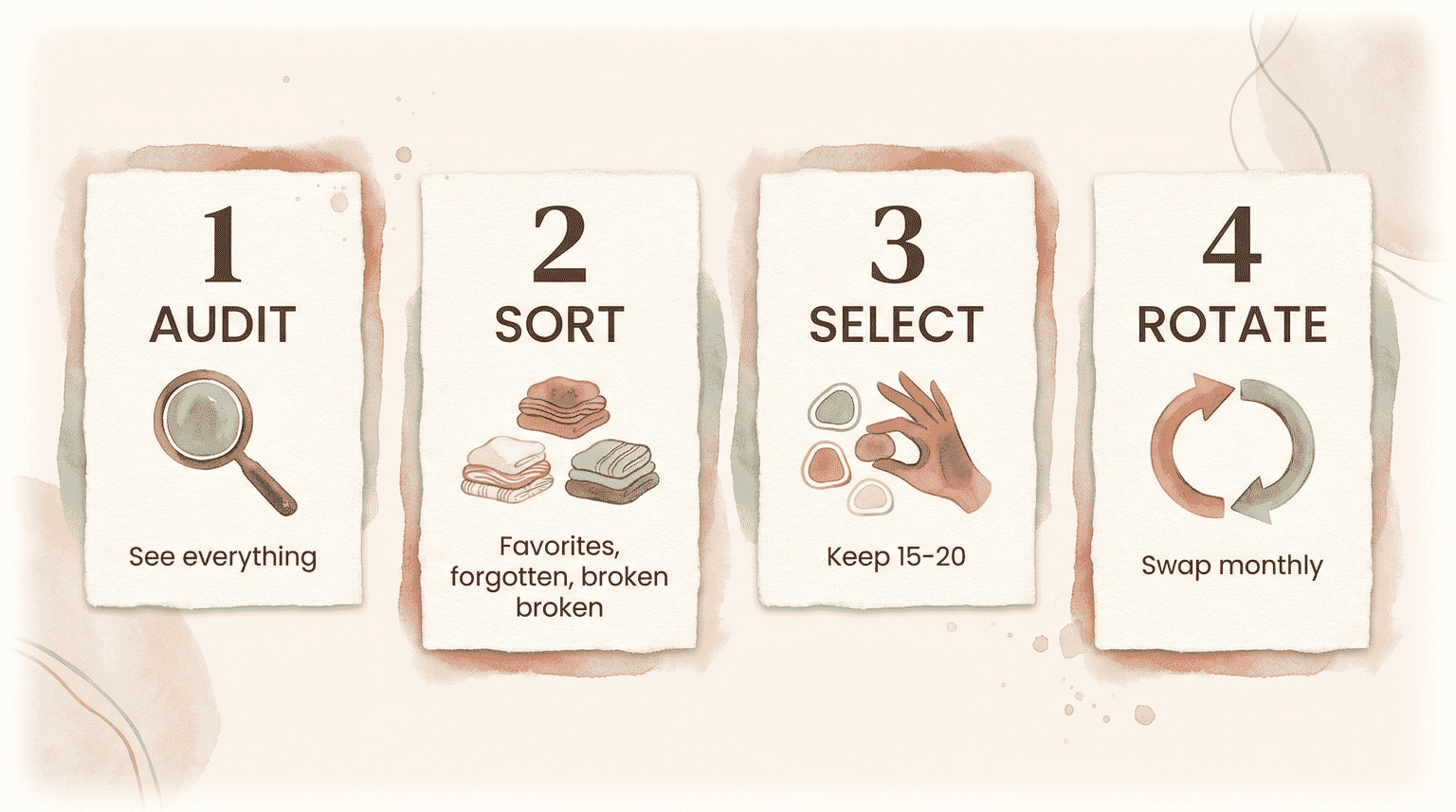
- Start with a simple 4-step process: audit, sort, select 15-20 favorites, then rotate monthly
- The goal is reducing overwhelm, not strict accounting—adjust the number to fit your family
Why Fewer Toys Works
Toledo researchers found that children with fewer toys played twice as long and showed more creative engagement than those surrounded by options. The reason comes down to decision fatigue—too many choices paralyze rather than inspire.
A 2025 study in Frontiers in Developmental Psychology confirms what I’ve watched happen in my own playroom: children actively drive their own learning by selectively attending to stimuli and manipulating objects. But they can’t do that when 47 toys are competing for their attention.
With eight kids spanning toddlers to teens, I’ve seen this play out repeatedly. Fewer toys doesn’t mean less play—it means better play.
For the full research on fewer toys and better play, that article digs much deeper into the science behind why constraint fuels creativity.
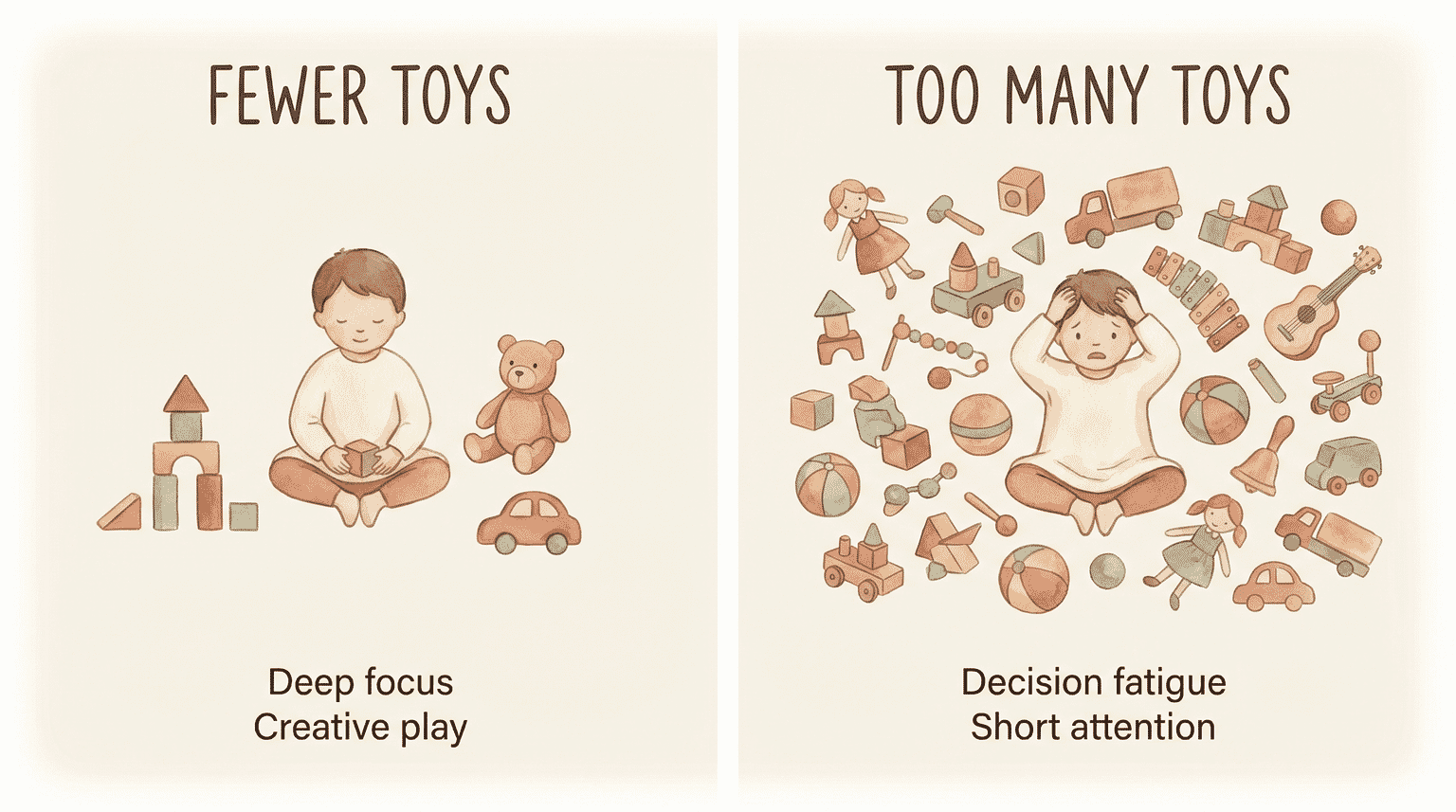
When children face fewer choices, their brains can actually settle into imaginative play rather than constantly scanning for the next shiny thing.
What Counts as One Toy?
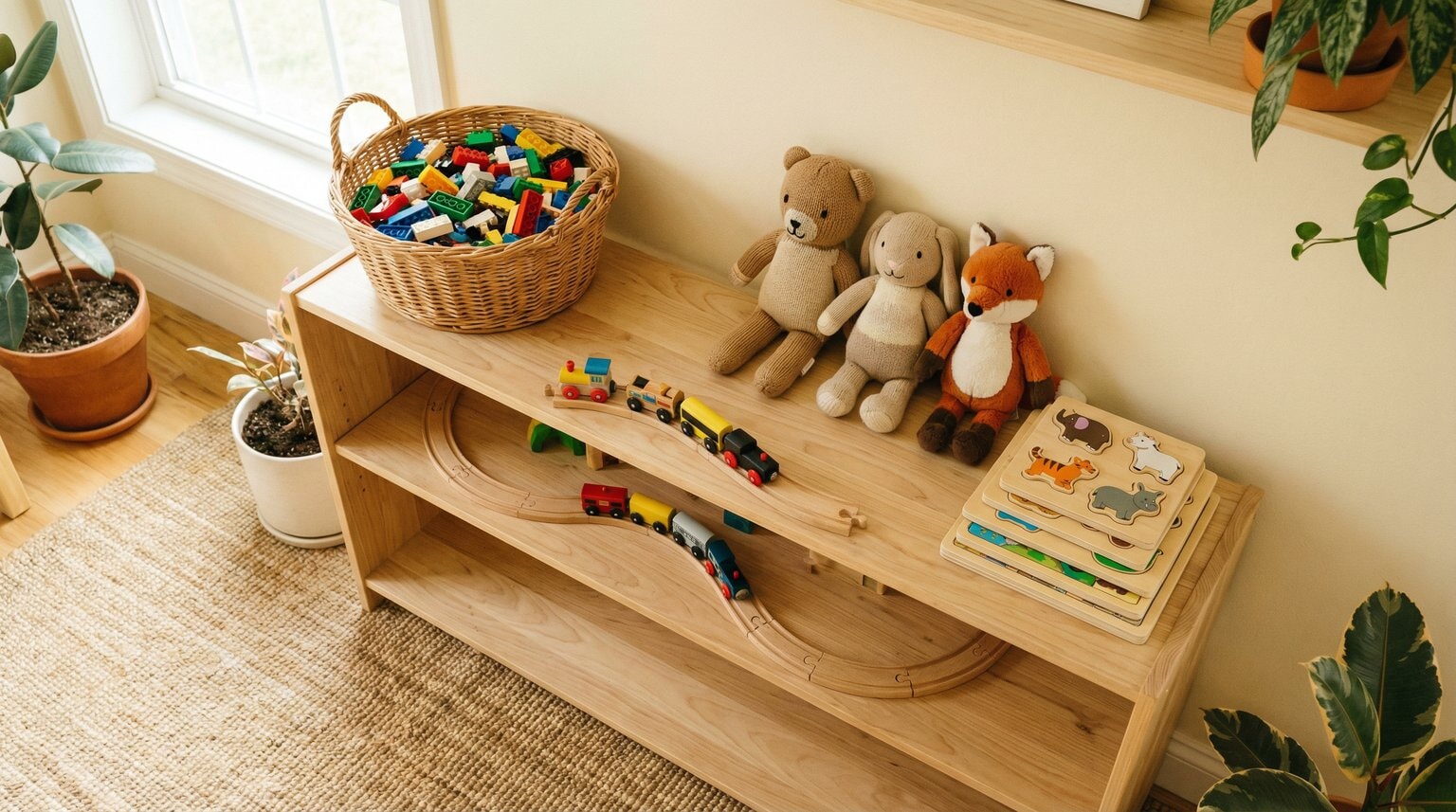
Here’s how most families categorize:
- Toy sets count as one toy (all the LEGO bricks, the entire train track, the block collection)
- Books are separate—don’t count against your 20
- Art supplies are separate—crayons, paper, paint get their own category
- Outdoor equipment is separate—bikes, balls, and sandbox toys live outside the count
The goal is reducing decision fatigue, not strict accounting. If your child has 22 toys and plays deeply with all of them, you’re fine.
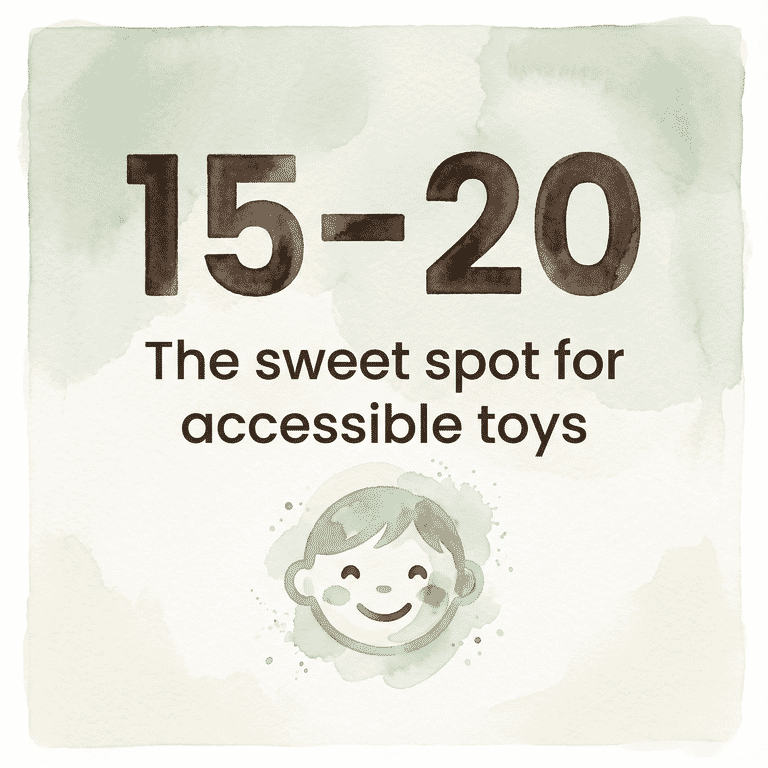
The sweet spot of 15-20 accessible toys gives children enough variety to stay engaged without overwhelming their decision-making capacity.
Some families land at 12, others at 25. The number matters less than the intention behind it—creating space for deep play rather than scattered attention.
How to Start Today
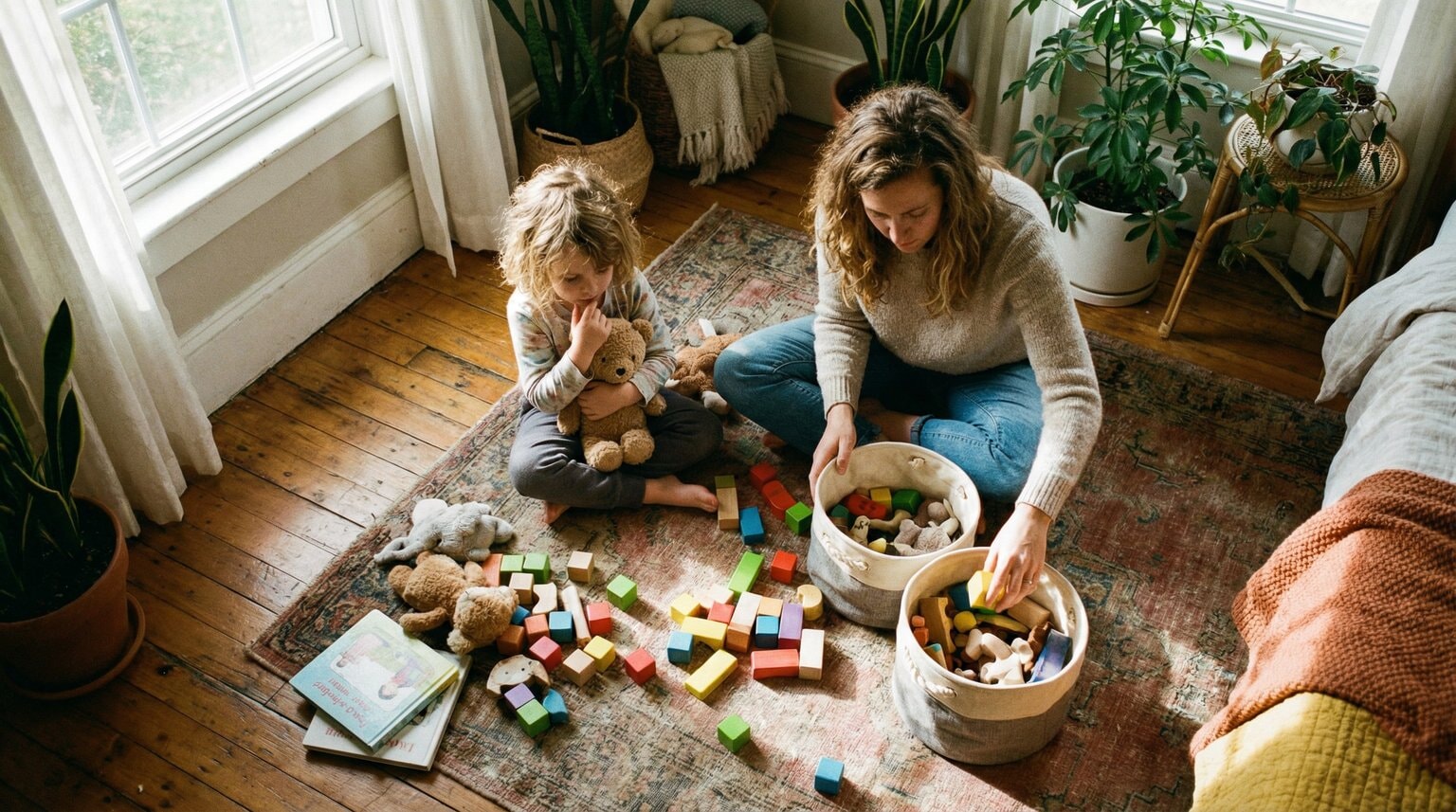
- Audit — Pull every toy into one space and see what you’re actually working with
- Sort — Separate into favorites, forgotten, and broken
- Select — Keep 15-20 favorites accessible; store the rest for rotation
- Rotate — Swap stored toys in monthly to keep things fresh
If relatives tend to flood your house with gifts, you might find teaching gift values helpful for navigating those conversations.
The 20-toy rule isn’t about deprivation—it’s about giving your child’s brain the space to actually engage. Start with what you have. Adjust the number to fit your family. The research backs you up.
I’m Curious
Have you tried limiting toys to a specific number? I’d love to hear what count worked for your family—and whether the pushback was as intense as you expected.
Your toy count experiments help other parents feel less alone in this.
References
- Frontiers in Developmental Psychology (2025) – Research on children’s self-directed learning through object manipulation

Share Your Thoughts